
Climate, Famine, and Imperialism: The Forgotten Lessons of the Super El Niño That Killed 30 Million
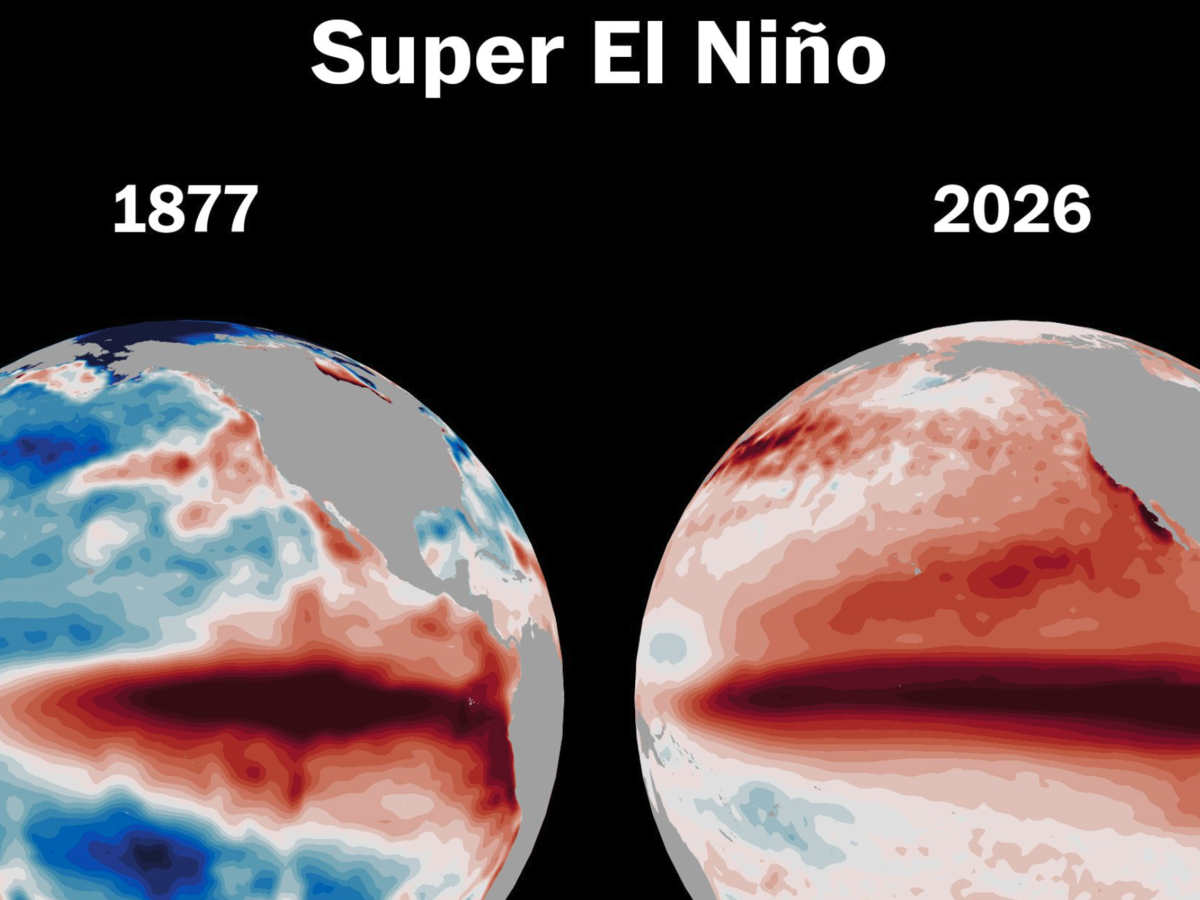
Major weather agencies have already confirmed the onset of a super El Niño in 2026, and scientists worldwide are warning of devastating consequences. Many fear that the phenomenon could change the course of the Earth’s climate system.
I have a lot to say about the 2026 super El Niño and the impacts it may cause. But in this article, I’m going to discuss the consequences of another super El Niño—the one from 1877—which many point to as the best historical parallel for what may be coming.
That weather event triggered one of the greatest human catastrophes in history. It is estimated that more than 30 million people died as a result of the severe famines that struck Asia, Africa, and parts of Latin America.
However, there is one fundamental detail: it was not El Niño that killed those people. What turned a drought into a tragedy of colossal proportions was the emergence and expansion of colonial imperialism, which destroyed peasant economies, subordinated entire peoples to the global market, and condemned millions to starvation.
The Landscape of Famine
To understand the scope of what happened, let’s start with a specific story: the vacation trip of Ulysses S. Grant, president of the United States in the 1870s. Grant is best known for leading Union troops during the American Civil War, but his presidency was also marked by numerous cases of corruption. At the end of his term, he simply took his family and set off on a long, two-year trip around the world.
He traveled throughout the East, visiting Egypt, China, and India. Everywhere he went, however, he was struck by one thing: the scenes of famine were devastating the populations of those countries. It was the year 1877, and in addition to those regions, famine was also ravaging Korea, Russia, South Africa, the Philippines, and northeastern Brazil.
At the time, people didn’t yet realize it, but the famine was the result of severe droughts that caused massive crop losses—an effect of a powerful El Niño, now referred to as a “super El Niño.” This climate phenomenon, which affects the global climate, is caused by abnormal warming in the equatorial waters of the Pacific Ocean. However, in the late 19th century, meteorological science was still in its early stages: there was no global weather network, and no one fully understood how the phenomenon worked.
Between 1896 and 1902, another major wave of famine struck those nations and other countries. It was another El Niño cycle, which also devastated Ethiopia and Sudan. It is estimated that more than 31 million people died of starvation during that entire period; some sources cite more than 50 million victims. In addition to starvation, hundreds of thousands died from epidemics of cholera, malaria, bubonic plague, and other diseases that always emerge with particular intensity following a major El Niño event.
Climate and the New Imperialist Order
These data were compiled by Mike Davis and appear in the book Late Victorians Colonial Holocausts: El Niño Famines, and the making of the Third World. Davis demonstrates that this great tragedy was not caused solely by a natural phenomenon.
His thesis is that the imperialist nations of Europe, along with Japan and the United States, seized the opportunity to expand their colonial holdings, appropriate communal lands, and gain control of new sources of raw materials. It was the birth of the new imperialist order, ushered in over the corpses of millions of people who starved to death as a result of their violent incorporation into the modern world system. In which the use of force paved the way.
This interpretation is consistent with Rosa Luxemburg’s classic analysis of imperialist accumulation in peripheral countries:
“Each new colonial expansion is accompanied, as a matter of course, by a relentless battle of capital against the social and economic ties of the natives, who are also forcibly robbed of their means of production and labour power…Each new colonial expansion is accompanied, as a matter of course, by a relentless battle of capital against the social and economic ties of the natives, who are also forcibly robbed of their means of production and labour power. Accumulation, with its spasmodic expansion, can no more wait for, and be content with, a natural internal disintegration of non-capitalist formations and their transition to commodity economy(…). Force is the only solution open to capital; the accumulation of capital, seen as an historical process, employs force as a permanent weapon…”
This analysis is striking and remains highly relevant for examining even the contemporary encroachment of capitalism on the territories of indigenous, peasant, and Quilombola communities.
According to Mike Davis, the victims of famine were destroyed by three major forces:
- Extreme weather events on a global scale, which were hardly understood at the time.
- The creation of a global grain market, whose price was beginning to be determined in the heart of capitalism at the time: Victorian England.
- Imperialism, which combined colonial expansion with the dynamics of natural disasters, taking advantage of the situation to create a global market and render peasants and traditional economies vulnerable.
Other factors also contributed to further increasing that vulnerability, as we will see later.
It is important to note that El Niño has existed for thousands of years, long before the emergence of humanity. Ancient Eastern civilizations—in China and India—have always known that periods of severe drought existed and prepared themselves to face them.
In China, for example, the emperor maintained what were known as tribute depots: grain reserves stored in granaries outside drought-affected regions, used to help the population during periods of crop loss. When severe droughts affected agriculture, the emperors came to the people’s aid, as happened during the El Niño cycles of the 18th century, in 1720, 1742, and 1778. There was even a trained state bureaucracy with a “protocol” for responding to severe droughts.
That situation was very different from what happened in the late 19th century. If tax reserves had been maintained, the famine would likely not have claimed so many lives. But why wasn’t that system maintained? The answer has to do with British colonial rule.
Colonial Holocausts
China was subjected to imperialism’s so-called “gunboat diplomacy.” One need only recall the two Opium Wars, in which the British Empire forced China, through military force, to allow the opium trade within its territory.
The British sold as many as 87,000 boxes to the Chinese in 1879, in what Davis describes as the “largest drug transaction in world history.” As a result, China lost sovereignty over its foreign trade.
The Chinese state, weakened and demoralized by colonial rule, was unable to maintain the grain reserves necessary to cope with droughts and prevent famine. When El Niño struck in the late 19th century, some grain reserves still remained. However, while the population was starving—often right next to those depots—the stored grain was simply shipped to England, exported to the world market instead of being used to aid the people.
In China, the dismantling took place through diplomatic and military means; in India it occurred through economic and infrastructural means. There were also food stores in Indian villages. The ancient Indian civilization, known as a “hydraulic society,” had developed along major rivers and had created complex irrigation systems to protect itself from severe droughts.
But that came to an end under British colonial rule: the ancient irrigation systems were stripped down, as documented in colonial reports.
The railroads built by the British were praised as a safeguard against famine because they could transport food supplies to affected areas; in fact, they moved grain stored in villages to more secure warehouses, free from the threat of looting by the starving population.
As in China, food reserves were exported to global markets rather than used to aid the population.
The numbers reveal a striking fact: between 1875 and 1877, India’s grain exports increased fivefold, just before the great famine. Between 1875 and 1900, when the worst famines in Indian history occurred, annual grain exports rose from 3 million to 10 million tons.
In the early 20th century, India supplied nearly one-fifth of Great Britain’s wheat consumption.
Added to this was an even more devastating economic landscape. Imperialism drew small farmers from colonial and semicolonial countries into the global trade in goods. Many began producing cotton for the British textile industry.
This cotton boom was linked to the American Civil War, which had brought production in the South to a standstill. When production resumed, prices fell, driving small farmers into ruin.
Worse still, cotton cultivation reduced food production, leaving the population in a state of food insecurity on the eve of the great El Niño of 1877, which further exacerbated the catastrophe.
This ruin was paired with capitalism’s first recession, which began in 1873 and lasted until 1897, causing the value of tropical agricultural products to plummet.
To make matters worse, the adoption of the gold standard by the United States, Europe, and Japan devalued the currencies of China and India (whose standards were based on silver), exacerbating the fiscal crisis in those countries.
To further strangle the peripheral economies, a large portion of their budgets was tied up in colonial military spending; in India, this amounted to 34% of the budget.
Chilling Stories
One of Davis’s greatest achievements is bringing to light the accounts and stories of this immense tragedy. Drawing on reports from the British Empire and news articles of the time, he confronts the reader with terrifying facts.
Religious missionaries reported that, in many regions of India, the only living, well-fed creatures were the dogs that fed on the corpses of people lying in the streets.
An English traveler reported that, in a Chinese province, more than a thousand people were starving to death every day. According to his account, the inhabitants sold their wives and children and ate mud or the remains of human corpses.
And when the great drought ended, diseases and epidemics struck, claiming hundreds of thousands more lives.
Reports show that high-ranking officials of the empire knew exactly what was happening, but adopted an even crueler stance: they collected taxes from ruined peasants and confiscated the land of those who could not pay.
In other words, imperialism took advantage of the situation to dismantle traditional communal lands and convert them into private property.
But the super El Niño of 1877 also helped spark major colonial rebellions such as the Boxer Rebellion in China, the Canudos Rebellion in the sertão of northeastern Brazil, and, undoubtedly, the rise of Indian nationalism in the following decades, which would strengthen the struggle for independence.
The Political Ecology of Famine
By combining Marxist political economy with environmental history, Davis adopts the method he calls the “political ecology of famine” and rejects outdated explanations based on naturalistic determinism or Malthusian theories that claimed hunger was a consequence of overpopulation.
At that time, Orientalist stereotypes prevailed, portraying Asia as a land of famine, inhabited by thin, starving peasants dressed in rags.
Mike Davis’s great contribution is to show that this tragedy cannot be explained solely by El Niño’s effects.
The great famines of the late 19th century were not simply the result of natural causes, but rather of how society organizes food production and distribution, and how it prepares (or fails to prepare) for extreme weather events.
The victims of famine paid the price for the transformations imposed by the advance of imperialism, in a veritable colonial Holocaust that official history sought to keep hidden.
Applying this analysis to the present day, more than a century later, we once again face the possibility of a super El Niño, perhaps even more intense than the one in 1877.
However, unlike the past, its force is compounded by global warming driven by fossil-fuel-based capitalism, which can alter the balance of Earth’s climate system.
The next El Niño will encounter an even more vulnerable world: one marked by decades of neoliberal policies that dismantled preventive measures, privatized natural resources such as water, and are compounded by the rise of the far right and climate denialism.
What can we expect from an upcoming, even stronger El Niño in a world that is increasingly unequal and threatened by climate catastrophe?
That is a question for the next article.
First published here by the IWL


