
The EU’s Existential Crisis and How to Confront the Upcoming Attacks (Part 2)
PDAC—IWL Section in Italy
Corriente Roja—IWL Section in the Spanish State
Em Luta—IWL Section in Portugal
As we explained in the first part of this article, the European Union (EU)—the unified apparatus of big capital in European countries created in a world where U.S. supremacy was unchallenged—is the product of a world order in crisis, one that no longer exists as we knew it after World War II. In this turbulent context, the EU has entered an existential crisis, with its economy in decline relative to those of the U.S. and China and doomed by Trump’s new foreign policy, which explicitly aims to dismantle it.
The Impact of the EU Crisis on the Political Systems of European Countries. The Working Class Takes the Stage
The EU crisis, unfolding amid the crisis of the world order, is also having a strong impact on the political systems of each of the various European governments, where we see difficulties in forming stable governments, or even the collapse of governments that seemingly had all the conditions necessary to ensure parliamentary stability. This instability reflects the intensifying conflict among different sectors of the bourgeoisie, as well as a deepening of social and political polarization and the class struggle—all of which demonstrate that the working class has the capacity to confront these attacks.
In 2025, we witnessed a resurgence of solidarity in support of Palestine and against the Zionist genocide, which succeeded in sparking historic strikes and mobilizations in various countries that served to politicize an entire generation of young people. Italy experienced an unprecedented wave of mobilizations, notably the three general strikes on September 22, October 3, and November 28, as well as the massive national demonstration on October 4 in Rome, which united workers’ demands, the struggle against rearmament, and solidarity with Palestine.
These strikes—during which Giorgia Meloni’s government faced its deepest crisis since taking power—served as a model for the global working class and influenced the outcome of the referendum held on March 22 and 23, in which the judicial reform pushed by Meloni was rejected at the polls. This first electoral defeat for the Meloni government has sparked an internal crisis within the ruling parties, reflecting an initial rift between the government and the big bourgeoisie, and has weakened the government as a whole. Meloni can remain in power only because the bourgeois opposition is not calling for her ouster. The CGIL, the main union linked to the Democratic Party, does not even want to call partial strikes because it knows that the social situation could explode, as it did in September and October. The massive turnout at the demonstrations on April 25—the anniversary of the Resistance’s victory over fascism—bears witness to this volatile situation.
In France, there were also significant mobilizations in September and October in direct response to Lecornú, against the austerity plans and budget cuts inherited from his predecessor, François Bayrou. The most direct consequence was his resignation on October 6 and his subsequent replacement by Emmanuel Macron four days later, creating a technical or transitional government whose legitimacy was deeply questioned by the public. Following these protests, Lecornú proposed suspending the implementation of the pension reform until 2027 in an attempt to ease social tensions.
Portugal experienced a historic day of struggle with a strike and demonstrations against the new package of measures proposed by then Prime Minister Montenegro on December 11, 2025. It was the first mobilization of its kind in 12 years (the last one was in June 2013) and succeeded in paralyzing much of the country. These protests were diverted onto the electoral stage by the union bureaucracy and the parliamentary left, but they were decisive in shaping the landscape of the 2026 presidential elections—marked by social and political polarization—in which the electorate rallied behind the Socialist Party candidate to prevent a victory by the ultra-right Chega party, managed to advance to the presidential runoff for the first time.
Anger continues to mount against the policies of the Montenegro government. The demonstrations on April 25, in memory of the Portuguese Revolution, have reflected—through their scale and content—that determination to fight. And there is a possibility that a second general strike will take place.
In the Spanish State, behind the positive macroeconomic data lies the consolidation of a new pattern of exploitation of the working class, where—to guarantee corporate profits—job insecurity is becoming widespread, wages are falling, there is a sustained erosion of labor rights, and young people find themselves without a future. After years of cuts, privatizations, and underfunding of public services, workers in healthcare, education, social services, and sanitation have begun 2026 by calling for strikes and mobilizations across the country.
In Belgium as well, there were major demonstrations and several general strikes in 2025, as well as a new strike organized by the country’s main unions in March of this year against the austerity policies and pension system reforms of the government led by Bart De Wever.
Consequently, the political landscape in EU countries is unstable due to this growing social polarization, and the bourgeoisie is using the alternation between right-wing and “left-wing” governments to curb this polarization. The electoral defeat of Orbán—who had the support of Trump and Putin—demonstrates that there is no set course of authoritarian change in Europe, nor is there a “right-wing wave.”
Against the backdrop of growing polarization, there is a relative rise in far-right groups. This rise varies numerically from country to country and takes on different nuances. In Italy, for example, these groups were used to provide electoral support for Meloni but had no influence on her government’s policies. The case of Germany, with the AfD’s rise in the polls, must instead be closely monitored.
There is an ideological offensive by the far right targeting certain sectors of the working class and youth, which we must confront. This reality compels activists to organize against this sector and to jointly organize a mass response—a response that must be linked to the struggle for social and democratic demands, rooted in places of study, work, and daily life, and accompanied by the organization of self-defense.
Our Tasks and Our Program
We have analyzed the decline of European imperialism and the ongoing anti-worker and anti-popular offensive, which is inseparable from the trend toward increasingly authoritarian states and governments—a trend that future far-right governments could intensify. But we have also seen the resistance and the willingness of the masses to fight. The path forward, then, lies in giving continuity to these struggles, seeking to organize the working class, the youth, and oppressed sectors—regardless of class—independently of all bourgeois blocs.
This has nothing to do with the formation of so-called “anti-fascist fronts,” which emerge during election periods. Not only is it futile to limit ourselves to combating the far-right offensive within the parliamentary arena, but these electoral fronts also condemn our class to subordination to a pact with organizations that answer to different sectors of the bourgeoisie and defend interests contrary to our own.
Social Democratic parties have long been part of the system, presenting themselves as “the lesser evil.” As for the few remaining communist parties and the institutional left that in recent years emerged as an alternative to social democracy, their goal has been to channel the significant wave of protest that swept the continent after the 2008 crisis into the institutional fold. After participating in various bourgeois governments, these parties are now in an advanced state of disintegration. The far right, which uses its demagoguery to divide and disorganize our class, feeds on the disappointment caused—and continuing to be caused—by the betrayal of these parties.
The self-organization of the working class, the youth, and all oppressed sectors involves developing democratic structures in our neighborhoods, workplaces, and schools so that all sectors engaged in struggle can coordinate with one another. And it must include self-defense against possible fascist attacks and police brutality by the states—which hold a monopoly on violence—while leaving aside all pacifist, individualistic and spontaneous tendencies.
Propaganda and the ideological struggle against the far right, directed especially toward working-class youth and students, are also of paramount importance. In workers’ struggles, it is urgent to break with isolation and fragmentation, going beyond the bureaucratic leaderships. Another relevant aspect is international solidarity and the unified struggle for common goals at the EU level. This solidarity must extend to a Europe broader than the EU, embracing the struggle of the Ukrainian resistance, and, of course, must extend beyond its imperialist borders.
A program for real change must be built around the following demands:
- A comprehensive reorganization of the economy based on social needs and environmental sustainability, expropriating strategic sectors of the economy and placing them under workers’ control.
- No to the EU’s rearmament plan. A drastic reduction in military spending, the withdrawal of all European military contingents from Africa, Lebanon, and Asia, the dissolution of NATO, and the dismantling of U.S. bases in Europe.
- To ensure the defense of the peoples against possible aggression, we propose an army based on universal military training, grounded in the democratic principle of an armed people and controlled by them. This is our alternative to the professional army and its caste of officers in the service of capital.
- We support the struggles for self-determination of oppressed peoples facing imperialist aggression, such as the national liberation war waged by the Ukrainian resistance against the Russian invasion. We do so even though this war is currently led by the bourgeois government of Zelensky—to which we offer no political support—and we reiterate our opposition to increased military spending in EU countries. We support the right of Ukraine and other oppressed peoples to demand and obtain weapons to defend themselves, and we promote initiatives of class solidarity that strengthen the most politically conscious sectors of struggle and resistance movements.
- Down with the European Pact on Migration; repeal all immigration laws; close the detention centers; recognize the right to citizenship for migrants on European soil; and ensure the right to asylum for those fleeing war and death. Dissolve the European Border and Coast Guard Agency (Frontex). Native or foreigner—we’re all part of the same working class!
- We fight so that the working class takes the environmental struggle into its own hands and fights for measures to protect us from climate change, for a drastic reduction in the use of fossil fuels, and for a genuine energy transition that halts the environmental catastrophe currently underway.
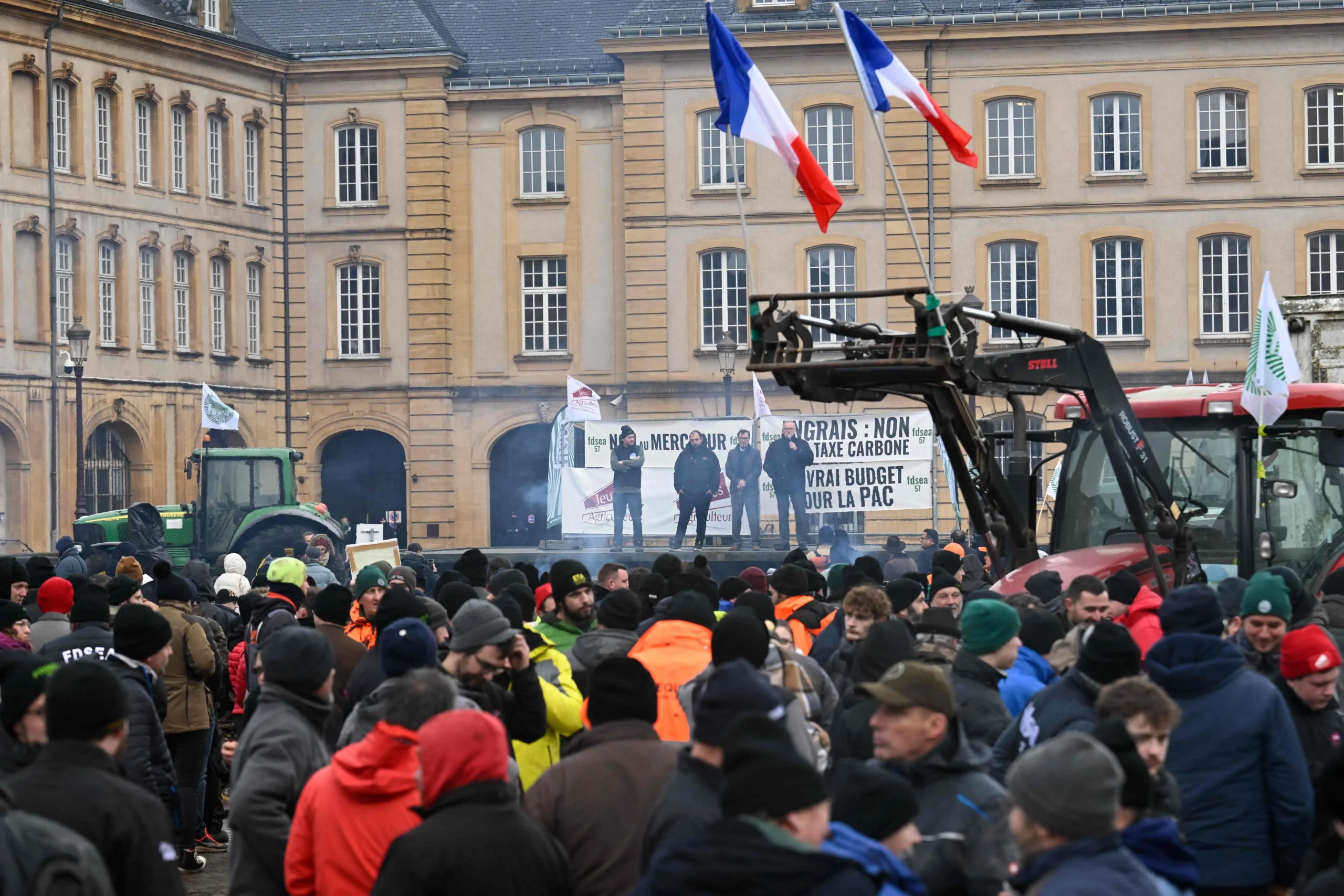
- An alliance between working-class organizations and small rural landowners to end the neoliberal Common Agricultural Policy (CAP) and free trade agreements, and to advocate for measures to transition toward sustainable agriculture and livestock farming that guarantee decent incomes, as well as healthy food that is affordable for the working class.
- For the return to public ownership of all privatized public services (education, health care, social services, public infrastructure, culture). A drastic increase in the budget for prevention, care, and protection against all forms of violence targeting the most oppressed sectors of our class.
- A program of this nature is incompatible with EU membership. In this globalized world, there is no solution at the national level. In opposition to the EU, we advocate for a Socialist United States of Europe that unifies the economy and the peoples of Europe on the basis of freedom and solidarity.
Let us build together a working-class, socialist, revolutionary, and internationalist party on the path toward the reconstruction of the Fourth International.
Fighting for these measures involves building revolutionary socialist organizations in every country, with the goal of building a world party of the socialist revolution.
We are not talking about electoralist and parliamentary parties—although we can and must participate in elections, using institutions as a revolutionary platform—but rather about parties to organize struggles and bring the working class to power, with the aim of changing the world.
We know that we are still very far from the party that humanity needs for the triumph of the socialist revolution. But we are convinced that there is no other path, nor any shortcuts to reach it, and that this is the most important task facing us revolutionaries today. That is why we invite all activists who struggle day in and day out in the various spheres of social struggle to join the ranks of the IWL—an international organization whose goal is the reconstruction of the Fourth International, together with all those organizations with which we share a common program and strategy.
Signed by:
PDAC—IWL Section in Italy
Corriente Roja—IWL Section in the Spanish State
Em Luta—IWL Section in Portugal


