
Elections in Hungary: Does Magyar’s victory point to major policy changes?
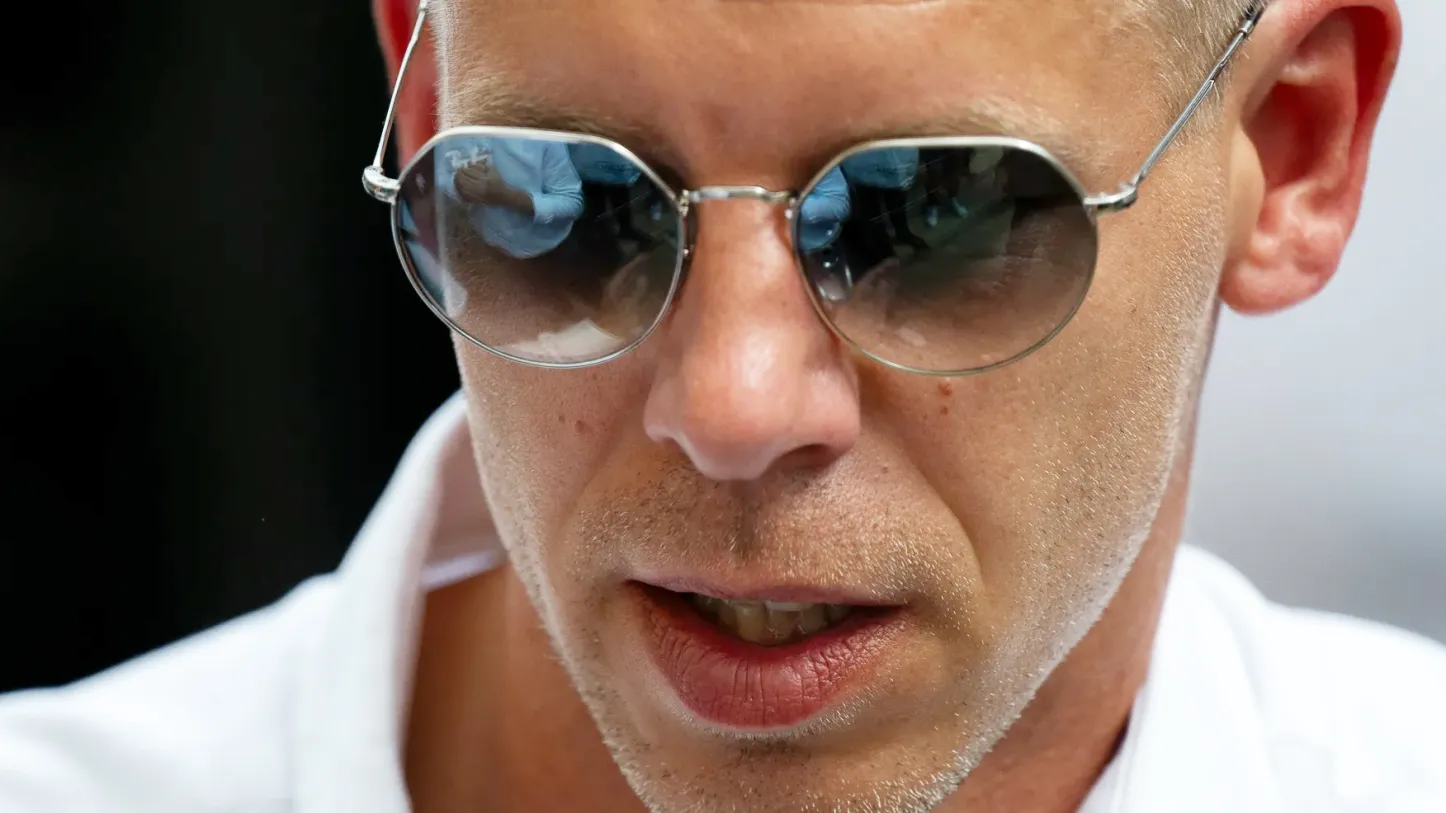
On May 9, the Hungarian parliament inaugurated Peter Magyar as premier, officially ending 16 years of rule by Viktor Orban and his Fidesz party. The election has implications well beyond Hungary as Orban has played a major role in right-wing politics globally. Not only has his nationalist offensive on democratic rights and institutions become a leading model for rightest projects, but it has helped to develop an international network of ethno-nationalist and far-right forces, including shared think tanks and media resources.
Project 2025, for instance, is not merely influenced by Orban’s work; his organizations helped craft it. In turn, J.D. Vance (and other MAGA figures) helped campaign for Orban—though in vain. On Election Day, Orban’s Fidesz party won a mere 38.6% of the vote to Tisza’s 53.2%
Making sense of Orban’s electoral defeat—what it means and how it happened—is important for all seeking to defeat rising reactionary movements around the globe. What enabled Orban to wage an offensive against democratic rights, immigrants the LGBTQI+ community, workers and other oppressed groups? What brought Orban down? What is replacing him? What does this mean for social movements in Hungary? What can we learn in the U.S. and elsewhere?
Orban’s dominance of the Hungarian political apparatus began in 2010, in the midst of a crisis of the neoliberal project brought on by the 2008/2009 financial crash. He directed outrage away from the capitalist class as such, and toward foreign elites, immigrants, progressive social values, the LGBTQI+ community, Muslims, Jews, and other scapegoats. He promised economic development for Hungary through greater independence from Western economic and political powers, national renewal and a rejection of progressive values and rights. He used a landslide victory to restructure much of Hungary’s political structure, including the constitution.
Orban developed relationships with powers outside the EU and NATO and made progress towards integrating Hungary into the supply chains of economic powers like Germany. Still, in a world-capitalist system wracked by competition, low profit rates, plague, war, and instability, these strategies could only go so far.
By 2026, Orban’s project had suffered through protracted crises. Facing sustained inflation and worsened prospects, workers had left the country in droves, depopulating Hungary by roughly half a million since 2011 (about 5% of the country!). Movements emerged to challenge Orban’s program, with mass protests in 2018 against the so-called “slave law” (which allows employers to mandate compulsory overtime, whose payment they can delay up to three years), mass protests and strikes by teachers in 2022, and unprecedented Pride marches in June of 2025.
Meanwhile, the corruption of Fidesz became more visible and onerous across classes, and estrangement from Western powers led the EU to block billions of euros in aid. For many, the regime’s rot was expressed vividly by child abuse in state institutions and the government moves to cover it up.
Peter Magyar, Hungary’s new premier, comes out of the higher ranks of Orban’s Fidesz party, starting in its youth organization and marrying (later divorcing) Judit Varga, the justice minister under Fidesz. Magyar left Fidesz and took over the previously obscure Tisza Party a mere two years ago.
Magyar has rhetorically distinguished himself from Fidesz primarily through promises to weed out corruption, restore democratic norms, and reconnect with Western powers in the EU and NATO. Second to these are promises to repair the health-care system and to renationalize and democratize higher education.
Magyar has committed to continue the same anti-immigrant policies promoted by Fidesz, even promising to go further than his former party by sending more troops to the Serbian border. On labor, Magyar (like Orban) refused to even meet with trade unions to hear their demands. He is quite close with heads of industry, several of whom have already been awarded government posts. Despite pledging to arrest the war criminal Benjamin Netanyahu if he came to Hungary, upon winning the election, Magyar made sure that Netanyahu was the first foreign head of state he spoke to by phone.
Magyar stayed away from the massive Pride march of June 2025 and avoided speaking about LGBTQI+ rights (for or against) during his campaign. In his acceptance speech, he said that “everyone can live with, and love, whomever they want, as long as they do not violate the laws and do not harm others”—a Janus-faced statement if ever there was one.
More than just being vague, Magyar here provides the pretext to violate the rights he professes to defend in the very same statement. His own former party has passed laws which outlaw pride parades and distribution of materials depicting LGBTQ people or culture under the guise of preventing harm to children. In Hungary today, defending the right of everyone “to live with and love whomever they want” means violating the law.
As independent Budapest-based scholar Anita Zsurzsan puts it: “The Magyar government represents not a break with Orbanism, but its reformulation: a more disciplined, EU-compatible, technocratic version of the same nationalist, exclusionary order. The project has changed hands, not foundations.”
The import of Orban’s program for working people is not the narrowing of decision-makers and exploiters to a smaller clique, or the orientation towards one or another great power, but the use of racism, nationalism, xenophobia, transphobia, homophobia and other reactionary ideologies to redirect anger away from capital and to atomize and discipline the working class.
For those who wish to be more than observers, it is important to draw a tricky but critical distinction. Orban’s defeat in the election does represent a temporary set-back for authoritarianism, in that it was made necessary by the exhaustion of Fidesz’s program and the rise of mass movements to oppose it. But the support that Magyar received from this opposition creates a setback for these movements and the working class, as they have handed much political credibility to a party committed to continuing the same social program as Orban—despite whatever tactical retreats it might make.
Consider the extent of the opposition. The labor protests of 2018 drew 15,000 at their peak and raised the question of general strikes. The 2022 teachers’ strikes brought some 40,000 out for an indefinite strike and 50,000 for solidarity protests. The Pride march of 2025 put between 100,000 and 200,000 on the street—in defiance of a law against Pride marches that the government promised to enforce using facial recognition software. After the action, the government backed down and declined to prosecute marchers.
And so, by the time of Orban’s electoral defeat, his power to divide and intimidate had already been fatally undermined. And the Queer community had already won more rights in action than Magyar would ever promise them.
Meanwhile, in order to support Magyar, the Hungarian Socialist Party withdrew from elections altogether. And so, Magyar was handed the same authoritarian apparatus and the same two-thirds majority as Orban, but without any visible left opposition. The only other parties in parliament are to his right, and unlike Orban, much of the left has endorsed him!
The movements to defend the rights of working people will need to find their bearings once again. If they do not do so quickly, they might find their good names dragged down with Magyar’s as his program meets the realities of today’s capitalist decay. After all, it is the left’s association with the neoliberal offensive in Hungary and elsewhere that created the openings for figures like Orban and Trump in the first place.
This experience reveals the power of mass movements to upend the power of authoritarians even when their position appears secure. It also puts in bold the need for independent working-class political organization that can help such struggles to grow in power, rather than be driven into the arms of those who wish to make of them a meal.
Photo: New Hungarian premier Peter Magyar.
First published here by Workers’ Voice


