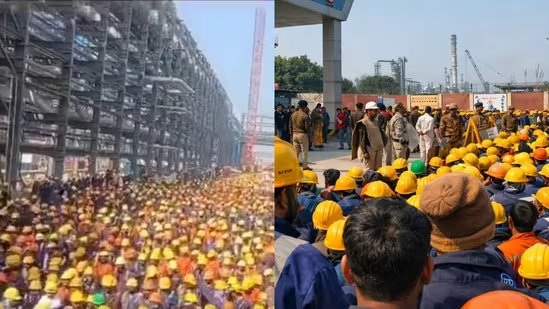
The struggle in Hasdeo forest
Proletarianization and environmental destruction
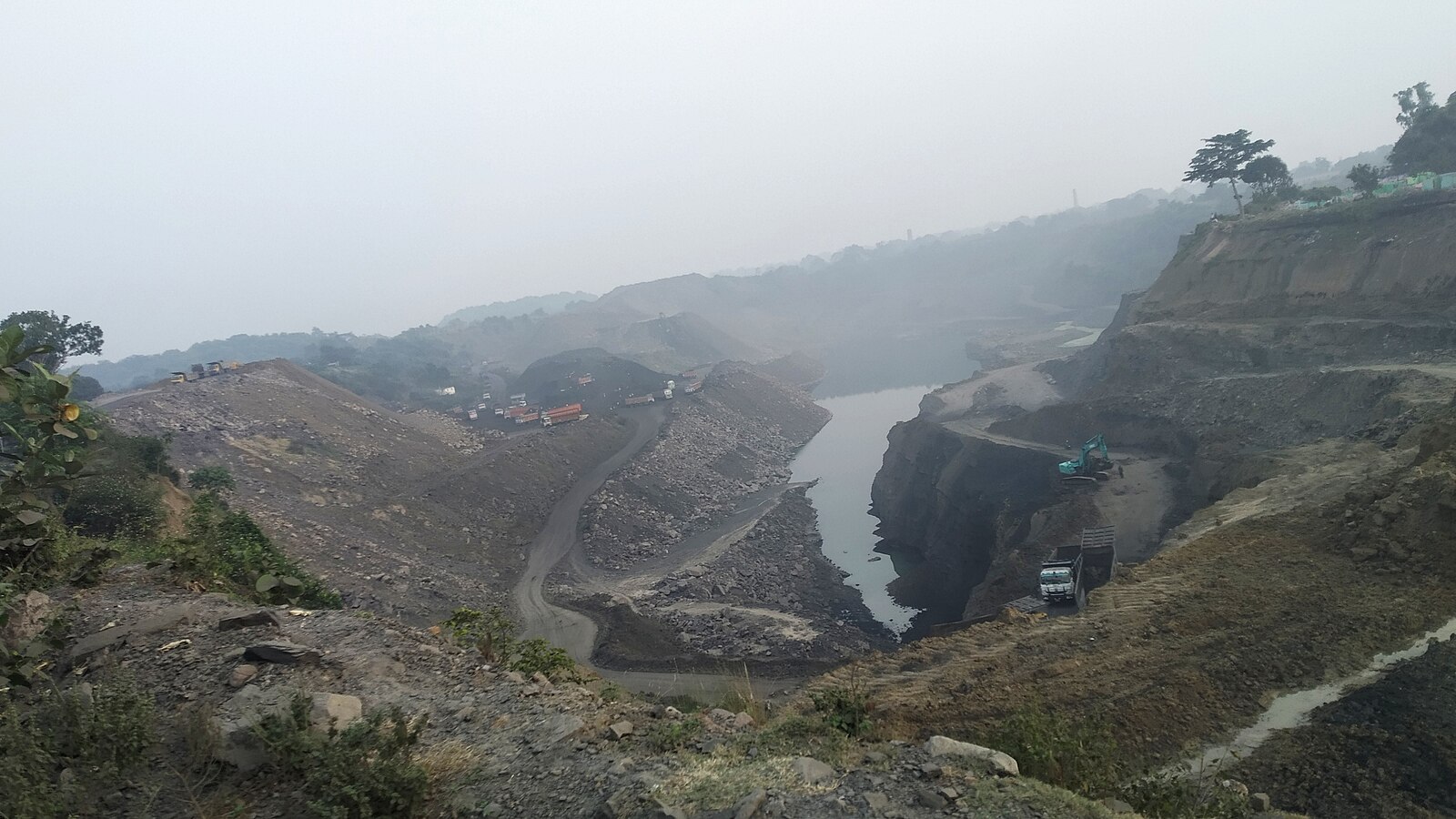
The region of Eastern and Central india is rich in the most critical minerals such as iron, coal, uranium and rare earths. Chattisgarh is one of India’s most mineral rich states, and it is also one of India’s poorest. Much of the state falls under areas of tribal land, inhabited by scheduled tribes like the Gond and Murias. For long decades the Indian state exploited them and their land for its mineral wealth, agricultural wealth and forest resources. The scheduled tribes remained among the poorest communities in India, even as their land fueled the rise of Indian capitalism, building the foundations of a modern nation.
After liberalization, the exploitation of tribal land and people only intensified. The state which had neglected and oppressed them, now turned its powers to enable the exploitation of the land and resources of the scheduled tribes, displacing and impoverishing them for the benefit of steel and mining companies. The persistent marginalization and oppression suffered by the scheduled tribes compelled them to take up arms under the leadership of the armed Maoist parties of India, known collectively as the Naxals.
There is a direct overlap of the spread of iron and coal resources, tribal land, and Naxal insurgency. After a decade and a half of brutal counter-insurgency warfare by the Indian state, the area affected by Naxalite insurgency has been reduced to just two districts. The final push against Naxalites launched by the BJP government under operation Kagaar preceded the latest scramble for resources.
Mining and steel companies had ravaged the forest lands of Chattisgarh’s tribal population, yet tribal populations have resisted bravely. Today, the point of confrontation is the Hasdeo forest of Chattisgarh Arand, known for long as the lungs of Chattisgarh. The Hasdeo Arand forests are home to a rich biodiversity of elephants, sloth bears, leopards and valuable water reserves. Several tribal hamlets home to a population of people belonging to the Gond and Araon tribes, as well as several smaller tribal communities. The forests are spread over 170,000 hectares over land rich in coal.
For long, the region has been subjected to intensive coal mining, producing about 5 million tonnes per annum. Reserves of up to 5 billion tonnes of coal are found in the Hasdeo-Arand coalfield. Despite opposition from the scheduled tribes inhabiting the forest, environmental activists and experts warning of the grave damage that expanding mining would cause, the government has decided in favour of allocating more mining rights. Over the last year alone, there have been several protests against proposed mining expansions, in Ambikapur, these protests have culminated into open armed confrontation with the police forces.
Proletarianization : The foundation of Indian capitalism
The media often talks about India’s ‘demographic dividend’, India having the largest population of young working age population in the world. Much of this population is yet to be incorporated into the ranks of the working class, many of whom have been rendered unemployed or survive off petty production or service. Crucially, most of this population lives in the countryside.
For Indian capitalism, this population represents a huge unexploited asset. The ‘demographic dividend’ is nothing but the potential pool of working class that Indian capitalism can exploit cheaply. To do it, the system must ensure that the youth have no option but to sell its labour power to survive, that requires the wholesale destruction of small scale production, farming, retail, and it requires the destruction of any support system which could keep communities rooted where they are.
The destruction of tribal lands for mining serves two purposes, securing the resources of the land and throwing the people who live off the land into the system of proletarianization. India’s scheduled tribes inhabiting the vast stretch of East-Central India count among the most vulnerable population, and a prime target of this process.
Chattisgarh has one of the worst poverty rates in the country. Nationally, the scheduled tribes of India suffer one of the worst poverty rates in the country, at nearly 50%. This state is one of the richest in minerals, yet remains trapped in poverty. Indian and foreign capitalist companies exploit tribal land for resources resulting in the displacement of hundreds and thousands from their ancestral land, the destruction of traditional support structures, leaving them no option but to become workers in cities, often in the most exploitative sectors such as construction.
India is the fastest growing major capitalist economy, yet most of the population continues to live in poverty. For the last thirty years, the process of proletarianization has intensified. Millions of scheduled tribes have been displaced as a result of Indian infrastructure and mining projects. ‘Liberalizing’ reforms allowed greater exploitation of the working class, the deeper penetration of foreign capital, and the growth of Indian multi-national corporations. Fueling this rise is the ruthless destruction of small scale production and tribal land.
Millions have been forced to leave the countryside for work in the cities, or find work in small industrial units spread near urban suburbs. To continue this growth, Indian capital is hungry for resources. All eyes have turned to the resource rich states of Chattisgarh, Jharkhand, Orissa and West Bengal, regions which have most of India’s scheduled tribe populations.
Scramble for resources:
Chattisgarh has 4 billion tonnes of Iron ore reserves, accounting for 19% of the total iron ore reserves in India. Four states along Eastern and Central India account for 4/5th of all iron ore reserves in India, Chattisgarh, Jharkhand, Orissa and Andhra Pradesh. This region also holds much of India’s coal and uranium deposits, most of which again sit on tribal lands, or adjacent to tribal lands. The states also account for a bulk of India’s forest cover and biodiversity.
As Indian capital emerged, so did its hunger for resources. Lands belonging to tribes inhabiting these areas for millennia were now a target for mining companies, steel companies and power companies. Coal fuels most of India’s power needs, even today while much of the world turns to renewables, ensuring these states and the scheduled tribal population of these states, would continue to be at the receiving end of displacements caused by large scale mining projects.
India has grown as one of the largest steel and coal producers in the world, much of it on the back of iron mined in Chhattisgarh, Odisha and Jharkhand. Mega mining projects here have caused immense environmental harm as well as displacement of millions. The upending of tribal life and livelihoods has had the effect of creating a large pool of workers for India’s expanding cities, who have no other means of sustaining themselves, than becoming cheap labour.
This scramble for resources went hand in hand with a commodity boom in the early years of the 21st century, and fueled the rise of Naxalite insurgency. To their credit, the armed wing of the CPI(Maoists) were one of the few to mobilize and arm tribal populations against the terror tactics of the Indian state. The stiff armed resistance of these communities did not deter the Indian state, even if it may have slowed down the pace of mining expansion for a while.
The struggle of tribal populations culminated in the passage of the Forest Rights Act in 2006, a landmark legislation that accorded rights of tribal populations and those who lived off the resources of Indian forests to that land. The state could no longer exercise arbitrary control over the land rights of scheduled tribes. Despite this measure, the Indian state and corporations found ways around protections to ensure the steady expansion of mining.
It was under the Congress government that Operation Green Hunt was initiated, combined with a large scale crackdown on whatever the state declared to be “Naxals”. This gave the state a wide mandate to hunt down any intellectuals who stood in solidarity with fighting tribal populations against the wishes of mining companies. The conflict between the capitalist state and tribal populations of East and Central India became an undeclared war, largely fought by India’s paramilitaries against the insurgents of the Maoists. The so-called red-belt was the frontline of this war.
Today Naxal affected zones have shrunk to two or three districts around Eastern Maharashtra. The armed resistance of tribes have largely been done away with, and under the Modi government, hard won rights and protections are being slowly done away with. Indian capitalism is not immune to the crisis affecting capitalism as a whole, across the world there has been a slowdown, a decline in the rate of profit. Indian capitalism’s solution is the same that every capitalist country has undertaken, expand and deepen the penetration of capitalism, intensify proletarianization, and expand the exploitation of resources.
We are witnessing the new phase of a very old scheme of exploitation, where the scramble for resources continues and intensifies, once again this has pitted tribal populations against the armed forces of the state.
The history of persecution of tribal populations:
The region comprising the Chotanagpur plateau and Eastern Ghats accounts for the most mineral rich region of India. For centuries, this region remained dominated by autonomous tribal communities, with large centralizing empires barely having any sway over it. This changed when the British extended its sway over this region.
The tribes of this region, chiefly the Gonds and Santhals, bravely resisted British colonialism and they were brutally punished for it. The tribal population were subjected to indentured labour for tea plantations in the Himalayas, thousands were deported and many died en route. The subjugation of the tribes following the crushing of the Santhal rebellion opened up this region for capitalist mining. For the first time, the Gonds, Santhals and others now faced a threat to their very existence, for mining challenged their link to the land, critical to their very being.
Over the course of the mid to late 19th century, the populations of this region were exploited for supplying cheap indentured labour for British plantations along the Himalayas and beyond. From the early 20th century onwards mining was intensified in the region, steel production was established, pioneered by the Tatas who established the integrated steel plant in Jamshedpur, modern day Jharkhand state.
The tribal populations suffered displacement terror and incessant violence, this reality remained unchanged even as India gained independence. The British bureaucrat and state forces were simply replaced by their Indian counterparts. Independent India kept the colonial army and police, virtually unchanged. While they served foreign masters before independence, after independence they served Indian capitalists. Their aim was indistinguishable from the British, to exploit tribal land and people for the enrichment of a handful of oligarchs. The Tatas pioneered this exploitation, others today have carried it forward.
Today, the Modi government is hastening the exploitation of tribal land, bringing the so-called war against Naxals to a bloody close, and weakening diluting protections till they become more worthless than the paper they’re written on. Under his leadership, Indian and foreign mining companies have gained unprecedented freedom to exploit tribal lands.
The Modi government and Indian environmental laws
Since coming to power, Modi and the BJP went on an all-out war against environmental restrictions. Mining clearances were made easier, forests were either denotified or cleared for mining, even as the Modi government claimed false victories, such as the expansion of forest cover. In truth, the new government has changed the definitions of forests to include plantations.
On paper funds for afforestation has increased fivefold, but in reality most afforestation projects do not exist. At the same time, environmental clearances have increased from 577 in 2018, to 12496 in 2022. The time required for attaining an environmental clearance has also decreased from 600 days to 162, giving less time to conduct a proper assessment of environmental impact for projects.
Since coming to power, the Modi government has fast-tracked several industrial and mining projects in sensitive land. The government has sought to undermine environmental protections and the rights of forest dwellers to favour capitalist land-grabbers. Projects have been allowed to continue without prior environmental assessment or consultation.
The most damaging move however, would be in the amendments to the Forest Conversation Act (1980). The new Forest Bill seeks to reclassify forests, extending protection to only those forests notified in the records as on 25th October 1980. If the bill passes into law, a third of India’s forests may lose any protection. It further dilutes protections for forests, removing the requirement for consultation with Forest dwelling tribes, and allowing eco-tourism projects on sensitive land. Furthermore, the protection for sensitive forests would be altogether removed for land within 100 km of international borders.
The government’s dismal track record on environmental protection continues, with the recent ruling of the Supreme Court on the Aravalli hills. The state representatives submitted an absurd criterion for the protection of the hills, confining the definition of hills to only those with 100 mts of height, ignoring the unique and ecologically sensitive geography of the Aravalli range. What is set to be done to one of the oldest mountain ranges is already being done with the forests in Hasdeo.
Hasdeo and the world – the bloody global scramble for resources
It must be understood what is happening in India is not unique. World over, environmentally sensitive zones are under threat, indigenous and tribal populations are subjected to constant terror and violence. Capitalism states everywhere are diluting environmental protections to ease the exploitation of unexploited protected land.
Capitalism is in crisis now, and in such a state it seeks new avenues to keep the rate of profit from falling. That means only one thing, the intensification of exploitation of land and labour. The capitalist thirst for resources is unquenchable, it has brought war to Africa, climate catastrophes across the world, and now a war in the Americas.
This scramble for resources, be it gold, iron, coal, oil, or rare earth minerals, is one of the most dangerous and toxic manifestations of capitalism. We must recognize that this is not a matter of policy alone, but a feature of the capitalist system.
There is no struggle to save the environment that does not also call for the abolition of capitalism.
DOWN WITH ADANI ! DOWN WITH CAPITALISM !
SAVE THE PLANET ! DESTROY CAPITALISM ! BUILD SOCIALISM !
FOR TRIBAL AND INDIGENOUS RIGHTS !
References
https://www.youtube.com/watch?v=MUjbTkKxlmM
https://www.instagram.com/reel/DRzxDnaDENm/
https://www.rightsofnaturetribunal.org/cases/hasdeo-arand-india/
https://101reporters.com/article/Society/Poverty_on_rise_in_Chhattisgarh_Tough_Times_For_Tribals