General strike in Portugal: The working class responds to the government’s attack
Just like Lula in Brazil, the PSD government is trying to push through labor laws that reduce workers' rights and living conditions. Now in Portugal, workers are fighting back.
In Portugal, the main trade union confederations, CGTP-IN and UGT, have called a general strike for December 11, 2025. This is the first joint strike by these unions since 2013, a clear sign of the degree of mobilization and dissatisfaction among workers in the face of a profound attack on their rights.
The motto of the strike is the labor reform proposal made by the government of Luís Montenegro and the Partido Social Democrata (PSD, Social Democratic Party). The reform, dubbed “Job 21,” (Trabalho XXI) includes changes to more than 100 articles of the Labor Code. The argument for this reform is based on the discourse of ‘modernization’ of the economy, increased productivity, labor market flexibility, “competitiveness,” and, according to the prime minister, “more economic growth.”
But for unions and workers, the proposal represents just the opposite: more insecurity, more exploitation, and fewer rights. The proposal includes extremely harsh measures, such as the return of individual time banking, allowing for work weeks of up to 50 hours; the extension of fixed-term contracts, which can last up to three years; and new processes for layoffs, including mechanisms that reduce labor protection. It also affects parental rights, reducing guarantees for workers with children, and tightens the rules on strikes by expanding so-called “minimum services”. In this context, the general strike is an indispensable method of resistance resistance.
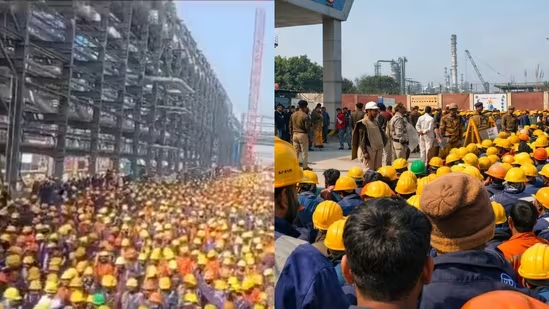
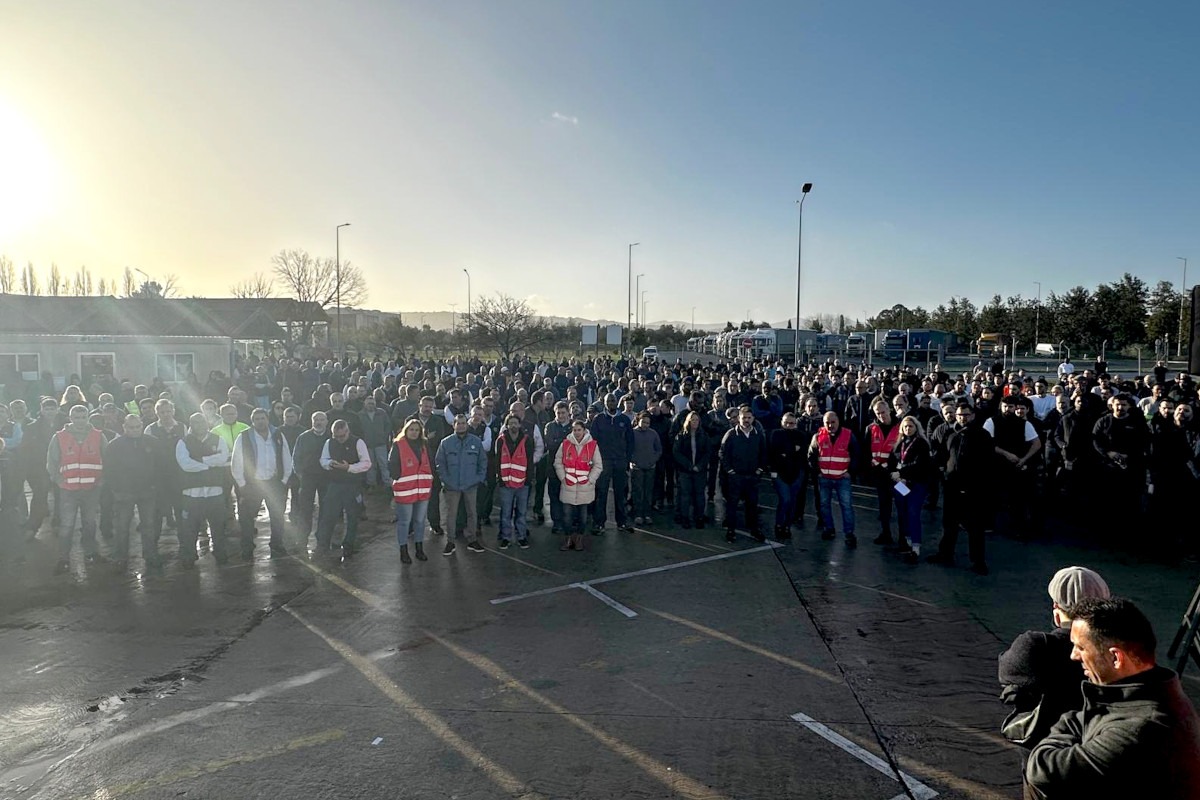
The general strike is expected to have a strong impact on essential sectors such as health, education, transportation, waste collection, and municipal services. Important sectors of the working class have also joined the struggle, as approved in a meeting by workers at Volkswagen, the country’s largest factory.
See this photo on Instagram
A post shared by Em Luta (@em.luta.lit)
Political crisis and the rise of the far right
The outbreak of this offensive against labor rights cannot be understood without looking at the recent political situation unfolding in Portugal. In May 2025, legislative elections were held following the fall of the government, the third legislative election in less than four years.
The right-wing coalition, with the PSD and Centro Democratico Social (CDS, Democratic Social Center), led by Luís Montenegro, emerged victorious with about 32% of the votes and 91 deputies, an advance over 2024, but still without an absolute majority. At the same time, the far right, represented by Chega (CH, lit. “Enough”), grew significantly, winning around 23% of the votes and becoming the second largest parliamentary group.
This situation of instability, with a right-wing government and a strong far-right presence in parliament, paves the way for projects such as “Trabalho XXI” and attacks on immigrants’ rights. Since its formation, the government itself has announced that it would prioritize “flexibility” policies.
From the “Troika” crisis to today’s attacks
To understand the gravity of the moment, it is useful to take a step back in history. Just over a decade ago, with the Troika’s adjustment program (a commission formed by the International Monetary Fund, the European Central Bank, and the European Commission to impose reforms), Portugal experienced harsh austerity measures, losses of rights, precariousness, unemployment, and wage squeezes, all as part of a plan to contain debt and neoliberal restructuring.
This period gave rise to the Geringonça government, from 2015 to 2019, composed of the Partido Socialista (PS, Socialist Party) and supported by the Bloc Esquerda (BE, Left Bloc) and Partido Comunista Português (PCP, Portuguese Communist Party), which promised to turn the page on austerity but maintained all the structural reforms of the Troika period. However, the decision to form a government without breaking with the bourgeoisie to promote structural change led to disappointment among broad sectors of the population. This erosion and the perception that the Geringonça did not break with neoliberal logic, together with the economic crisis, unemployment, and precariousness, contributed to creating fertile ground for the rise of the far right, represented by Chega, which capitalized on discontent and dissatisfaction with “old politics.” It is no coincidence that both BE and PCP have suffered successive electoral defeats.
See this photo on Instagram
A post shared by Em Luta (@em.luta.lit)
Labor reform in Brazil, “Trabalho XXI” in Portugal: the same logic of exploitation
The battle against the 6×1 schedule in Brazil (six day workweeks), the ultimate symbol of overexploitation, the degradation of living conditions, and the employer’s logic of squeezing every last minute out of the worker, is part of the same capitalist offensive that today attacks workers’ rights in Portugal. Here, after years of reactionary labor reforms, unlimited outsourcing, and precariousness, Lula’s big tent government keeps the core of the 2017 reform intact.
In both countries, governments serving capitalism are trying to impose grueling working hours, flexibilization, and loss of rights to increase profits amid the global crisis of the system. The capitalist crisis knows no borders: the bosses, the ruling classes, and the governments at their service are carrying out an international offensive that pushes workers into increasingly brutal conditions. That is why strengthening solidarity among workers, sharing experiences, and coordinating struggles is more urgent than ever.
The resistance against the 6×1 scale in Brazil and the building of the general strike in Portugal reveal the same need: to unify the working class to confront the capitalist offensive and build a revolutionary and socialist alternative.