
What Does Unconditional Support for the Palestinian Liberation Struggle Mean?
How do we defend Palestine unconditionally under bourgeois democracy?
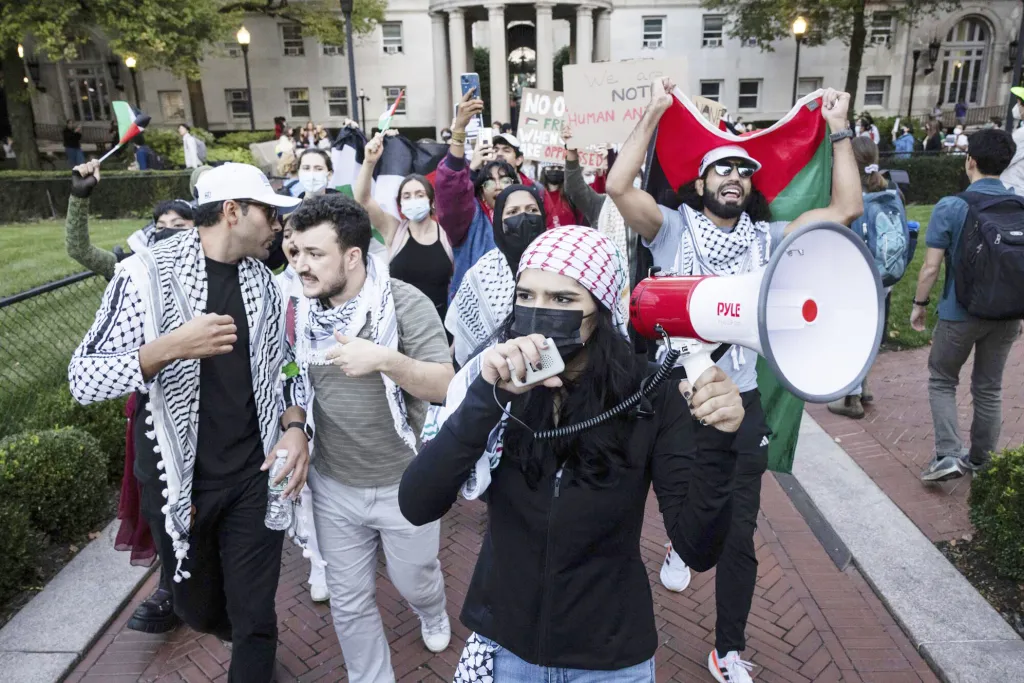
Over the past three years, we have witnessed an intensification of the criminalization of the Palestine solidarity movement on an international scale. This offensive is not limited to Western imperialist centers: it is also advancing in countries like Brazil and Argentina, where governments, parliaments, and institutions have been adopting repressive measures—ranging from the persecution of activists to attempts to equate anti-Zionism with anti-Semitism and to restrict campaigns like BDS.
This dynamic cannot be understood as a purely “national” phenomenon. It is a coordinated offensive driven by imperialist pressure, particularly from the United States, which seeks to ensure the maintenance of Israel as a strategic colonial enclave in the Middle East. Within the framework of inter-imperialist rivalries, the defense of Israel becomes a central pillar of U.S. foreign policy, which translates into direct and indirect pressure on dependent states and allies to repress solidarity with the Palestinian struggle.
In light of this, an immediate strategic question arises: how can we defend unconditional support for the Palestinian liberation struggle—including the right to resistance—within the space of bourgeois democracy, especially when the government seeks precisely to suppress that support? The answer lies neither in adapting to the rules of the game nor in an abstract rejection of the legal arena. It is possible—and necessary—to use the very contradictions of bourgeois democracy against it. How can revolutionaries and those in solidarity with the Palestinian struggle use the formal freedoms of bourgeois democracy—freedom of speech, assembly, and the press; due process of law—to defend the right to self-determination, which includes, as the UN itself recognizes, “the struggle by all available means, including armed struggle”? This is the central contradiction we face. On the one hand, liberal democracies have been passing laws that equate anti-Zionism with anti-Semitism, criminalizing BDS, banning slogans like “from the river to the sea,” and persecuting activists. On the other hand, we know that abandoning the legal arena means abandoning the working class and the youth to repression without defense. This article argues that it is possible—and necessary—to use the mechanisms of bourgeois democracy against the very limits of that democracy, in a strategy of legal defense that exposes the system’s hypocrisy and prepares the class for future confrontations.
Unconditional support for liberation struggles
The historical position of Marxism has been to give unconditional support to the national liberation struggles of the oppressed. Unconditional support for liberation struggles—which does not mean uncritical support, much less political support for their leaderships—stems from a materialist analysis of the nature of states and the class forces at play.
Regrettably, this position is abandoned by various leftist or socialist currents, especially in the case of Palestine, but also in Ukraine. In the case of Palestine, this has to do with the racist, pro-imperialist, and colonialist nature of the State of Israel, which is engaged in a genocidal war against the Palestinians, and with its reactionary role in the region.
Any defeat of Israel and any victory of the Palestinian and Arab masses against it can only have one progressive outcome: the strengthening and acceleration of the struggles of the oppressed in the region until total liberation.
Unconditional support, however, must not be confused with a refusal to act within the realm of bourgeois institutions. On the contrary: Marxists have always used parliaments, courts, and formal freedoms as platforms to expose the nature of the enemy and defend the oppressed—not because they believed in “bourgeois democracy,” but because the struggle for immediate democratic rights is an inseparable part of the struggle for revolution.
In the case of Palestine and other national liberation struggles, it is useful to expose the sheer hypocrisy of the UN and Western liberal ideology. The 1990 UN General Assembly Resolution on the right of peoples to self-determination affirmed: “the legitimacy of the struggle of peoples for independence, territorial integrity, national unity, and liberation from colonial domination, apartheid, and foreign occupation by all available means, including armed struggle.” [1]However, the UN was the very same entity that created and legitimized the State of Israel in the first place, and which has continually defended its existence. Furthermore, the countries that control the UN are the first to criminalize, by all means, the Palestinian resistance and its supporters. Similarly, we must denounce the fact that, despite the ICC’s indictment of Israel for its ongoing genocide and war crimes, Western imperialism’s support and aid to Israel have not diminished.
Criminalization of the Resistance and Legal Defense
Unconditional support begins with actively fighting against the criminalization of the resistance movement. This is realized through a commitment to defending all those involved in the struggle for justice in Palestine, everywhere, but especially in imperialist centers, where the rights to freedom of expression and assembly are increasingly restricted and new laws and regulations are being implemented to criminalize the growing solidarity movement. It also means opposing calls to condemn the actions of the Palestinian resistance and the demand that they adopt nonviolent tactics in the face of a violent state condemned for war crimes and genocide by the UN and international law. Such demands reinforce old colonial, Orientalist, and Islamophobic stereotypes that portray resistance movements against colonial violence as “savage,” “uncivilized,” and “terrorist.”
The work of defending against repression is best carried out through united-front campaigns to defend democratic rights and by drawing on the policies tested and developed by the revolutionary movement over the past century.
As James Cannon argued in Socialism on Trial (1965), it is in our interest to use “defensive formulations,” that is, to show “that the bourgeoisie takes the initiative in violence and does not allow for peaceful change,” because, by refocusing on the social and political origins of violence in the capitalist state and explaining the political nature of the struggle, it is possible to build the broadest support for our struggle among workers, educate new layers of the population on the question of Palestine, encouraging them to join our movement, and expose the hypocrisy of liberal democracies. [2]Defensive formulations also helped prepare workers for future clashes with the state: “We advise workers to bear this in mind and prepare to defend themselves against the violence of the reactionary and outdated class minority.” [3]That is, they help us train our movement in the working class’s methods of self-defense, to move beyond spontaneous and individual initiatives and, instead, implement broad, democratic, and collective preparation for self-defense measures.
This approach to defensive formulations is the key to acting within the framework of bourgeois democracy without falling into either reformism (believing that laws can deliver justice) or sectarianism (rejecting any legal engagement). When we defend an activist imprisoned for shouting “from the river to the sea,” we do not ask the judge for permission to exist. We demonstrate, based on the very principles of the defense, that repression is selective, that freedoms are formally guaranteed but materially denied to Palestinians and those who stand in solidarity with them; and, in doing so, we educate the working class about the class-based nature of the state.
We must denounce the false equivalence
The content of our defensive propaganda stems from the denunciation of the false equivalence between the actions of the oppressed and the oppressor and, worse still, the campaign that portrays the victim as the aggressor. These narratives are created by imperialist governments and disseminated by the corporate media and certain liberals on the left. The task of Marxists is precisely to explain that the actions of October 2023 were fundamentally defensive, even though the Palestinian resistance appeared to be the tactical “initiator” of armed violence. This is because the structural violence of the colonizer’s colonialism—the siege, the expropriation of land, the daily killings, the denial of basic rights—already constituted a state of permanent war imposed on the Palestinians.
Even before October 7, Gaza was undergoing a methodical strangulation: since 2007, Israel has controlled the airspace, territorial waters, border crossings, population registration, and access to drinking water, food, electricity, and medical care. This blockade, denounced by human rights organizations as a collective siege and mass punishment, had already turned Gaza into the world’s largest open-air prison.
As Leon Trotsky recalls in his writings on World War I: “A defensive war is one waged by an oppressed nation against an oppressor nation. Every national war, when it is a matter of self-defense against a foreign enemy, is just from the point of view of the oppressed. But a war is never defensive for the ruling class; it is always imperialist. The decisive question is not who fired the first shot, but who benefits from the existing order and who is fighting to break it.” [4] Therefore, refusing to reduce resistance to an abstract act of “initial violence” is to understand that the asymmetry lies not only in military means, but also in the very right to exist.
The famous scene from Gillo Pontecorvo’s The Battle of Algiers (1966) captures with surgical precision the moral hypocrisy that always accompanies colonial wars. When a journalist asks the revolutionary leader Ben M’Hidi if it isn’t “cowardly” to use women’s baskets to hide explosives that kill civilians, he replies: “And don’t you think it’s even more cowardly to drop napalm bombs on defenseless villages, where there are a thousand times more innocent victims? Of course, if we had your planes, it would be much easier for us. Give us your bombers and you can keep our baskets.” This exchange exposes the false symmetry that the dominant discourse attempts to impose: on one side, the “civilized” violence of the State, with its armies and arsenals of mass destruction; on the other, the “savage” or “terrorist” violence of the colonized, who use the primitive means at their disposal—baskets, bandages, slingshots, or homemade rockets. The question of the “legitimacy” of methods is never posed to those who possess the technology of industrialized death, only to those who resist with scraps and leftovers. As Ben M’Hidi makes clear, the fair exchange would be: the right to symmetrical self-defense. As long as that is not possible, demanding that the oppressed abandon their “baskets” while the oppressor retains their “bombers” is not pacifism: it is complicity with domination.
Giving unconditional support to Palestinian liberation efforts means opposing any demand that conditions or restricts solidarity with the oppressed’s methods of struggle, especially when such calls are nothing more than the amplification, within the movement, of the ideological war that the imperialist oppressor wages against the oppressed.
Defending the right to self-determination means defending it “by all available means” in Western parliaments and courts; it means, in practice, fighting against the criminalization of solidarity. It means introducing bills to overturn anti-BDS laws, preventing the adoption of the IHRA definition in universities and public bodies, and demanding compliance with the decisions of the ICJ and the ICC—not because the international legal system is just, but because exposing its selectivity (Israel tried and unpunished) is a weapon of agitation.
Acting in the cracks of bourgeois democracy: tactics for solidarity
The practical question arising from all this is: what to do today, as repressive laws advance in the imperialist centers? The answer has four interrelated components.
1. Aggressive and educational legal defense of our rights
It is not just about posting bail or hiring lawyers. It is about using every trial as a public platform to explain why solidarity with Palestine is not a crime and to organize an independent movement of support in the streets and in the workplaces. To this end, Cannon’s tactic of “defensive formulations”—which consists of turning the accused into the accuser of the state—helps to politicize and broaden the struggles. When an activist is prosecuted for “apology for terrorism” or for using the slogan “from the river to the sea,” the defense must demonstrate that the true state terrorism is that of Israel—supported by the West with weapons, funding, and diplomatic cover. Every acquittal, every reduced sentence, every favorable ruling is a crack in the wall of repression and a lesson for the working class on how the “legal” system protects the oppressor and punishes the oppressed.
2. Broad and unified campaigns for democratic freedoms
The best defense of solidarity with Palestine is the defense of freedom of expression for everyone. That is why it is tactically correct to form broad fronts with liberals, unions, and human rights organizations around concrete demands: rejecting the IHRA (International Holocaust Remembrance Alliance) definition in universities and public institutions; preventing the passage of anti-BDS laws; overturning convictions of activists; defeating bills that equate anti-Zionism with anti-Semitism. These campaigns demonstrate, in practice, that the common enemy is not “the Jews,” but the racist State of Israel and the censorship that protects said state. As recently demonstrated in New York (revocation of the executive order adopting the IHRA) and in New Jersey (defeat of bill A3558), it is possible to win battles within the realm of bourgeois democracy when broad coalitions are built.
3. Denouncing the double standards of bourgeois democracy
Bourgeois democracy applies the law selectively.
We must denounce the fact that the state does not comply with its own laws and that Western governments do not treat Russia and Israel with the same rigor: if there are sanctions against Russia for the invasion of Ukraine, why are there no sanctions against Israel for genocide and occupation? We must also highlight the need for national courts to comply with the decisions of the ICJ and the ICC.
In the case of Palestine, the situation is very serious. The truly powerful anti-Semites are rarely prosecuted, while anti-Zionists are criminalized through false accusations. Michael Ferro (U.S.), former president of Tribune Publishing, was recorded speaking of a “Jewish cabal” that controlled Los Angeles.
He faced no criminal charges. Jürgen Möllemann (Germany), vice-chairman of the Free Democratic Party, campaigned with explicit anti-Semitic statements; prosecutors dismissed the complaint against him. Elon Musk (U.S.) publicly endorsed an anti-Semitic conspiracy theory (according to which Jewish communities promote “hatred against whites”), was condemned by the White House, saw his X platform flooded with hate speech, and threatened to sue the Anti-Defamation League (ADL) for calling out this rise in anti-Semitism — but has not faced any criminal charges.
Meanwhile, Palestinian activists and their allies in Europe and North America are routinely accused of anti-Semitism for expressing solidarity with Palestine, while actual white supremacists do not face the same consequences. College students in the U.S. and the U.K. have been suspended or lost their jobs for protesting the genocide in Gaza. Academics in Europe have been fired for supporting the academic boycott of Israel (BDS) or for criticizing Zionism, without any evidence of anti-Semitism. This selectivity reveals the class character of bourgeois justice.
Conclusion
Defending the Palestinian people’s right to self-determination—by all means, including armed struggle—within the framework of bourgeois democracy is a contradictory task, but not an impossible one. It requires theoretical clarity to avoid falling into reformism (believing that laws can deliver justice) or sectarianism (rejecting any legal compromise). It requires courage to use the platforms of the established order against it. And it requires organization to transform every defensive victory into a springboard toward the mass offensive.
The greatest contribution that solidarity activists in imperialist centers can make to the Palestinian resistance is twofold: dismantling Israel’s material advantages (through BDS, pressure on unions, and the interruption of the flow of arms) and dismantling its political advantages (through the exposure of the colonial truth of Zionism). The struggle for freedom of expression, for the right to boycott, for the rejection of the IHRA, and for the overturning of convictions against activists is not a struggle parallel to Palestinian solidarity—it is an integral part of it. Defending the democratic rights of workers and the oppressed today means defending the possibility of organizing, tomorrow, the material solidarity that can, in fact, change the balance of power.
To this end, it is necessary to develop forms of mass mobilization led by the working class itself—that is, through the class’s autonomous and independent organization, via assemblies, political strikes, occupations, active solidarity committees, and direct actions that do not depend on bourgeois institutions (the state, parliaments, courts) or on the traditional union or party bureaucracy. Only the working class, organized by itself, can impose, from the bottom up, an end to the hypocritical selectivity of international law and the complicity of Western governments.
References
[1] UN General Assembly Resolution on the rights of peoples to self-determination and to struggle by all available means, 1990.
https://www.un.org/unispal/document/auto-insert-184801
[2] James Cannon, Socialism on Trial, 1965.
[3] James Cannon, Socialism on Trial, 1965.
[4] Trotsky, War and the International, 1914.


