
The problem is not just Netanyahu, but the colonial and racist State of Israel
While the spotlight was on the electoral process in Israel—and now on the gridlock following the vote recount—the Zionist occupation forces were pressing ahead with ethnic cleansing, genocide, and apartheid against the Palestinians. This was not merely a smokescreen, with all eyes fixed on the elections to decide who would govern a colonial and supremacist state built on crimes against humanity. It was also an attempt to secure the votes of the settlers.
On October 27, election day, the West Bank had already been facing an intensified siege against the Palestinian people for four days, with the Zionist occupation forces blocking access to neighborhoods, villages, and cities, raiding refugee camps, carrying out new home demolitions, and conducting arrests and expulsions.
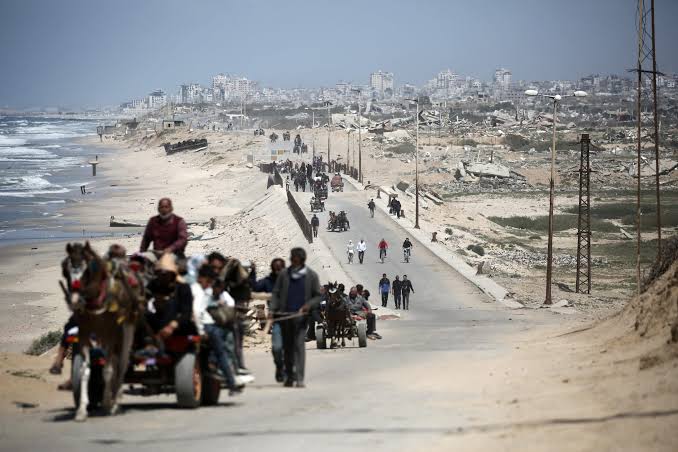
In Gaza, blood was also shed—including that of children—on that day, and the killings continued in the days that followed. Dozens of victims continue to be added, day after day, to the more than 80,000 Palestinians killed in the ongoing genocide.
“Alarming Developments”
The advance of ethnic cleansing in the West Bank led the director of the United Nations Relief and Works Agency for Palestine Refugees (UNRWA), Roland Friedrich, to express on October 27, in a post on X, his “deep concern over the situation in Hebron.”
Al-Khalil, as it is called in Arabic, is the largest city in the West Bank, with a population of 700,000 across its entire province. According to Friedrich, it was facing a “near-total blockade that severely restricted residents’ freedom of movement and access to essential services.”
Friedrich added in his post:
“These events bring to mind alarming echoes of the mass displacement observed in the northern occupied West Bank in early 2025, where more than 34,000 Palestinian refugees—from the Jenin, Tulkarem, and Nur Shams camps—remain forcibly displaced more than a year later. […] These events are also taking place against the backdrop of the Knesset (Israeli Parliament) elections, while tensions throughout the occupied West Bank remain high.”
The severe siege of the West Bank lasted ten days, beginning on October 23. Under the pretext of responding to an act of resistance against Zionist occupation soldiers—as is customary—Israel resorted to collective punishment, which, as Friedrich acknowledged in his publication, is illegal under international law.
In the last few days alone, according to Al Jazeera, more than 5,000 Palestinians from Al Khalil were displaced.
It is always worth remembering that peoples subjected to colonization, such as the Palestinians, have the legitimate right to resist by all means, and that the occupying power—in this case, Israel—has no right to self-defense, as recognized by the United Nations itself.
It Is Not a Question of Government
As the situation worsened day by day, however, Palestinian lives did not grab the same headlines. The focus was on whether the genocidal Benjamin Netanyahu, the Zionist prime minister, would be defeated or not.
The political gridlock continues, with his coalition having won 53 seats, compared to 48 for the opposition led by occupation general Gadi Eisenkot, one of the architects of the Dahiya Doctrine—the scorched-earth strategy developed in Lebanon’s Dahiya neighborhood in 2006 and applied in the ongoing genocide in Gaza.
As shown in an article by Yoav Haifawi republished by the IWL-FI, titled “The Knesset Elections Expose the Crisis of Israel’s Apartheid Regime,” Eisenkot’s main criticism of Netanyahu—as well as that of his allies—is that he failed to “crush” Hamas in Gaza. And the promise of this opposition is greater militarization, including mandatory conscription of ultra-Orthodox Haredi Jews.
Neither of the two racist leaders—and it is ironic that the media portrays Eisenkot as a “centrist” alternative who would supposedly be better for the Palestinians—achieved the majority needed to form a government.
The question now is whether the so-called opposition to Netanyahu will manage to form a majority by accepting an alliance with the Arab parties, which won 19 seats and have “no real influence,” as Yoav Haifawi also details in another article titled “The Palestinians of ’48 and the Israeli Apartheid Elections.”
It should be noted that Yoav is a member of the left-wing Palestinian organization Abnaa el-Balad (“Sons of the Land”), which maintains a stance of boycotting the institutions of the Zionist state and does not recognize the elections to the Zionist parliament, the Knesset.
This consistent position challenges the rhetoric built around the idea that the problem is Netanyahu and the Israeli “far right.”
That narrative ignores the fact that this is not a matter of government, but of the state itself. Israel presents itself to the world as a normal bourgeois democratic state, but it is a military enclave of imperialism—the consolidation of a colonial and supremacist project that has been in place for more than 78 years.
Its democracy is a myth. Apartheid is institutionalized, from the river to the sea, as was also demonstrated during the electoral process through racism against Palestinians. The so-called Arab-Israeli citizens, who represent 20% of the population of the Zionist state—1.9 million people—face some 65 racist laws and do not enjoy the same rights in the “Jewish nation-state.”
The Zionist colonial project consisted of maintaining a “minority” of between 15% and 20%, which would serve to uphold the facade of “democracy.”
These Palestinians are the few who were able to remain in the enclave after 1948, when Israel was established over 78% of historic Palestine through ethnic cleansing and genocide that led to the violent expulsion of 800,000 Palestinians from their lands and the destruction of approximately 530 villages.
That was where the cornerstone of the permanent Nakba (catastrophe) was laid.
Those in power at that time were the so-called Labor Zionists (identified today as the “left”), not Netanyahu’s revisionist wing.
The Labor Party remained in power until 1977 and, therefore, was also in power in 1967, when Israel violently occupied the remaining 22% of historic Palestine: Gaza, the West Bank, and the Old City of Jerusalem.
The issue is not the political spectrum within a racist colonial ideology and project, but Zionism itself.
Furthermore, the crisis of Zionism is also evident in elections—not only in Israel but also in the U.S. midterm elections.
On November 3, Trump announced that he would terminate the security cooperation agreement with Israel, which provides for an annual transfer of $3.8 billion and has been criticized by Democrats.
This is ironic and hypocritical, given that it was Barack Obama who signed the agreement in 2019.
But this demonstrates the loss of support for Israel even within the United States. A recent Pew Research Center survey indicated that six out of ten Americans held an unfavorable view of Israel.
For the Zionist state, removing Netanyahu from the office of prime minister would be providential in an effort to stem the crisis, restore the image of the genocidal state in the eyes of public opinion, and stem its growing international isolation.
This effort is echoed in narratives that portray Netanyahu and his far-right faction as the problem.
The obstacle lies with those who refuse to remain silent and continue to expose the true face of the genocidal State of Israel, aligned with and inspired by the resistance, steadfastness, and persistence of the Palestinian people, who have succeeded in making their voices resonate in a wave of solidarity never before seen around the world.
In this regard, it is essential to challenge the misconception that the problem lies with the current government and to continue taking action to hasten the end of the Zionist colonial project, moving toward a free Palestine, from the river to the sea, with the return of millions of Palestinian refugees to their lands.
First published here by the IWL-FI


