The fight against Palantir in Britain
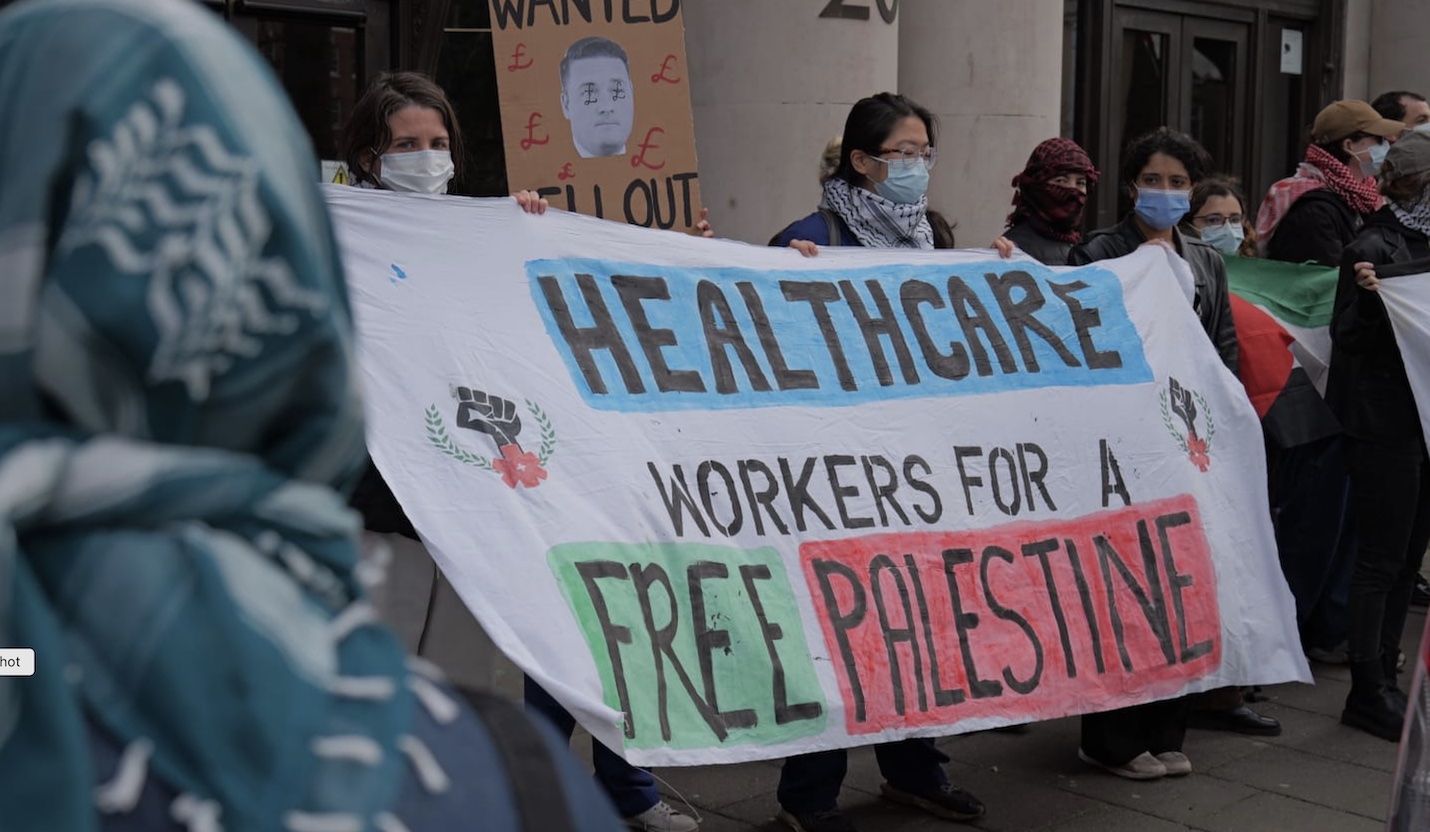
The US military-tech company Palantir has been tasked with amalgamating data across NHS England into what is known as the federated platform (FDP). Palantir’s CV boasts clients who are among the most violent organisations of Western imperialism: the CIA, Homeland Security, and ICE in the US; the IDF in the zionist entity; and the Department of Defence in the UK.
The firm specialises in making disparate, messy data sets coherent. Foundary, the name for the civilian software, is interoperable with Gotham, the equivalent for military systems. This has allowed, for example, ICE to use health data to identify, track, detain, and deport migrants in the US. In February, Reform UK announced policy to build an ICE-style force that can ‘relentlessly identify and detain all illegal migrants in the UK…[a Reform government] will automatically share data between the Home Office, NHS, HMRC, DVLA, banks and the police.’ The Labour Party is laying the technical infrastructure ahead of time to make that possible.
A 2025 open letter from the NHS Chief Data and Analytical Officer Network concluded that the NHS already has ‘similar tools in use that presently exceed the capability and application of what the FDP is currently trying to develop or roll out at a system level.’ This leaves the argument espoused by proponents that the FDP will improve wait times, patient care, and efficiency in the NHS ringing hollow. Rather, the FDP is part of the ruling class’ cynical and sinister attempt to sell off the NHS bit by bit until there is nothing left.
The fightback to block the rollout of Palantir’s FDP is well and truly on across England. Health workers have been spearheading the campaign with significant support from health justice groups and Palestine solidarity groups. Last year, the BMA (the doctor’s union) passed a motion rejecting the FDP and resolved to lobby relevant NHS bodies to terminate the contract. The union is currently developing guidance for members on when and how to refuse to use the FDP without compromising patient safety while at work. This is with the view to move ‘away from the platform entirely’ when a suitable alternative has been developed.
Such an alternative exists in Greater Manchester, where a grassroots alliance of staff, patients, and local community groups came together to block the rollout at hospitals in their area. They successfully managed to get the integrated care board (ICB, the bureaucratic unit responsible for administering the rollout) to halt the process and work with a local firm (albeit a private one) to develop an alternative. The ICB specifically cited grassroots opposition, including from the local Unite branch, when justifying their decision.
Unison has also been active on this front and raised concern back in 2023 when the contract was announced. Following a motion passed in the London NHS branch, General Secretary Andrea Egan sent a letter to the Health Secretary Wes Streeting earlier this month. It detailed their opposition to Palantir due to their role in powering Israeli war crimes in Palestine, deportations in the US, and paying an ‘odd’ amount of tax in Britain.
The Green Party has also made this a priority saying they will ‘use every means at [their] disposal, including that of [their] many thousands of members to get [Palantir] out of the NHS.’ Greens members are already reaching out to local campaigners to develop alliances.
While keeping Palantir out of the NHS is certainly worthwhile in and of itself, this defensive campaign needs to link concretely to offensive struggles in the pursuit of health justice in the UK and abroad. The strategic decisions taken now are incredibly consequential for what becomes possible in the future.
There are currents in the campaign eager to use it to build confidence, structure and momentum that can be deployed in other struggles: around border violence against migrants; against British imperialism overseas, in West Asia in particular; and for a healthcare system under the control of workers and users, for example. A base of health workers that can take initiative, strategise across sectoral and trade union divides, and connect political struggles to economic demands would be well placed to serve the broader movement of the working class in Britain and internationally.
Time will tell how the more radical currents within the campaign will fare against the reformists.
- Palantir out of the NHS!
- Build patient-staff alliances!
- Abolish border violence and imperialism in healthcare!
First published here by International Socialist League (Britain, IWL)