Orbán’s Defeat: Advances and Challenges for the Working People of Hungary
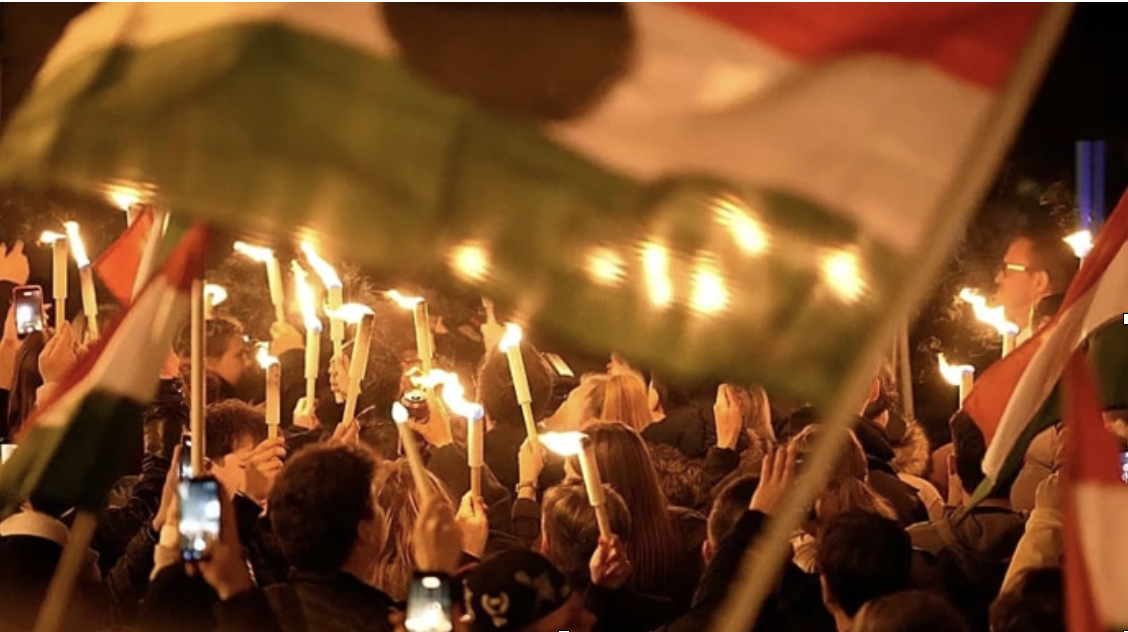
On the night of April 12, in Budapest, the capital of Hungary, thousands of people jubilantly filled the streets to celebrate the political and electoral defeat of Prime Minister Viktor Orbán and his Fidesz party, after 16 years of authoritarian government. A new historical stage had begun.
Why did Orbán lose, and what does his defeat represent? What can we expect from Péter Magyar’s new government? What challenges do the Hungarian working people and the left face? From an internationalist perspective of the workers and a scientific approach, this article answers these three fundamental questions that millions of people in Hungary, Europe, and the world are asking today.
Following Orbán’s departure, the workers of Hungary and Eastern Europe, immigrants, and the anti-capitalist left, we’ve the right to be optimistic!
Why did Orban lose and what does his defeat represent?
Although polls predicted that Prime Minister Viktor Orbán might lose the parliamentary elections, the results surprised everyone. His supporters, opponents, and even so-called independent analysts were stunned. Even at Péter Magyar’s campaign headquarters and Orbán’s official residence, it was hard to believe. The surprise lay in the overwhelming magnitude of the defeat(1), as well as in the government’s own response and that of its authoritarian political regime.
Facing the possibility of his defeat, a close election was anticipated, marked by maneuvers designed to disregard the popular will. These would include covert fraud and repression. In fact, before the elections, Russian espionage, smear campaigns, disinformation, and calculated scandals were commonplace in the official media and public life. Nevertheless, Viktor Orbán abstained and refrained from rejecting the results. Had he done so, it could have unleashed, at the very least, massive demonstrations, a literal social uprising, a Hungarian Spring.
Foreign policy chiefs like JD Vance, as well as Kremlin-linked figures, had endorsed Orbán’s reelection days earlier, offering suggestions for maintaining public order and winning the election. Indeed, in recent years, under Orbán’s rule, social protest has been criminalized and activists have been charged. However, on this occasion, the police forces themselves, both in the capital and in the regions, lacked sufficient operational capacity, the necessary modernized equipment, and the popular legitimacy to confront large-scale mobilizations in such a historic and decisive election.
After 16 years in power, Viktor Orbán was defeated primarily due to a declining economy and prolonged political erosion, an organic crisis of legitimacy. This was compounded by his government’s inadequate political responses to the aspirations of the Hungarian working people. A flawed campaign strategy also played a role, ultimately strengthening his main opponent.
On average, Hungarian workers work three times more hours than their European counterparts. However, by 2023, their wages were among the second lowest in the European Union. Furthermore, thousands of people experience homelessness in the capital, and relative poverty is prevalent in many households. The devaluation and stagnation of the forint have persisted in the country since the second half of the 2000s. Inflation, rent, and the cost of living are constant concerns, forcing large segments of the workforce to make sacrifices to make ends meet.
Meanwhile, the working class and younger generations have witnessed the enrichment of a corrupt network of professional politicians and businesspeople, as well as a wealthy minority—a veritable parasitic oligarchy—that has grown at the expense of the general welfare. This discontent, silent but widespread, eventually took its toll on the once all-powerful Prime Minister, Viktor Orbán.
Based on official data from the National Election Office (NVI)(2), with a total of 199 seats in the National Assembly and a record turnout of 78%—83% in the capital—the results were surprising. The center-right opposition, led by Péter Magyar and his TISZA (Respect and Freedom) coalition, swept the elections, winning 141 seats (70.9%). This gave them a supermajority of two-thirds ( ⅔).
In this election, after a decade and a half of hegemony, the electorate soundly defeated the right-wing populist Fidesz-KDNP (Hungarian Civic Union and Christian Democratic People’s Party) governing coalition. The coalition won 52 seats (26.1%) but lost 83. In third place, the far-right, neo-fascist Our Homeland Movement (Mi Hazánk) narrowly surpassed the 5% electoral threshold, securing 6 seats (3%) and gaining parliamentary representation.
The opposition, now the governing force, received approximately 3.3 million votes (53%). Its gains were particularly notable in cities such as Budapest, Szeged, and Pécs. The ruling party, meanwhile, garnered around 2.4 million votes. It retained strongholds in rural areas of the northeast, as well as in Debrecen and medium-sized industrial cities like Miskolc, Nyíregyháza, and Kecskemét. Although representing only 5% of the total, the Hungarian diaspora in Romania, Serbia, Slovakia, and Ukraine gave 84% support to Orbán’s continued rule, due to the visa benefits he has granted them. However, this support declined by 5 to 10 percentage points.

Source: National Electoral Office (NVI), 2026.
Orbán’s electoral strategy unfolded on two fronts. On one hand, he sought to channel discontent toward an external scapegoat, particularly Ukrainian President Volodymyr Zelensky. He also emphasized the risk of increased debt to Ukraine and the European Union under a potential Magyar government. In doing so, he attempted to generate fear of an external conflict and further indebtedness. On the other hand, he offered economic relief measures, including year-end energy tariff reductions, an increase in the minimum wage, and a promise to stabilize the economy through pragmatic agreements with Russia and Europe. None of these strategies succeeded in diverting the electorate’s attention. The protest vote prevailed, driven by dissatisfaction with internal problems such as corruption allegations and the declining standard of living.
Péter Magyar, a former member of the ruling party, capitalized on the government’s growing political decline since 2014. He leveraged both the economic downturn and the loss of political legitimacy. His campaign focused on two main pillars. First, securing European funds to stabilize the economy and encourage investment. Second, implementing institutional reforms aimed at restoring the democratic rule of law and dismantling corruption networks.
Regardless of one’s judgment of the opposition’s campaign, this shows that the Hungarian people’s focus is on “daily bread” and on the “management of taxes” and “funds” by those at the top versus those at the bottom. Their spiritual judgment of bourgeois democracy, the government’s management, and the aspirations of the European Union have this as their material starting point. In this sense, it corroborates the Marxist method. The limited agenda of the parliamentary elections pivoted centrally and forcefully on basic social questions. The result was an extraordinary reckoning with the ruling faction.
Although the electoral defeat is being capitalized on by a right-wing bourgeois political faction—the neoliberal TISZA party and its new charismatic leader, Péter Magyar—Orbán’s defeat represents an undeniable advance for the Hungarian working people. It also constitutes a decisive mandate against the prevailing social inequality and the corruption of the ruling oligarchy. In other words, Orbán’s defeat is a distorted reflection of the class struggle in the electoral arena. It precisely expresses the accumulated popular discontent and the desire for change.
Orbán’s electoral defeat is, above all, a decisive blow to his authoritarian project of perpetuating himself in power. This reactionary project, dubbed “illiberal democracy”, sought to consolidate a dictatorial political regime aligned with the Russian Federation. Hence the boycott chant at the demonstrations: “Russians , go home!” (Ruszkik haza!). Contrary to what has been claimed, this is not Russophobia, but rather a democratic sentiment among Hungarians in the face of Kremlin interference. Hungarian social consciousness keeps alive the memory of the 1956 revolution.
In this sense, the election results objectively constitute a defeat for the regional and global alliance of the new populist far right, represented by figures such as Trump, Putin, Netanyahu, and Fico. In Latin America, figures like Bukele, Milei, and Kast. All of them had observed with admiration Orbán’s prolonged rule and his ability to remain in power. In particular, the permissiveness and opportunism of these leaders regarding the Russian invasion and partition of Ukraine, which was the central focus of Fidesz’s disinformation and alarmist campaign, are exposed.
Similarly, Orbán’s defeat expresses, in a secondary but no less significant way, an emerging—though not yet majority—interest in the democratic freedoms eroded during his term. It also falls within a process of generational shift. Young people and urban sectors are showing greater democratic awareness. Taken together, these elements reflect the distancing of a sector away from the neoconservative agenda in Europe and the world, and consequently its weakening.
This is a reactionary capitalist agenda that seeks to curtail rights, divide the working class, and openly disregard social gains. It affects, among others, the rights of women and orphaned children—as evidenced by the scandal of the pardon granted by Hungarian President Katalin Novák for pedophilia in 2024. It also violates the rights of LGBTI communities through constitutional reforms and discriminatory laws promoted by Fidesz. Added to this are the restriction of immigrants’ rights, xenophobia towards Romanians and Gypsies, Ukrainians, and peoples of the Global South, the discrediting of trade unions, and hostility towards the new workforce and the left-wing opposition.
What to expect from Peter Magyar’s new government?

Fueled by electoral euphoria, hopes for change and popular expectations for the new government are undeniably high, the majority of Hungary’s 10 million people—including some segments of the nearly 500,000 migrants—are waiting for tangible improvements. High expectations certainly exist. However, it is necessary to patiently explain to the public and various social sectors that there is not so much to expect as there is much to demand from Péter Magyar’s emerging government.
Despite its social heterogeneity, the majority of Hungarians believe that greater integration with the European Union is the salvation of the country and its economy. They also aspire to eradicate institutional corruption. Furthermore, they demand a social agenda that will revitalize the domestic economy and provide greater security for families and young people.
Judging by the political program of the TISZA party, the formation of the new cabinet and the composition of parliament, as well as by the recent speeches, promises and first measures of the new Prime Minister, certain right-wing realignments are visible in the emerging government.
The first one corresponds to the area of foreign policy. The Hungarian government, from a pragmatic, seemingly sovereignist position, will seek to strengthen ties with European imperialism and recover the €22 billion withheld(3). In the short and medium term, this will increase Hungary’s dependence on and semi-colonization by the EU’s imperialist powers. For the Hungarian bourgeoisie and its new political administrator, it is crucial to unblock relations with Brussels. Equally important is improving ties with Ukraine and distancing itself somewhat from Russia, without abandoning energy interests.
Within this situation, rapprochement has begun, though not without present and future tensions. One point of contention will be the migration quota demanded by the European Union and the absorption capacity that the Hungarian bourgeoisie is willing to tolerate. With a conservative tone and a certain exclusionary racist bias, Magyar has indicated that it will maintain restrictive border controls. It has also stated that it will discourage the entry of non-European temporary workers, particularly those from Asia. Its priority will be Hungarian labor, and secondarily, workers from the Eurozone.
Another key item on the agenda will be Europe’s alternative energy industry. This is hampered by dependence on Russia and rising fossil fuel prices, exacerbated by the attacks on Iran and Lebanon and the ongoing genocide in Gaza. Meanwhile, tensions persist surrounding the war in Ukraine, the imperialist military buildup promoted by the European Union, and relations with international actors such as Trump, Putin, and Netanyahu. Regarding the latter, faced with pressure due to his ambiguous stance, Magyar has indicated that, unlike Orbán, he would comply with any arrest warrant issued by the International Criminal Court should Netanyahu dare to set foot on Hungarian soil.
The second axis is located in the sphere of economic policy. Magyar has incorporated business executives from big capital into the government and ministries. With this, he seeks to attract private investment, both foreign and domestic. The main challenge remains restoring public finances. Another challenge is reactivating capital accumulation processes and sustaining the prevailing neoliberal logic. This well-known logic involves “privatizing profits and socializing losses”. All of this is happening against a fragile backdrop of economic slowdown, deindustrialization, inflation, and unemployment that continues to plague the country.
The third point lies in the realm of institutional politics. Magyar, posing as a conservative liberal, has signaled his intention to cleanse and reform the authoritarian political regime inherited from Orbán. He seeks to restore the liberal rule of law and democratic freedoms. He also aims to reestablish the separation of powers, strengthen the judiciary, reform the electoral system, and guarantee press independence. These are all crucial aspects that were damaged during Orbán’s ultra-reactionary period. His two-thirds majority in parliament grants him a favorable margin for institutional maneuvering.
However, there are clear structural limitations. The realignment of the dominant capitalist power bloc imposes constraints. The populist right-wing opposition, although weakened, remains the second largest political force in the country. Added to this is the persistent ties to the old regime. Furthermore, a united front and unity of action operate among bourgeois factions who, in defense of their interests, tend to preserve the existing institutional order, conspiring against the Hungarian people. Taken together, these factors constitute significant obstacles to the regime’s aspirations for democratization.
What challenges do the Hungarian working people and the left face?

Political participation in the recent elections—that is, the historic levels of mass suffrage approaching 80%—reveals the Hungarian people’s desire to improve their living conditions. It also expresses weariness with the outgoing government. Furthermore, it reveals conflicting passions regarding public affairs (res publica), that is, politics itself.
Over the past two hundred years, the Hungarian working people have amassed an extraordinary wealth of experience in struggle against diverse forms of class-based government across the political spectrum. They have also courageously led at least three revolutionary processes: 1848, 1918, and 1956. They have thus contended with imperial monarchical governments and liberal bourgeois-democratic governments. They have also faced a pro-Hitler fascist government and, later, Stalinist governments in the former Hungarian People’s Republic (1945–1989).
More recently, following the capitalist restoration of 1989, the Hungarian people have had to endure, with sweat and blood, various social democratic or center-left governments. These have, in many cases, implemented austerity policies typical of the right. In the most recent period, we have also had to contend with right-wing neoliberal and national-populist governments.
The first challenge for Hungarian workers and their popular allies is to advance the dismantling and radical transformation of Orbán’s authoritarian political regime. This rotten regime encapsulates all the contradictions of social life. From this perspective, the main demand is the repeal of the Basic Law and all the irregular constitutional reforms(4) pushed through by Fidesz in Parliament. We socialists, propose the opening of a free, democratic, and sovereign constituent process. In this process, trade unions, left-wing parties, and mass organizations could challenge the parties of capital to determine the nation’s destiny and the type of republic it wishes to build.
Crucially, it is essential to pressure the judiciary to investigate, prosecute, and punish with imprisonment, as well as the expropriation of assets, the oligarchic elite implicated in corruption and embezzlement of public funds during the last sixteen years of the regime. The Magyar government and the judges of the judiciary must not be allowed any form of pardon, exile, impunity, or reduced sentences for the corrupt officials and their main leader, Viktor Orbán. This must be applied without exception, regardless of whether they come from Fidesz or any other faction within the regime’s political spectrum.
The possibility of a new republican regime that reflects the Hungarian common good is now on the public agenda. The historical dilemma is between a plutocratic democracy, governed by an opulent minority—that is, the dictatorship of capital and the bourgeoisie— versus a sovereign workers’ democracy of the wage-earning majorities, organized in councils, who are the ones who sustain the country. From a socialist perspective and that of a left-wing political project, this implies the recovery of public spaces and essential services. Education, housing, and healthcare must be affirmed as fundamental social rights that should not be subordinated to the market. Likewise, the nationalization and democratic planning of strategic sectors of the economy, dismantled during the catastrophic wave of privatizations and counter-reforms, are being considered. In this new historical stage in which we find ourselves, the new generations face a growing deterioration of their material conditions and their mental health.
Regarding immigration and employment, the State should implement a massive investment and public works plan. The goal would be to create jobs for Hungarian workers and guarantee annual salary increases that allow them to recover their purchasing power. At the same time, this requires the implementation of subsidies, housing programs, and guarantees for Hungarian workers from both the east and west who wish to return to the country.
In the area of national security and sovereignty, the Hungarian government must be required to adopt a policy of solidarity with its neighboring country and brotherly people in Ukraine(5). This would include expanding democratic guarantees for the reception of Ukrainian refugees and providing assistance to Hungarians living in Ukraine. It would also entail not vetoing European military aid to the Ukrainian resistance against the Russian invasion and publicly condemning this infamous attempt at colonization in foreign diplomacy. At the same time, this should not translate into a strengthening of NATO, a Western imperialist alliance from which Hungary, as a dependent country, should disengage as soon as possible if it seeks to preserve its sovereignty and integrity.
At this point, it is necessary to explain to the Hungarian working class and the migrant population the risks of continuing a restrictive migration policy under the Magyar government. While the new Prime Minister demagogically and populistically promotes the return of Hungarian citizens and wage increases for certain sectors, as well as sanctions against illegal migration networks and border closures, the overexploitation of migrant labor is likely to persist. The Hungarian bourgeoisie and multinational corporations, with the approval of the new emerging government, could continue to profit from the labor of tens of thousands of migrants. In 2024, at least 65,389 workers from countries such as Vietnam, Ukraine, Romania, China, India, South Korea, Slovenia, Turkey, Mongolia, and Russia played a fundamental role in the Hungarian economy(6).
Likewise, migrants who work honestly and those who study in the country require better conditions. More than 10,000 international students participate annually in the Stipendium Hungaricum Scholarship program. These two sectors need guarantees of residency, democratic rights, and real opportunities for permanence. Their contribution to the country can translate into strategic benefits. Among these are the social reproduction of the workforce, the demographic dynamism of families and generations, increased domestic consumption and demand, a boost to tourism, productive and educational development, diplomatic projection, and cultural diversity.
Given the favorable outlook for Hungary’s membership in the European Union, it is essential to revive a policy of class solidarity and multiculturalism, characterized by anti-racist and anti-imperialist championed by a contemporary left-wing project. The Hungarian working class shares strategic interests with workers in other parts of the world and Eastern Europe. This convergence is crucial for defending their rights against the power of capital, both local and foreign.
The second challenge for Hungarian workers and their popular allies is to demand that the new government, both within the first 100 days and throughout its four-year term, implement an emergency social plan to address the capitalist crisis plaguing the country and the European Union. The goal is for Péter Magyar to fulfill the popular mandate and for the people to gain their own sociopolitical experience with “their” government.
For now, the urgent priority is regulating inflation. This also includes implementing social subsidies and freezing prices for basic goods in the face of rising living costs. Added to this are increasing the minimum wage, imposing higher taxes on large corporations, protecting pensions, promoting mass employment, and increasing the public budget allocated to social investment.
Although the €22 billion from the European Union can help revitalize the domestic economy, its use requires strict oversight. It is essential to ensure that these resources are effectively directed toward civil society and the most affected sectors. At the same time, the working people must express their opposition to any potentially exorbitant conditions in the public debate—and, if necessary, in the streets. These conditions include increased external debt to the Troika (European Commission, European Central Bank, and International Monetary Fund), the strengthening of NATO, and greater structural dependence for Hungary. These measures could lead to further impoverishment of Hungarian families and young people. The case of Greece serves as an illustrative precedent.
In this situation, the need arises to develop a left-wing, anti-imperialist workers’ program. This program must confront both the Eurosceptic bourgeois ideology and the national-populism of the right-wing opposition in Parliament and civil society. Consequently, it is essential to explain the phenomenon of political and economic dependence of Hungary and the countries of Eastern Europe. It is equally crucial to formulate an alternative that prevents the political agents of national and foreign capital, including the emerging Hungarian government, from implementing austerity policies and military modernization programs in the interests of the central imperialist bourgeoisies of Europe, such as Germany, France, and the United Kingdom.
Although there is popular enthusiasm and legitimate expectations regarding greater integration with Western Europe, these perceptions of the EU need to be qualified. The central governance of the European Union is not geared towards the general welfare, but rather towards the imperialist administration of tax burdens and the reproduction of its unequal structures of dependency. In certain situations, this can mean shifting the costs of crises, through austerity plans and indebtedness, or conflicts, onto peripheral countries, making them cannon fodder in NATO wars. From a strategic perspective, it is not through an inward-looking nationalist retreat, but only through a new and distinct Democratic Federation of Socialist Republics of Europe and a socialist revolution in the United States of America that it is possible to overcome this contradiction of dependency between East and West.
The third challenge for Hungarian workers and their popular allies is to advance, in a task reminiscent of both Sisyphus and the patient work of ants, in the reconstruction of the workers’ and popular movement. This involves the reconstruction of a revolutionary left-wing strategic project for 21st-century Hungary.
This implies raising the levels of organization and politicization to the point of constituting a new revolutionary party that represents the native working class, migrants, youth, women, and sexual minorities—a party that is currently nonexistent in Hungary. A powerful and disciplined left-wing party of Hungarian and migrant workers that undertakes a critical historical and scientific assessment of Stalinism and capitalist restoration, that offers a transition program to take the power through insurrection against all right-wing parties and the bourgeoisie, and that reclaims the legacy of the 1956 Hungarian Revolution. The formation of new political forces capable of capitalizing on social discontent, as Tisza did in 2024, demonstrates that this process is not only possible but also necessary. In this reconstruction of alliances and regroupings, international socialist currents can play a progressive role if they manage to establish themselves in some local stronghold within the country.
While it is true that for the period 2026-2030 the Hungarian Parliament has zero left-wing representation (0%)(7), its composition is dominated by a conservative nationalist majority (TISZA), a populist opposition (Fidesz-KDNP), and a neo-fascist minority (Mi Hazánk), all within the right-wing political spectrum. However, it would be erroneous, one-sided, and even unscientific to conclude that the Hungarian working people are, irremediably, substantially right-wing or conservative in their political culture. The motivations behind the protest vote express a different phenomenon. The processes of popular consciousness are historical, segmented, and considerably more complex.
In recent decades, the nationalist discourse of the Hungarian bourgeoisie and capital has permeated the consciousness of the working class and the general population. In their daily lives, this manifests as a rather closed relationship with the outside world, reinforced by the exclusive use of the Hungarian language—beautiful but intricate—and by relatively insular lifestyles, associated with a narrow-minded, national-chauvinistic cultural identity. Counteracting this trend is greater cultural integration with Europe and the world, the development of urbanization and productive forces, cosmopolitan tourism, and an internationally oriented educational and technological system for the younger generations.
Hungarian common sense, in its regressive aspect, manifests itself in widespread skepticism toward immigration, sometimes perceived as “illegal” and linked to job losses or internal competition between national and foreign workers. It also expresses itself in conservative, and often reactionary, concerns about a fixed cultural “identity” or “whiteness” as well as in the rejection of certain democratic agendas regarding gender and liberties, seen as identity politics divorced from the material necessities of life.
Due to capitalist restoration and austerity policies, the Hungarian working class tends to distrust all professional politicians across the political spectrum, regardless of ideology. This reflects sound class instinct and shrewdness. Within this situation, a negative image of both the institutional and extra-institutional “left” is also projected. For many, this is associated with the authoritarian hell and failure of the Stalinist bureaucratic model of the former USSR and its continuation in the former Hungarian regimes of Rákosi and Kádár. This perception has been reinforced by intense, institutionalized anti-communist propaganda—visible in places like the Museum of Terror in Budapest or Memento Park—as well as by the education system and the media, both private and public. Added to this is the neoconservative ideological orientation of Orbán and, to some extent, Magyar, who share a convergent rhetoric surrounding the memory of National Day (October 23) of the 1956 Hungarian Revolution.
In more recent memory, distrust of the “left” is particularly focused on the failed and disastrous experience of the Hungarian Socialist Party (MSZP) during its second term (2002-2010). In the turbulent atmosphere of the 2008 global financial crisis, the MSZP, whose leaders had already enriched themselves and become bourgeois through the capitalist restoration of the 1990s, finalized the implementation of a neoliberal austerity agenda, at the service of the EU troika. This agenda was marked by corruption scandals at the highest levels (such as the Őszöd case) and by direct cuts to workers’ rights. This provoked, as expected, massive protests from the Hungarian working people, who are anything but passive.
Following the return to capitalist democracy, it was the betrayal of the reformist center-left in government that fueled the nightmare of the mass phenomenon of right-wing nationalist populism under Viktor Orbán, then leader of the Alliance of Young Democrats, the original name of Fidesz. This movement, which initially had clear liberal restorationist characteristics, later consolidated itself as the dominant force in the Hungarian political system. Today, it has been displaced but not entirely overcome, and it has been partially reconfigured in party formations such as Tisza, which maintain a right-wing conservative profile.
In this sense, we are witnessing the end of Orbán’s hegemony, but not yet the end of right-wing national-populist hegemony. We are entering a post-Orbán era. Amen. Although his legacy remains present, both in the opposition and in public discourse, even though Orbán and other leaders recently declined to take a parliamentary seat, it is an unburied and rotting “living corpse” that continues to resonate in national political life through other charismatic figures. A kind of moderate (soft) Orbánism without Orbán.
In this crisis of revolutionary leadership—to paraphrase Rosa Luxemburg(8)—the Hungarian working people must traverse their own historical Via Crucis and path of liberation through the desert, until they find an emancipatory way out, the light at the end of the tunnel on the rocky road of class struggle. Orbán’s defeat opens, in the near-term historical perspective, the possibility of an acceleration of contradictions under the Magyar government in the coming years, which will hardly be able to fully satisfy expectations for change.
In conclusion, in recent months, we have witnessed progress in the political and organizational arena. We are living through extraordinary historical moments, the opening of a new stage. The opportunities for rebuilding a left-wing alternative project and for rebuilding the mass movement are expanding. This reaffirms a socialist optimism and a scientific approach based on the agency of those at the bottom, on the historical struggle of the Hungarian working people in the immanent class conflict.
The massive women’s march on March 8th in Freedom Square and in front of St. Stephen’s Basilica. The massive LGBTI diversity demonstration on Freedom Bridge. The mega multicultural concert in Heroes’ Square. The National Union of Students (HOOK) demonstration against budget cuts to public universities and the attempted imposition of tuition fees. The sit-ins against Netanyahu’s visit to Budapest and the Conservative Political Action Conference (CPAC), in solidarity with the Palestinian people. The anti-fascist boycotts of the neofascist events of Honor Day (Becsület napja) in Budapest. And the diaspora rallies in solidarity with the people of Iran and Ukraine, rejecting both the internal repression of the Islamic regime and the Russian colonial invasion.
Finally, noteworthy are the rallies of the new union of free workers’ deliveries for the multinational Wolt, as well as at least eleven labour conflicts and strike processes in the last three years in industrial sectors (energy, manufacturing, automotive) and services (health, transport, education, and public administration).
Notes
(1) Read the article A crushing defeat of authoritarian populism (14/4/2026) on the website of the International Workers’ League ( IWL).
(2) See the results officers in Composition of the National Assembly and Hungary’s General Election: Official Final Results .
(3) Read the press Hungary Today Péter Magyar Begins Negotiations for Billions in EU Funds to Be Released (2026/04/20).
(4) See he Human Rights Watch report Hungary: Fundamental Law Changes Attack Rule of Law, Rights (2025/04/17).
(5) See the analysis article Orbán and the gordian knot of Ukraine (2026/02/26) on the website of the International Workers League (IWL-IL).
(6) See official immigration data from the Hungarian Central Statistical Office (KSH) and analysis by the economic portal Pénzcentrum (4/11/2025).
(7) In the heterogeneous field of the “Hungarian left”, the Democratic The center coalition, with its social-liberal leanings, garnered 1.1% of the vote (70,298 votes) and failed to secure any seats in parliament. The Hungarian Socialist Party (MSZP), which typically held 10 seats, opted not to run, resulting in zero seats, and instead launched a pragmatic “Leftists for System Change” campaign for TISZA. Other social democratic and environmentalist parties (Dialogue, LMP) also declined to participate and called for a vote for TISZA. Meanwhile, Stalinist parties like the Hungarian Workers’ Party, in coalition with the Solidarity Party, which has been aligned with Russia in the armed conflict with Ukraine, urged voters not to support either Orbán or Magyar, but rather their own lists of single-member district candidates in three Budapest districts (150 votes, 0.1%), failing to secure any national parliamentary representation.
(8) “The modern proletariat comes out of historical tests differently. Its tasks and its errors are both gigantic: no prescription, no schema valid for every case, no infallible leader to show it the path to follow. Historical experience is its only school mistress. Its thorny way [Dornenweg] to self-emancipation is paved not only with immeasurable suffering but also with countless errors. The aim of its journey – its emancipation depends on this – is whether the proletariat can learn from its own errors. Self-criticism, remorseless, cruel, and going to the core of things is the life’s breath and light of the proletarian movement. The fall of the socialist proletariat in the present world war is unprecedented. It is a misfortune for humanity. But socialism will be lost only if the international proletariat fails to measure the depth of this fall, if it refuses to learn from it”, The Junius Pamphlet: The Crisis of German Social Democracy (1916), Rosa Luxemburg. Available in Marxist Internet Archive.