New British Prime Minister Andy Burnham: Saviour or More of the Same?
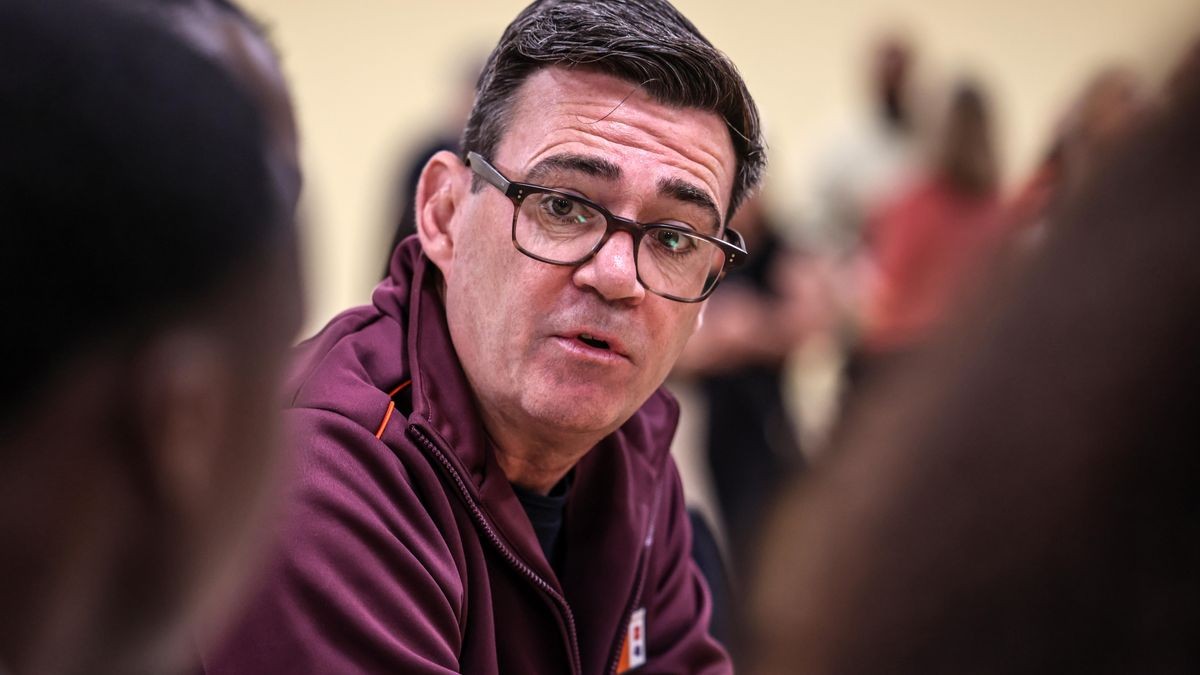
Andy Burnham was ‘crowned’ leader of the Labour Party (LP) and Prime Minister in July 2026 following an overwhelming decline in the popularity of Keir Starmer and Labour’s catastrophic local election results in May.
The far-right Reform UK and the Green Party were outperforming Labour and increasing their membership, thus hastening Starmer’s demise and securing Burnham’s leadership whilst avoiding a necessary debate on policy and accountability. On becoming MP for Ashton-in-Makerfield in June, Burnham promised to make “the most significant change moment in our politics for 40 years.”
Whilst Burnham is a more capable and charismatic politician, he is unlikely to reverse Thatcherism’s policies of privatisation and deregulation, and the anti-trade union legislation, despite his rhetorical claims. Nor will he reverse the brutal immigration controls being introduced, as he voted for the Immigration and Asylum Bill at its second reading in July.
Burnham has failed to condemn Israel’s genocide in Gaza, restricting his comment to saying Labour had ‘not got it right.’ So far, he has not suggested an arms embargo against Israel. On the attacks on Iran by the US/Israel, he has not ruled out British support. He has not ruled out the US using British military bases to launch attacks against Iran. In fact, as we write, Akrotiri, Cyprus, is planned for expansion.
The Cost of Living Continues to Rise
Amid the cost-of-living crisis, many people are struggling, having to make choices between food and energy within a limited household budget, and facing further gas price increases of 4% in October (to its highest level in three years).
Burnham announced a cap on bus fares outside London at £2 a journey and a six-month suspension of VAT on household electricity bills. The Institute for Fiscal Studies estimates the average household electricity bill will fall by just £25, that is £1 a week. These measures are far from sufficient to alleviate the rising cost-of-living pressures.
The Housing Crisis
Over 1.5 million people are on waiting lists for social housing. In June, Burnham promised ‘a council housing revolution’; under his leadership Labour would resolve the housing and homelessness crisis by initiating the biggest council house building programme since the post-war period. He stated that 100% of the £39 billion funding pot (already pledged by Starmer) would be dedicated to council and social rent homes. Already compromising on this, he now says that 60% of the initial £10bn allocated for Affordable Homes will be reserved for social renting.
The Centre for Policy Studies estimates the current budget will create 14,000 to 15,500 extra council homes a year, just 5% of national targets. Much larger government grants than those promised are essential to begin addressing what is needed.
And pledges to end the ‘rough sleeping’ of 400,000 homeless people cannot be achieved without massive, long-term funding for health and addiction care. The housing crisis will not go away, and suffering will continue. At the same time, Burnham retreats from his funding promises, and across England there are in excess of 1 million in empty or second homes.
Furthermore, whilst the private renting sector continues to increase rents to unaffordable levels, demands from campaign groups such as Acorn for rent controls and rent freezes remain unheard – they demand a response.
Inadequate Policies
Burnham has said he believes that the 1970s represented an economic high in British post-war history, partly because local authority housebuilding programmes resulted in over a million council homes in that decade.
However, in 1976, as a condition for a £3.2 billion loan, the International Monetary Fund (IMF) demanded that James Callaghan’s Labour government implement fiscal austerity and strict monetary targets. Labour also imposed massive public spending cuts of £7 billion between 1977–1979. It was the first such IMF loan and the start of an era of austerity attacks on the working class.
Then, between 1978-79, there were widespread strikes by public and private sector workers protesting the government’s 5% wage cap, ultimately leading to the defeat of the Labour government and ushering in 10 years of Thatcherism.
Burnham has ‘forgotten’ the IMF onslaught and the massive waves of strikes by workers against the Labour government.
Of course, workers will welcome the limited financial relief policies, but these policies will not address the national and global economic crises impoverishing the masses, nor will they address the greed and power of big business and the City of London.
Fundamentally, the Labour Party, along with all mainstream political parties, is committed to the demands of big business and the wealthy elite whilst paying lip service to the crises and poverty facing the working class.
Only by building many working-class alliances and mobilising the masses to challenge the status quo will real change be achieved.