
NATO Today: China, the Pacific and Turkiye in the Midst of a New Cold War
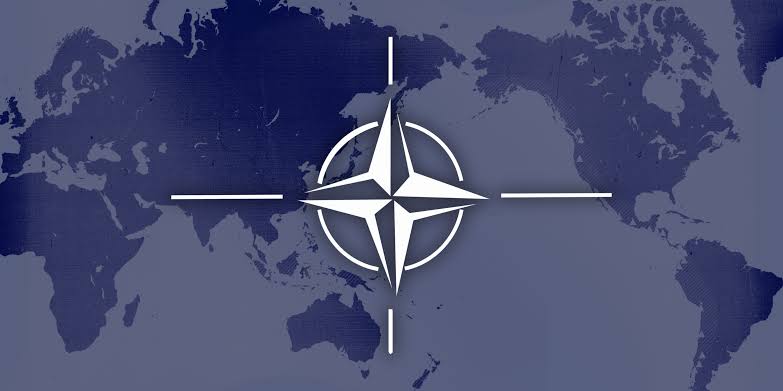
Today, NATO is not merely a military defence organisation; it is an aggressive structure safeguarding the global political and economic order of US imperialism.
In this century, the economic centre of gravity is gradually shifting from the Atlantic to the Pacific. As China becomes the world’s second-largest economy, a significant portion of global trade and production is concentrating in Asia. Consequently, China’s rise is now not merely an economic issue, but a geopolitical one. We view this as the emergence of a new imperialist power; the unipolar world is giving way once more to a multipolar power struggle.
As Europe’s security concerns grow, Turkiye’s geopolitical position and military strength will become one of the key factors bearing a significant portion of this burden. So, what price will Turkiye’s working people have to pay for this expanding role within NATO?
Gül Bahar / 3 July 2026
Following the end of the Cold War, liberals believed that NATO would fade from the historical stage. After all, the Soviet Union – the very reason for the alliance’s creation – had collapsed. However, rather than disbanding, NATO expanded; it extended its reach into Eastern Europe, fought in Afghanistan and played an active role in the intervention in Libya. Today, it has turned its attention to the Indo-Pacific region.
The regular invitation of leaders from Japan, South Korea, Australia and New Zealand to NATO summits in recent years, the fact that China has been explicitly designated as a ‘strategic rival’ in NATO documents for the first time, and the increasing US pressure regarding the Indo-Pacific region all clearly demonstrate that NATO is pursuing a goal of global expansion.
In fact, the shift in the US’s strategic focus towards the Pacific is not a new development. The US had already begun to gradually redirect its diplomatic, economic and military weight towards the Pacific through the “Pivot to Asia” policy announced during the Barack Obama administration. Whilst the trade war with China took centre stage during the Donald Trump era, the Joe Biden administration has continued this approach by strengthening its network of allies. NATO’s interest in the Indo-Pacific should also be viewed as part of this long-term strategic transformation
Established in 1949, NATO was formed to contain the Soviet Union and functioned as the military force of the Western bloc throughout the Cold War. Following the capitalist restoration in the Soviet Union, the alliance chose to expand rather than shrink. First, the countries of Eastern Europe were admitted as members, and subsequently its sphere of activity extended beyond Europe’s borders.
Today, NATO is not merely a military defence organisation; it is an aggressive structure safeguarding the global political and economic order of US imperialism.
A Shift in the Global Balance of Power
In this century, the economic centre of gravity is gradually shifting from the Atlantic to the Pacific. As China becomes the world’s second-largest economy, a significant portion of global trade and production is concentrating in Asia. Consequently, China’s rise is now not merely an economic issue, but a geopolitical one. We view this as the emergence of a new imperialist power; the unipolar world is giving way once more to a multipolar power struggle.
NATO’s developing relations with Japan, South Korea, Australia and New Zealand must also be assessed within this context. Whilst NATO describes this as ‘cooperation against global security threats’, the real aim is part of a broader strategy aimed at encircling China. North Korea’s military support for Russia in the war in Ukraine and the partnership China has established with Russia are leading Western strategists to argue that ‘the security of Europe and the security of Asia are now an indivisible whole’.
This expansion is not a matter concerning the Pacific region alone. At first glance, developments in the Pacific may appear unrelated to Latin America or Africa. However, China’s rise has not been confined to Asia. Over the past twenty years, Beijing has become the largest trading partner in many regions, from Africa to Latin America. China’s influence in the foreign trade of countries such as Brazil, Chile and Peru has grown rapidly. Consequently, competition with China is not merely a matter of Taiwan or the South China Sea; it is a global imperialist struggle for dominance.
During the same period, the growth of formations such as BRICS has also brought to the fore the Global South’s search for alternatives to Western-centred institutions. Whilst these countries have not formed a united bloc against NATO, they are no longer willing to align themselves as readily as before with the geopolitical lines drawn by the West. In response, the Beijing administration characterises NATO’s moves in the Asia-Pacific as a ‘Cold War mentality’ aimed at encircling it, and argues that the West’s military steps in the region will undermine global stability.
What Might Happen in the Future?
It seems inevitable that NATO’s presence in the Pacific will become even more visible in the coming years. It is likely that military and technological cooperation between NATO and its US allies in the Pacific will deepen. Narrow-membership alliances such as the AUKUS agreement between the US, the UK and Australia, and the QUAD, which brings together the US, Japan, Australia and India, are the most concrete examples of this new model. These structures, referred to as “mini-lateral”, differ from broad organisations encompassing numerous countries, such as NATO or the United Nations, in that they represent smaller, more flexible cooperation mechanisms centred around a specific objective or security issue.
Meanwhile, NATO is also deepening integration with the so-called IP4 (Indo-Pacific Quartet – comprising Japan, South Korea, Australia and New Zealand) in areas such as cyber defence, artificial intelligence and maritime security. The current strategy is based on efforts by the US and its allies to preserve their hegemonic position within the global order established after the Second World War. For this reason, NATO’s role in the Pacific can be interpreted as the construction of the institutional infrastructure for a new Cold War. NATO, of course, rejects these criticisms; it maintains that its activities are aimed at safeguarding international law, open maritime trade and the security of its allies.
The issue under discussion today is not so much whether NATO is geographically expanding into the Pacific, but rather its role within the new global security architecture emerging in response to China’s rise. Consequently, the ‘Global NATO’ debate is not merely a military issue; it is also a comprehensive struggle over how the world economy, the balance of power and the future of the Global South will be shaped. Developments in the Pacific are already indicating where and how the new power struggle of the 21st century will unfold.
Where Does Turkiye Stand in This Equation?
NATO’s shift towards the Indo-Pacific may, at first glance, appear to be a development far removed from Turkiye. However, the alliance’s increasingly globalised approach to security has the potential to directly affect Turkiye’s position.
Today, Turkiye not only possesses one of NATO’s largest armies but is also situated at the crossroads of the Black Sea, the Caucasus, the Eastern Mediterranean and the Middle East. Consequently, from NATO’s perspective, it functions not merely as a member state but also as a critical military and logistical hub. The growth in the defence industry in recent years, along with developments in domestic military technologies and UAV/UCAV systems, is also increasing Turkiye’s influence within the Alliance. Within the evolving global security architecture, Turkiye’s military capabilities are gaining greater strategic value for NATO.
As Europe’s security concerns grow, Turkey’s geopolitical position and military strength will become one of the key factors bearing a significant portion of this burden. So, what price will Turkiye’s working people have to pay for this expanding role within NATO?
NATO’s new orientation towards the Pacific is therefore not merely a distant agenda concerning only China or the Asia-Pacific region. It also raises the question of what kind of subcontractor or outpost role countries such as Turkey will assume within the global security architecture. This shift also sheds direct light on the critical importance that the current regime of the ‘sword of sovereignty’ holds for Turkish finance capital and international imperialism.
First published here by Marxism Now!


