Massacre in Pakistan-Administered Kashmir
Justice demands truth. Truth demands accountability. Accountability demands action. The families of those killed on June 7 deserve answers. The wounded deserve justice. The detained deserve freedom. And the people of Pakistan-administered Kashmir deserve the democratic rights and representation that have been denied for far too long.
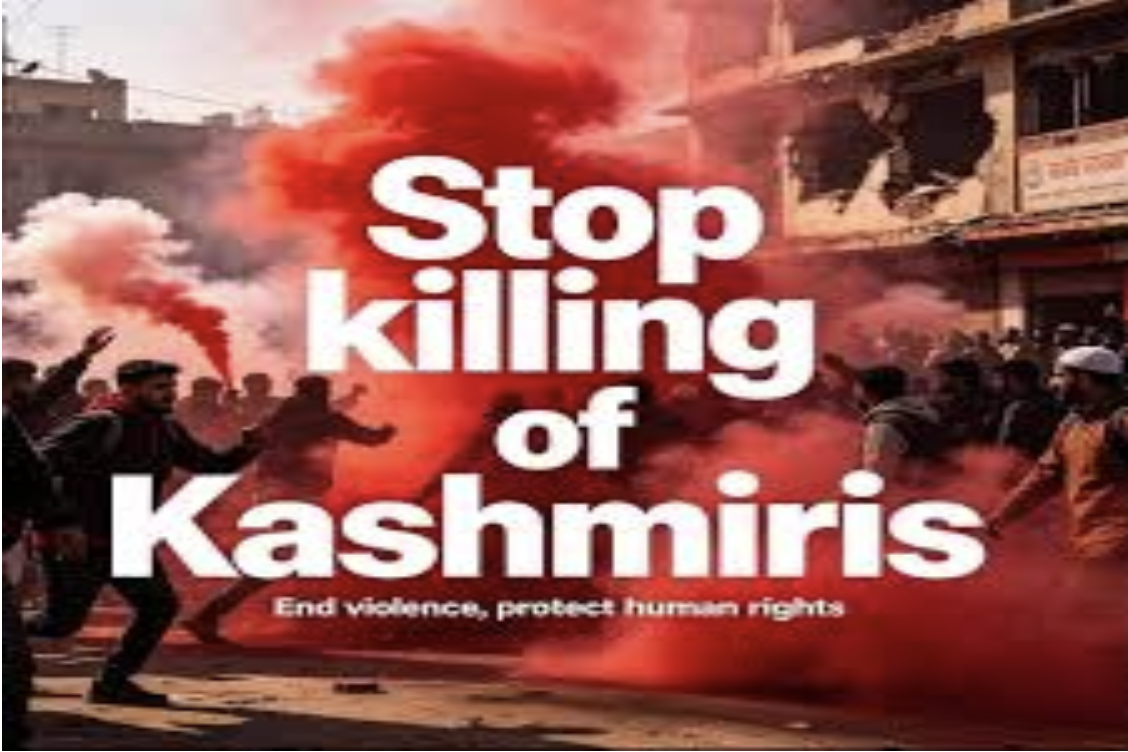
Pakistan-Administrated Kashmir is currently facing one of the most severe crackdowns in recent memory, as the region’s government, backed by the Pakistani state, has unleashed a campaign of violence against peaceful protesters. The Joint Awami Action Committee (JAAC), a social movement demanding basic rights and the implementation of a signed agreement, has been brutally suppressed.
The June 7 Massacre
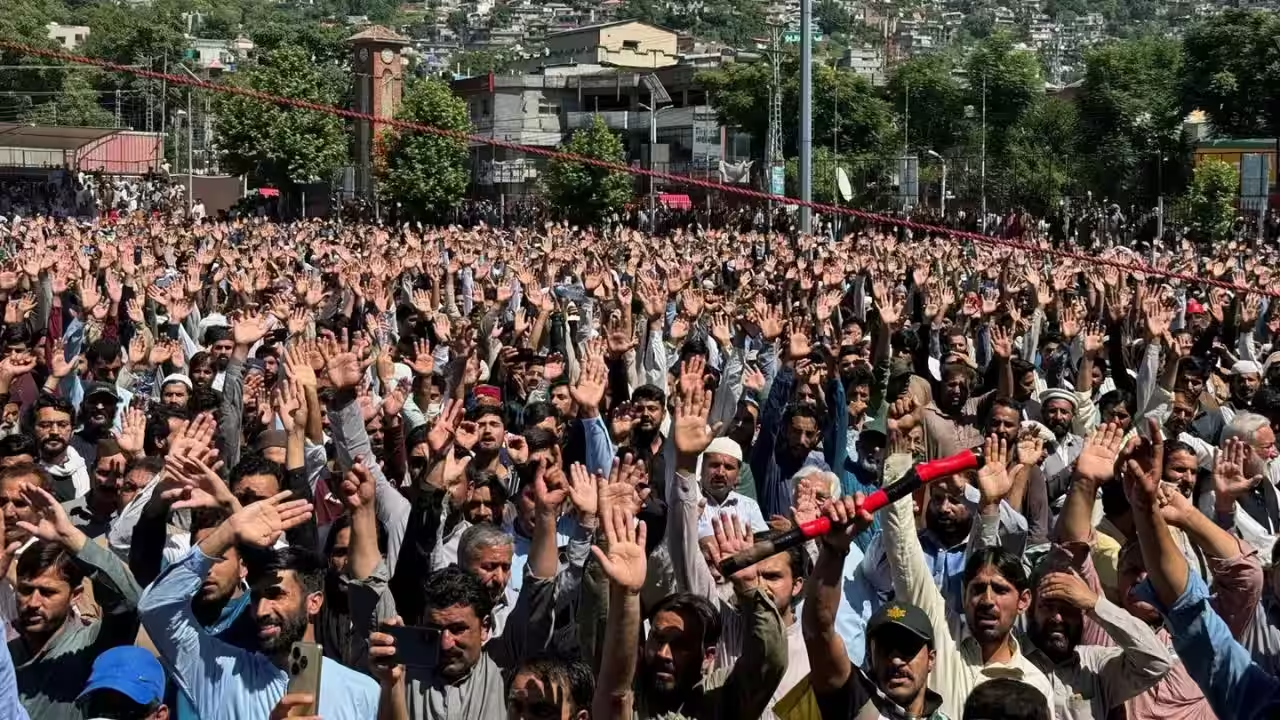
The most violent episode in the current crisis occurred on June 7, 2026, after protesters organized a funeral (of a activist of JAAC was killed by security forces) and were protesting peacefully, using the funeral gathering as a platform to demand justice and the implementation of their rights. The funeral was transformed into a scene of bloodshed outside the Combined Military Hospital in Rawalakot.
In a move that has drawn widespread condemnation, security personnel opened fire and resorted to shelling against the unarmed mourners. According to the JAAC’s official account, at least 27 protesters were killed during the operation, while several others sustained serious injuries. Some local sources have suggested that the death toll could be over 100. it is fact by those were present that approximately 110 locals were detained from the hospital premises and that several people remain missing following the security operation. Authorities have been accused of taking custody of the bodies of deceased protesters, preventing families from performing last rites and further deepening the trauma inflicted upon the community.
Casualties and Disappearances
The violence of June 7 was not an isolated incident but part of a sustained campaign of repression. According to human rights activists and local sources, nearly 350 local residents have been detained over a span of just four days in a series of raids across the region. The central office of the JAAC has been sealed, and authorities have registered what activists describe as fabricated criminal cases, including accusations related to illegal possession of ammunition, against several JAAC members.
While official sources claim that seven civilians were killed during Sunday’s clashes , the JAAC’s figure of 27 is corroborated by multiple independent media reports. The discrepancy between official accounts and on-the-ground reporting underscores the information blackout that authorities have imposed. Mobile data services remain suspended or blocked in the region, severely curtailing the flow of information and preventing the world from witnessing the full scale of the repression.
The Broken Promise
Understanding the current repression requires examining its root cause: the government’s failure to honor its commitments. The JAAC was not formed as an anti-state entity but emerged organically from the people’s legitimate grievances. Initially formed in September 2023, the committee was based on three core economic demands including subsidized flour, reduction in electricity tariffs, and reduction of elite privileges. The movement grew as the government repeatedly failed to address these basic needs.
The situation came to a head in September and October 2025, when widespread protests and clashes forced the government to negotiate. A formal peace agreement was signed between the Azad Jammu-Kashmir (AJK, the official name of Pakistani-administered Kashmir) Government and JAAC in October 2025, with the federal minister for parliamentary affairs, Dr. Tariq Fazal Chaudhry, acting as a signatory. This agreement was supposed to address a comprehensive charter of 38 demands .
However, the people of AJK have learned that government promises are written on paper that dissolves upon contact with reality. According to the government’s own progress report, only 24 out of 44 total demands have been completed, with 16 in process and four facing an “impasse” . The JAAC has consistently argued that the government has failed to implement the agreement in letter and spirit, leading to the decision to launch a long march from across Kashmir to Muzaffarabad on June 9 .
The march was intended to be a historic, peaceful demonstration of the people’s collective will. As Shaukat Nawaz Mir, a JAAC member, stated in an audio message: “We are not against any country, institution or individual – to link our peaceful struggle with terrorism is a great oppression”. The government’s response was not to engage in dialogue but to proscribe the JAAC under anti-terrorism laws on June 5, effectively criminalizing peaceful protest.
The Government’s Dubious Claims of Implementation
The government has attempted to justify its repression by claiming it has fulfilled most of the agreement’s clauses. Federal Minister Tariq Fazal Chaudhry has stated that 35 of the 38 clauses have either been completed or substantially acted upon. This claim, however, collapses under scrutiny.
A careful reading of the government’s own implementation record reveals selective fulfillment of minor demands while core political and governance issues remain unaddressed. The progress report itself acknowledges that “several unresolved demands are seen as direct challenges to the existing democratic, constitutional, and political order” . Among these are the demand for overseas voting (dismissed as “impractical”) and the abolition of refugee seats (perceived as an “attempt to undermine the Kashmir cause”) .
The government’s approach has been to cherry-pick easily implemented economic concessions-such as withdrawing First Information Reports (FIR, the typical first step in initiating a criminal investigation in Pakistan) against protesters or waiving electricity bills for specific beneficiaries—while refusing to address fundamental issues of democratic representation and autonomy. The claim of 35 fulfilled clauses is a statistical sleight of hand that does not reflect the lived reality of the Kashmiri people, who continue to suffer from economic hardship and political disenfranchisement.
The Present Reality: A Region Under Siege
As of June 9, 2026, the situation in Pakistan-administered Kashmir remains extremely tense. The government has deployed additional paramilitary troops to reinforce the local police force . A travel advisory is in place, with visitors being urged to postpone non-essential travel to Rawalakot until June 20 . Mobile data services remain suspended, creating an information blackout that allows state violence to continue unseen .
The mood in Muzaffarabad, the largest city in the region, has been described as tense, with a visible security force presence and residents rushing to stock up on supplies in markets for fear of looming lockdowns . The government has declared the JAAC a proscribed organization under anti-terrorism legislation, accusing it of “engaging in terrorism” and “creating anarchy” . This designation is being used to justify mass detentions, the sealing of offices, and the use of lethal force against protesters.
Despite the threats and violence, the JAAC has remained steadfast. The committee has rejected the terrorism allegations, asserting that its members were holding a peaceful sit-in when security forces opened fire . The planned long march to Muzaffarabad represents a last resort for a people who have exhausted all peaceful avenues of redress.
From Rawalakot to Every Corner of Resistance: Justice Will Rise
The massacre of June 2026 will not be remembered merely as another episode of state repression. It will be remembered as a moment when ordinary people stood against injustice, refused to surrender their dignity, and paid the highest price for demanding their fundamental rights. The blood spilled in Rawalakot is a stain on the conscience of those who ordered and justified violence against peaceful citizens.
History teaches us that no amount of repression can permanently silence a people determined to be free. The attempt to criminalize peaceful dissent, to brand protesters as terrorists, and to crush democratic movements through force is not a sign of strength—it is a sign of fear. Governments may imprison activists, ban organizations, and impose blackouts, but they cannot extinguish the collective will of a people fighting for justice.
The struggle of the JAAC is not simply about economic demands or political reforms. It represents a broader struggle for democracy, accountability, and the right of people to determine their own future. Every arrest, every act of intimidation, and every bullet fired against peaceful protesters has only strengthened the resolve of those who refuse to accept oppression as normal.
Justice demands truth. Truth demands accountability. Accountability demands action. The families of those killed on June 7 deserve answers. The wounded deserve justice. The detained deserve freedom. And the people of Pakistan-administered Kashmir deserve the democratic rights and representation that have been denied for far too long.
The future belongs not to those who rule through fear, but to those who organize through hope. The voices rising from Rawalakot, Muzaffarabad, Bagh, Poonch, and every village and town of the region carry a simple message: dignity cannot be banned, and freedom cannot be buried.
An Injury to One Is an Injury to All: A Call for International Solidarity
The struggle unfolding in Pakistan-administered Kashmir is not an isolated local issue. It is part of a universal struggle for human dignity, democratic rights, economic justice, and the freedom of people to raise their voices without fear of repression. When peaceful protesters are met with bullets, when activists are imprisoned for organizing, and when entire communities are silenced through force, the responsibility to speak out belongs not only to the affected people but to all who believe in justice.
The massacre in Rawalakot and the crackdown against the Jammu Kashmir Joint Awami Action Committee (JAAC) demand international attention and scrutiny. Human rights organizations, democratic institutions, trade unions, student movements, journalists, academics, and people of conscience across the world must raise their voices against impunity and stand with those demanding accountability.