
Housing under Spanish capitalism: What is the way out for the working class?
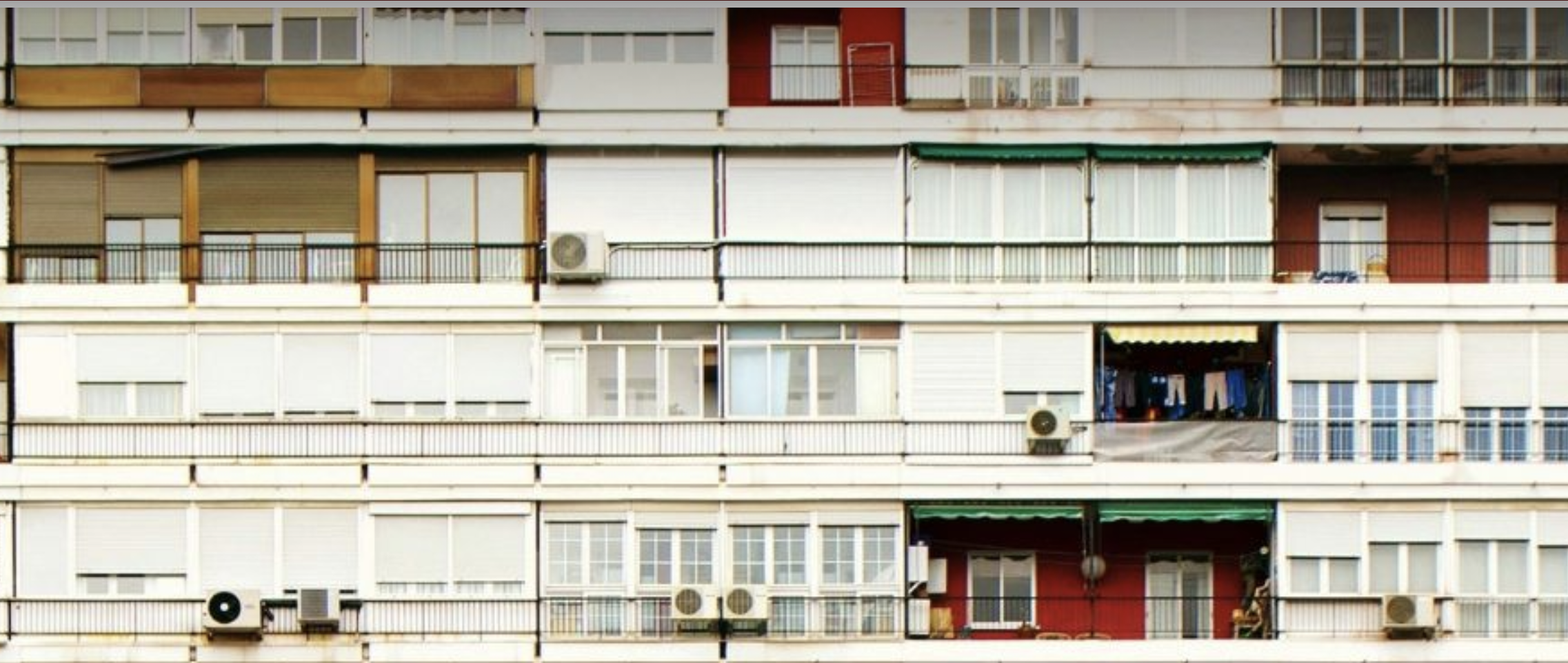
Maricarmen was 87 years old when they evicted her from her home. That was the spark. Within a few days, what began as a fight to stop an eviction turned into demonstrations. Protest camps spread from Madrid to other cities; thousands of young people filled the streets; and what began as an economic grievance became a political confrontation with the government.
It is no coincidence that, fifteen years after the 15-M movement—when mortgage evictions were a massive social crisis—the latest upheaval stems from the housing crisis. Housing is the point where the impoverishment of an entire generation, the record profits of banks, investment funds, and major rentiers, and the impotence of a “progressive” government—which for more than eight years has failed to stand up to vulture funds or make even minimal progress in creating a public rental housing stock—all converge. Polls have said the same thing for years: it is the population’s top concern, and the problem only worsens. Given this, we must ask: Why is this crisis recurring? Will the solutions proposed by the PSOE-SUMAR on one side or the PP-VOX on the other actually address the problem? What is needed for a working-class solution?
Sixty Years of Business
To understand why the housing crisis is exploding now, we must first look back. What we call the housing crisis is the result of sixty years of state policy, and it has beneficiaries whose names are well-known.“We want a country of homeowners, not proletarians” (Franco’s Minister of Housing, 1959). The Franco regime made a decision that would shape several generations: that people should buy homes. It did so through mortgages, subsidies, and tax breaks that primarily benefited those who had the most. Between 1960 and 2001, homeownership rose from 51.9% to 81.2% of households, with the majority of the working class owning their homes, while the public housing stock shrank to a fraction: today it stands at around 1.5–1.6%, compared to a European average of nearly 8%. It was not, fundamentally, a social policy. It was the means of rebuilding Spanish capitalism after the war. The real estate business requires credit, land, and construction, and mortgage-backed home purchases brought all three together: the state promoted mortgage lending and tax breaks and established a framework in which rezoning land generated capital gains for those who built homes to sell. The state did not merely let the market run its course; it organized it.
Affordable housing intended for sale, mortgage tax breaks, and land financing helped turn a social need into a cycle of accumulation for large landowners, developers, construction companies, and banks.
The Transition transformed the political system without disrupting Spanish capital’s specialization in construction, tourism, banking, and land speculation. Private housing development, mortgage credit, and land appreciation remained central to investment, now under new regional and municipal institutions. The 1997–2007 cycle did not deviate from that model; it expanded it through cheap credit, urban planning liberalization, and massive household debt.
Today’s banks and construction companies were founded under Franco
Specific people backed this model. The banking sector grew in a protected and concentrated manner: in 1962, one hundred financial families controlled 48 banks and 84.8% of paid-in capital. The Botín family and the institutions that today make up BBVA emerged from that world.
The same was true of the construction companies. Ferrovial was founded in 1952 to renovate rail lines for Renfe, and in the 1960s, it won the contract for the Bilbao-Behobia toll highway—the first to be put out to bid with private financing. Huarte, Agromán, and Dragados were the major construction firms of the dictatorship: today, Huarte is the “H” in OHL, Agromán is part of Ferrovial, and Dragados is part of ACS. Huarte and Agromán built the Valley of the Fallen, and Entrecanales—now Acciona—constructed a canal in Seville using forced labor from Republican prisoners. The foundations of some of today’s greatest fortunes were laid with slave labor under the Franco regime.
This is no coincidence. Of the 83 ministers under Franco who were still alive in 1974, 64 had served on corporate boards during the preceding fifteen years. And when the Ibex 35 was created in 1992, its boards included 35 officials from the Franco regime and 43 high-ranking officials from the PSOE. Governments changed. The boards did not.
Tourism completes the triangle
In 1959, the Stabilization Plan gave the definitive boost to mass tourism and, with it, to a specialization of the Spanish economy that persists to this day. Bank credit and construction companies developed the Mediterranean coast.
Combined with Spain’s entry into the EU and deindustrialization in favor of German and French capital, tourism became the central engine of accumulation for a segment of the Spanish bourgeoisie. Tourism, as a model, requires enormous amounts of cheap, precarious labor, as well as a brutal assault on the environment to build tourist destinations and infrastructure.
The 2008 bubble was business taken to the extreme. Between 1997 and 2007, housing prices rose about 200% while the CPI rose 40%, and the share of price attributable to profits rose from 16.5% to 49.3% between 1996 and 2004: a massive transfer of income from the working class to capital. Land legislation in the late 1990s expanded urban development possibilities and tied municipal financing to construction.
The crisis exposed the limits of an economy that had subordinated investment and employment to land appreciation and debt expansion.
When it erupted, we were the ones who footed the bill. Between 2007 and 2017, more than 700,000 foreclosures occurred, and nearly one million homes passed from working people into the hands of banks. The state bailed out those same banks: it purchased the toxic assets and transferred them to Sareb, which received about 200,000 real estate and financial assets with a transfer value of 50,781 million euros. Much of that debt ended up being converted into public debt. The government assumed the risks of the banking crisis without converting those assets into a public social rental housing stock from the outset.
On the other hand, many banks offloaded their real estate portfolios by selling them to investment funds. The incentive for this shift was the creation of SOCIMIs—real estate investment companies—which were exempt from corporate income tax if they entered the tax regime established by Law 11/2009, enacted and approved by the Zapatero government. SOCIMIs have been the vehicle that turned the real estate business into a highly profitable venture for investment funds and the upper class.
Today, a system of bourgeois rent and exploitation of the working class
After 2010, the business shifted away from construction and toward residential and seasonal rentals. Against a backdrop of falling rates of profit (profits per euro invested), capital shifted toward “safe” assets: housing and public services, which will always be paid for, as they are essential to the working class’s livelihood. This phenomenon has not been exclusive to Spain; it has also been observed across Europe.
The government itself outlines the consequences of this. The Ministry of Social Rights report, titled “The Problem of Wealth Concentration,” states: “Large property owners with more than 10 properties quadrupled their real estate holdings, rising from 138,000 to 626,000 properties. The percentage of households living in owner-occupied homes has fallen from 79% to 63.9%. The percentage of households living in rental housing has risen from 11.9% to 19%.” Added to this is the fact that there are currently 341,000 homes used for short-term rentals.
The clearest manifestation of this trend—which explains the crisis we are currently experiencing—is that among those under 35, homeownership fell from 69.3% in 2011 to 36.1% in 2020. Spain ceased to be a nation of homeowners for the new generations of the working class.
This created a divide among working-class generations, reflected in the rental market, where 39% of homes are owned by people with only one rental property.
But it must be clear that this sector is part of the working class, which owned a home not for speculative purposes but because homeownership had been a pillar of the working class’s material and ideological security until 2008. Buying a home was a way to save and build an emergency cushion for oneself or one’s children.
The central problem—the concentration of housing ownership—can only be explained through a class-based lens: a family renting an inherited apartment is not the same as a wealth management firm, a bank, or a fund that manages thousands of homes. Their interests are opposed. Therefore, when the majority of the working class still owns its own home, speaking of rentierism in general makes it difficult to understand and address the problem, allowing the right wing to position itself as the defender of working-class people who own one or two apartments. The conflict is not between the working class and rentiers, but between the working class and large property owners, who have found in the real estate market a space to accumulate capital.
Blackstone helps illustrate the business-driven nature of this new form of rentier property ownership. Civio documented 19,638 rental units managed through 27 companies linked to the fund, of which more than 13,000 were in Madrid; CaixaBank accounted for some 22,000, and Cerberus for nearly 7,000. This is how Spanish big capital joined forces with American capital to create the current housing crisis.
Rents are rising, but wages are not. The banks and the ultra-wealthy are the winners
But the problem with housing access isn’t just price; since the 2008 crisis, rents have risen much faster than wages. Rent prices are indexed to the CPI and are ripe for speculation. Wages do not automatically rise with inflation. Since the labor reforms, precarious work and part-time schedules have become widespread. This combination meant that by 2025, on average, 50% of wages went toward paying rent, while rents rose by 7% and wages by only 1%. As a result, 3.4 million people live in overcrowded conditions, and in 2025 there were 18,317 evictions due to nonpayment of rent.
Today, 18 years after the 2008 crisis, housing is once again in the spotlight, but unlike then, there is no macroeconomic crisis; instead, we are told Spain is Europe’s “locomotive.” Housing is the clearest example of the implications of Pedro Sánchez’s “Spain is doing well” mantra.
Capitalism and the Spanish bourgeoisie have fared wonderfully in recent years, fueled by increased exploitation through precarious labor, the theft of people’s income through rents, and the siphoning of taxes via the privatization of public services and multimillion-euro public works contracts that ultimately swell public debt. The clearest evidence of this is that “the richest 1% holds 21.6% of all wealth, compared to 13% at the beginning of the century. Meanwhile, the richest 10% holds 52.9% of the wealth.”
The main beneficiaries of evictions and rent are major banks and investment funds. In 2025, CaixaBank reported 5,891 million euros in net profit, BBVA reported 10,511 million for the group as a whole, and Santander reported 14,101 million.
These figures do not reflect profits derived exclusively from housing, but they do show the economic power of the institutions involved in mortgage lending, in financing developers, and, in certain cases, in direct real estate ownership. Thus, those who benefit from and cause the housing crisis are, essentially, the same as always. The business changes, but the owners do not.
We are the other side of the coin: a working class much poorer than in 2008, with new generations unable to buy homes, competing for scarce rental housing, and facing unstable leases and screening criteria that exclude those with lower incomes or a history of eviction. Those left out end up in substandard housing, squatting, or homelessness.
No matter who is in power, the formula is the same: housing as a commodity.
Eight years of PSOE-Sumar government have produced no measure to address the structural causes of housing access. It took a mass mobilization for them to pass the Maricarmen decree, which is completely insufficient, and the minimal measures it contains—such as the moratorium on evictions from apartments owned by large landlords until 2028 and the automatic two-year extension of leases—are merely a stopgap measure, intended to save face electorally and set the stage for an even greater crisis two years from now.
The official figure for completed affordable housing units exceeded 100,000 per year for much of the 1980s and reached 114,067 in 1985; in 2024, 14,371 were recorded, and in 2025, 12,858. These are completed affordable housing units, not necessarily public rental housing that remains off the market. Even with that caveat, the gap shows that the Sánchez administrations could have promoted much larger-scale public housing production and the permanent preservation of the housing stock, without waiting for a socialist transformation of the entire economy.
Now, the PSOE-SUMAR coalition is talking about regulating market excesses. But, as we explained in the article “The Deceptions Hidden Behind Some Housing Proposals”, the solutions they advocate do little to resolve the issue. Social rentals with private landlords—in which the state pays most of the rent to the landlord—do not create a public housing stock and perpetuate the problem. Tax breaks for landlords (up to 90% in some cases under Law 12/2023) have neither increased the housing supply nor lowered prices, and they impoverish the state. Furthermore, calling it “housing alternatives” instead of “housing” makes it possible to offer shelter as a “solution” to evicted families with children.
After the 2008 crisis, they already sparked a huge outcry over market regulation: one measure was to tighten the conditions for accessing mortgages. The practical consequence was that large and medium-sized capitalists had access to all the credit, while a subjugated working class, with worse contracts and wages, had to look for a place to rent.
The Right: Deregulate Land and Build More
On the other hand, the Right—while claiming there is no immediate solution—proposes the exact opposite and ends up with the same result. The PP and Vox, along with sectors of the bourgeoisie opposed to any regulation, want to deregulate land on a large scale and launch a new construction boom. This solution solves nothing in the immediate term and directly recalls the measures of the 1990s and 2000s that laid the groundwork for the real estate bubble. But above all, it is a complete lie, because it never mentions that, according to the Ministry of Housing, Spain has enough vacant developed land to build 6.7 million homes. They omit this because the owners are primarily investment funds or Sareb, which have been saddled with these properties since the real estate bubble.An immediate solution is to put to use what already exists and is currently used for speculation—the homes and plots owned by banks, investment funds, and Sareb—starting with the vacant ones.
Criticism of the “build more” approach should not be equated with the claim that new housing will never be needed. Building new homes and concentrating them in certain metropolitan areas create real territorial imbalances. The crucial question is not only how many homes to build, but also who decides their location, who finances them, and whether they will remain permanently off the market as public social rental housing.
Because while there are 3.84 million (2021 Census) vacant homes, the prescription for massive land-use liberalization in the context of an ever-deepening ecological crisis means once again generating immense energy and material expenditure, with corresponding CO2 emissions, ecosystem destruction, and construction in flood-prone areas. In other words, it means once again benefiting the same banks, construction companies, and investment funds that profited during the previous crisis. We already saw this with the DANA in Valencia, where the PP paid the same companies involved in the Gürtel scandal to “rebuild” in the flood-prone areas they had built on 20 years earlier.
A capitalist market, not a poorly regulated market
In short, the problem is not that the housing market functions poorly because it is regulated or because it is liberalized, as most political forces—including Sumar and Podemos—claim; it functions poorly because it is a capitalist, irrational market that lurches from crisis to crisis, benefiting a single class along the way.
Today, the Spanish housing market works wonderfully for big business owners, bankers, and rentiers: for them, a home is not a home, but just another commodity to sell, buy, and rent.
Representatives of the bourgeoisie argue that large property owners constitute too small a faction of the total housing stock to pose a problem. But in reality, large property owners, since they do not need the housing to live in, can leave apartments vacant until prices rise, or artificially inflate prices until sectors of the working class, out of sheer necessity, are forced to pay them. This is the only way to explain why rental prices have doubled over the past 10 years.
And it is necessary to understand the structure of Spanish capitalism to grasp the “progressive” government’s total inability to take any substantive measures, the absence of any public housing stock, and the fact that mass mobilizations are needed to achieve even such minimal goals as halting evictions.
As we explained earlier, the bourgeoisie linked to banks, construction companies, and real estate is central to Spanish imperialism, and its largest companies are ACS, Ferrovial, Santander, and BBVA. These are powerful multinationals with structural ties to the U.S. bourgeoisie.
That is why, in Spain, even the smallest measure to ensure housing as a universal right, not a commodity, directly confronts the IBEX and the economic power structure of the post-Transition regime. A confrontation that, as we have seen over the past 8 years, no force that formed the basis of the progressive government will undertake—much less the forces to its right. This helps explain why, despite the massive mobilizations following Maricarmen’s eviction, parliament rejected even minimal decrees, none of which included a single measure addressing the concentration of real estate ownership.
How can the right to housing be guaranteed?
As we have seen, no solution will come from the bourgeoisie’s representatives. The only guarantee is that the working class steps in with its own voice and methods—knowing this will be a long struggle, and that the general strike currently being organized is a first step. Contrary to what they would have us believe, structural solutions can be implemented immediately—but only if we are willing to confront the big bourgeoisie.
This struggle must begin with a moratorium on all evictions and the mobilization of the resources needed to offer stable housing alternatives to those already evicted.
The instability of the rental system forces many working-class families into displacement or, quite simply, to face the threat of eviction every time their lease expires and their wages are no longer enough to keep up with constant rent hikes. That is why the struggle must continue for truly open-ended lease agreements and for an immediate reduction in rent prices.
As we have seen, rising inflation is driving up the cost of living for the working class. This process of gradual impoverishment makes it increasingly difficult to afford housing. For this reason, it is also urgent to fight for higher wages and pensions, indexed to the CPI.
For a public social rental housing stock; expropriate large landlords
Finally, an essential measure to address the housing problem is to create a public social rental housing stock. This can be done immediately by expropriating large landlords without compensation, as repayment for the 2008 banking bailout the entire working class paid for. This solution would eliminate most apartments used for speculation and make them available at affordable rents, lowering overall prices.
Expropriation must expressly distinguish between personal property or small family assets and real estate organized as capital. It is not a matter of equating a retiree who supplements their pension by renting out an apartment with Blackstone or a bank’s residential portfolio. The goal is to socialize large landlords’ housing stock and manage it through the democratic participation of tenants, sector workers, and neighborhood organizations, with rents tied to income and a ban on future privatization.
Before building new housing, a plan must be developed to put vacant units into use, based on a regional inventory of vacant, tourist, and rehabilitable housing, and taking into account projections for new households and the potential for renovation. This plan must begin with the expropriation of housing owned by banks, vulture funds, and large property owners, incorporating these units into a permanent public social rental housing stock, with rents adjusted to families’ incomes and under the democratic control of workers and tenants. Wherever, after recovering and rehabilitating the existing housing stock, a proven shortage persists, public housing must be built directly on public land, with no possibility of subsequent privatization or of turning subsidies into a guarantee of profitability for private developers.
Expropriation of large construction companies. Democratic and ecological planning.
To avoid repeating the speculative model that led to the 2008 crisis and to nip in the bud all corruption related to infrastructure construction (the Ábalos case), we must also expropriate the large construction companies and IBEX-listed banks, placing land, credit, and construction capacity at the service of democratic planning. This planning must determine where and how many homes to build based on social needs, changes in household structures, access to public transportation, and ecological criteria. The goal is to combine expropriation—which transforms property relations—with the recovery, rehabilitation, and construction of the housing needed to also overcome its unequal territorial distribution.
An ecological construction plan would have to begin by restoring and rehabilitating existing buildings, reducing energy demand, and avoiding new developments in flood-prone or high-risk areas. Any necessary new construction should be based on expropriating already developed land, using low-impact materials, adapting to heat, and ensuring access to public transportation. The alternative to the real estate business is not to leave the construction sector without work, but to redirect its capacity toward rehabilitation, social housing, and much-needed infrastructure.
Overcoming the divide between large metropolitan areas and depopulated regions also requires redistributing jobs, services, universities, and investment. A much denser public rail network —commuter, regional, medium-distance, and high-speed rail—that is accessible and largely free, along with a reduction in the workweek without a pay cut and voluntary telework wherever possible, would help reduce commuting.
Nor can this planning be reduced to a single ministry that awards contracts to the very same large construction firms. It requires a workers’ government and democratic planning bodies with the participation of unions, construction workers, railway workers, tenants, and communities—bodies capable of deciding on land use, credit, and productive capacity. That is why the socialization of the major banks, real estate developers, and construction companies is not a slogan unrelated to housing, but a prerequisite for implementing the program.
Is it possible to implement these measures under Spanish capitalism?
As we have seen, measures to solve the problem at its root exist; they are feasible and can guarantee housing as a right. These measures are entirely possible; the current political class’s failure to implement them is a conscious decision to privilege a minority over the interests of the masses. Because the real estate business is closely tied to the Spanish bourgeoisie, any measure directly confronts the interests of the IBEX 35, regardless of who wins the elections.
Only the working class and its allies can wage this confrontation through a massive, organized struggle—as they did in the 1930s during the Spanish Revolution—while also resolving basic issues such as housing, access to land, and wages. If we look next door, in Portugal, mass occupations of vacant homes took place only in the context of the Carnation Revolution in 1975; beyond the nationalization of banks and energy companies, rent prices were capped and regulated. The state was forced to implement the SAAL plan (Local Housing Support Service), which, under the direction of neighborhood committees, enabled the construction and reconstruction of neighborhoods—which still exist today—to meet people’s needs.
However, many of these gains have been rolled back today. The reason is that, although the revolution succeeded in overthrowing the Salazar dictatorship, it did not go far enough to overthrow the dictatorship of the bourgeoisie, capitalism. In revolutionary processes, the bourgeoisie prefers to give up its rings rather than lose its hand because, if capitalism remains in place, it can wait for a more favorable moment. It can wait until the working class is more disorganized and demoralized, then launch another offensive and reclaim what it was forced to cede.
The lesson we must learn is that, in Spain, housing struggles—even minimal, defensive ones, like Maricarmen’s eviction—can spark massive mobilizations that chart the path forward and deepen the struggle. The only way to secure the right to housing in the long term is through a revolution that establishes a working-class government to confront the IBEX 35—a government rooted in the democratic mass organizations built by workers and the people themselves in their struggle. A government whose task is not to manage the decaying bourgeois state, but to replace it entirely. A government that expropriates the bourgeoisie and democratically plans the economy to serve social needs. This workers’ government will be the first step on the path toward the Socialist United States of Europe and the international revolution.
First published here by Corriente Roja


