Kashmir: Campaign for a Revolutionary Constituent Assembly
We have repeatedly explained that constitutional questions play a central role in the struggle of the working class. A struggle from a socialist perspective is only possible if we adopt a revolutionary position on the democratic question. This means consistently defending all democratic demands and fighting for the revolutionary implementation of the most important among them. The question of the constitution is necessarily an integral part of this struggle.
The slogan of a Constituent Assembly has historically occupied a central position in revolutionary democratic struggles, even during the era of bourgeois revolutions. During the French Revolution of 1789, for example, the Constituent Assembly became the focal point of the struggle for freedom. The same was true of the European revolutions of 1848 and the Russian Revolutions of 1905 and 1917. The writings of Marx, Engels and Lenin from those periods bear witness to this historical reality. The Constituent Assembly has continued to play an important role in several revolutions since then.
In essence, a Constituent Assembly is a body elected exclusively for the purpose of drafting and deciding upon the constitution of a state. It is a forum in which representatives of antagonistic classes present their respective programmes for how society should be governed. For this reason, the Constituent Assembly represents the most radical form of bourgeois democracy, as it brings popular layers of society into the debate over the political and economic structure of society.
Marxists have no illusions that socialism can be peacefully established merely through such an assembly. The overthrow of capitalist class rule and the expropriation of the capitalist class are questions of power, which ultimately involve a confrontation between the ruling and oppressed classes.
However, this does not mean that Marxists should ignore such institutions. We advocate making use of every available institution to present the complete programme of revolutionary social transformation. Such a struggle can help demonstrate to the masses that these institutions, on their own, are incapable of resolving the fundamental problems of society.
To make a Constituent Assembly as democratic and revolutionary as possible, Marxists propose that its representatives should be elected through local popular assemblies; that they should remain subject to recall by their constituents at any time; and that they should receive no more than the wages of a skilled worker.
Recent developments around the world, along with numerous historical experiences, have demonstrated that democratic slogans, particularly the slogan of a Constituent Assembly, can be advanced in two different ways: a revolutionary way and a reformist way. Reformists present democratic demands as appeals to the bourgeois state and emphasise the parliamentary road rather than mobilising the working class and the masses. Reformists and centrists generally raise the slogan of a Constituent Assembly by demanding that the ruling class convene such an assembly. In such circumstances, however, the Constituent Assembly can become merely an instrument of the ruling class, since it is the ruling class that will control it.
Revolutionaries, by contrast, do not demand a conciliatory Constituent Assembly designed merely to appease the masses. Instead, they campaign for a Revolutionary Constituent Assembly. This means an assembly under the control of the struggling masses, organised through action committees and popular militias. In other words, such an assembly would emerge as the outcome of a revolutionary upsurge, in which the working class has seized power or, at the very least, a situation of dual power has developed.
Under what conditions should Marxists raise the slogan of a Revolutionary Constituent Assembly? We believe that this is not a universal slogan that can be raised in every country or under all circumstances. Our position on this question has been expressed as follows:
“Where fundamental questions of political sovereignty are on the agenda, and the masses have not yet developed an awareness that democratic workers’ councils are superior to a Constituent Assembly, the slogan of a Revolutionary Constituent Assembly can be important at particular stages. Bolshevik-Communists advocate that representatives must remain under popular control and be subject to recall at any time. Such an assembly cannot easily be turned into an instrument of the ruling class. It should be convened not by a bourgeois government, but through a revolutionary government based on committees of workers and ordinary people.”
Therefore, we propose raising this slogan wherever the course of struggle or the conditions of the capitalist political system bring fundamental democratic questions onto the agenda. This may be the case in countries ruled by military dictatorships or by less overtly authoritarian forms of bourgeois government, such as Bonapartism or semi-Bonapartism. It may also arise where the struggle of the working class brings fundamental questions concerning the constitutional structure of the country to the forefront. As long as workers and popular layers retain illusions in bourgeois democracy, Marxists should raise the slogan of a Revolutionary Constituent Assembly under such conditions.
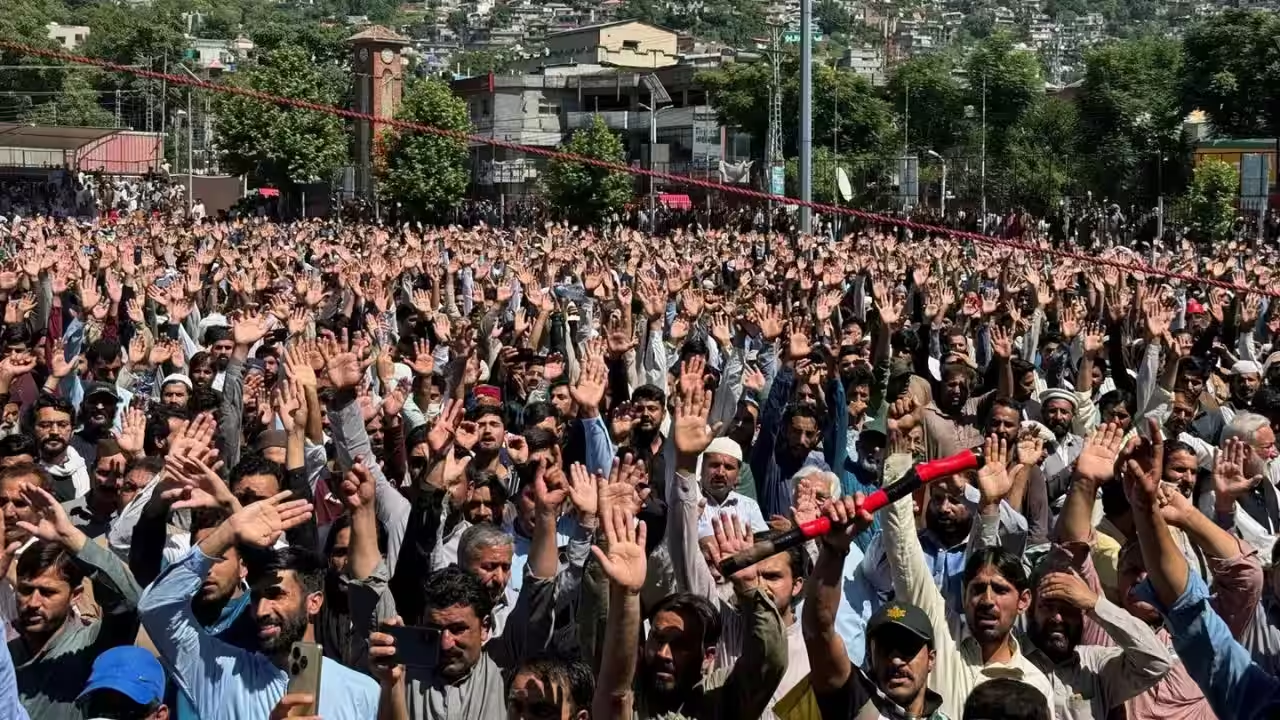
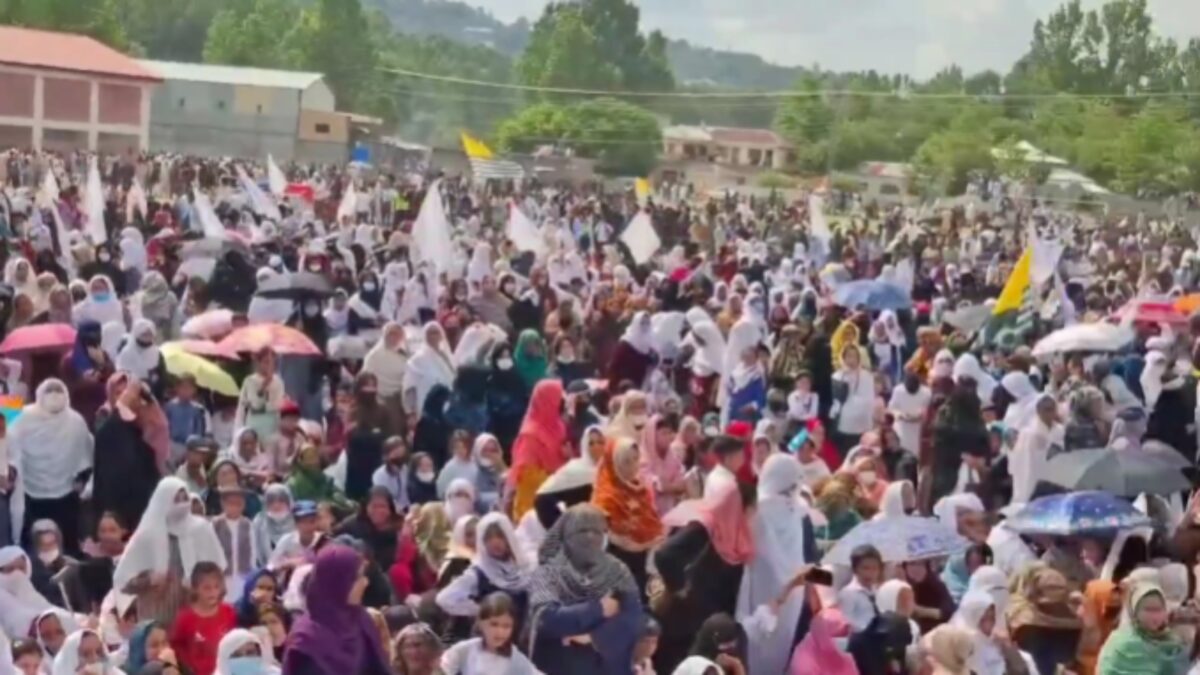
The courage demonstrated by the People’s Rights Movement has not only given the people of Jammu and Kashmir greater confidence but has also generated a sense of collective solidarity among the people of Pakistan who are struggling against oppression and for democratic rights. It has reinforced the belief that when ordinary people unite in the struggle for their rights, the ruling classes are not powerful enough to continue depriving them of those rights.
Our social media friends and acquaintances, setting aside the anti-Pakistan propaganda of the ruling classes, have repeatedly congratulated the movement on its successive victories and pledged that they will soon organise their own struggles for rights more effectively within Pakistan. It is therefore essential to maintain continuous pressure on the ruling classes, beginning at the village and town levels, in order to preserve the gains of the movement.
The experiences accumulated during the struggle must not only be shared among its participants but must also be translated into further political and organisational demands. Women and men must have equal representation in this process. Alongside the problems of villages and towns, demands should also be raised at the district level for fully functional wholesale markets and fully equipped general hospitals.
This process can only be realised if popular committees are consciously involved at every stage. Every campaign should be subjected to voting under the principle of democratic centralism. Every possible effort should be made to reach decisions through consensus; where consensus is not possible, majority decisions must prevail over minority positions, even if the organisers themselves happen to belong to the minority. This is the most effective way to promote equality, humility and collective solidarity among the people.
The entire process should be conducted through People’s Assemblies, beginning at the village and town levels. At every level, efforts should also be made to encourage workers represented in these popular committees to organise campaigns for workers’ committees within their own workplaces and institutions.
Every People’s Assembly should conduct a vigorous campaign against the existing Legislative Assembly of Pakistan-administered Jammu and Kashmir, whose constitutional framework imposes restrictions on contesting elections on the basis of the right to self-determination. The importance of an alternative Constituent Assembly must be actively propagated in opposition to this existing arrangement. This is the way to preserve the achievements of the movement while countering the ruling classes’ attempts to confuse and mislead the people.
The struggle must therefore continue without placing any trust in the ruling classes. It must move consistently forward.
These colonial rulers now repeatedly tell the people that Pakistan treats them unjustly and that none of the promised provisions have been delivered. In other words, when the hunter himself finds himself trapped in the net, he suddenly begins objecting to the existence of the net! It is essential to take advantage of this contradiction.
Rather than doing anything to strengthen the authority of these rulers, the people must now campaign for a Revolutionary Constituent Assembly. This campaign should bring together all stakeholders in the state, including representatives of ordinary people, working-class leadership, the middle classes (lawyers, professors, doctors, traders and transport operators), students and women’s leadership. Such a Revolutionary Constituent Assembly should undertake the task of constitution-making and issue a call for further revolutionary struggle. It must also take responsibility for organising its own struggle for the liberation of the rest of Jammu and Kashmir.
The movement in Kashmir is not merely a regional uprising. It is part of the global struggle against oppression, the occupation of the resources of oppressed nations, the harsh consequences of neoliberal policies, the privileges of the political elite and unemployment.
When the basic necessities and rights of the people are withheld while privileges are concentrated in the hands of a few, popular resistance becomes inevitable. Once that resistance emerges, neither media blackouts nor the use of force and bullets can suppress it indefinitely. This is precisely what happened in Pakistan-administered Jammu and Kashmir.
The constitutional crisis in Pakistan-administered Kashmir is not merely a legal issue; it is fundamentally a question of power. The Karachi Agreement, the Act of 1974 and the institutional framework built around them are instruments of domination that the people have rejected.
The people are no longer willing to remain silent spectators. A revolutionary solution cannot be achieved merely through constitutional amendments or the acceptance of individual demands. Rather, the active struggle of the working people of Kashmir, through the experience of a Revolutionary Constituent Assembly, will lay the foundations of a democratic and socialist Kashmir.