Trump and Netanyahu fall short, and a two-week ceasefire begins
While details of the ceasefire and its longevity remain unclear, the fact that this deal was even on the table is a significant setback for imperialist ambitions
After threatening to “wipe out Iranian civilization,” Trump backed down. He accepted a 15-day truce, signaling the possibility that he might accept defeat. Israel accepted the truce in theory, but in practice has already broken it by bombing a refinery in Lavan, Iran. Since this is a truce, and not an agreement ending the war, everything could change. Furthermore, the outcome of this war could directly and profoundly influence the crisis of the world order and the trends of the class struggle in much of the world. Therefore, it is necessary to wait for its definitive results before drawing conclusions. But it is undeniable that the terms of the truce point to the possibility of a defeat for imperialism.
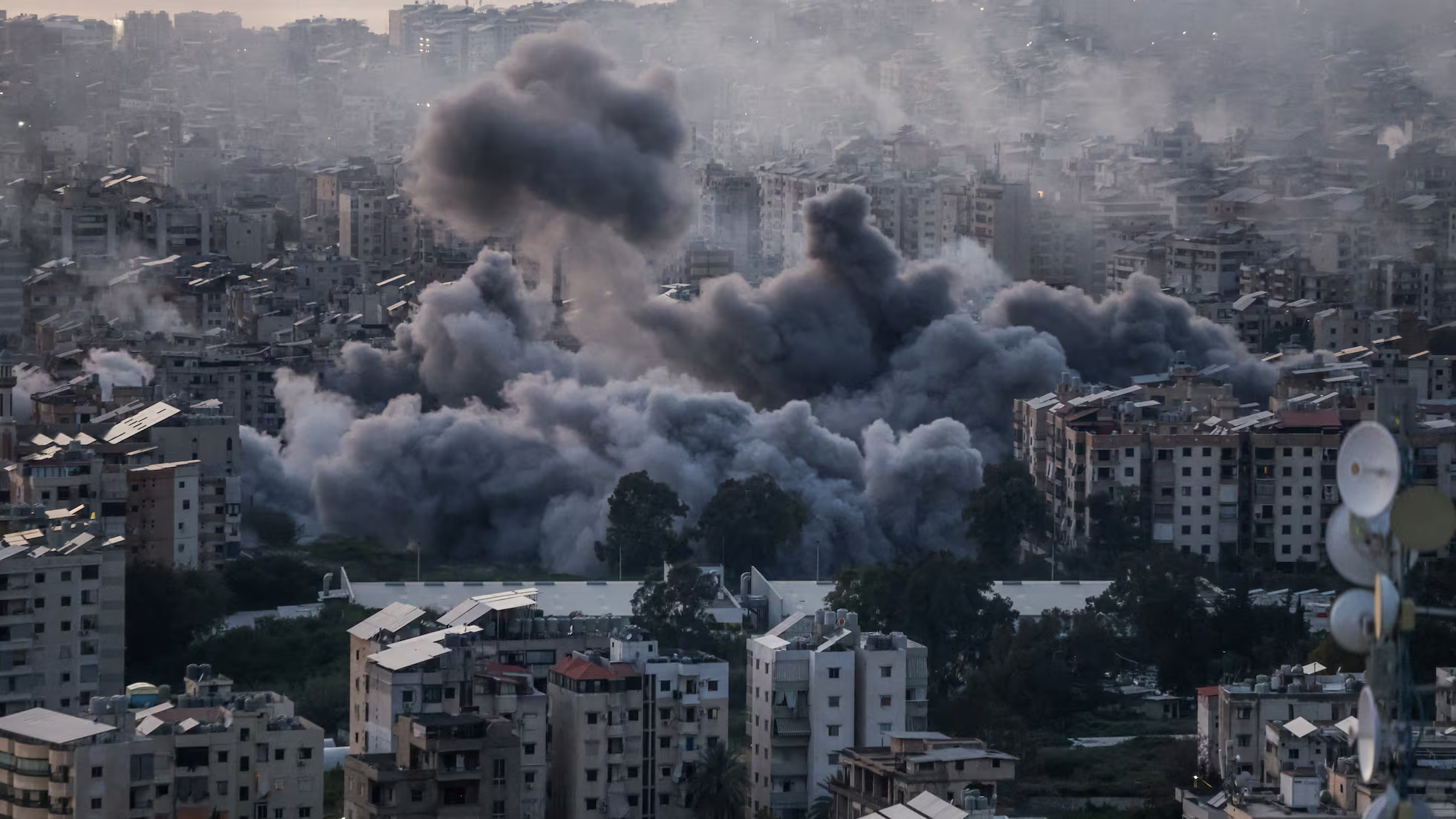
After 40 days of aggression against Iran, with over 15,000 bombings, widespread destruction, and 2,000 Iranian deaths, virtually none of the imperialists’ main objectives were achieved.
Despite Trump’s claims to the contrary, the Iranian regime may have lost more than 40 leaders, but it survived and grew stronger both within and, especially, outside the country, while also consolidating the IRGC’s power over the entire regime.
The nuclear and ballistic missile programs are still up for negotiation, but it is unlikely they will be eliminated. They may be limited in exchange for the total or partial suspension of heavy sanctions and the unfreezing of millions in Iranian funds abroad.
Israel asserts that Lebanon is not part of the agreement. This is an important issue, and we will see how it materializes. The reality is that Hezbollah’s resistance has not been defeated to date, and a retreat of imperialism in Iran does not favor Israel, even though, regrettably, this has not been a priority for the Iranian regime in the negotiations.
U.S. control over Iranian oil has not been established, contrary to Trump’s previous statements. Could this change in the negotiations? It is possible, to the extent that Iran is interested in modernizing its oil industry and selling oil at market prices, which are significantly higher than the prices paid by China. But nothing here resembles the Venezuelan example from January.
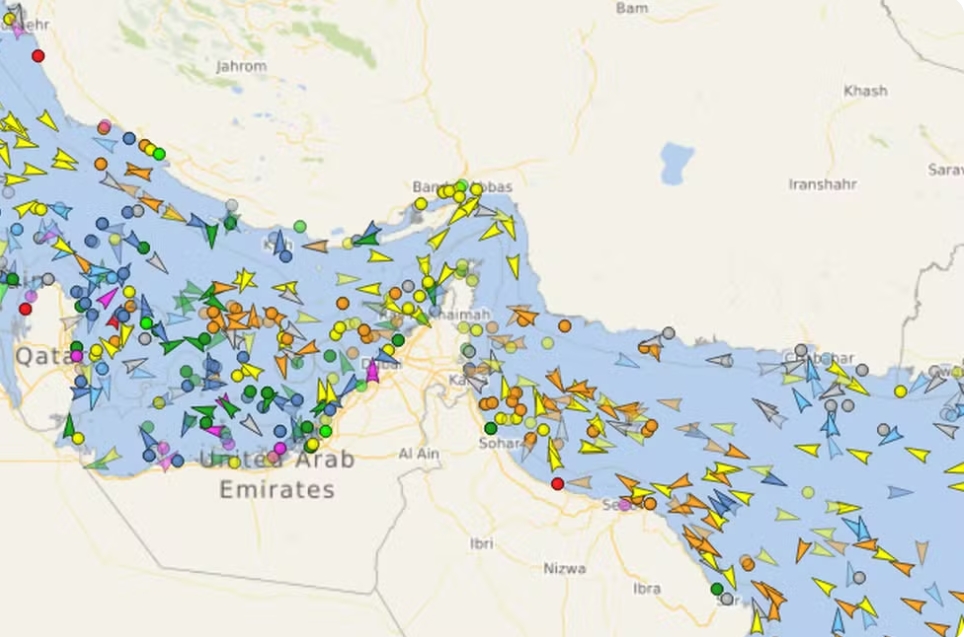
The full reopening of the Strait of Hormuz will take place under Iranian control, and there is a possibility of tolls being imposed by Iran and Oman, which did not occur before the attacks.
This provisional outcome weakens imperialist policies in the region and around the world
The imperialist-Zionist dream of a new Middle East under Israeli hegemony is slipping away. Iran emerges stronger and keeps its sights set on Israel’s main ally in the Gulf, the United Arab Emirates, as well as other signatories of the shameful Abraham Accords, which normalized relations with Israel at the cost of Palestinian lives.
Another regional power, Saudi Arabia, is moving away from normalization with Israel and is betting on military agreements with Pakistan and Turkiye, in addition to building alternative routes for oil exports. It is also possible that it will seek a necessary accommodation with Iran, despite Iranian attacks on the country.
The future of Israeli territorial expansion in Lebanon and Syria is uncertain. Zionist leaders wish to proceed with their plans to seize southern Lebanon, expel the population, and turn it into a permanent occupation. They also aim to expand the occupation into southern Syria, integrating the occupied territories from the Golan Heights all the way to Sweida, passing through parts of the Quneitra and Daraa provinces. However, Israel depends directly on the military, political, financial, and diplomatic support of U.S. imperialism, which places the future of war in the hands of President Trump, but also makes Israel dependent on Arab regimes’ own desire to resist or capitulate. The example of Iran strengthens the option of resistance. The Zionist failure in the war against Iran is likely to weaken Al-Hajri and the Druze leaders who are banking on relations with the Zionists.
As for Palestine, the end of the genocide in Gaza and the ethnic cleansing in the West Bank and al-Quds/Jerusalem is not yet in sight. Despite the weakening of imperialism/Zionism, the Palestinian issue has not been given central prominence in negotiations with the United States. Issues such as the withdrawal of Israeli troops from Gaza, the West Bank, and Al-Quds/Jerusalem, and border control between Gaza and Egypt, and between the West Bank and Jordan, remain unresolved.
Finally, Netanyahu will face a tough electoral test in the elections that are expected to be called by October at the latest. The failure of the aggression against Iran weakens his position.
Global Impact
On the international stage, the global capitalist economy is weakening. The World Bank forecasts lower growth and higher inflation due to the war.
Transatlantic relations between the United States and Europe are strained. It is possible that European imperialism, battered by U.S. impositions, will attempt to develop alternative energy sources (nuclear and renewable) and its own armed forces (including an expansion of France’s nuclear arsenal) to reposition itself in the international inter-imperialist struggle.
Russian imperialism, one of the main beneficiaries of the war, saw its profits rise from oil and gas exports at higher prices. Oil prices fell with the ceasefire, but are likely to remain higher than pre-war levels for some time. However, Russian gains may remain limited by the Ukrainian military offensive, which reduced Russian production capacity by 20% to 40%.
Chinese imperialism has fared well. It has avoided inflation in oil and gas prices, strengthened energy alternatives (coal and renewables), pressured Iran to accept the ceasefire, and bolstered its image of predictability in contrast to U.S. imperialism. While U.S. aggression against Iran opens the door for other imperialist powers to follow suit, the costly U.S. military failure temporarily rules out any attempt to take Taiwan by military means and strengthens efforts to pressure the Taiwanese bourgeoisie and the population regarding the “benefits” of unification (despite the dictatorship).
Overall, the U.S. failure demonstrates that no superpower is invincible, echoing the example of Russian imperialism in Ukraine. And it strengthens the struggles of oppressed peoples around the world.
Furthermore, it accelerates the inter-imperialist arms race, the energy transition in imperialist powers that are not self-sufficient in oil and gas (China, Japan, and Europe), and new techniques of conventional warfare with the widespread use of missiles and drones, as well as asymmetric warfare tactics.
Trump has suffered a blow. And he is likely to try to retaliate
The negotiations will confirm (or not) the trends that stem from the proposed 14-day ceasefire. In any case, Trump will seek to win at the negotiating table what he failed to achieve through war. One of these goals for him is access to Iranian oil, which is strategic in the dispute with Chinese imperialism. Trump may try to trade the lifting of sanctions for some degree of access to this strategic energy resource.
Trump is also likely to seek to impose his will on other countries, particularly in Latin America, in order to throw a smokescreen over his failure in Iran. Cuba, suffocated by the energy blockade imposed by Trump, will likely be the next target. Other countries holding elections, such as Hungary, Colombia, and Brazil, are also likely to be the target of efforts to influence their outcomes in favor of far-right candidates.
Domestically, in the United States, his situation is more complicated due to the outcome of the war, likely crises between bourgeois factions, and a loss of popularity stemming from inflation, the violent actions of ICE, and the pedophilia and influence-peddling scandal involving his friend Epstein. All of this comes on the eve of the midterm elections, in which Trump will likely attempt to interfere to prevent an electoral defeat from undermining his presidency.
The Iranian working class will have to resume the struggle against dictatorship and capitalism
The ceasefire, if extended indefinitely, will eliminate the scenario of the destruction of life and the country through imperialist-Zionist military action. In this scenario, the working class will benefit from the end of military intervention, and from the consequent erosion of support for imperialist military aggression among the population and the diaspora. Reza Pahlavi and the MEK will return to their rightful irrelevance.
But just today, Iranian judicial authorities called for the acceleration of executions. Therefore, the working class will have to resume the struggle for an end to executions and for the release of political prisoners (more than 50,000), as well as for democratic freedoms of expression and organization, and for social justice. This will only be achieved with the end of the dictatorship and capitalism.
To this end, it will be necessary to strengthen the independent organization of the working class through trade unions, the student movement, organizations for women’s rights, and those of oppressed nationalities (Kurds, Balochis, Arabs, …), as well as the large diaspora capable of building international solidarity with these democratic and social struggles.
Our Position
The IWL-FI supports the struggles against all forms of imperialism (U.S., European, Chinese, Russian, or Japanese) and welcomes the potential military defeat of imperialism-Zionism at the hands of the Iranian military forces.
If the balance of power allows the Iranian regime to take a clear stance in negotiations with Trump for the end of U.S. bases in the region, for an end to aggression and the withdrawal of Israeli troops from Syria and Lebanon, and for an end to the genocide in Gaza and ethnic cleansing in the West Bank, a more decisive victory over imperialism and Zionism will have been achieved.
At the same time, we will support all forms of self-organization by the working class and Iranian social movements in their struggle to end the executions of political prisoners and secure their immediate release, and for democratic freedoms and social justice.
Finally, we reiterate the call to take to the streets in solidarity with the Palestinian people. We will have a comrade from the IWL present on the Sumud Flotilla to Gaza and will strengthen solidarity activities such as Palestinian Political Prisoners’ Day (April 17) and the Nakba anniversary on May 15.
First published here in Portuguese by the IWL-FI