
The Iranian Regime, the US-Israel-Iran War, and the Effects of the War on Turkiye
If Israel and the U.S. manage to destroy the current Iranian regime, Turkiye may well be the next target for their attacks
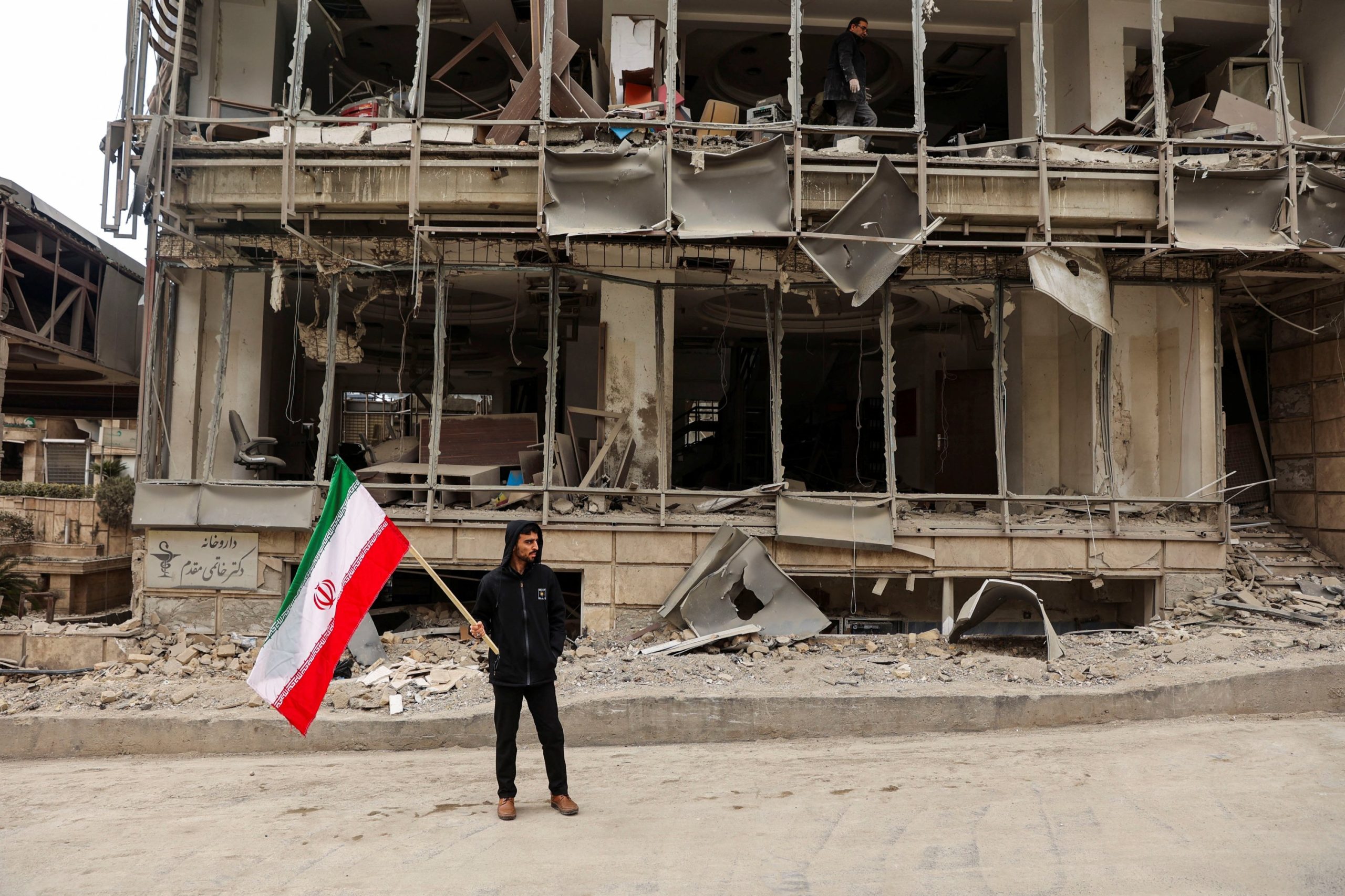
Since 2015, the Iranian regime has become one of the primary targets of the administration of Benjamin Netanyahu. In particular, Netanyahu’s 2015 speech at the U.S. Congress constituted the beginning of the policy of encirclement directed at Iran. The U.S.–Israel axis declared Iran’s ballistic missile program and the Axis of Resistance that Iran built in the Middle East as a threat to regional dominance.
Beginning with its first steps in the 1980s, Iran established in the 2010s a clear front composed of non-state and state-sponsored actors in the Middle East: Hamas in Gaza, Hezbollah in Lebanon, the Assad regime in Syria, the Houthis in Yemen, and Hashd al-Shaabi in Iraq. However, after the defeat of ISIS, along with the killing of Qassem Soleimani in 2020 and the U.S.–Israel attacks following the October 7 Attacks, as well as shifts in regional balances, most of these forces were eliminated or rendered ineffective. The Iranian regime, since the killing of Qassem Soleimani, has systematically avoided escalating its confrontations with Israel and the U.S. and has refrained from entering an all-out war.
Clues for Correctly Reading the Iranian Regime
The Iranian regime is fundamentally a theocratic–Bonapartist regime form governed by a bureaucratic-military oligarchic class in which the working class is systematically kept under political and economic repression.
The Axis of Resistance, coupled with rhetorical anti-imperialism, forms the foreign policy apparatus of the regime.
In Iran, the structure of the regime and its social base are in a contradictory condition. Because the regime possesses public resources, a central role in society, and organic ties with religious authority (the clergy), it has a solid core of supporters able to maintain its continuity. On the other hand, wide social sectors, due both to ideological distance and to patronage relations within the public sector, remain deprived of public opportunities. Therefore, they have neither emotional nor economic ties to the regime.
Seventy percent of the Iranian economy is dependent on the Iranian state. One out of every ten Iranians works in the public sector or in semi-public/state-linked employment. While public-sector hiring after the 1979 Islamic Revolution was tied to loyalty to Islamic values and initially to participation in the Revolution process, from the 1990s onward it became tied to patronage networks such as regional favoritism, kinship, and loyalty to the regime. Since women and youth are unable to enter these networks, their unemployment rates have remained high.
In major cities, aside from public-sector personnel, the “bazari” merchant class remains an important politico-economic actor, yet the centralized structure of the Iranian state and the ongoing economic crisis have caused it to lose strength day by day.
In the countryside, the poor peasantry mostly works as wage laborers on the land or as small peasants cultivating their own plots. Although large land transfers occurred after the Islamic Revolution, agricultural economy remains weak both because mechanization and modern agriculture are insufficient, and because Iran’s geography is predominantly arid.
According to former president Mahmoud Ahmadinejad, who is claimed to have been killed in U.S.–Israel attacks, “60% of Iran’s national wealth is controlled by only 300 people.”
Additionally, 20% of the Iranian economy is controlled by the foundations known as “Bonyad.” These foundations are linked directly to the Supreme Leadership (the office formerly held by Ali Khamenei until his death), enjoy tax exemption, and autonomously operate in every sector.
Army Within an Army, State Within a State
The Islamic Revolutionary Guard Corps (IRGC), due to its economic, political, and military power, constitutes its own social base and clearly supports the regime.
The IRGC alone controls one-third of the Iranian economy. It operates in all sectors, from construction to oil, from automotive to telecommunications. And because it is responsible for border security, it maintains a monopoly over smuggling and anti-smuggling operations.
Iran’s short- and medium-range ballistic missile programs, declared by Israel as the primary threat (alongside Iran’s nuclear program), are under the control of the IRGC. Iran claims it deliberately refrains from producing long-range missiles capable of hitting the United States. Despite the 12-Day War in June 2025 and ongoing attacks, Iran is claimed to possess around ten thousand ballistic missiles in storage.
Thus, a two-dimensional legitimacy crisis emerges in Iran.
First, an extreme concentration of capital in favor of state classes has taken place. Every group linked to the public sector, IRGC, Bonyads, or the bureaucratic-bourgeois bloc, has become a distinct fraction of capital.
Second, religious institutions maintain determining influence over political power. The doctrine of Velayat-e Faqih, though operating as an ideological apparatus that veils class contradictions in Iran, has lost its social legitimacy over the last 15 years. The recent waves of uprisings in Iranian society, spanning from 1999 to 2026, show that the regime’s social base has eroded while its apparatus of coercion has strengthened.
Iranian Opposition
Although in the U.S. and Europe–based Iranian diaspora the name and the flags of Reza Pahlavi (the son of the deposed Shah) find significant space, the brutalities of the last Shah have not yet been forgotten in Iranian society. Among the youth, the idea of the Shah’s return appears only to some extent as a means of forming ties with the West and advancing secularization. One important point must be remembered in discussions of the Shah: since the Cold War, the West has never restored a former monarchy in any country it sought to integrate into the Western system. In this framework, the restoration of monarchy in Iran appears highly unlikely.
Another frequently mentioned actor in the Iranian opposition is the organization the People’s Mujahedin of Iran (Mojahedin-e-Khalq, MEK). Founded in 1965, the organization, organized around an Islamist-Leftist political line, contributed to the overthrow of the Shah regime, but later became a target of severe repression due to its opposition to the new Islamic regime. Responding to repression by the regime with bombing attacks, the MEK first moved to France, then relocated to Iraq during the Iran–Iraq War. In the final phases of the war, entering Iran with Iraqi support, the organization lost all remaining popular support, and most of its cadres were killed in operations. The operation they conducted was used as justification for the Iranian regime’s massacre of more than 5,000 leftists who had been imprisoned since 1979. After the failed operation, the organization survived in Iraq until the 2003 U.S. invasion but became increasingly sect-like. Disarmed by U.S. occupation forces, it was first placed on the international terrorist list, then removed when it was seen as potentially useful against Iran, and moved to a camp in Albania. Accused of numerous human-rights violations, the organization maintained its paramilitary structure and became an instrument of intelligence agencies.
Social Uprisings and the Erosion of the Regime
The regime possesses numerous religious institutions that restrict the popular will. Considering corruption, repression, and economic crisis, the Iranian regime is living the final stages of its biological lifespan, the regime cannot continue in its current form.
The main axis in Iran runs between reformists and hardliners. While key positions are always held by hardliners at the center of the regime, reformist candidates who periodically win elections cannot create any lasting political impact.
If we list the demonstrations that have occurred in increasingly frequent intervals in Iran in recent years: the 1999 Iran student protests, the 2003 Iran student protests, the 2009–2010 presidential election protests, the 2011–2012 Iran protests, the 2016 Cyrus the Great Uprising (Monarchist, Secularist), the 2017–2018 Iran protests, the 2018–2019 Iran general strikes and protests, the 2019–2020 Iran protests (economic, anti-government), the 2021–2022 Iran protests (water shortages, economy), the 2022 Iranian food protests, the 2022–23 Mahsa Amini protests (Women, Life, Freedom Movement), the 2025 Iran water crisis protests (May–August), and the bloody 2025–2026 Iran protests that still continue in waves.
If we analyze the social reaction in Iran in the face of attacks, both support for the regime and reactions toward the U.S. and Israel remain weak. There is a different attitude from earlier periods, a kind of waiting posture. Compared to previous years, the possibility that the public may not stand with the regime against an external intervention has increased. The consecutive social uprisings in Iran and their violent suppression, as well as the regime’s avoidance even of constructive reforms, have caused an emotional rupture between Iranian youth, particularly those in major cities, and the regime.
It is not yet possible to make a definitive prediction about the future of the regime, but it appears that at some horizon a structural transformation will occur. Depending on the course of the war, it is possible that hardliner factions will increase their control over the regime.
Iran’s Nuclear Program and Ballistic Missile Program
Although the first allegations about Iran’s nuclear program emerged in 2003, Iran has always claimed that its goal is a peaceful nuclear program, using nuclear energy for electricity production and health applications. As of this writing, Iran is a signatory to the Treaty on the Non-Proliferation of Nuclear Weapons (NPT) and generates 1% of its electricity from nuclear energy. There also existed a fatwa by the late Supreme Leader Ali Khamenei (whose passing invalidates previous fatwas under the theological logic of the Velayat-e Faqih system) prohibiting the development of nuclear weapons, a position criticized by hardliners within the regime. A new Supreme Leader could issue a new fatwa and open the path toward nuclear weapons.
Despite this, Iran has reached very close to the 90% enrichment level required for nuclear weapons by possessing around 400 kg of uranium enriched above 60%. For the operation of a nuclear power plant, enrichment levels of 2–5% are sufficient. Iran’s only nuclear power plant is the Bushehr Nuclear Power Plant, operated by Russia.
Although negotiations over nuclear energy between the U.S. and Iran have a long history, the Obama administration reached an agreement in 2015. This agreement, which included inspection by the International Atomic Energy Agency, the limitation of enrichment levels, and the dismantling of enrichment centrifuges, was canceled by Trump just three years later. From that day on, under threats of attack, Iran gradually increased its uranium enrichment. During this period it became clear that under the Trump administration, diplomatic processes such as “negotiation” were meaningless. First in June 2025, and now again in March 2026, major attacks were launched under the mask of negotiations and dialogue.
However, the real issue here is not technical but political: the United States targets not only Iran’s nuclear capacity, but also its capacity for independent political action.
The reason the IRGC, separate from the regular Iranian Armed Forces, has emphasized ballistic missiles stems both from fear that Air Force pilots might oppose the regime and become a threat, and from the fact that ballistic missiles can be produced in large numbers at low cost, allowing a strategy of generating deterrence cheaply while minimizing the budget allocated to aircraft procurement and maintenance during arms embargoes.
U.S. and Israeli Attacks: The Imperialist Strategy
The fundamental goal of the U.S.–Israel alliance is to ensure regime change in Iran, integrate it into the global system, and strip Iran of its status as a regional power. Within the US, there are conflicting goals and strategies regarding attacks on Iran. While the more aggressive wing advocates for rapid and comprehensive changes with decapitation attacks on key targets, the moderate wing aims to bring Iran to the negotiating table, denuclearize it, and weaken the regime in the long run.
The U.S. has three additional long-term strategic goals:
- To open Iran’s hydrocarbon reserves, the world’s second-largest natural gas and third-largest oil reserves, to U.S. capital, thereby creating a pro-Western ruling class in Iran through the revenue generated, integrating Iran into Western markets, and hence into the Western system.
- To control the energy resources flowing to China.
- To advance the encirclement of Russia and China, considering the developments in the South Caucasus and Central Asia:
- (1) the TRIPP – Trump Peace Road as part of the Armenia–Azerbaijan normalization (although true peace appears unlikely),
- (2) the distancing of Central Asian republics from Russian influence and their closer ties with the West.
Trump has stated that they have killed key figures of the regime, including Ali Khamenei and other central actors, as well as individuals who could potentially replace them.
One of the most important factors in the timing of the U.S.–Israel attacks is the shift in U.S. public opinion. Support for Israel had risen for many years, peaked after October 7, 2023, but then rapidly declined due to the genocidal attacks on Gaza. For the first time in years, high levels of opposition to Israel and U.S. interventionism have emerged. The U.S. and Israel appear to have launched this operation as a fait accompli before public opposition grew further.
Western countries, especially European states and the Gulf monarchies, initially displayed timid reactions, but openly supported the U.S.–Israel attacks after Iran targeted Israel, U.S. bases in the Gulf, and British bases in Cyprus.
Despite the killing of the Supreme Leader and many key regime figures, the regime did not seek dialogue with the United States in the first 48 hours and continued counterattacks. With Hezbollah in Lebanon and the remaining forces of the Axis of Resistance mobilizing, Israel began preparations for a military operation toward Lebanon. Meanwhile, the U.S., in addition to intensifying airstrikes on key figures and facilities, may choose to deliberately increase civilian casualties.
The Gulf monarchies, although not yet taking an active role in the attacks, would like to see Iran removed as a power. Until the Syrian Civil War approached its end, and until the bilateral agreement between Saudi Arabia and Iran was signed under Chinese mediation, the Gulf monarchies, especially Saudi Arabia, had repeatedly appealed to the United States for intervention against Iran.
The two major countries that could be considered Iran’s potential great-power allies are Russia and China. Both Russia and China remained nearly silent in the face of the kidnapping of Venezuela’s president Nicolás Maduro and the country’s shift into the U.S. orbit, even though Venezuela was one of their most important partners. For Russia, it is enough that Iran not lose, Iran does not necessarily need to win. If Iran were to lose, Russia would face the danger of its soft underbelly being exposed in the Caucasus and Central Asia. Despite this, the agreements Russia signs with Iran emphasize only trade, not mutual assistance.
Due to the talks Russia has held with Trump regarding the Ukraine War, and following the potential fall of the Assad regime in Syria, Russia has shown only low-level responses to U.S. moves in the Middle East. Another factor is that Israel is far closer to Russia than Iran is. The economic and governmental roles of Israel’s Russian-origin Jewish population are extremely important for Russia. The coordinated politics that began in Syria transformed into open cooperation with the onset of the Ukraine War. Trump’s presidency, compared to Biden’s previous term or a potential Democratic administration, offers Russia an opportunity for either stepping back or reaching a deal.
Similarly, although China has intensified its commercial and military relations with Iran, these relations do not translate into military defense commitments or military aid/sales. China holds port operation rights in Israel and is one of Israel’s principal trade partners.
Through the Abraham Accords, Iran’s isolation in the region is being targeted.
The Strait of Hormuz is a critical waterway through which 20% of the world’s liquefied natural gas and 25% of its crude oil passes. Eighty-five percent of the oil passing through this strait goes to Asian countries. Although Iran has declared that it is closing the Strait of Hormuz, due to the release of Venezuelan oil and the United States becoming a net oil exporter, a severe global oil bottleneck does not yet appear likely.
Iran did not attack the armies of the directly collaborationist Gulf states but rather targeted U.S. and British bases in the region. Although the Gulf states condemned Iran’s attacks and stated that they reserve the right to respond, they are not ready to participate actively in the offensive because they would be on the front line of the war.
The United States wishes to end this military operation quickly due to its limited ammunition stockpiles and the potential political effects at home, whereas the Iranian regime wishes to prolong it in order to ensure its own survival and consolidate its authority among the population.
One of the major motives behind the U.S. attacks is the resentment over Iran’s abandonment of Western finance capital following the 1979 Iranian Revolution.
Iran previously experienced a long and exhausting war in the Iran–Iraq War. While this war was instigated by the West through Iraq, instead of collapsing, the regime consolidated itself and eliminated its internal opposition. Today, although the regime is weakened, the social consequences of a hot war remain uncertain.
The initial U.S. plan appears to have been a several-day operation, striking key figures and strategic positions, followed, similar to Venezuela, by engaging with elements within the regime willing to collaborate. However, regime change through air operations alone does not appear possible.
U.S. attempts to topple regimes solely with air power were previously tested in Syria and Libya. In neither country was rapid success achieved without military forces on the ground. In Libya, downfall of regime occurred only with a broad anti-Gaddafi coalition and with Gaddafi’s extrajudicial execution. Years later, civil war continues and still there are warring factions within each side. In Syria, the fall of Assad was achieved only after 13 years and 8 months of conflict and continuous interventions by dozens of states, particularly the U.S. and Israel.
Since withdrawing from Afghanistan, the United States is not ready to engage in ground warfare again. This is especially true as U.S. midterm elections approach and Trump’s approval rating, already declining due to current conflicts, continues to fall.
The Gulf states do not possess the capacity to conduct ground operations either through Iraq or across the Persian Gulf.
Pakistan, just before this war began, entered into hot conflict with Afghanistan. Considering its own sizeable Shia population and its long-balanced relationship with Iran, Pakistan does not appear likely to enter a conflict with Iran.
This leaves, finally, Turkiye, a NATO member to Iran’s west, and host to the Kürecik Radar Base and the Incirlik Air Base, emerging once again in strategic calculations.
Iran’s Possible Impact on Turkiye
Turkiye’s stance, behind a mask of supposed neutrality, continues its cooperation with the U.S.–Israel bloc. Trade with Israel has continued for years. While the Kürecik radar base monitors Iranian airspace together with radar installations in Azerbaijan, the extent of the U.S. Air Force’s support for operations from the Incirlik Air Base remains unclear due to media censorship.
Turkiye aims to transform its rising influence in the region, following the weakening of the Assad dictatorship in Syria, into regional hegemony with the weakening of Iran.
Azeris constitute 25% and Kurds 10% of Iran’s population. Iranian Azeris, especially due to their Shia identity, are largely integrated with the regime and consider themselves one of its founding pillars, whereas the Kurds, with their Sunni identity and distance from the regime, constitute a more significant danger of division.
The fundamental unifying identity for Azerbaijanis in Iran has been Shiism. Although many Azerbaijanis participate in Iranian public administration, their public identity remains Shiite. Turkiye, Azerbaijan and the US-Israel alliance desire the spread of nationalist and separatist sentiments among Iranian Azerbaijanis.
Days before the attack, on February 22, five Kurdish organizations in Iran announced the formation of the “Political Forces Coalition of Iranian Kurdistan,” declaring their intent to work together. In their statement, they defined their objectives as “the struggle for the overthrow of the Islamic Republic of Iran, the realization of the Kurdish people’s right to self-determination, and the establishment of a national and democratic institution based on the political will of the Kurdish nation in Eastern Kurdistan.” This move can be interpreted as an attempt to recreate the dynamics experienced in Syria after 2011. While Kurds possess armed organizations in and close borders of Iran, a long period of non-aggression has been maintained. This situation may change following the US attacks.
Parallel to the internal political process that has neutralized the Kurdish Political Movement in Turkiye, Turkiye also prevented the YPG from achieving autonomy and territorial dominance in Syria. By establishing commercial and hegemonic relations with the Autonomous Kurdistan Region in Northern Iraq through Barzani, Turkiye aims to keep the Kurds under control on three fronts, and may now seek to prevent Kurdish groups from breaking out of this control in Iran.
When one adds the possible mass migration from Iran and potential unrest among the Azeri population, Turkiye, invited by the U.S., may consider military operations in Iran similar to those it conducted in Syria. The threat of Turkiye being drawn into the war may increase in the coming period. Historically, Iran and Turkiye have experienced major conflicts, yet they maintained roughly equal power, and their borders have remained unchanged for centuries.
On the other hand, after the Ottoman period and until the 1979 Iranian Islamic Revolution, particularly during the Cold War, the West primarily preferred Iran as a partner. An Iran fully integrated with the West would create difficulties for Turkiye, which already experiences contradictions and conflicts with the USA, the EU, and Israel.
Israel does not want any state in the Middle East or the Eastern Mediterranean capable of challenging it. Its aim is to fragment all competing centers of power. The alliance Israel formed with Greece and Cyprus in the Eastern Mediterranean can be interpreted as an attempt to isolate Turkiye in the region. A similar logic can be applied to the cooperation between Israel and the UAE against the alliance of Pakistan, Saudi Arabia, and Turkiye that came to the agenda in January 2026, in the context of the Abraham Accords.
The completion of the genocide in Palestine, followed by the alignment of Middle Eastern states through the Abraham Accords, and the potential transition of Syria from Assad to the U.S.-Israel axis, positions Iran as the next target. The elimination of Iran as a power center inevitably brings Turkiye into focus.
From the beginning of the Cold War until the 2000s, Turkiye consistently aligned with U.S. imperialism and Western finance capital. With the rise of the AKP, Turkiye continued to make moves compatible with U.S. regional strategies, occasionally experiencing tensions with Washington, yet maintaining its ties with Western financial capital.
Although the possibility of conflict with Israel has been discussed recently both in Turkiye and Israel, Turkiye’s economic relations and connections with the West make an open war impossible. Nevertheless, Israel’s program clearly includes efforts to isolate Turkiye in the region as a precautionary measure.
Historically, the Iranian regime is experiencing one of its weakest periods; however, under conditions of imperialist intervention, the societal impact of a war is unpredictable. While the Iranian regime appears to be entering the final stages of its biological and political lifespan, the manner of its collapse will be decisive. It remains uncertain whether this will take the form of a prolonged war, a controlled transition, or a reorganization within the ruling elites.
Imperialist encirclement carries destructive consequences for the peoples of the region, while simultaneously increasing the likelihood of drawing Turkiye deeper into conflict. In Turkiye, where class contradictions are intensifying, the regional war conjuncture will become a key factor shaping the internal political strategies of the ruling power.
The elimination of Iran will not elevate Turkiye to a regional power; rather, it will position Turkiye as a new threat in the strategic vision of the U.S.-Israel axis. While Turkiye’s current economic dependencies reduce the probability of direct confrontation with the imperialist bloc, they increase the risk of isolation in the region.
Thus, Turkiye faces two possible paths:
It will either align with the imperialist bloc, adapting its regional position to U.S. strategic interests, or it will pursue a multi-polar foreign policy, attempting, as in the late Ottoman period, to navigate between blocs and carve out its own space.
Turkish workers and laborers must stand with their Iranian brothers against this imperialist aggression. We must prevent Turkiye from becoming part of the attack against Iran and aim for the closure of all NATO and US bases in Turkiye.
We stand with the Iranian people, not the Iranian regime, against the US-Israeli imperialist attacks!
Down with imperialist attacks from Palestine to Iran!
Down with the USA, down with Israel!
First published here in Turkish by Marksizm Şimdi


