
Album review: ‘Days of Ash’ by U2
Well, at least they asked for permission this time...
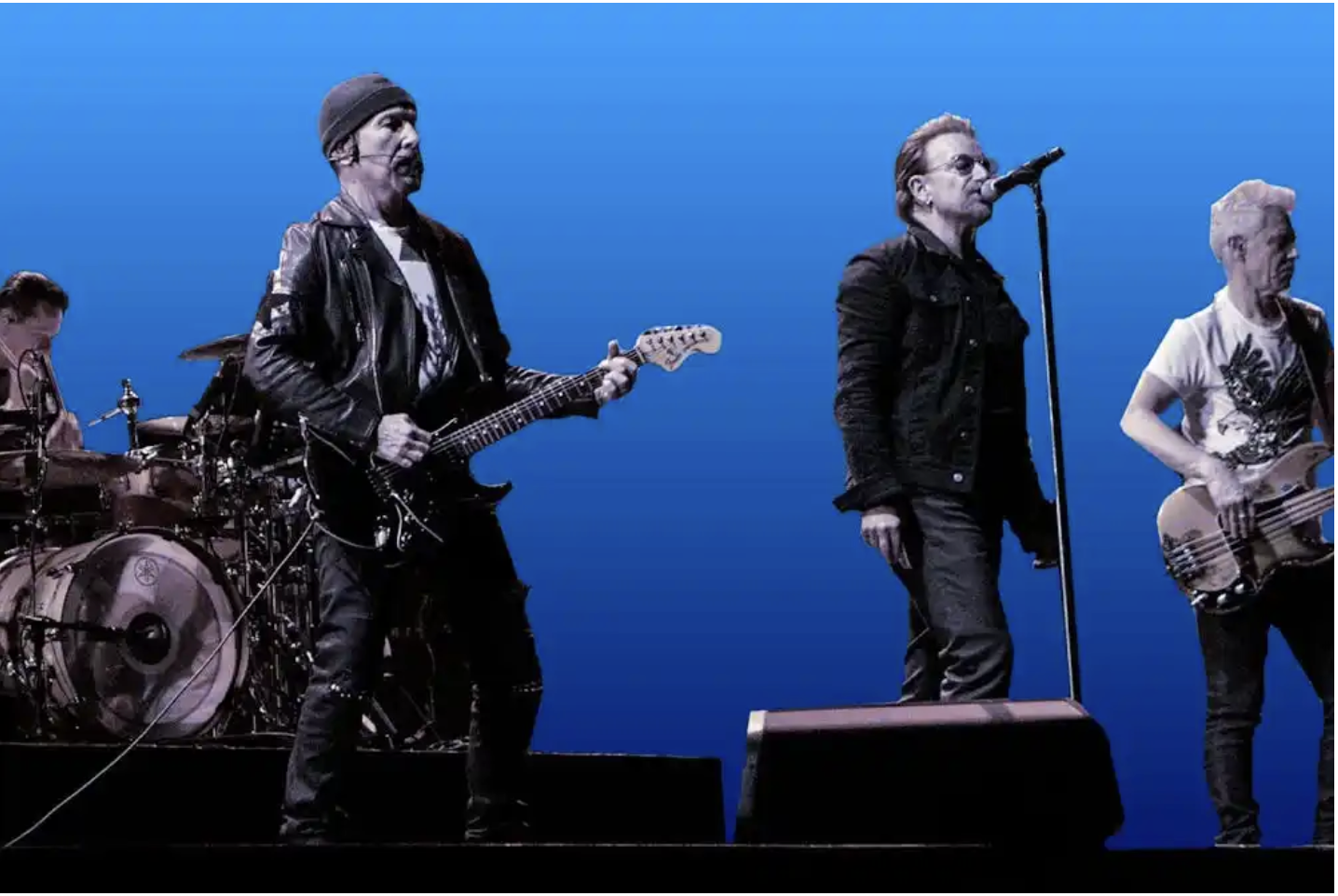
Veteran Irish rockers U2 are back with a 23-minute, six-song EP that is here to face the dark and chaotic times we find ourselves in. Or at least, that’s clearly what U2 believes and wants you to think. The reality is that U2’s listless liberal, pacifist, religious politics are less poignant than ever, and the band retreads similar sonic ground to prior work that is less able to make up for the lyrics’ weaknesses than it did in the ’80s.
U2 are no strangers to political music. “Sunday Bloody Sunday,” the band’s breakout hit from the 1983 album War, is a direct expression of shock and dismay at the actions of British soldiers opening fire on an unarmed protest in Derry, Northern Ireland. The song’s iconic military drum attack and symphonic electric guitar composition made it an instant hit as its lyrics struck a chord with the public.
But even then, as young people living at the geographic epicenter of The Troubles (although it cannot be said that they themselves suffered much oppression, as the band formed at a Protestant state school, and half the band is of British origin), their politics were essentially pacifist, and the closest thing the song has to a call to action is an appeal to specifically Christian brotherhood (“How long, how long must we sing this song/How long, to win the war that Jesus won”).
The band, and particularly frontman Bono, would go on to be outspoken against apartheid in South Africa and criticize oppression and war on various songs—including a condemnation of U.S. intervention in Nicaragua on “Bullet the Blue Sky.” They have frequently engaged in activism around HIV/AIDS as well as being outspoken against poverty and hunger around the world. Their main mode of political action, however, is distinctly ruling class—donate money and make nice with celebrities and the leaders of imperialist countries.
So perhaps it’s no surprise that U2 would weigh in on today’s political moment. In a certain sense, it’s maybe worth applauding that household name superstars are writing songs about the murder of Renee Good. But the message of U2’s song to that effect, “American Obituary” is “I love you more/than hate loves war” and “America will rise/against the people of the lie.” Somehow, I don’t think either of these will become the next “el pueblo unido, jamás será vencido.”
Regrettably, the political content is only downhill from the opening track. “The Tears of Things” runs circles of Biblical allusions to pray to God (the Christian one) for an end to holy wars, but for some reason the only specific conflict that Bono mentions in the lyrics besides David and Goliath is … the Holocaust, with “Six million voices silenced in just four years.” After 50-odd years, the quintessential ’80s stadium rock band has finally addressed the most well-known genocide in history. Antisemites, your days are numbered!
Perhaps nothing sums up the milquetoast politics of Days of Ash better than its fourth track, “Wildpeace,” based on a poem written by Israeli soldier turned poet Yehuda Amichai in 1971, arguably turning the album into a BDS violation. “At least he wanted peace,” you could say, and Amichai was certainly tired of war. But is it any surprise that a former soldier of a military occupation wanted “A peace / without the big noise of beating swords into ploughshares / without words, without / the thud of the heavy rubber stamp: let it be / light, floating, like lazy white foam.” How nice it would be for a foot soldier of apartheid to be able to just forget and let everything slip into the past!
This is the same peace, “the absence of tension” that Martin Luther King named and denounced so many decades ago. But U2 finds it compelling, apparently, and dresses up the poem in an electronic soundscape that could charitably be called “experimental,” and has the words be recited by Nigerian-French singer Adeola.
Does Days of Ash make up for its political weaknesses with compelling musical compositions? In a word, no. While nothing on the album is pointedly terrible, the music plays like a remix of the blander moments of the last 30 years of U2. There’s no riff on this album that you haven’t heard before, if not on a past U2 album, then on an album by Muse. The one exception is the final track, “Yours Eternally,” which features Ed Sheeran and Ukrainian artist Taras Topolia, and somehow manages to sound more like a One Direction song than any of the more varied output Sheeran has produced in the last decade.
Ultimately, Days of Ash is not worth your time. While it is in a sense good that big name pop stars are writing and releasing music that is critical of the current political crisis while appealing to the idea of large groups of people resisting authority, at least abstractly, that doesn’t mean it’s important for you to listen to it. At least this time around, U2 was nice enough to give people that option, instead of automatically putting it on every iPhone and iTunes library—like last time.
First published here by Workers’ Voice


