
The Crisis of Chavismo and Social Catastrophe
This article is a synthesis that contains parts of articles published in Correo Internacional in 2017 and 2019, as well as articles published on the LIT-CI website in 2020.
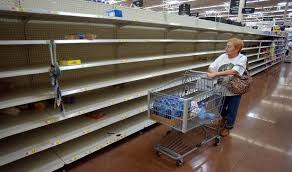
Within the polemics of the different left currents, they tend to discuss the policies towards Maduro’s administration, the Constituent Assembly, and/or imperialism. But, unfortunately, little is said about the depth of the economic and social crisis (beyond politics) that the Venezuelan people suffer from. In this article, we will try to provide some information for a better understanding of the situation and the lack of support for the currents that defend Maduro’s regime and administration, as well as his Constituent Assembly and the PSUV.
We must begin by recognizing that in the early years of Hugo Chávez Frías’ presidency, workers and popular sectors obtained some concessions that allowed them to attain a better standard of living. This occurred without any type of structural change in the economy’s dependence on imperialism nor any break with the bourgeoisie. Therefore, the concessions lasted until the sharp drop in oil prices, the global capitalist crisis, and its impact on Venezuela. From that point on, each concession began to be rolled back. We will try to explain the current situation. Beyond our rejection of any interventionist maneuvers, the pro-imperialist bourgeois opposition, headed by Guaidó, draws upon a real situation: the workers and the Venezuelan people are experiencing a true social catastrophe. One of the main reasons behind this catastrophe is the accumulated debt over all of these years, which places the Venezuela’s foreign debt at $184.5 billion (a figure that is five times the estimated exports for this year).
This foreign debt continues to be paid despite the country’s decreased influx of dollars: at the beginning of last year, president Nicolás Maduro acknowledged that during his administration, the country had paid $74 billion to that end.
The context of the situation includes falling international oil prices and, fundamentally, a huge drop in national production, which accounts for 96% of foreign exchange earnings: it fell from more than 3 million barrels per day to 1.2 million, mainly due to lack of investment. All of this happened long before the “sanctions and blockades” of imperialism. The situation is now worse with these sanctions, though it had already been an issue.
Within this framework, hyperinflation is taking a toll, with prices increasing daily. Since January of this year, the monthly minimum wage is 18,000 sovereign bolivars, with a food allowance of 1,800. This year’s inflation is unpredictable, but today the cost of basic food essentials (calculated by CENDAS) reached 1,000 sovereign bolivars.
Maduro’s administration attacks wages
To gauge the magnitude of the attacks on the standard of living of salaried workers, one merely has to look at the evolution of wages. In 2012, under Chávez, minimum wage was equivalent to about $400; even taking into account the parallel dollar exchange rate, wages were close to that amount. Inflation hovered around single digits and, although insufficient, a worker could eat three meals a day.
Today, things are different. As of 8/18/2017, minimum wage is 256,000 bolivars, or, according to the official DICOM dollar exchange rate of 2,970 bolivars, $84, although “malicious gossip” states that the dollar traded at public auction is closer to 4,500 bolivars. But taking into account the “black market” dollar rate published in Dólar Today, it is at 14,140 (8/14/2017)–minimum wage would be $18! Additionally, two important facts must be considered: the basic food essentials (or family basket) reached 2.4 million bolivars in August (9 times the minimum wage). Inflation reached 600% in 2016 and, according to the IMF, it will reach 1,000% this year. But beyond these main data points, there is another: what is the acquisition power of these 256,000 bolivars? We should note briefly that this salary is made up of a minimum wage of 97,531 bolivars and a non-remunerative food voucher (that cannot be used to calculate vacation pay, pension, etc.) of 153,000 bolivars.
The typical Venezuelan family has five people. One kilo of rice can last three or four days, as well as a kilo of precooked flour. One kilo of sugar, maybe a week. In the “normal” market, not the “black” market but the corner market on the corner of any neighborhood or housing development, a kilo of rice costs approximately 15,000 bolivars (plus or minus 1,000); the precooked flour works out to about the same amount; a bottle of soybean oil 18,000, a kilo of sugar 12,000, and a kilo of pasta, 18,000. A carton of eggs now costs 30,000 bolivars (when they’re even available)! We haven’t even included protein like beef, chicken, or pork, which have skyrocketed in price. How can anyone survive with these prices set by the government?
Therefore, the data from the 2016 ENCOVI (National Living Conditions Survey) is not surprising. It was conducted by a research team from UCV (Central University of Venezuela), USB (Simón Bolívar University) and UCAB (Catholic University), which determined that 52% of the country’s households did not have the necessary income to buy food essentials. Thus, they are considered to be in extreme poverty. Furthremore, although they have income to buy food, they don’t have enough money for other basic household expenses. Consequently, 82% of households are in poverty. Structural poverty, which was at 16% in 2014, reached 31% two years later.
Neglecting public health
The Missions brought advances for the most marginalized sectors that had never had access to a diagnostic center. The “Barrio Adentro” Mission (“Inside the Neighborhood”), with a majority of Cuban doctors, allowed these sectors to have access to primary care. Although there was no profound or structural change in the hospitals regarding more complex medicine, there was some progress.
Today healthcare has declined to 1998 levels or worse. On May 9 2017, the Ministry of Popular Health published an epidemiological study covering 2015-2016. It is the type of report that warns about diseases and their potential impact on the population. What stands out from the report is the levels of maternal mortality. This figure, which throughout Latin America has been decreasing in the last few years to 2%, has increased in Venezuela to 12%. But in the years studied in the report, it shot up: between 2015 and 2016, it increased by 65%. In just one year, the number of women who died rose from 456 in 2015 to 756 in 2016.
The same is true with infant mortality. The average in Venezuela was between 5 and 6%–an already high figure, given that annual population growth was 1.49%. The fact that it was above that rate already represents a setback. Between 2015 and 2016, infant mortality reached 29.5%.
The growth rates of other diseases are also striking: malaria increased to 240,000 cases in 2016, which only 136,402 cases were recorded in 2015 and 89,822 in 2014. In 2010 this disease was confined to three states; today it has reached 13. Other diseases that have become widespread are Zika and chikungunya, both new epidemics, as well as diphtheria, which has had a resurgence. An “interesting” fact is that the minister who revealed this information “resigned” a couple of days after its publication.
This can all be explained mainly by major disinvestment by the state and the destruction of public health: doctors and nurses have long been mobilizing over wages, lack of supplies, and, fundamentally, the shortage of disposable materials and medicines.
According to a survey published by the National Assembly and the organization “Médicos por la Salud” (Doctors for Healthcare) on “Hospitals across the country in 42 cities”: “51% of operating rooms are inoperative and 78% of the hospitals are facing medicine shortages; 64% do not have baby formula to feed infants; more than half of the kitchens are non-operational due to lack of food; CT scanners are practically non-functioning, and 89% of X-ray machines are faulty or do not work at all.”
These figures, released by the opposition-controlled National Assembly, may be exaggerated, but they can help to explain the official numbers. This public health catastrophe also explains the huge increase in private healthcare: more than 55% of the patients are treated at private clinics or doctors’ offices.
On top of all of this, there is the almost total lack of medicine for chronic or terminal illnesses: there are no medications available for hypertension, HIV, prostate diseases, diabetes, chemotherapy for cancer, etc. These medicines are only available on the black market, despite the government’s assertion that labs and importers have received “preferential dollars.” Who is keeping the dollars and the imported medicine?
The social crisis deepens
In addition to the data provided on wages and health, almost 10 million people only have access to two meals a day (breakfast and lunch or dinner). It is in this context that child malnutrition is on the rise due to a lack of powdered milk and protein.
Violence and lack of security have become true pandemics: there are seven cities in Venezuela that are among the most violent in the world (Caracas being the most violent, Maturín, Ciudad Guayana, Valencia, Barquisimeto, Cumaná, and Barcelona), according to the Citizen Council for Security and Justice, an organization based in Mexico.
The country’s number of violent deaths climbed from 4,550 in 1998 to 28,479 in 2016 (the most recent estimate from the Venezuelan Observatory on Violence). In total, there have been 287,926 victims in the last 18 years, or just over 43 deaths per day.
On top of these serious hardships, the poor suffer due to the lack of gas cylinders that are essential for cooking, facing endless queues from early morning to buy even one.
All services have deteriorated: power cuts continue to be a regular occurrence; the supply and quality of drinking water are poor, even in states such as Bolívar, which has sufficient water sources. Urban sanitation services are non-existent in some cities and garbage piles up in the streets…
The different left-wing currents that are debating the situation in Venezuela should take into account, at least in part, the figures presented here in order to try to understand and explain the real causes of the confrontation that the masses have long experienced with Nicolás Maduro’s government and the break with it. Despite the different scenarios that may arise, this process of rupture, demoralization, and crisis is irreversible. The masses’ experience with Chavismo and the failure of the bourgeois nationalist project will open up a process of reflection that is important to take into account in order to draw conclusions and build a political alternative independent of the bourgeoisie, the falsely “socialist” military, and the state and union bureaucracy.
The “Red Package” targeting workers
In August 2018, Nicolás Maduro announced a series of economic measures with the “Economic Recovery and Welfare Program,” a tremendous setback for workers and the humble people of Venezuela. This plan included currency conversion, with a new devalued sovereign bolivar (removing five zeros from the “old strong bolivar”) and pegging the new bolivar to the Petro, a cryptocurrency created by the government and linked to the price of a barrel of oil.
This was accompanied by highly regressive tax reform. On the one hand, the government increased the VAT (Value Added Tax) from 12% to 16% as well as the rates for some basic services, with a new pricing scheme and a wage adjustment (which, with the devaluation, accelerated impoverishment). On the other hand, it exempted food importers, transnational oil and mining companies, and multinational oil companies from income tax.
The goal was to achieve a “zero deficit” through fiscal discipline, as in other countries with neoliberal economies, and within that framework, PDVSA handed over a complete block of certified oil reserves, 29.298 billion barrels, to the Central Bank of Venezuela (BCV) in order to issue new financial assets with that backing. In other words, oil reserves and assets were used as collateral for new debt, taking advantage of legal loopholes in the Constitution and in current legislation that prevent such concessions.
He complemented this package with what was perhaps the most lethal measure: Executive Resolution 2792 of October 11, 2018, which dealt another blow to the achievements of state workers, as it established a single pay scale; this effectively eliminates collective bargaining agreements and additional bonuses and leaves unions out of the wage discussion. It should be noted that there are four and a half million public employees, three million pensioners, and some 190,000 military personnel. Then add to that, contract workers. In total, the number of people receiving salaries or income from the state amounts to 6 million.
At the time, an Army General’s salary was set at 5,324 sovereign bolivars (of course, that came with other perks) and at 2,800 bolivars for professionals. For retirees, pensioners, and workers, it was set at just 1,800 bolivars. This provoked a reaction, especially from workers in state-owned basic industries (such as SIDOR, Venalum, Ferrominera, Alcasa, and Bauxilum, among others in the Bolívar State Government), with walkouts, strikes, and demonstrations. The same happened with doctors, nurses, university workers, teachers, and PDVSA oil workers. These struggles continued until the end of the year, and some, such as those of the teachers, began this year. The struggles set off alarm bells in both the government and the bourgeois opposition. The situation was heading toward a possible “social uprising.”
Public health in free fall
When former Health Minister Antonieta Caporale revealed the rates of epidemics, maternal deaths, infanticide, and the state of health in Venezuela—after several years of absolute silence—there was a huge uproar. A few days later, shortly after taking office, the minister “resigned.” What data did she provide? That maternal mortality had increased by 65% in 2016 and infant mortality by 30%.
These figures, while worrying in themselves, were made even worse by the reappearance of diseases that seemed to have been eradicated, such as tuberculosis and malaria. In previous years, Venezuela had made significant progress in controlling epidemics, but the decline began in 2014. Data on tuberculosis show that cases increased from 6,000 in 2014 to 7,800 in 2016, and more than 10,000 in 2017. Malaria, which was confined to three states, has now spread to more than thirteen and continues to spread. Other countries, such as Brazil, have also seen increases in cases, but of the 770,000 cases in the entire South American region, Venezuela has 411,000. That is 53% of the entire region, one of the highest percentages in the last 40 years. At the same time, diphtheria and measles are also reappearing due to a lack of vaccines.
According to the NGO Cáritas Venezuela, “moderate to severe acute malnutrition” among children under five increased from 10% in February 2017 to 17% in March 2018. Although it had fallen in some states in July 2018, in Caracas and Vargas it remained above crisis levels (16.7% and 20%, respectively). Caritas itself found that 48% of pregnant women live in low-income communities and suffer from “severe, moderate, or mild malnutrition.” The same is true of child malnutrition: depending on the region, between 18% and 40% of children are admitted to hospitals.
The situation in hospitals has not improved. Many hospitals are beginning to feel the exodus of professionals: there is a shortage of pediatricians, cardiologists, oncologists, etc., who initially left public hospitals for private ones, but have now emigrated abroad.
Surveys conducted year after year reveal shortcomings in the country’s 300 public hospitals: failures in the water supply, frequent power cuts, and emergency services that are either dysfunctional or simply do not work. In addition, there is a shortage of medicines (in more than 70% of cases) and medical supplies (in more than 79% of cases). These figures vary from hospital to hospital, as some supplies arrive, but others disappear.
According to medical professionals, a recurring problem in hospitals is the lack of reagents to detect diseases and guide treatment. For this reason, relatives of patients scour pharmacies and social media to obtain supplies and medication. There is also a chronic shortage of high-cost medicines for certain diseases, up to 95%; meanwhile, essential medicines, such as those for hypertension, are short by 85%, according to the Pharmaceutical Federation.
Poverty
Three of the country’s leading universities have conducted a survey of the social and health situation, as well as poverty rates. Professionals from the UCV (Central University of Venezuela), the UCAB (Andrés Bello Catholic University), and the USB (Simón Bolívar University) presented a study on these variables.
According to this research, poverty, measured by income, rose from 48% in 2014 to 87% in 2017, according to ENCOVI (Survey of Living Conditions). In other words, it practically doubled. These researchers clarify that these indicators do not yet reflect the effects of the hyperinflation that began in October of that year. Another fact: more than 60% of adults skip one of their three meals in order to better feed their children. According to this study, households considered “non-poor” represent only 13% (in 2014 they were 51.5%). Extreme poverty increased as follows: 2014, 23.6%; 2015, 49.9%; 2016, 51.5%; 2017, 61.2%. In other words, it increased by 2.6x in three years!
One attempt by the government to alleviate the situation was the implementation of CLAPs (Local Supply and Production Committees), which provide boxes or bags of subsidized food. In cities such as Caracas, these reach almost 62% of households on a somewhat regular basis, once a month. But this is not the case nationwide, where it is delivered much less frequently. These products are barely enough to cover a family’s food needs for a week. To receive these products, you must be registered. But it “helps” to have the Carnet de la Patria (Homeland Card).
This new document has been used by the government as a tool for blackmail and ends up being an instrument of political and social control, such as coercion and blackmail of voters in the last Constituent Assembly and presidential elections.
At the same time, according to ENCOVI, the Missions, created during Chávez’s lifetime as a mechanism to assist the poorest sectors, have been reduced, in some cases disappearing or merging with others, reflecting their lack of funding. Contradictorily, the deterioration of the social situation means that an increasing percentage of the population depends on them for their survival.
Education no longer reaches everyone
The report by the aforementioned universities examines the relationship between hunger, poverty, and education. It concludes that 76% of schoolchildren ages 3 to 17 from low-income sectors do not attend classes regularly due to lack of food. A significant portion of the population already skips breakfast.
One of the UCAB professionals who participated in the study, Anitza Freitez, said: “Only 9,931,000 out of 12,734,000 (children and young people) are receiving education, and a significant number (500,000) have learning difficulties and are at risk of educational exclusion.”
Progress in privatization and the handing over of reserves
During the first two years of the adjustment plan’s implementation, the government has been deepening its adjustment policy against workers, advancing on issues such as the privatization of state-owned companies, including PDVSA, and the transfer of mineral resources. Even before 2018, the Orinoco Mining Arc (AMO) agreements were signed, transferring important mineral reserves to imperialist transnational corporations.
This covers an area of 111,843.70 km², mainly the north of Bolívar state and, to a lesser extent, the northeast of Amazonas state and part of Delta Amacuro state, equivalent to 12.4% of Venezuelan territory, twice the size of the Orinoco oil belt. It contains 7,000 tons of gold, copper, diamonds, coltan, iron, bauxite, and other minerals, which are extracted by at least 150 companies from 35 countries. The main companies involved are US-owned Gold Reserve Inc., which plundered the southern part of the country during the Carlos Andrés Pérez era, and the Canadian company Barrick Gold, which has a history of complaints in areas where it operates, related to murders and abuses in countries such as Papua New Guinea and Tanzania, as well as alarming pollution and ecological damage, such as the spill of at least one million liters of cyanide solution into five rivers in the Argentine province of San Juan.
Many nationalized companies have been reprivatized, some at the state level and others at the national level, such as the Venetur hotel chain, including the Hotel Humboldt, which was handed over to the Marriott chain, the Bicentenario grocery stores, food processing companies, among others.
This process is also advancing at PDVSA and has included the reduction and, in some cases, the transfer of majority shareholdings in PDVSA’s joint ventures and refineries abroad. As in 2016, when PDVSA’s stake in the PetroSinovensa joint venture was reduced from 60% to 50.1% and from 83% to 60% in PetroMonagas, in the Orinoco oil belt (FPO), and the transfer of Block Junín 10 of the FPO, previously operated by PDVSA, to a Maltese shell company. Similarly, in 2020, PDV-Puertos was created to manage the country’s ports and oil terminals. The company would have its own income and the power to form alliances with national and international associations, and 35% of the shares of the Swedish refinery Nynas were sold off, reducing PDVSA’s stake from 50% to 15% and ceding its position as majority shareholder.
In other words, this was a complete restructuring plan towards privatization, in violation of the current Hydrocarbons Law and the Constitution of the Bolivarian Republic of Venezuela (CRBV) itself. In addition, with the approval in 2016 of the reform of the Gaseous Hydrocarbons Law, the door was opened for the delivery of offshore gas to transnational companies.
Anti-Blockade Law to legalize looting
With the aim of providing legal cover for this entire process of privatization and handing over of reserves and natural resources, minerals, and hydrocarbons to imperialist transnational corporations, as well as Chinese and Russian ones, the government has hastily and almost without discussion passed the controversial Anti-Blockade Law for National Development and the Guarantee of Human Rights. It used the fraudulent and illegitimate National Constituent Assembly (ANC) for this purpose, although the approval was not unanimous within this clearly pro-government body.
There have been various questions raised about the legislation revolving around the fact that the newly approved law goes against the national constitution, as well as the secrecy, haste, and lack of discussion surrounding its approval, and regarding the approval of a law that bypasses important constitutional aspects without the slightest consultation for its popular approval, such as a referendum, which makes it a totally fraudulent law.
This law allows the executive branch to bypass the controls of the National Assembly to privatize assets of the Republic and state-owned companies, reverse expropriations or nationalizations, restructure state-owned companies by incorporating private national and international entities, circumvent laws to carry out these actions, enter into contracts that involve incurring debt, and all this under the most absolute silence and confidentiality, behind the backs of the workers and the people.
The opportunity for privatization and reversal of nationalization, among other mechanisms, occurs when the way is paved for altering the shareholding structure of companies in which the state owns more than 50% of the shares, which means reducing that share and increasing private participation, and also allows disputes to be settled through international courts allied with imperialism.
It is extremely worrying that any information about the terms of the agreements that the executive branch would reach with national and foreign private entities, as well as their veto by the National Assembly, is blocked under the guise of confidentiality, even going so far as to establish the possibility of prosecuting and penalizing those who inquire about them.
In this way, free rein is given to private capital, both national and international, to plunder the nation, extract Venezuela’s oil and mining resources with no limits, increase the country’s dependence and colonization, and exploit its workers. It is therefore not surprising that, despite criticism of the secrecy and haste with which it was approved, spokespeople for the bourgeoisie such as Ricardo Cussano, president of Fedecamaras (the country’s main bourgeois trade association), celebrate the approval of the law, claiming it is necessary to “attract investment.”
The responsibility of Maduro’s government and the PSUV
With this information, we aim to demonstrate that the decline of the Chavista project does not originate in the “economic war” or the “imperialist blockade” that Maduro has long mentioned. Although the recent freezing of Venezuelan state accounts has exacerbated the situation, this decline began with the failure of Chavismo’s “bourgeois nationalist” project, which failed to break with imperialism or make structural changes to that dependency. The Maduro government and the Chavista regime are primarily responsible for the tragic situation, which was already brewing during the Chávez governments, which, in addition to failing to change the country’s dependent and semi-colonial capitalist character—in fact, deepening it—began to destroy the national productive apparatus and hand over hydrocarbon and mineral reserves, prioritizing the payment of foreign debt, guaranteeing profits for transnational corporations, and managing the economy in a disastrous manner. Added to this is the largest capital flight in the country’s history. From the outset, Chavismo promoted the creation of a new bourgeois sector that appropriated oil revenues and state businesses, displacing another bourgeois sector. All these sectors have lived and continue to live off these businesses, in close relationship with Yankee imperialism and the ruling bourgeoisies in China and Russia. Examples of this are multinational oil, pharmaceutical, chemical, food, and automotive companies, among others.
During the 20 years of Chavismo, imperialism “endured” the Chavista governments that guaranteed them succulent profits, speculative deals with the dollar and imports, and, fundamentally, the peace of mind of recovering profits with the masses demobilized through concessions. When “social stability” ended with the economic crisis, when the working class and the masses got fed up with being the “fall guys” and took to the streets to fight and confront the government and Maduro’s regime, imperialism decided to return to its old partners, now in the bourgeois opposition. To this end, they are trying to take advantage of the growing discontent among workers and the people generated by the social catastrophe.
Translated from the original Spanish


