
Reclaim the legacy of M.L. King, the fierce critic of oppression everywhere
While MLK is often reduced to his advocacy of non-violence, his observations of U.S. racism and imperialism led him to correctly conclude that the U.S. is and has been the greatest purveyor of violence in the world. As the U.S. government seeks to undermine and undo his legacy, we must defend the fight against racism and imperialism
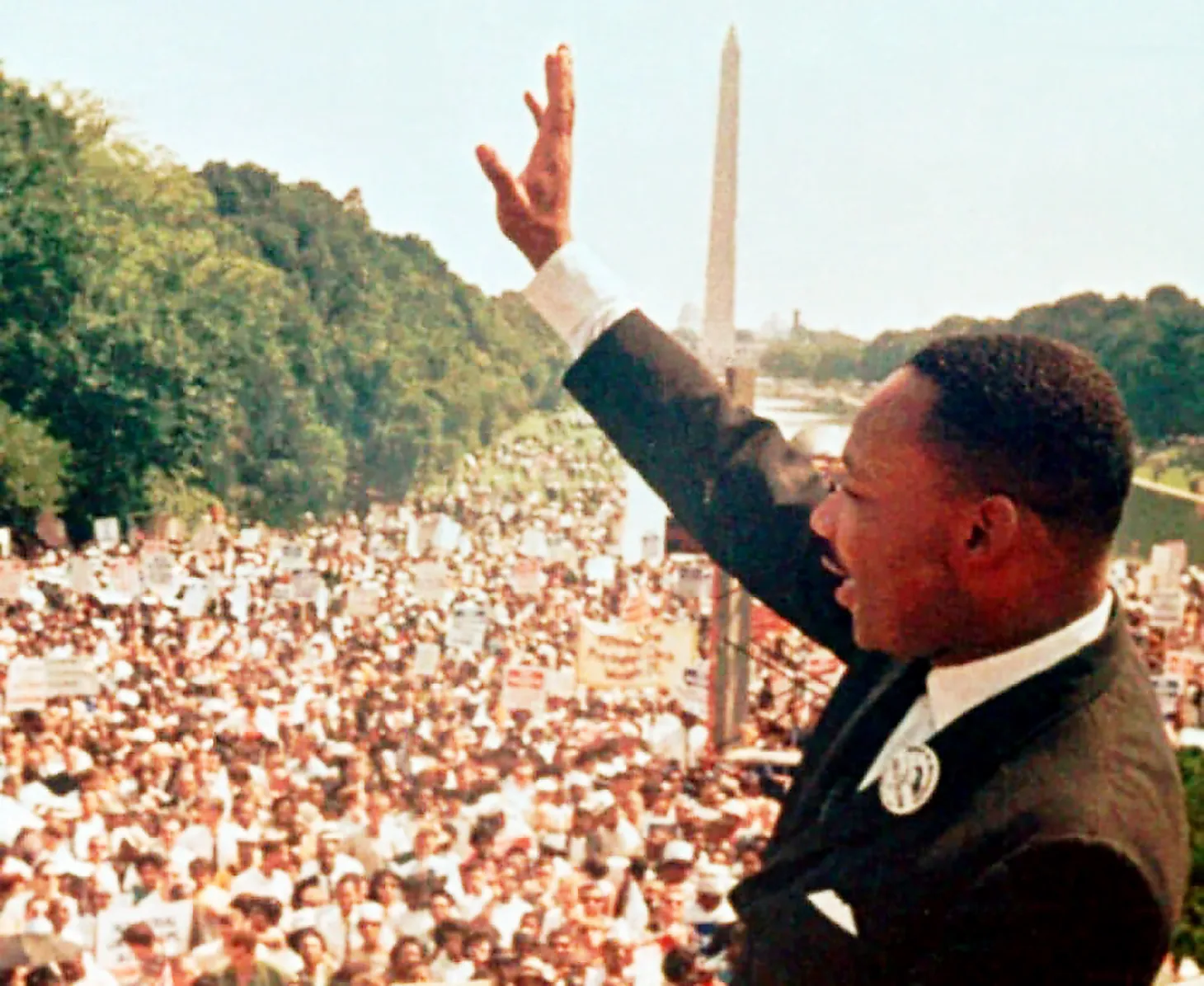
For the moment we still celebrate the birth of Dr. Martin Luther King as a federal holiday. This year commemorates the holiday’s 40th anniversary. Born Jan. 15, 1929, King is one of the seminal figures of the Black liberation struggle. His importance cannot be overestimated. He provided a major impetus for the giant leap in the struggle at the midpoint of the 20th century. Though the legacy is sanitized for the consumption of the masses, and the comfort of the ruling class, King called into question the character of the system that has oppressed Black people for centuries.
Political consciousness can grow with struggle. When modest demands are met with violence, the system reveals its true nature and that it cannot be merely reformed. From this experience class consciousness is constructed, which affects not only the masses engaged in the movement but also its leadership.
Dr. King arrived at the perspective that the same system responsible for the brutal oppression of African Americans also bound the peoples of Africa, Asia, and Latin America in a state of subjugation. Sponsors of coups, theft of resources, and mass murder, the U.S. portrays itself as the purveyor of democracy and the pillar of international laws. King came to the opposite conclusion.
King’s advocacy of nonviolence was sincere, but as he brought his message north into the long neglected Black communities, it was met with skepticism. They were not neglected in respect to the plagues of unemployment, poverty, segregation, and the ubiquitous police harassment and brutality.
King’s travels north were fraught with the white rage some might have considered confined to the South. But as Franz Fanon wrote: “a country is racist or it’s not.” Prejudice was not confined to one region. Segregation was the law of the land. The landmark case Brown v. Board of Education of Topeka, Kansas was the turning point in dismantling segregation. Kansas is not the South. Nor is Boston, which became a center of attention in the attempts to desegregate public schools and where King led a march against segregation in April 1965. But it was King’s experience in Chicago that prompted him to lament: “I have been in many demonstrations across the South, but I can say that I have never seen, even in Mississippi, mobs as hostile and hate filled as in Chicago.” That was the domestic context.
As long as Dr. King confined himself to civil rights, he remained in the good graces of politicians and the press. But he could not be confined to addressing violent oppression domestically when the U.S. was waging a war against a nation that recently freed itself from colonial bondage.
Vietnam, a former colony of France, found itself confronted by another imperialist power. The U.S. by 1965 had committed itself with thousands of troops to a war that became the longest in U.S. history (until the 20-year Afghan war eclipsed it). Images of bombings, killings, burning of villages, and mass body counts were brought to living rooms across the country.
“Beyond Vietnam” is Martin Luther King’s most radical oration and is as relevant now as it was then; the statement on U.S. imperialism reverberates through the ages. Wars and rumors of war do come home, and the consequences fall heavily on the working class and the poor. King noted the priorities of the U.S. in its shift from social programs to funding the war effort in Vietnam.
He concluded: “I knew America would never invest the necessary funds or energies in rehabilitation of its poor so long as adventures like Vietnam continued to draw men and skills and money like a demonic destructive suction tube. So, I was increasingly compelled to see the war as an enemy of the poor and to attack it as such.”
The war robbed the working class of its young, who would fight and die or return damaged and lost. “We were taking Black young men who had been crippled by our society and sending them eight thousand miles away to guarantee liberties in South Asia which they had not found in southwest Georgia and East Harlem.” Liberty, democracy, and freedom were beside the point. The U.S. military was not bringing any of it to Asia or anywhere else. Misery was its gift, the stench that lingers.
When King went north, he was confronted with an anger that he tried to assuage. He attempted to be understanding and “compassionate while maintaining” his “conviction that social change comes most meaningfully through nonviolent action.” A common response was “What about Vietnam?” That violence was broadcast every day for all to see. King said: “I could never again raise my voice against the violence of the oppressed in the ghettos without having first spoken clearly to the greatest purveyor of violence in the world today—my own government.”
The ever-destructive character of imperialism is epitomized by U.S. intervention throughout the 20th century. As crises permeate the world system, it’s time for the ruling class to revive the old ghosts. Marx wrote: “History repeats itself first time as tragedy the second as farce.” Now we have Trump’s revival of Theodore Roosevelt’s gunboat diplomacy and the Monroe Doctrine. He has resorted to invading and threatening invasions of other countries.
Domestically, immigrants are hunted, beaten, or otherwise abused, and sometimes murdered. An authoritarian administration is in the process of demolishing all rights, including the fruits of the movement Dr. King led. It is a direct attack on Martin Luther King’s legacy.In fact, it is a full-scale assault on all progress that has been achieved in this country.
Martin Luther King understood that this oppression was not isolated. It was not confined to one region, or one country, but a global affliction. Despite attacks from the press that charged that he was out of his depth, King gave a fairly detailed history of Vietnam after World War II—an accurate history that correctly characterized the U.S. as an obstacle to Vietnamese independence.
In this moment, the U.S. stands as the greatest obstacle to Palestinian liberation, the liberation of the people of Latin America, Africa, and the working class of the world. The “greatest purveyor of violence” has been consistently so. On the 40th commemoration of the holiday in his name, we want to reclaim Martin Luther King, not the sanitized version, but the fierce critic of oppression everywhere.
Photo: Dr. Martin Luther King speaks at the March on Washington, Aug. 28, 1963. (AP)
First published here by Workers’ Voice


