
What is Islamic State?
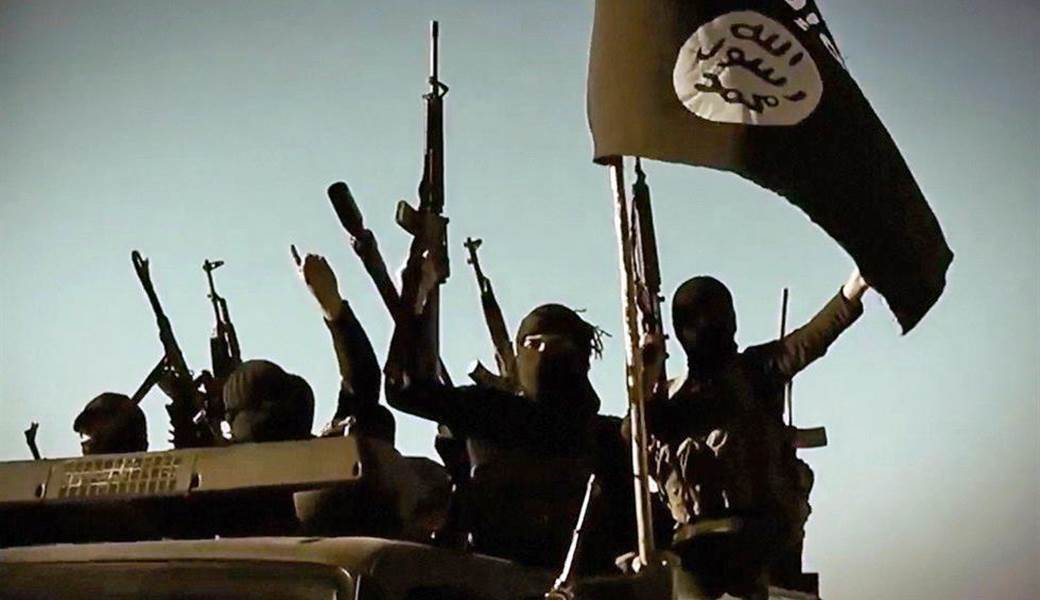
 In June 29th of 2014, Islamic State of Iraq and the Levant announced the establishment of Islamic Caliphate on territories currently including Syria and Iraq, specifically the region located “between Aleppo and Diyala”. At the time, Abu Bakr al Baghdadi, maximum leader of ISIS, self-proclaimed “Ibrahim, imam and Caliph of all Muslims”.
[Article originally published in July 2014, International Courier No. 12]
Since then, ISIS removed references to Iraq and the Levant (Syria) from its name, to be called just “Islamic State” (IS).1
The establishment of Caliphate matched the rise of a blitzkrieg, the now proclaimed Islamic State broke out in early June, moving from the territories they control in Syria to the Northwest of Iraq, on its course toBaghdad.
In less than two weeks, IS took possession of an Iraqi territory extension equivalent to five times the size of Lebanon, which covers five provinces, including the second largest city of the country, Mosul. On June 11th, it also occupied Tikrit, which is emblematic for being the birthplace of the former dictator, Saddam Hussein.
IS troops are disputing control of the main refinery of the country, on Baiji, which provides one third of the total refined fuel from Iraq. The combat reached Baquba, 60 km away from Baghdad.
However, more recent history of Islamic State’s offensive happened in January, when the cities of Fallujah and Ramadi – located 60 and 100 km from de capital, respectively – were occupied, proclaiming their first “Islamic State”. In late June, Iraq had already lost control of Syrian (Al Qaim) and Jordan’s (Traibil) borders to Jihadists.
In all these areas, IS proclaimed: “the legality of all emirates, groups, states and organizations becomes voided after the expansion of Caliph’s authority and the arrival of his troops”.2
According to Syrian Observatory of Human Rights (SOHR), after their most recent advances in the provinces of Homs and Deir al Zur, IS controls 35% of the entire Syrian territory. After such conquer, they control most of the Deir al Zur, one of the richest areas in oil in the entire Syria.
Military advance of Islamic State is completely reactionary
IS’ offensive is not a popular struggle process being led by a counter-revolutionary, bourgeois leadership, but the advancement of a “military party” aiming to control territories and natural resources from Syria and Iraq, applying fascist methods to this goal, as part of a theocratic, dictatorial program.
Therefore, the current role of IS cannot be compared, for example, to the Iraqi resistance of last decade, which despite having bourgeois, theocratic leaderships, played a progressive role in the struggle for national liberation, by facing imperialist occupation troops.
Islamic State is a bourgeois organization with an ultra-reactionary, dictatorial and theocratic program. The current military offensive took the form of a multi-sector front, including former soldiers of Baas, as Army of the Men of the Naqshbandi Order, the armed wing of Baas party (recently banned)3, Sunni tribal chiefs4 and others “Jihadists” forces5, but the hard core of IS comes from a dissident rupture of Al Qaeda.
These forces emerged in Iraq, in the context of occupation by the US. In 2004, they were known as “Al Qaeda from Iraq”, and two years later they claimed to be called as “Islamic State of Iraq”. In 2010, this organization received a stroke, when the US troops eliminated Al Qaeda’s head in Iraq, Ayyub Al Masri, and Islamic State’s leader in Iraq, al-Rashid al-Baghdadi. Also in this context, in the same year, Abu Bakr al-Baghdadi took the leadership of the organization.
In April of 2013, they began acting on Syrian civil war, so they added the expression “and the Levant” (Syria) to its name, starting a conflict with Al Qaeda’s heads, which required ISIS to confine to Iraq, recognizing Al-Nusra Front as its only branch in Syria. This ‘insubordination’ ended up as a rupture and the following crisis resulted in armed clashes between Al-Nusra and ISIS inside Syrian territory; a conflict which only worsened since January of 2014, killing over 7,000 soldiers from both sides.
The reason behind the dispute between these two factions is to have control over cities like Raqqa and Deir al Zur, both of them of major political importance and rich in oil.
The military movement of IS responds to its political strategy of expanding the domain of the new “Caliphate” to territories including Jordan, historic Palestine, Lebanon, Kuwait, Turkey and Cyprus6, being the Syrian city of Raqqa7, its declared capital.
Behind the religious wrapping and Caliphate’s symbology, it is clear ISIS’s goal is direct control of rich oil reserves of all the region through military means, imposing ferocious dictatorships based upon a literal interpretation of the Sharia (Islamic law), so even more brutal than their progenitors, Al Qaeda’s dictatorships.
This interpretation includes multiple and summary executions, in addition to several kinds of atrocities, like public beheading and crucifixion, and destruction of Shiite mosques and Christian churches, with the only goal of imposing brutal terror to civilians.
In Mosul and other cities of Nineveh province, for example, IS left without water, electricity or gasoline to all “unfaithful” citizens who did not swear allegiance to the “Caliph Ibrahim”; especially Christians and Shias of al Hamdani, Bashika & Bartala, located at the south of Mosul. Most dramatic case comes from Talkif’s district, North of Mosul, where IS troops definitely cut off access to drinkable water to more than 30,000 Christians.8
In this regard, persecution to Christians in Mosul is growing. All Christians’ houses are being marked with the letter N, from Nazarat, which means Christian in Arab. Empty houses were confiscated. Christian families who remained, are being called to withdraw, to convert to Islam, or pay a protection tax called jizia, a specific “tax” for non-Muslims9, something around 100 US dollars monthly.10 IS also ordered public officials of Mosul to suspend any and all kind of help for gas or food to Christians Shiites and Kurds, under the penalty of being “punished according to the Sharia”.11
In Syrian city of Raqqa, where usually there is water and electricity only for a few hours a day, IS established a “tax” of around 10 US dollars for each one of those services, arguing “water and electricity are pleasures of this world”, and what really matters is “obedience and loyalty to Caliph Abu Bakr al-Baghdadi”.12
In Homs, militiamen from IS murdered 11 civilian employees on the gas field of Al Shaer, on July 18th. SOHR released a video showing one IS soldier hitting the head of a corpse with a shoe, as a demonstration of contempt.
By the end of June, IS had crucified nine people, eight of them for being “moderate” rebels from Free Syrian Army (FSA) or from Islamic Front (SIF). Those condemned to the cross took three days to die, on Deir Hafer’s main square, in Aleppo, according to SOHR.13
According UN reports, 5,576 civilians died on Iraq due to multiple attacks and sectarian violence since the beginning of 2014, and 2,400 of them were killed in June, during the offensive of Islamic State. To these numbers, we have to add more than 1,2 million people who ran away from their homes in 2014, half of them after IS’ actions.14
These tyrannical steps undermine any possibility of strong popular support. Most probably, at the beginning, some Sunni areas sympathized with IS, as an expression of their rejection to Maliki’s sectarian government, but it is very difficult for this support to remain intact, after the terror fundamentalists have implemented.
For example, IS militias do not have anything in common with organizations like Hamas, from West Bank, or Hezbollah, from Lebanon; despite all our programmatic differences with them, we recognize they emerged from communities in the context of progressive struggles. Islamic State does not have these popular rooting, and control of the population in the areas IS occupies is necessarily through violence and brutal methods.
How is the Islamic State financed?
IS is the expression of bourgeois sectors which, among the chaos of war and instability in Iraq, aim for their own source of business. According to their own reports, they finance their military campaigns out of extortion, thefts and kidnapping.15 All of this in addition to fundings they receive – although apparently not directly from governmental sources – from other major Sunni bourgeois sectors from countries of the Arabian Peninsula, such as Saudi Arabia, Qatar and Kuwait. We are talking about millionaires from these countries willing to “invest” in the project of “Caliphate”.
However, the funding is not officially declared in countries like Saudi Arabia, which included IS on its list of terrorists groups in March, and announced penalties of up to 20 years in prison for individuals who “belong to, support and finance terrorist groups”. But this kind of resolution has now small impact over IS structure, as even getting private donations, IS apparently managed to achieve self-financing from direct control of the territories and oil reserves in Syria and Iraq.
In addition, In Mosul they took over US$ 500 million dollars held at the Central Bank agency of that city, in one single stroke.16 According to General Gharaui Mahdi, former chief of Mosul police, IS receives at least US$ 8 million out of “revolutionary taxes”, counting among them, those taxes charged to Christians and Shiites for “safe transportation” through roads controlled by them in Iraq and Syria.17
Islamic State’s dictatorship and women rights
The barbaric regime established by IS can be understood in all its magnitude in regards of women rights. In Raqqa, after the Islamic prayer in the evening of July 17th, IS ordered the public stoning of a woman at an Al Tabaqa district’s popular market, accusing her of “adultery”, in what was the first sentence of this kind by fundamentalists in the country.
In Al Bab, on east Aleppo (Syria), IS opened a “matrimonial agency” for single women and widows to find fundamentalist groups’ fighters to marry, according to SOHR.18
After Mosul’s occupation, Al Baghdadi ordered the ablation (female genital mutilation) of all female – between early teens and 49-year-old women –, residents of the new “Caliphate”, in order to “avoid the expansion of ‘debauchery and immorality’ among women”.19 According to UN, this measure could affect four million girls and adult women.
IS also imposed mandatory full-body veil for women, under the threat of receiving a “severe punishment” for not obeying this order. They also banned the use of perfume or tight clothes “which allow to perceive the shape of the body”. The justification: “conditions imposed to clothing and presentation is simply intended to end the pretext of debauchery resulting from women embellishing too much“.20 Not even mannequins of Mosul’s stores escaped this medieval measures, since IS insisted for all of them to be covered with a black veil.
According to the Federation of Workers Councils and Unions in Iraq, many women in Mosul committed suicide facing the cruel situation opened with the theocratic dictatorship imposed by IS. UN also presented data in this regard, reporting four women took their own lives after being raped or forced to marry IS’ soldiers. The report also described the cases of men who committed suicide after being forced to watch their wives and daughters being raped.21
Al Qaeda’s crisis
According to its own reports, IS claims to have 15,000 active fighters, most of them recruited over the last three years. Despite its Iraqi origin, the organization counts with thousands foreigners: Moroccans, Algerians, Afghans, Tunisians, Egyptians, and even around 3,000 Europeans, recruited in special centres in France, United Kingdom, Netherlands, Belgium and Spain.
It seems to be a small number, but they are truly disciplined soldiers, with large combat experience and, above all, a clear political program.
The impact caused by Mosul’s occupation and the unilateral establishment of Caliphate by IS mujahideen (fighters), as its proximity to Baghdad, created a force of attraction which impacts a wide range of “Jihadists” groups acting in Maghreb.
Authorities from Europe, for example, do not hide their concern about thousands of fighters from the continent currently on IS ranks, and about the clear evidence of current preparation for entering Libya – where there are several fundamentalists groups acting -, located less than 300km away from Italian island of Lampedusa.
Estimate is, since the beginning of Syrian war, 15,000 Europeans joined the “Jihadist front”, being IS the main receiver of European fighters.22 High alert was declared in other North African countries, such as Morocco, where many members of the high command of IS, and about 1,500 soldiers, come from.
In Libya and Tunisia, groups like Ansar Sharia (supporters of the Islamic Law) already expressed their admiration and support to the stunning militaries actions of Al Baghdadi followers in Syria and Iraq, and called for reconciliation between IS and Al Nusra. They also received support from Ansar Bayt al Maqdis in Egypt and Abu Sayyaf in Philippines.
Military success of Islamic State is even causing internal ruptures in other Jihadists organizations still associated to Al Qaeda’s “network”,23 including several battalions of Al Nusra Front, in Syria.
For example, branch of Al Qaeda acting over Islamic Maghreb (AQIM) territory, Tunisia, Libya and even Mali, issued a statement praising IS, saying it is “moving on the right path, which is not the path of compromise”.24
There are strong elements pointing there is a crisis within Al Qaeda, reinforced after Bin Laden’s death, in which new Islamic State would be replacing it as the international reference to this kind of fundamentalism.
In the context of this dispute, the resonance of IS “victory” establishing the Caliphate has great influence, especially when compared to the “inertia” and “stagnation” from Al Qaeda over the last few years.
The maximum expression of this crisis are the armed clashes between these two factions in Syria, where a fierce fight between IS and Al Nusra takes place, to control the cities formerly occupied by rebel forces.
It all started when followers of Al Baghdadi began to question the leading role of Al Nusra, recognized as official Al Qaeda’s branch in Syria. In response, Al Quaeda’s leader, Ayman Al Zawahiri, ordered [back then] ISIS to go back to Iraq, reaffirming Al Nusra’s authority. ISIS responded announcing their separation: “on your supplication to withdraw from Syria, it will not happen, and we repeat it is impossible”, making clear they “do not owe obedience” to Al Qaeda’s leader.25
From thereon, successive armed clashes took place, with a death toll of thousands. Most of these battles where located in Deir al Zur, the richer oil region and base of main companies of this branch. There is a clear reason for this: to control this business as a financing source to their activities. The other combat center is Raqqa, of great importance, as it is the capital of the province. Before falling into IS’m hands, Raqqa was controlled by Al Nusra, who had already expelled secular rebels.
In this context, Al Nusra front even got to declare another “Caliphate” in Syria, which intensified the fight between this branch of Al Qaeda and Syrians rebels.26
According to SOHR reports, confrontation between these two groups also took place in Aleppo, Idlib and North of Homs.27 Over 60,000 civilians were forced to leave their homes from the Eastern area of Syria.28
Fact is, dispute is still open to define the new global reference of the so called “Jihad”, which also indicates a decline of Al Qaeda, aggravated after the death of its founder and leader, Osama Bin Laden. The outcome is not predictable, as it could come out of military confrontations as well as from a number of changes between Al Qaeda and sectors of Al Baghdadi. However, it becomes clear on the action field, the new IS has advantage regarding the materialization of the cherished project of an “Islamic Caliphate”.
The role of Islamic State in Syria
In Syria, as we explained previously, IS plays a counter-revolutionary role; specifically, it is the Al Assad’s regime fifth column. This is because, since its appearance during civil war, in 2013, instead of fighting the dictatorship, it fought Syrian rebels, from both FSA and IFS, aiming to parasitize the conquers these forces had ripped out of Damascus regime.
This role became clear over the months, up to the point where, today, the main anti-dictatorial forces in Syria claim the Islamic State has agreements with Al Assad, who does not bomb their bases, and even buys fuel from refineries this sector controls in Raqqa and Deir al Zur.29
This situation forced Syrian revolutionaries, taking ahead an unbalanced fight against Syrian dictatorship, to open a “second front” to fight IS and Al Nusra. In January of this year, a number of violent clashes began, between a coalition conformed by Islamic Front, Mujahideen Army (holy warriors) and FSA in one side, and current Islamic State and Al Qaeda on the other. Armed confrontations took place in Homs, Hama, Aleppo, Raqqa, Idlib and Deir al Zur, causing over 1,700 deaths in only the first month.30
On May 19th, 2014, there was a general strike in Manbej (Aleppo), against the occupation of this city by ISIS. Activists of the city said the strike had an 80% adherence among workers and local merchants, and resisted bravely despite the harsh repression of IS, according the Local Coordination Committee of Manbej.31
These actions occured in the context of an offensive called “North Earthquake”, in which rebels from Aleppo attempted to expel ISIS from Northern areas of the province.32
In another initiative against current IS, five Islamic groups – Islamic Front, Brigade al Furqan, Mujahideen Army, Legion of Levant and Islamic Union of Levant Soldiers – on May 17th declared ISIS as a “military target of the revolution”, along with the Syrian regime and its allies from other countries. In a document called “Contract before Allah”, these groups justified their stance standing on the necessity to “unify efforts and ranks in a common framework serving the needs of the Syrian people“, as IS “committed aggressions against the [Syrian] people”.33
Although Islamic, these organizations highlighted they must remain “far from fundamentalism and radicalism”: “The Syrian Revolution is based on values which aim for freedom, justice and security to all Syrian society and its diversified social fabric, multiethnic, multi-religious and social” [sic.], they added.34
However, the cost of fighting against the regime and IS is too high for anti-dictatorial rebels. Some rebels groups fighting against IS estimate up to half of their forces had to be diverted to this second front.35
Because they are enemies of the revolution, confrontation against current IS and its sectors, as much as against Al Nusra, is progressive, and the revolutionaries must fight to expel them from liberated areas of Syria, and in defense of Local Committees and Popular Councils built on different cities taken off the regime.
For these reasons, the advance of Islamic State in Iraq can only encourage the counter-revolution in Syria. Indeed, in mid-July, IS launched a new offensive in Syria, sporting the new arsenal captured in Iraq, and most of it were weapons coming from the US, including about 1,500 Humvees (military vehicles), some of these armed with TOW missiles, plus several howitzers and high-precision weapons. With this heavy artillery, it attacked Kurdish areas in Syria, where thousands of fighters of the People’s Protection Units (PPU) fight against IS, now.36
The presence of IS in Syria, besides being another military force on the field against rebels, has served magnificently to the Syrian dictator, strengthening the speech in which he presents himself as the only “savior” of the country against the “advance of terrorism”. Al Assad uses this card in front of imperialism, showing himself as indispensable to defeat IS, seeking to be seen as the “lesser evil” by West.
His goal is to show himself as a “reliable ally” to imperialism, since after the IS advance in Iraq, Al Assad went too far bombing some cities controlled by IS, although taking care of not destroying its headquarters, and actually avoiding to achieve any important military objective. On July 14th, Syrian Vice-Minister of Foreign and Expatriates, Faisal al-Mekdad, assured Al Assad is determined to “eliminate” Islamic State, and urged Western nations to join “the fight against terrorism”. In this regard, Vice-minister argued the only way to solve Islamic extremist groups’ threat is to work together with the Syrian government.37
In other words, all IS actions in Syria and Iraq are counter-revolutionary: in Syria, because they fight directly against anti-dictatorial rebels, and in Iraq because they divert the focus out of Syrian civil war, and serve as justification to Syrian dictatorship to appear as an element of “stability”. This is why Islamic State is part of the wide counter-revolutionary front slaughtering Middle East as a whole.
Notes:
1 It might also be referred to as Daash, its phonetic transcription from Arab. –T.N.
2 http://www.foxnews.com/world/2014/06/30/sunni-militants-declare-islamic-state-in-iraq-and-syria/
4 Among Sunni groups supporting IS, we can count the Islamic Kurdish Ansar Al Islam, the tribal group Yaisj Al Islam, and other clans from a region including parts of Bagdad and the cities of Ramadi, Tikrit, Fallujah and Samarra (RTVE).
6 http://piensachile.com/2014/06/hacia-donde-va-el-estado-islamico-de-irak-y-siria-isis/
9 http://internacional.elpais.com/internacional/2014/07/19/actualidad/1405780949_754142.html
10 http://www.clarin.com/mundo/prospero-califato-siglo-XXI_0_1182481781.html
14 http://www.dw.de/m%C3%A1s-de-5500-civiles-han-muerto-este-a%C3%B1o-en-irak-dice-la-onu/a-17795264
15 http://internacional.elpais.com/internacional/2014/06/19/actualidad/1403210110_042938.html
16 http://internacional.elpais.com/internacional/2014/06/16/actualidad/1402946776_690141.html
18 http://www.abc.es/internacional/20140728/abci-yihadistas-agencia-matrimonial-201407281726.html
20 http://internacional.elpais.com/internacional/2014/07/25/actualidad/1406283699_085249.html
22 http://www.abc.es/espana/20140714/abci-magreb-convierte-cantera-yihadistas-201407140540.html
23 http://elpais.com/elpais/2014/07/06/opinion/1404661521_458839.html
24 http://www.elmundo.es/internacional/2014/07/13/53c2a181ca4741147c8b4584.html
26 http://octavodia.mx/articulo/53035/insurgentes-anuncian-un-segundo-quotestado-islamicoquot-en-siria
27 http://www.abc.es/internacional/20140514/abci-siria-qaida-201405131803.html
28 http://internacional.elpais.com/internacional/2014/05/05/actualidad/1399294660_557507.html
32 http://www.dailystar.com.lb/News/Middle-East/2014/May-19/256939-general-strike-challenges-isis-in-aleppo-town.ashx#ixzz32COGn43G
37 http://www.prensalatina.cu/index.php?option=com_content&task=view&idioma=1&id=2881151&Itemid=1
Translation: Gleice Barros.


