Trump administration to ban gender-affirming care for trans youth
The content of these attacks is hauntingly reminiscent of attacks on abortion access
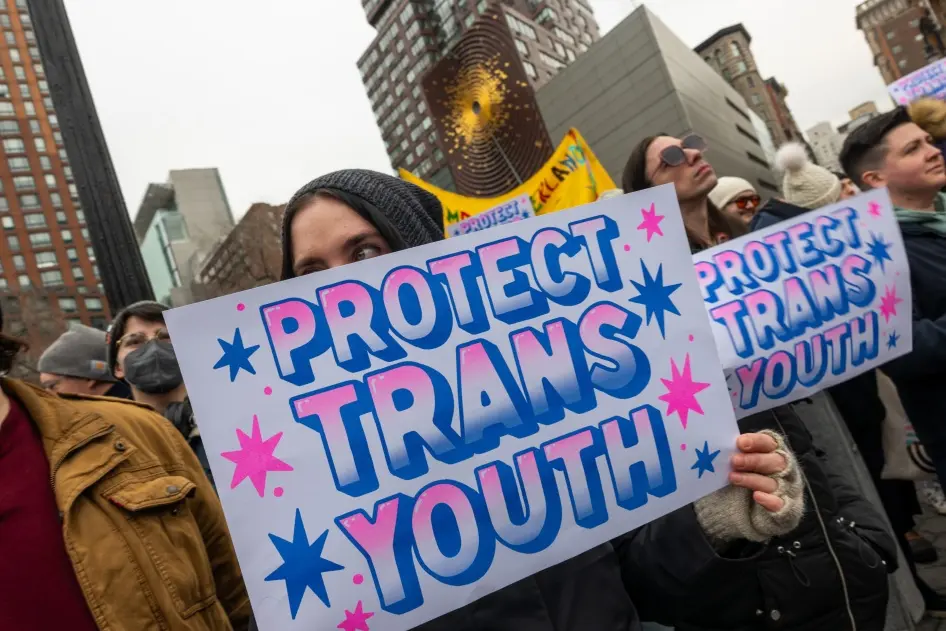
In December, the Trump administration proposed sweeping restrictions on gender-affirming care for transgender minors. On Dec. 18, the Centers for Medicare & Medicaid (CMS) announced two new proposed policies that would effectively terminate Medicaid coverage of of gender-affirming care for individuals under 18, cutting off a critical lifeline for many trans youth.1
The first of these policies would modify the Conditions of Participation (CoPs) to disqualify hospitals that offer gender-affirming care from Medicaid and Medicare reimbursement. As virtually all hospitals in the U.S. rely on CMS funding to operate, the adoption of this policy would mean hospitals nationwide would no longer provide gender-affirming care.
The second proposed policy prohibits the allocation of Medicaid and Children’s Health Insurance Program (CHIP) funds to gender-affirming care for minors under 18, ending state insurance coverage of gender-affirming care for minors. These policies alone would make gender-affirming care inaccessible for most working-class trans youth. These two proposals are subject to legal challenges; comments on them are due on Feb. 17.
U.S. Department of Health & Human Services Secretary Robert F. Kennedy Jr. also signed a separate HHS declaration 2 on Dec. 18, which frames youth access to gender-affirming care as a public health crisis that violates professional medical standards and the Hippocratic oath. RFK defended this move by citing a widely disputed 3 medical study, 4 produced in November 2025 by the HHS under his authority, warning that “practitioners who perform sex-rejecting procedures on minors would be deemed out of compliance with those standards.” This declaration creates legal uncertainty for all medical establishments that offer gender-affirming care, creating an incentive to cease providing the treatment altogether—an effect hauntingly reminiscent of anti-abortion bills.
The crackdown extends beyond medical facilities. The FDA has issued 12 warnings to private manufacturers and retailers of chest binders—garments used to flatten the chest—signaling a broader campaign against resources commonly used by transgender individuals.5
These measures would have devastating consequences. For many transgender adolescents, access to HRT during puberty is not only affirming but lifesaving. Puberty introduces changes that are irreversible without timely intervention. While some effects, such as certain secondary sex characteristics, can be mitigated later, others including height, bone structure, and vocal deepening—cannot be reversed once adulthood is reached. For this reason, adolescence is a crucial treatment window. Denying care during this period forces trans people to endure life-long dysphoria that could have been prevented. These policies will deepen the suffering that transgender people already endure as highly marginalized members of the population through stripping young trans people of autonomy over their bodies.
The administration’s actions mark one of the most aggressive federal interventions into transgender health care to date. These decisions are clear attempts to rob the transgender community of the future that our youth embody. Mass, public resistance to these attacks on transgender youth is absolutely necessary to end this assault on bodily autonomy and to prevent it from widening in scope. Organizations fighting for bodily autonomy must come together with trans youth, medical workers, teachers, case workers, and other workers in affected industries to broaden the organs of collective struggle and fight back for trans rights!
First published here by Workers’ Voice