
The streets are rallying once again against the threat of the far right!
A critical vote for Iván Cepeda
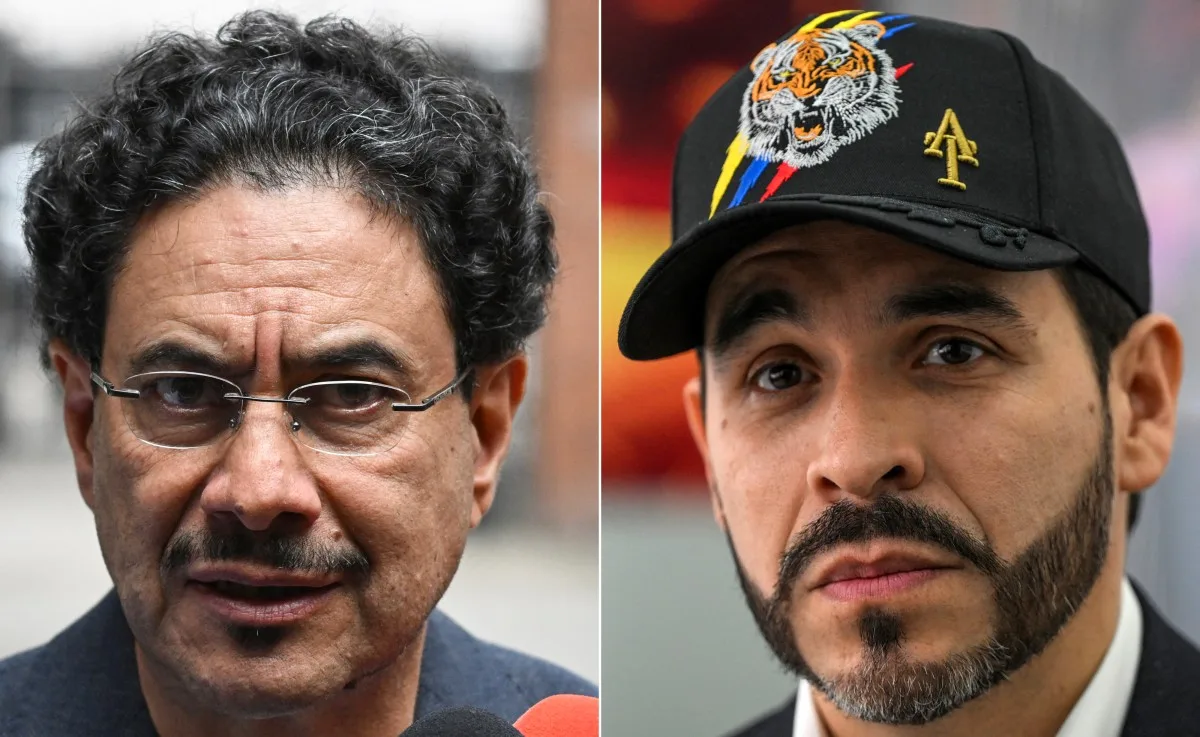
In the first round of the Colombian elections, held on May 31, candidate Abelardo De la Espriella of the far-right Defenders of the Homeland Movement won 43.7% of the vote, compared to 40.9% for candidate Iván Cepeda of the Historic Pact and Alliance for Life, who represents the continuity of the current government of Gustavo Petro. Citing Milei as a model for the economy and El Salvador’s President Bukele for public safety, candidate De la Espriella enjoys Trump’s enthusiastic support.
Petro and Cepeda initially refused to recognize the election results for a week, later changing their position. In a deeply polarized electoral process, the second round of the election will take place on June 21, amid allegations of imperialist interference in the electoral process, while a congressional committee has called for the suspension of Petro’s mandate until the election is concluded, accusing him of improperly participating in the campaign.
The streets are alive again
Following the first round of the presidential election on May 31, thousands of young people, workers, students, and members of the working class have spontaneously taken to the streets of Colombia’s major cities to reject the advance of the far right represented by Abelardo de la Espriella.
The first demonstration took place in Bogotá. Hundreds of young people took to the avenues in the north and center of the city on the nights of June 1 and 2, filling the streets with energy, flags, and slogans against authoritarianism. In Cali, Medellín, Barranquilla, and other cities across the country, rallies—particularly those involving young people—are taking place. At the Pedagogical and Technological University of Colombia (UPTC) in Tunja, students took to the streets en masse; the same occurred at the University of Tolima, where university students turned out in force to reject the far-right agenda. Over the following days, this wave of mobilizations and marches has continued, with a significant spontaneous component but also organized by unions.
Also, through an extremely rapid process, networks and groups that seemed to have been forgotten by the popular assemblies began to reactivate across the country. Calls for union, trade association, and local meetings are popping up everywhere. Local and neighborhood assemblies, as well as sector-specific meetings that arise spontaneously—for example, among healthcare workers—demonstrate, on the one hand, the need to organize and the mistake of having neglected these spaces with the arrival of the Petro administration; but they also demonstrate the social movement’s capacity for recovery and response.
We enthusiastically welcome these expressions of street protest!
The 2021 National Strike remains alive in the people’s memory.
Five years ago, millions of Colombians took to the streets to protest against Duque’s tax reform, against poverty, youth unemployment, police repression, and systematic violence. The front lines of defense were organized, along with community kitchens, popular assemblies, and indigenous, peasant, and Afro-Colombian resistance. Although the movement was harshly repressed, it left a clear lesson: the streets are the true path to winning rights. The memory and experience of the strike did not fade; it was contained because it was channeled toward the ballot box in 2022, it has resurfaced in the protests of recent days, and now it must be strengthened. Let us not allow the memory of the social uprising to become merely a memory. Let us transform it into a permanent organization, independent of the government or the candidates.
Cepeda now faces pressure from the bourgeois sectors that support him but also distrust an anti-institutional candidate (who calls himself “anti-system”), amid latent discontent sown by the rise of the 2021 national strike—which has not been defeated—and the fear that the social crisis could erupt again at any moment, snatching away their power and privileges; it is the fear that a revolution will erupt.
They know that, just as Petro’s government made deals favoring their interests, Cepeda’s will continue the policy of alliances under the National Agreement. Factions within the Liberal Party, the Santos camp, the Greens, and other sectors are unwilling to venture into right-wing alliances with Abelardo de la Espriella; similarly, those who have been directly attacked in a sexist and homophobic manner—such as Juan Daniel Oviedo and Claudia López—are distancing themselves, making their support for Cepeda and Quilcué conditional. The pressure to form alliances and to further water down the Historic Pact’s platform will intensify.
Organization and mobilization are the tasks of the moment.
Whoever governs on August 7, the rights of the working class, peasants, women, Indigenous peoples, and youth will not be defended in Congress or the Casa de Nariño, but in the streets, through organization and mass struggle.
The critical vote for Cepeda and Quilcué on June 21 is not a political endorsement of the current government, nor of Cepeda’s project of continuity; it signifies solidarity with the working masses who, still placing their trust in them, are fighting in the streets against the far right.
It is a critical vote because, just as Petro’s current government is not a government of the workers, neither will Cepeda’s be, since it defends the same program of class conciliation and economic compromise.
We will vote critically for Cepeda, but at the same time call on workers to distrust his policy of compromise and reconciliation between the antagonistic interests of business owners and workers, while simultaneously promoting the independence that we workers must maintain in the face of all governments that defend capitalism.
Petro’s government is going down in history as the first “left-wing” government in Colombia, but a government should not be defined by its rhetoric, but by its class composition and what it stands for. Petro’s government has clearly been a government within the framework of the capitalist state, which it has maintained. Its composition from the beginning to the present includes figures from the reformist left as well as independents and representatives of bourgeois sectors and parties; therefore, it is a capitalist government of class conciliation.
We reject any attempt at fraud, disinformation campaigns, and imperialist interference.
The right wing has unleashed a brutal campaign of lies and media manipulation to try to distort the will of the people. We reject any attempt at fraud and raise our voices against the interference of U.S. imperialism and its allies, who seek to dictate Colombia’s course according to their geopolitical and economic interests.
Now is the time to revive the independent organization of the working class and the popular sectors.
Popular assemblies in every neighborhood, village, university, union, and sector must multiply across the country. These assemblies must be decisive, and under no circumstances should they be deactivated after the runoff. We cannot expect those in power to solve our problems from above. Recent history proves it: only massive pressure from below forces governments—even progressive ones—to concede gains.
Whoever wins the runoff will face a deep economic crisis, pressure from the International Monetary Fund and imperialism, and a rabid right wing that will not easily accept defeat. If Cepeda wins, we must mobilize to demand the real fulfillment of the promises of change and confront the bosses’ counteroffensive. If De la Espriella wins, resistance in the streets will be even more urgent and necessary.
Continue on the path of struggle
The Bolivian people show us the way. Their experience tells us that the right wing, if it wins, will impose counter-reforms to crush rights, just as President Rodrigo Paz did, and that the only way to stop it is in the streets through a general strike, through a national strike. It is the struggle in the streets that can defeat the right wing. In Colombia, we already have this experience. If we were unable to overthrow Iván Duque in 2021, it was because the strike leaders dismantled the movement to channel discontent toward the ballot box.
If Iván Cepeda wins, we will also have to mobilize to demand that the government break with the capitalists and resolve the major underlying problems of workers, peasants, and the popular sectors.
With the unity of the exploited and oppressed, in direct struggle, we can defeat the political regime that still remains, and win the reforms and demands we need. It is through a revolution in the streets that we will be able to defeat the powerful and finally put the workers and the people in power. Otherwise, we will fall into the cycle of alternating between right-wing and left-wing governments that do not solve the problems but, on the contrary, exacerbate them.
Political independence of the working class
With the results—in which the far-right candidate Abelardo de la Espriella narrowly defeated Iván Cepeda of the Historic Pact, who represented continuity of the Petro administration—a situation has emerged that combines campaign efforts to win the runoff election with mass mobilizations opposing the electoral advance of the far right. These mobilizations echo some characteristics of the national strike movement.
Internationally, we are witnessing a wave of struggles against right-wing governments, such as in Bolivia and Chile, which show that the struggles that began a few years ago remain alive.
Capitalism is a system that exploits wage labor, expropriating the wealth produced by workers; it is not a system that workers can claim as our own. In the same vein, a government that seeks to develop capitalism is not a government of the workers. That is why workers must maintain political independence under the slogan: whoever governs, rights must be defended.
Strategically, we are pushing for the building of a party—not an electoral one, but one for the struggle and the socialist revolution—to win a workers’ government and an economic system without exploiters or the exploited.
Against Trump’s intervention and U.S. imperialism in the elections!
A critical vote without political support for Iván Cepeda and Aída Quilcué!
For struggle in the streets and independent organization to defeat imperialism and the bourgeoisie!
Against Cepeda’s policy of conciliation and the National Agreement—an agreement from below for the demands of the National Strike!
The Historic Pact government is not our government—for a true Workers’ and People’s government!
Through the processes of struggle and organization, let us stimulate mobilization and independent organization, resuming the struggle of the National Strike!
Whoever governs, rights must be defended!
Translated from the original Spanish


