The Indigo airlines chaos
The Indigo Airlines saga is the perfect example of what goes wrong when capitalist interests are put in charge of public services
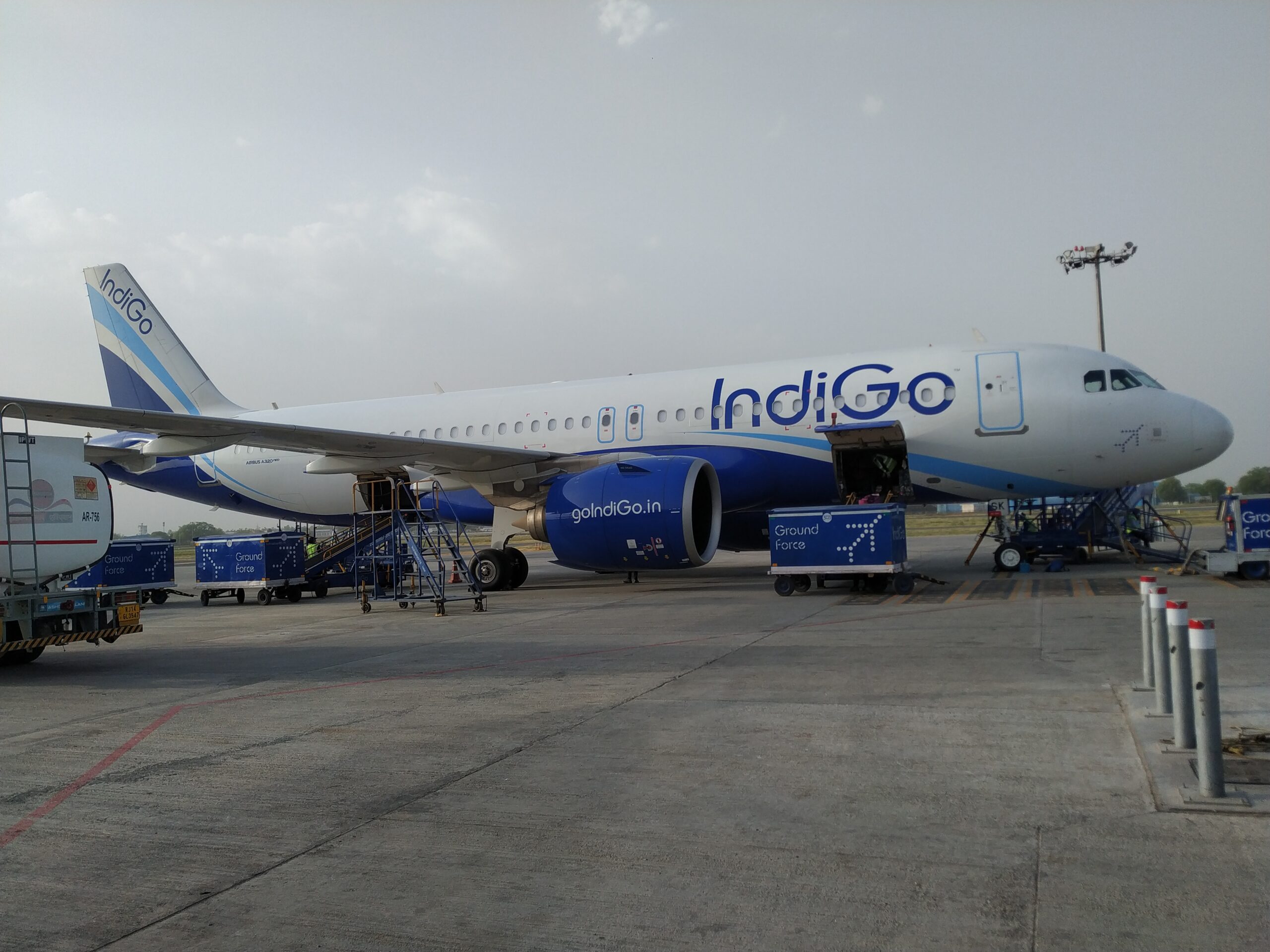
Hundreds of flights cancelled, thousands of passengers stranded, a whole airline infrastructure in utter chaos, all because of one airliner. Indigo airlines is India’s largest airliner accounting for over 60% of all domestic flights. Beginning on the 1st of December this year, up to 400 flights were cancelled by the 5th of December leaving passengers stranded at airports across India. The reason? The airline had an arsenal of excuses from congestion on routes, to the new crew rostering rules. The true reason was the company’s unwillingness to implement the government’s new mandate for pilot rest, which would increase mandated rest from 36 hours to 48 hours.
The airline’s rise is a classic example of the rise of a capitalist monopoly, achieved over the years by cutting competition through low costs and relentless expansion of routes. Indigo used its clout to muscle away new airlines from lucrative routes so it could more effectively monopolize flying in India.
Indigo airlines stands as the second largest Asian airline, and one of the largest in the world in terms of passenger count, accounting for 31.9 million passengers in the fourth quarter of 2025 alone. Today, 90% of all flights are operated by two airlines, Indigo controlling 60% of routes and the Tata owned airlines of Air India and Vistara controlling the remaining 30%. In the competition between these two monopolies it is passengers and the airline workers who suffer.
The Indigo crisis
Indigo’s business model has been described as ‘lean’, which is a byword for minimal use of staff and maximum profit. This has been at the heart of the problem that has unfolded with Indigo airlines. For years Indigo has slowed recruitment and kept a limited staff while expanding services.
Pilots and staff were strained, and understandably required a provision for rest. The Directorate General of Civil Aviation came out with the guidelines for mandating 48 hour rests for pilots. The rules were framed well in advance in July, but rather than adapt, the airliner decided to keep its business model while the problems compounded. The company grounded flights citing redundancies and absences. Ground staff were overburdened with managing an angry clientele. Many were simply left stranded.
The chaos at airports and media anger from right wing corporate aligned news channels compelled the DGCA to withdraw the mandated rest rules. Indigo had effectively bullied the government and the public, to continue its exploitative practices. Pilots and flight crew will continue to be worked to exhaustion. The only reason such brazen blackmailing could be successful, is because of the monopolistic structure of Indian aviation.
Even just a decade ago, India had several airliners competing within a relatively open market, with one major publicly owned airliner in Air India. Airliners like Jet Airways, Spicejet, Kingfisher airlines, Sahara air, and Air Deccan emerged in the years following liberalization, at the expense of Air India’s monopoly. For years, Indian travelers had become used to a plethora of options and competitive relatively affordable pricing, thanks in good measure to the anchor of Air India and publicly owned air travel infrastructure. The Modi government took a hammer to this.
In one of its first moves, it opened airports to private ownership, and in a dramatic move, privatized Air India handing it back to the Tatas, after decades of public ownership. Over the years since the BJP won, competition among airliners resulted in the elimination of a good number of companies, until today, where the whole industry is essentially two monopolies competing against each other, and deciding prices with brazen arbitrariness.
Indigo has been the biggest winner of this competition, acquiring 60% of the market share for domestic travel. It is now in a position to dictate policy, holding travelers hostage, enabled by a shamelessly pro-capitalist government.
Corporate blackmail and monopoly competition
In the year 2012, four hundred pilots of Air India pilots went on strike. The strike was in response to the management’s decision to begin training pilots of the merged state airliner Indian Airlines for flying the newly acquired Boeing Dreamliner planes. The government and management responded with a series of sackings, affecting a quarter of all striking pilots. The strike was eventually withdrawn after 60 days. This was the last major strike by air pilots in India, and the last time that pilots and flight crew would go on strike in India.
The pilot strike went on for two months grounding operations of the beleaguered airlines, which was once the star airliner of India, holding a monopoly over air travel in India. Air India has a history of nearly 100 years beginning its life as Tata Air, before World War 2 disrupted its regular services. The air carrier would be nationalized in 1953 but management remained with its founder J.R.D Tata. During its existence as India’s leading state owned airliner Air India dominated air travel, becoming a virtual monopoly in this sector.
The 2012 pilot’s strike was debated in parliament, and became a national issue. The media focus remained on the inconvenience to passengers, and the striking pilots were villainized. No one stopped to ask, how a star airliner like Air India came to this mess, why the merger with Indian Airlines was done and why public sector companies like Air India always manage to get run to the ground. The truth was that Air India was being primed for re-privatization.
The privatization of Air India was first considered by parliament under the Modi government in 2017, and finally adopted in 2021. Air India was sold back to the Tatas, ending seven decades of publicly owned air travel in India. The privatization of Air India represented more than just the transfer of ownership of one Airline Company. Even though Air India had long lost its monopoly, the existence of a publicly owned airline company ensured a certain balance in the sector. Its vast assets, infrastructure, and planes, created an alternative to profit driven private monopolies which had been growing in strength since Jet Airways entered the market in 1993. The privatization of Air India was the final nail in the coffin, ensuring a complete private sector monopoly in air travel.
The slow destruction of Air India paved the way for private airliners to grow, often at the expense of Air India. With a publicly owned airliner, there was a check on private domination on air travel, as well as a system for securing airline workers (pilots, flight crew, and ground support staff). With Air India gone, the best defense of airline workers went with it.
Liberalization came to India with the promise of enhanced competition, which would supposedly guarantee better services for the customer. The market would somehow be better than the state in providing essential transportation service, yet today we have seen an entire mode of travel come to a standstill because of brazen corporate bullying. The Indigo episode has shown in the most glaring way, what happens when we let the ‘free market’ decide what’s best for the economy. Rather than guaranteed efficiency or quality service, we get monopolies of companies with no accountability. Unlike a publicly owned company which is funded by the people and run for the people, we have completely unaccountable corporations who can get away with holding people hostage.
For the last thirty years, the Indian public has been force fed propaganda that has painted the private sector as the beacon of efficiency, and publicly owned corporations as hubs of corruption. The media spoke as if all problems can be magically solved by unabated privatization, giving companies in the hands of supposedly genius entrepreneurs who ‘know’ business better. The truth is laid bare before us, that capitalist competition only leads to the creation of monopoly capitalism. Today, two companies control 95% of air travel, and its passengers and flight workers who suffer.
Indigo pilot’s quiet resistance
Among Indigo airlines’ chief excuses for the chaos has been the change of rosters for pilots. However, Indigo hardly recruited any new pilots and existing routes are stretched with limited staff. For two years, Indigo led the effort against increasing the mandated rest duration of pilots. The issue wasn’t just about rest, but also about safe air travel.
No sooner than the new mandate was announced, pilots began calling in sick days and taking leave. The company was forced to scramble for a response. Indigo remained intransigent, the company was not going to bring in fresh recruitment, it was not going to allow better working conditions for its pilots and it won’t tolerate a new government policy that would mandate increased rest. The quiet undeclared strike resulted in nothing.
The quiet resistance could be seen and felt, but without any conscious efforts or organized leadership the company would not be affected. The company successfully bullied the government and regular flyers to show the strength of its monopoly.
In a futile attempt to ameliorate the situation, the government rolled out emergency train services, but most of the 80 or so trains were left unused for their purpose. The government made no effort to propagate this news.
A socialist policy for mass transit
A service as essential as travel and transit cannot be left over to profit. At the core of capitalist thinking is the commodity. Everything is reduced to the logic of being a commodity, everything is seen through the lens of profitability, to see how much money it can make the capitalist. This logic ruins transit.
People use transit to satisfy a wide variety of needs, including work, leisure and healthcare. Should this be subjected to profit motive, the traveler must pay more for something that is more often than not, an essential service. Most people, especially the working class and youth, can’t afford private cars, and rely on mass public transit. Airlines are but one form of mass public transit. In the eyes of capitalist, it is a service in the same vein as delivering cargo. The only thing that matters is squeezing the most out of the passengers and crew, for the least amount expended.
Indigo ceased to think about passengers and switched to calling them customers, no different than being a customer at a café ordering a drink. The responsibility of the airliner does not go beyond the bottom line. Now that private companies have monopoly over air travel, they can decide how to expand and where to expand, it would not be based on the need of travelers, but on the profit motive of unaccountable companies.
To this we propose the socialist solution, which begins with a simple yet drastic step, Nationalize the monopolies! What had begun with Air India was undone over the decades to placate capitalist interests. Air India itself had been constantly undermined by bureaucratism and the corruption of politicians who preferred to use the national carrier as their personal air service than a service for the benefit of the people.
The socialist approach to transit has no patience for either greedy capitalists seeking monopolies over our lives, nor corrupt politicians and bureaucrats treating everyone else like second class citizens. Mass public transit like air and rail must be run on the basis of democracy and accountability. These two are sorely missing in India today, and they come entirely because of capitalist control over key elements of public transport, whether in the production of locomotives, busses, or outright control over services as in the case of air travel.
References
https://www.thehindu.com/business/Industry/indigo-airline-flight-delay-cancellation-reason-december-5-2025/article70360694.ece
https://en.wikipedia.org/wiki/Air_India
https://www.bbc.com/news/world-asia-india-18701680
Image credit: An Indigo jet in 2022 by Ravi Dwivedi via Wikimedia Commons