
Nepal floods: The cost of global warming
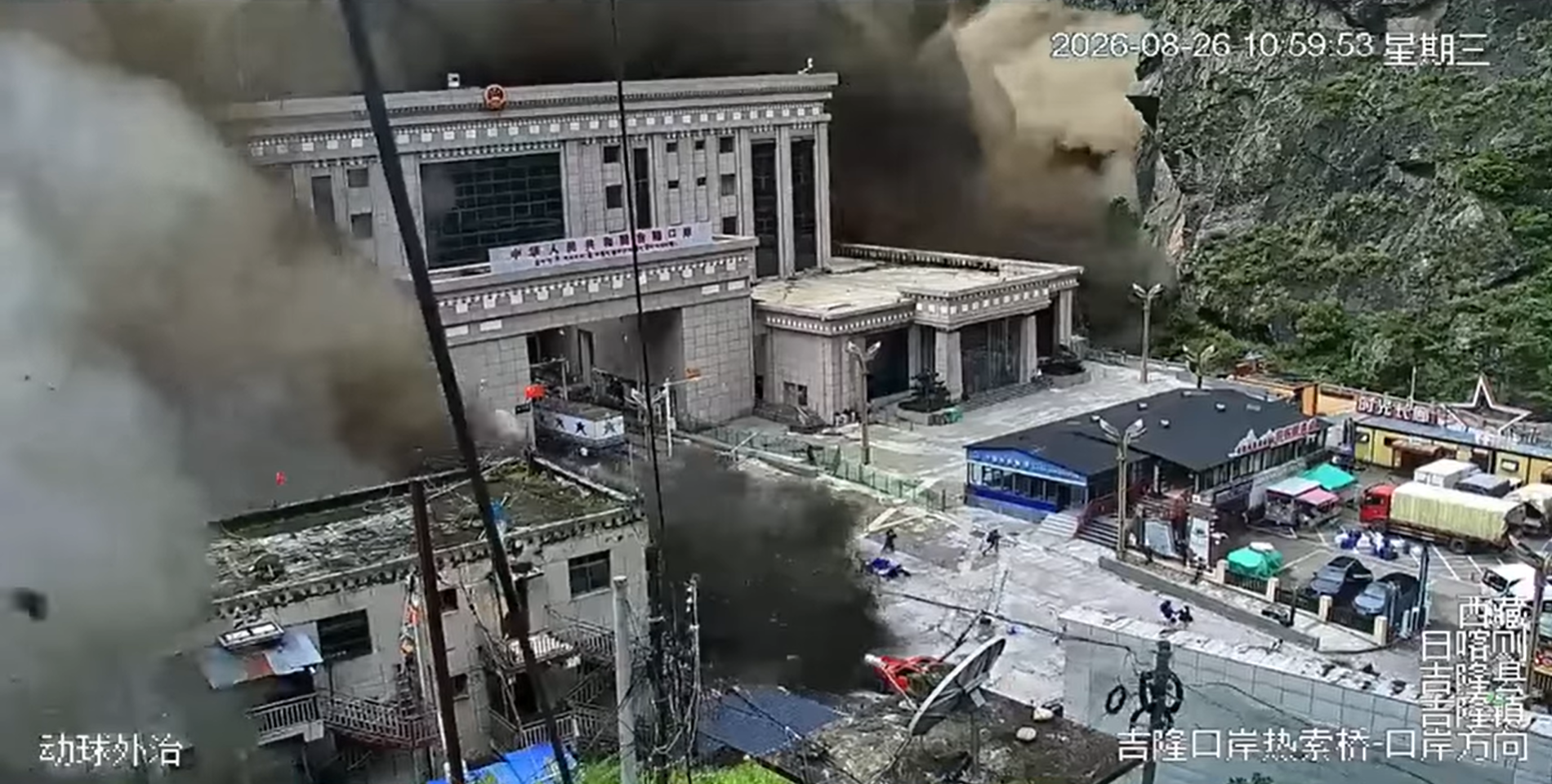
Over one thousand lives lost, countless villages and towns destroyed. The visuals of a raging torrent of mud soil and stone reducing concrete buildings to rubble will be forever etched into our collective memories. Far from being an abstract concept, this is what global warming looks like.
The world has already raced past the danger threshold of 1.5 degrees Celsius warming, now those who contributed the least to global warming are the ones suffering its consequences. Countries like Nepal, where much of the river system is fed by glacial waters of the Himalayas, where critical agriculture is reliant on predictable measured rainfall, are set to face some of the worst consequences of rising global temperatures, not the least in the form of the floods.
The flood itself was not caused by rainfall, but by the premature melting of glaciers further North along the Nepal-Tibet border. The flood began after a section of Langtang Lirung glacier collapsed into the valley below, locking the flow of the Lhende Khola river. The collapsed glacier dammed the natural flow of the river until it could no longer sustain the torrent behind, when the glacier broke the river flowed at a speed of 193 kmph down to the border outposts at Gyirong crossing, destroying a five storeyed customs building on its way.
The torrent of mud, stone and debris continued its downward flow into the Trishuli valley wreaking havoc along its path. The towns of Betrawati bazar, Bidur, Devighat were left devastated, as well as dozens of villages on the path of the torrent. In a matter of hours, a vast region of Nepal was left flooded, sweeping away homes, buildings, bridges, and farmland. More than 1200 people died in its aftermath.
Nepal is no stranger to floods, but what is undeniable is the growing severity of floods and their frequency. It is unusual to say the least, for Nepal to experience such disasters in periods of low rainfall, past the usual monsoon season. The present disaster is undeniably linked with global warming and increasing temperatures.
It is not without reason, that the present Prime Minister of Nepal has called on China, India and the United States to pay for the damage caused by the Nepal floods.
Global warming
For at least forty years now, we have known about the effects of runaway greenhouse gasses, their consequence upon the world’s environment and what causes it. Despite knowing about these effects, a concerted effort led chiefly by the leading imperialist powers of the world, and their largest corporations, have ensured that no meaningful actions take place.
Energy companies like Chevron knew about global warming since at least the 1950s but ensured that the science behind it would not become wider knowledge. Fossil fuel based energy ensured the rapid capitalist growth in the postwar years, not only in the imperialist core of the United States, but also in developing countries. The greatest beneficiaries of the system were the large corporations who could take advantage of weak environmental regulations to expand their operations there.
As early as the 1970s bodies like the American Petroleum Institute had been monitoring the effects of global warming and greenhouse gas emissions. Internal papers had warned of disastrous consequences, if emissions could not be regulated. Far from regulating emissions, they have only grown over the last forty years, driven not only by continued use of fossil fuel in developed nations but also due to the industrialization of developing nations, mainly China and India.
Since the dawn of the industrial revolution in Britain, there has been a rise in CO2 emissions largely through burning of fossil fuels for energy. The use of coal for steam power drove the first large scale carbon emissions, stemming almost entirely from Europe, the United States and Japan. After the Second World War, the spread of fossil fuel usage for the industrialization of decolonized nations, and the reconstruction of Europe drove the next phase of carbon emissions. This phase saw a dramatic rise, and the first visible signs of global warming.
By the 1990s the problem could not be denied any longer. The UN convened the first true climate conference (COP1) in 1995, held at Berlin. The Berlin mandate sought to create a mechanism for developed countries to monitor climate change and global warming. Targets were assigned for the period beyond the year 2000. Since then there have been 28 climate conferences at the behest of the UN, the most significant of which was held in 2016 at Paris.
The Paris climate conference resulted in the creation of the Paris Agreement, a legally binding treaty on climate change. The Paris Agreement had an overarching goal of limiting global temperature rise to 1.5degrees above pre-industrial levels, and limit the increase of global average temperature to well below 2 degrees Celsius.
As of 2026, the UN has published a report where it stated that there was no way to meet the goals of the Paris Agreement of 2016. According to the UN themselves, the world will miss its chance of limiting the rise of global temperatures beyond 1.5 degrees Celsius. In 2023 alone, the world produced more than 57 gigatonnes of greenhouse gas emissions, which was 1.3% higher than the year before it. In order to meet the temperature cap set by the Paris Agreement, countries must collectively reduce their emissions by 7.5% each year until 2035. Nothing suggests that target is anywhere close to being achieved.
It is important to remember, that even this target is an arbitrary one, a compromise figure that has been worked out within the very limiting framework of the United Nations. This requires sincere cooperation from all the member states of the UN for it to have any chance of success. Not only is there not any cooperation, some countries are now openly hostile to the idea of fighting man made climate change.
The rise of right-wing populism across the leading imperialist countries, the rise of reactionary governments in Latin America and the emergence of the Hindutva government in India has resulted in the acceleration of environmental degradation. In terms of carbon emissions alone, India, China and the United States rank among the top three for annual emissions.
Deadly yearly reminders of the cost of global warming have not been enough to deter the capitalist countries from their path. The bitter truth is that no amount of sane appeal to reason can convince these governments, the lame duck organization that is the United Nations has been a failure in bringing about any kind of consensus. Extreme climate events such as large-scale forest fires, droughts, floods, and extreme cold spells kill hundreds and displace thousands every year. Climate refugees are increasingly becoming a problem everywhere, yet countries invested in fossil fuels remain stubbornly committed to a toxic model of development.
Today, it is Nepal that is paying the price, tomorrow the victims will be elsewhere. It is always the working man who bears the brunt of the cost, while the capitalist elite and their puppet politicians are the ones causing most of the damage.
Capitalism the true cause of global warming –
We must first acknowledge the root cause of global warming. Carbon emissions have been known to cause greenhouse gasses, which in turn cause temperatures to rise by trapping heat. The question is not whether this science is proven or not, countless research papers, scientific studies, have proven this. The real-world effects are for all to see.
If one puts global temperature fluctuations on a graph, one would see periods of relative warming and cooling. This pattern remains largely stable until we got to the period of the rise of capitalism, in particular the early 19th century and the industrial revolution. For about eight hundred thousand years, the cycle of warming and cooling remained relatively constant, with a cold period in the thirteenth to sixteenth centuries.
This graph is significant, because it highlights the direct impact capitalist production had on the environment. Global warming did not begin in the 20th century, the roots of runaway greenhouse gas emissions begin with the rise of capitalism in the 18th and 19th centuries.
In Capital Volume 1 Marx had said “…all progress in capitalistic agriculture is a progress in the art, not only of robbing the labourer, but of robbing the soil; all progress in increasing the fertility of the soil for a given time, is a progress towards ruining the lasting sources of that fertility.”
The foundation of capitalism is commodity production. It is the basis on which there is capital accumulation. The system cannot function without endless accumulation and movement of capital, this requires increased commodification. New areas of commodity production must be opened, new items must be converted into commodities. Capitalist production rewards profitability, for this it seeks the most profitable and hence the cheapest possible way to secure the most useful raw materials. Coal was plentiful, it was a readily available and cheap source of power. Once coal-based steam power was introduced, mechanization of productive processes and transportation (with the railways) all but ensured that capitalism would remain on the path reliant on fossil fuels, even when cleaner alternatives such as hydro-electric power were available.
The discovery of oil as another plentiful high energy source of power, together with innovations in transportation such as the automobile, the discovery of diesel fuel and the diesel engine resulted in yet another rush for fossil fuel resources, this time for oil. Much like in the epoch of the 19th century, the 20th century saw a scramble for this new resource. While for most of capitalist history, industrialization was concentrated in the core countries of capitalism, namely in Western Europe and the United States, the period after the Second World War saw the rapid growth of capitalism in much of the formerly colonized world. A third and deadlier scramble for resources ensued, which has resulted in a dramatic spike in carbon emissions over the last seventy years.
The effects of greenhouse gasses have only become widely known in the last forty years when the impact of man made global warming became undeniable. The rise of an environmental movement forced capitalist governments to at least pretend to take the issue seriously, but we must understand governments which rely on the capitalist class will never sincerely go against the thing that ensures capitalist profits.
A whole economy has been built by imperialist nations on the basis of oil and fossil fuels. Even with the rise of new clean technology, particularly solar energy, capitalist countries are either unwilling or unable to make the transition away from fossil fuel, quickly enough to make a meaningful difference. An ideology of denial and condemnation is now being propagated to support a fossil fuel economy, even when it seems no longer viable, even on capitalist terms.
The Socialist response
If capitalism is the problem the solution can only be socialism. The ending of endless capitalist accumulation on the basis of the commodification of everything. Today, the question is no longer an abstraction, but one that is of the survival of the human race. Global warming is nearing a point where runaway temperature increases become irreversible. At that point, the melting of glaciers, warming oceans and desertification will take the lives of tens of millions through famines, natural disasters and uncontrolled temperature increases.
It is an often-misleading headline that countries as a whole are blamed for greenhouse gas emissions, when in truth it is the top 100 leading corporations have caused 71% of all emissions in the last 28 years. The Carbon Disclosure Project has mapped the totality of greenhouse gasses emitted, and found a quarter of all emissions could be traced back to just 25 companies and entities, most state-owned companies in the energy sector.
A Socialist program that brings these companies under workers control, and nationalizes all energy companies as part of it, would have an immediate impact on limiting global warming. A Socialist government led and directed by workers in accordance with a democratic plan, with the environment as one of the key pillars of that program, can do more to bring about change than any pious appeal or warning from the United Nations.
For the countries most responsible for global warming, the agenda for nationalization becomes even more critical. Energy companies and their financiers are among the most responsible for bringing us to this disastrous situation today, where global warming seems irreversible. As much as the likes of Prime Minister Balen Shah of Nepal may say, the capitalist governments, which have enabled the exploitation of their countries for the benefit of capital, are not blameless. Soil erosion due to large scale deforestation, expanded dam building for more power generation, have helped create conditions for the disastrous floods that have taken place.
It is worth remembering the warning made by Friedrich Engels, “Let us not…flatter ourselves overmuch on account of our human victories over nature. For each such victory nature takes its revenge on us. Each victory, it is true, in the first place brings about the results we expected, but in the second and third places, it has quite different, unforeseen effects which only too often cancel the first…”

