
Full support for the popular protests in Iran! Down with Khamenei and Pahlavi! Hands off, Israel and the United States! For democratic workers’ and popular power!
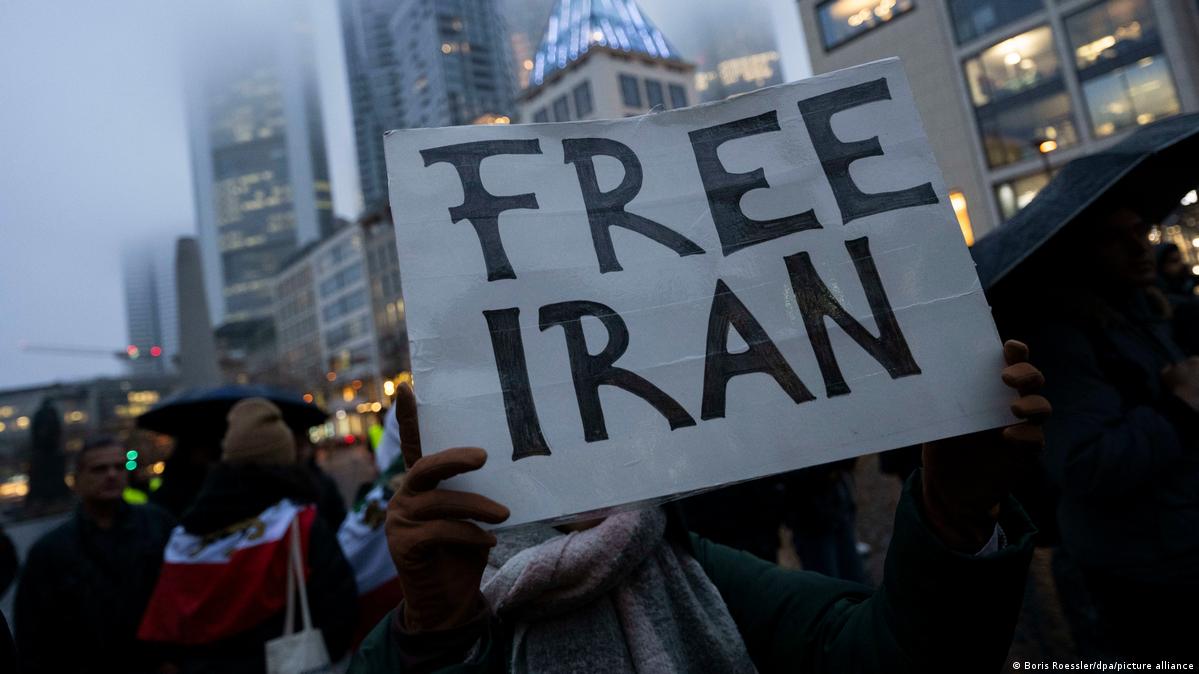
On December 28, Tehran merchants, known as “Bazaari,” closed their doors in protest against the economic crisis (skyrocketing inflation and sharp devaluation of the national currency, the rial) and neoliberal policies that benefit only certain capitalist sectors linked to the regime and widen social inequality.
The following day, university students joined the protests. From there, the movement grew to include working people ruined by inflation, the proletarianized middle classes, oppressed nationalities, and even middle sectors represented by “Bazaari.” It spread throughout the country, even to small towns in the interior and to regions where oppressed nationalities live. Compared to the last major wave of protests led by women and youth called “Woman, Life, Freedom” in 2022-2023 following the murder of Mahsa Amini, the protests in Tehran and other large cities are not as massive, but their national reach is much broader.
The general feeling among protesters and the larger population is that the situation of economic crisis and repression has no solution other than the fall of the regime. In 2009, in the so-called Green Revolution, the majority sentiment was to reform the regime from within and democratize it. But that revolution was defeated, and with it, the prospects for reform from within the regime were qualitatively weakened.
Weakened but not defeated
Today, the Iranian regime is weakened both by the economic situation, which is the result of heavy imperialist sanctions against the country and neoliberal economic policies that privilege a minority of capitalists within the regime, and by the regime’s loss of popularity among the Iranian working population, which has been severely affected by social inequality and the lack of democratic freedoms.
Even so, the regime is acting to prevent the protests from spreading and attempting to prevent the emergence of rifts within the regime itself. On the one hand, it offered small compensations to the Bazaari and a $7 voucher for families. On the other hand, it cut off the internet and launched a large-scale crackdown that has already resulted in 500 deaths and thousands of injuries that are filling hospitals. (1)
In addition to the support of big capitalists and the Shiite high clergy, the regime has the police, the army, the Basij militias, and, most importantly, the Revolutionary Guard (called Pasdaran or IRGC).
The Revolutionary Guard is a parallel army with the most advanced weapons available to the Iranian regime. It has some 125,000 members, trained and armed, with salaries higher than those of members of other police and military forces. Its funding comes from control of approximately 50% of oil revenues in addition to its participation in several other important economic sectors such as construction, communications, and agribusiness. Its leaders are appointed directly by Ayatollah Khamenei. Recently, on December 31, Ayatollah Khamenei appointed his supporter Ahmad Vahidi as deputy commander. At the end of the last century, they were authorized to participate in elections, and in 2005, they elected Mahmoud Ahmadinejad as president.
The Revolutionary Guard also plays a very important role in shaping the country’s foreign policy. The Al-Quds Force, an elite troop, built and financed alliances in other countries that constituted the so-called “axis of resistance,” which today is weakened by the fall of dictator Bashar al-Assad and the weakening of the Lebanese political party Hezbollah.
Iran’s future is key to Western Asia (the Middle East)
The regional situation is marked by the imperialist and Israeli offensive to shape a so-called “New Middle East” under Israeli hegemony.
However, the other regional powers are resisting this goal and seeking a privileged relationship with the United States outside of Israeli hegemony. In addition to Saudi Arabia (with the support of most Gulf countries, except the United Arab Emirates), there are Turkey and Iran.
The change in Iranian foreign policy, with or without the fall of the regime, is in the interest of US imperialism as long as Iran leaves the political and economic influence of Chinese imperialism (which benefits from cheap Iranian oil) and accepts a neocolonial pact that puts Iranian oil under the control of US oil companies and subordinates the Iranian regime to Israeli hegemony over the region.
But it is not in the interest of US imperialism for Iran to be plunged into chaos in which the Revolutionary Guard possesses ballistic missiles and 400 kilograms of enriched uranium. This issue may lead US imperialism to negotiate with the Iranian regime to end its nuclear and ballistic missile programs in exchange for the total or partial lifting of sanctions in the spirit of the neocolonial agreement imposed on the Venezuelan regime.
Nor is it in the US interest for a new workers’ and popular revolution to overthrow the regime and serve as a foothold for struggles throughout the region, particularly for the Palestinian resistance.
The Saudi regime is particularly concerned about Israeli advances in the region, including the Israeli alliance with the United Arab Emirates. Israel recently became the first country to recognize Somaliland with the aim of establishing military bases in the country and controlling the southern entrance to the Red Sea. At the same time, the UAE regime sent more weapons and resources to the Yemeni Southern Transitional Council (STC) to control a large area of the country between the Indian Ocean and the Saudi Arabian border. The Saudi regime bombed ships carrying weapons and resources from the United Arab Emirates to the STC in the port of Al-Mukalla and gave the United Arab Emirates forces 24 hours to leave Yemen.
To undermine Israeli hegemony and make the Middle East multipolar, the Saudi regime normalized relations with Iran in 2023, signed a mutual defense pact called SMDA, inspired by NATO’s Article 5, with Pakistan (which possesses nuclear weapons) in September 2025, and a military and industrial pact with Turkey in January 2026.
Who is leading the protests?
The international press has drawn attention to the only Iranian figure who appears to be disputing the leadership of these protests. This is Reza Pahlavi, the son of the last Shah of Iran who was overthrown in the 1979 revolution. On the one hand, the Shah’s son’s popularity is quite limited, but it is growing both inside and outside Iran (except among the oppressed nationalities of the country who hate him). On the other hand, his past condemns him. The collective memory of the atrocities of the Shah’s regime, which was overthrown in 1979, remains in the popular consciousness, which does not want to replace the dictatorship of the Ayatollahs with a new monarchical dictatorship.
Furthermore, Pahlavi’s criminal support for the cowardly Israeli and US aggression against Iran in June this year also places him at odds with the sentiment of the vast majority of Iranians, who do not see Israel or the US as allies in improving their living conditions or achieving democratic freedoms within Iran. On the contrary, both the US and Israel are seen as enemies whose “support for the mobilizations” is opportunistic and aims to deceive the Iranian people in order to implement their agenda of regional and international hegemony.
It is necessary to build a new leadership from the working class, without any ties to Reza Pahlavi, Israel, or the US. A new leadership that promotes the construction of workers’ and popular councils in every neighborhood and every city to expand the mobilizations and influence the rank and file of the security forces to divide them, paving the way for the fall of the regime at the hands of the working class.
The main absence is a workers’ and revolutionary party fully linked to the interests of the working class and the working people. Various sectors of the left played a very important role during the democratic revolution of 1979. To prevent the revolution from taking an anti-capitalist turn, Ayatollah Khomeini pursued a deliberate policy of isolating and eliminating all left-wing forces, whom he called apostates (“mortads” in Farsi) or hypocrites (“monafeqin”). This policy culminated in the execution of 5,000 left-wing activists in Iranian prisons in the late 1980s, shortly before Ayatollah Khomeini’s death, at the behest of an allied judge named Ebrahim Raisi, who many years later would become president of Iran. These executions qualitatively weakened the left-wing forces within the country.
But this does not prevent the construction of a new revolutionary workers’ party which, in the heat of the wave of protests, will promote the independent self-organization of the working class towards power. (2)
NOTES:
(1) The regime killed some 300 people, mostly women, in its repression of the “Woman, Life, Freedom” wave of protests that began in 2022 after the death of Mahsa Amini in the custody of the morality police for improper use of the hijab (veil).
A year after the protests began, the Iranian regime passed a “chastity law” imposing harsh penalties on women who did not wear the hijab correctly. In this way, by killing protesters and imposing abusive laws, the Iranian regime demonstrated that control over women’s clothing is a strategic issue for the survival of this unpopular regime.
(2) In 1988, Ayatollah Khomeini issued a fatwa to execute imprisoned leftist activists. The men were hanged and the women were flogged five times a day until they renounced Marxism or died. Most of the victims were buried in the “cursed” wing (La’Natabad) of the Khavaran cemetery in the eastern part of the capital, Tehran. The victims’ families (“Kharavan Families”) hold tributes at the cemetery and are repressed by the regime’s militias. To this day, they fight for recognition of the arbitrary executions and for the punishment of those responsible.


