
End the massacres in Iran! Down with the dictatorship! Full support for the popular protests! No to U.S. intervention!
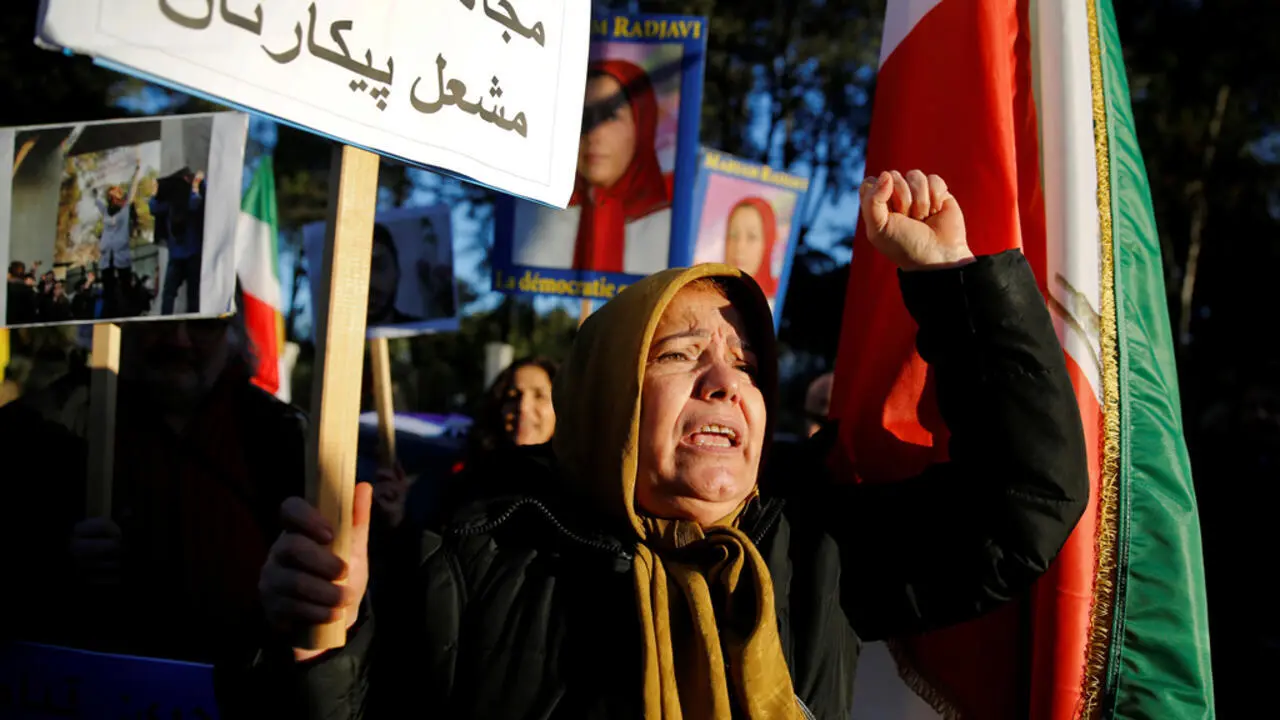
Since January 8, the Iranian regime has blocked internet and telephone communications and carried out massacres against protesters across the country. Human rights organizations estimate that there have been between 3,400 and 20,000 deaths, thousands of injuries, and more than 20,000 detentions of protesters. The violence has turned areas surrounding hospitals into open-air morgues.
These massacres were carried out by forces of repression, particularly the Revolutionary Guard (Pasdaran in Farsi), an elite military force of nearly 200,000 members that controls half of the country’s oil revenues and other businesses.
The protests began on December 28 with a strike by Tehran Bazaar merchants (known as bazaaris) against hyperinflation and the sharp devaluation of the national currency. The protests then spread to universities and across the country. These national protests have united the working class and youth from the most impoverished sectors to the middle classes, intellectual elites, and small traders.
The economic crisis and misery that the masses are protesting are the result of the regime’s policies that concentrate wealth in the hands of the allied bourgeoisie and the high state and military bureaucracy. These policies are coupled with the heavy and endless economic sanctions imposed by Western imperialism.
The population’s experience with the defeat of the 2009 “Green Revolution” against electoral fraud eliminated from the consciousness of the masses the prospect of democratic reform from within the regime . For this reason, economic demands against hyperinflation were quickly joined by calls to overthrow the regime.
The massacres and communications blockade reduced the protests, but they are far from over.
U.S. President Donald Trump threatened to launch a military attack on Iran if the executions of protesters did not stop, both in the streets and in prisons. Trump has no commitment to human rights or democratic freedoms. In reality, a U.S. or Israeli military intervention would be contrary to the struggle of the masses that imperialism fears most.
According to the press, pressure from Saudi Arabia, Qatar, and Turkey, as well as the prospect of military action, led to the postponement. Trump justified the postponement by claiming that executions had ceased; however, his spokesman stated that all options remain on the table.
Saudi Arabia, Qatar, and Turkey oppose any kind of military intervention and/or disorderly change in the Iranian regime. These capitalist regimes are concerned that attacks would increase regional instability, prompting reprisals by Iranian forces and their allies. This would affect the oil and gas industry and strengthen the project of turning Israel into a regional hegemonic power to which other countries in the region would have to submit. The Saudi regime announced that it would close its airspace to any military action against Iran.
Trump postponed the imminent January 14 military attack but maintained the deployment of an aircraft carrier from the South China Sea to the Middle East and expanded the shipment of air defense equipment to protect military bases in the region. These actions suggest the possibility of future attacks.
According to the press, Arab diplomats are banking on a “Venezuelan model”: rapid, high-visibility attacks followed by the regime’s capitulation to U.S. interests through negotiations. These interests include an end to the nuclear and ballistic missile programs and a relocation of the Iranian economy to fall under U.S. imperialism’s sphere of influence rather than that of Chinese imperialism. Most importantly, Trump cannot allow a workers’ and popular revolution to overthrow the regime as occurred in 1979, which could trigger uprisings throughout the region beyond any organization’s control committed to the status quo.
Another important point is the Palestinian question. The State of Israel continues its genocide and ethnic cleansing in Palestine. It keeps the Gaza Strip under siege and restricts access to humanitarian aid. The area is also subject to regular military attacks. In addition, the army and Zionist settlers are increasingly violent in their attempts to expel Palestinians from the West Bank. Nevertheless, the Palestinian Resistance continues, as do the mobilizations in support of the Palestinian struggle in various parts of the world.
The Palestinian people are not interested in any event that boosts Zionist morale. At the same time, Palestinians know that capitalist regimes, whether Arab or not, exploit the Palestinian cause to justify the oppression of their own citizens. This is also the case with the Iranian regime.
Furthermore, the Iranian regime has only made statements against the genocide in Gaza that began in October 2023 and provided limited aid to Hamas. Ayatollah Khamenei justified this inaction, stating that Iran would only attack Israel if Israel attacked Iran. That is what happened. In fact, the only regional force that supported the Palestinians were the Yemeni Houthis of Ansar Allah.
Overthrowing the Iranian regime through a workers’ and popular revolution could put Iran on the path to genuine solidarity with the Palestinian people. This could also mark the beginning of new revolutions that overthrow regional governments that directly or indirectly support the Zionist entity.
Victory to the protests!
Unfortunately, most left-wing organizations around the world have replaced the class struggle with disputes between imperialist blocs. In these disputes, the working class is expected to uncritically support Chinese and Russian imperialism and the regimes subordinate to them, such as Iran’s. This “campist” view of the world causes them to uncritically support capitalist dictatorships, such as Iran’s, and cover up the massacre of the working class in those countries.
We disagree with the campist view and are committed to the working class’s independent struggle against capitalist governments in all countries. This is why we support the workers’ and popular protests in Iran.
The 1979 workers’ and popular revolution shows that combining street protests with a general strike — particularly by oil workers — can lead to the fall of a dictatorship, as it did with Shah Reza Pahlavi. This is the example to follow.
At the same time, we must develop self-defense mechanisms against repression, as well as workers’ and popular councils in workplaces, working-class neighborhoods, and all cities. These councils should be modeled after the “shoras” (workers’ councils) of the 1978-1979 revolution.
Building an alternative leadership is also necessary. Reza Pahlavi, the son of the dictator, is not an alternative. The Iranian people do not want to replace one dictatorship with another; rather, they want freedom and decent living conditions. This will not be possible without a revolution that brings the working class to power and completes the process that was betrayed and interrupted in 1979.
The Iranian left was influential in the 1979 revolution. However, the capitulation of Stalinism to Ayatollah Khomeini in the name of a “revolution by stages” prevented the left from challenging the Shiite clergy and the bourgeoisie for power.
Now, the Iranian revolutionary left must rebuild its organization to provide leadership that opposes the dictatorial regime and imperialist interventions from the United States, Europe, Russia, and China. Furthermore, the Iranian revolutionary left must stand in solidarity with the Palestinian people against the Zionist state and guarantee democratic freedoms so the Iranian working class can take power and decide its future.
No more massacres! Down with the dictatorship!
No to imperialist intervention! For an immediate end to sanctions!
No U.S. or Israeli flags at the demonstrations!
Trump and Israel out! We support the Palestinian people!
For an insurrectionary general strike! For workers’ and popular self-defense!
For a workers’ and popular government based on factory and neighborhood councils!


