
Despite growing crises, Trump continues his attacks
Trump has found no easy victory in Iran. The whole world must be in solidarity with the military struggle against imperialist invasion. But securing national liberation and casting out imperialism for good will require going beyond the Ayatollah regime.
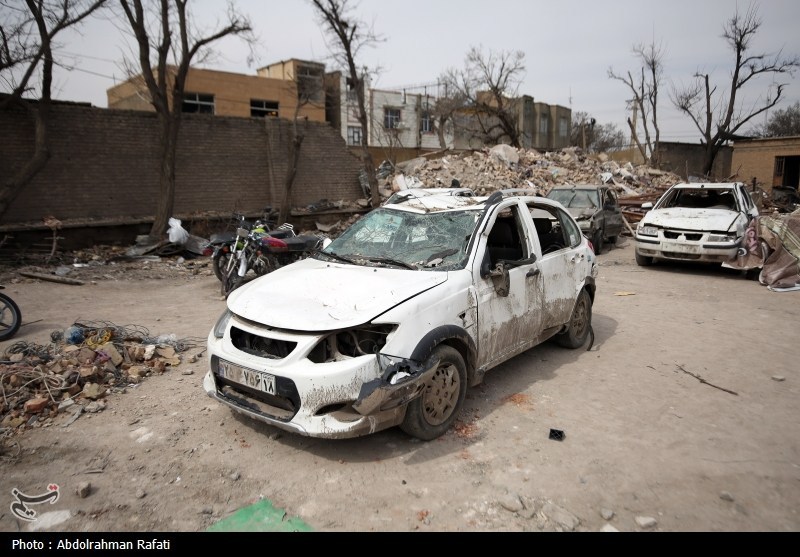
Overthrowing the Iranian regime and seizing the country’s oil reserves has proven more difficult than Trump expected, following 18 days of U.S.-Israeli aggression against Iran.
The aggression is devastating: 16,000 bombings; 1,500 dead (including leaders of the Iranian dictatorship such as Supreme Leader Ali Khamenei and the head of the National Security Council, Ali Larijani); more than a million displaced; schools, hospitals, pharmaceutical factories, and historic buildings bombed; acid rain over Tehran as a result of bombs dropped on five oil depots around the capital.
But it is Iran’s asymmetric response that has regionalized the conflict and affected the economy and the world order, in addition to dividing Trump’s supporters in the United States.
Furthermore, according to some U.S. military experts, the aggressors’ stockpiles of extremely expensive defensive missiles are being depleted at a faster rate than Iran can produce low-cost missiles and drones, and casualties are also rising among the aggressors’ ranks, though they remain hidden by censorship.
The launch of Iranian missiles and drones against Arab countries hosting U.S. bases and the blockade of the Strait of Hormuz means that the United States has failed to defend those countries, requiring them to consider a new defense strategy that does not rely exclusively on the presence of military bases belonging to the world’s greatest military power.
The blockade of the Strait of Hormuz raised the price of oil by around 50% on the international market, as well as shipping rates, affecting all countries. Frightened, Trump asked for help from European and Japanese imperialism, as well as South Korea and Australia, to ensure the passage of oil tankers using naval forces. All refused, highlighting the United States’ isolation, and pressed instead for a ceasefire and a diplomatic solution.
Iran announced that the blockade in Hormuz is selective: countries that purchase oil using the Chinese currency may pass. This decision has made the export of Iranian oil to China viable, and China has also benefited from the expansion of Russian oil exports to supply its immense market. These developments may affect new oil export contracts, weakening the U.S. dollar.
In fact, Putin is, in the short term, the main beneficiary of the aggression against Iran. Trump lifted the sanctions against Russian oil exports for 30 days. This decision has bolstered the coffers of the battered Russian economy by some $150 million a day. This did not prevent the Russian government from providing logistical information to the Iranian government, which is fighting to defend itself.
China took advantage of the many crises related to the military aggression against Iran to resume large-scale military maneuvers around Taiwan. On March 14 and 15, the Taiwanese government detected 26 Chinese aircraft and 7 ships around the island. During that period, it also imposed a selective “blockade” on ships bound for Taiwan, giving priority to Chinese vessels carrying electronic components vital to industries around the world.
The United States’ need to bolster military defense in the Middle East amid the aggression against Iran has sparked diplomatic crises and a loss of U.S. credibility.
One example of this is the South Korean government’s protest on March 12 against the attempt to transfer the advanced THAAD radar system from the Korean Peninsula to the Arabian Peninsula. Two of those radars were destroyed by Iranian missiles, and the construction of new equipment will take several years.
Israel, the Devastation of Lebanon, and the Ongoing Genocide in Palestine
The Israeli aggression against Lebanon is also devastating. There are 800 dead and nearly 800,000 displaced, in addition to 80,000 Syrians who have returned to Syria. The bombings are reaching the entire south of the country, as well as the capital, Beirut, and areas of the Bekaa Valley. Israel has issued evacuation orders for the entire south of Lebanon, including the city of Sour, which points to a military occupation in preparation for reaching the Litani River and, eventually, advancing toward the capital.
The Lebanese resistance is fighting Israeli incursions around the strategic town of Khiam, near the Lebanese-Palestinian border. But the Lebanese government has no intention of opposing the announced Israeli invasion. Divided, one faction seeks direct negotiations with Israel with French support, but Israel will only agree to negotiate after occupying the south of the country. Another faction wants to launch a civil war against Hezbollah, which would aid the Israeli invasion. The only real solution is to fight against the Israeli occupation through the general arming of the entire population.
In occupied Palestine, the genocide against the Palestinian population in Gaza and the West Bank continues. Every day, Israeli forces kill and wound Palestinians, advancing the occupation of land in Gaza (where they already control 60% of the territory) and in the West Bank, troops advance alongside Zionist settlers. The Peace Council led by Trump sponsors these violations of the ceasefire agreement and human rights.
According to Francesca Albanese, the UN Special Rapporteur on human rights in Palestine, the Israeli economy is transforming from an “occupation economy” into a “genocide economy”—that is, what the Zionist state has, in truth, always been. It is an economy based on the arms industry, the mobilization of the population into the armed forces, the ethnic cleansing of Palestinians, territorial expansion into Lebanon and Syria, and the pursuit of regional hegemony.
However, the economic outlook for the State of Israel, which had improved following the ceasefire in Gaza, has worsened considerably. The Ministry of Finance forecasts military spending of three billion dollars a week, which will lead to inflation and tax hikes in the medium term. The mobilization of 300,000 reservists will cause labor shortages, as well as conflicts with Haredi Jews who refuse military conscription. Iranian and Lebanese drones and missiles force the population, as sirens wail, to take shelter in bunkers several times a day, which erodes support for the war—which nevertheless still enjoys a broad majority backing—and fuels the exodus of Israelis to Europe and the U.S. Furthermore, the goal of disarming Hamas and the other Resistance forces has failed. The Palestinian resistance continues to fight.
Trump escalates the war despite its cost
In the United States, the war of aggression against Iran is already unpopular. Only one in four Americans supports it. Even these may change their minds if the death toll rises (it is already 13) and if inflation skyrockets, which is certain.
The cost of this war is astronomical. This month, the government has requested an additional $11 billion from Congress to cover initial costs. A cut of just $50 billion from the Pentagon’s $850 billion budget would be enough to restore food assistance to four million poor Americans, as well as establish free early childhood education for all and build 100,000 public housing units per year. The slogan “Money for jobs, not for war!” is already visible at protests. This stands in opposition to the Pentagon’s greed, which is now asking for an additional $200 billion on top of its budget to wage war.
Divisions within the Trump administration’s social base are deepening. Trump had promised to keep the United States out of distant and endless wars. That is why the aggression against Iran is being publicly criticized by prominent figures in the MAGA movement such as Tucker Carlson and Steve Bannon. David Sacks, White House advisor on AI and cryptocurrencies and a tech billionaire, advocated for a swift exit from the war. And the director of the U.S. National Counterterrorism Center, Joe Kent, resigned in opposition to the war.
However, Trump has decided, for now, to continue the aggression against Iran and is considering the possibility of seizing Kharg Island, Iran’s main oil export hub, or even sending troops to seize some 400 kilograms of enriched uranium believed to be stored underground at the Isfahan nuclear plant in the center of the country.
Any action by Trump on Kharg would provoke Iranian bombings against the oil industry facilities of the Gulf countries. For its part, a ground incursion into Isfahan has a high probability of failing. Faced with the possibility that a quick victory could turn into a quick defeat, it is also possible that U.S. imperialism will attempt to end the war in some way.
Opposition to the invasion is growing in the Iranian population
The Iranian population is divided into three segments. The social base of the Iranian dictatorship, which had been demoralized by the massacre of more than 20,000 protesters on January 8 and 9, 2026, and the arrest of thousands more in dozens of Iranian cities, has now been strengthened by the regime’s military response to the military aggression against the country.
Within the opposition, the sector in favor of U.S.-Israeli aggression is shrinking in the face of the bombs that are destroying the country and killing civilians. Historical experience teaches that imperialist aggression brings only destruction, death, and totalitarian regimes. Furthermore, the population has realized that it is highly unlikely the regime will fall due to airstrikes that kill thousands of Iranian civilians.
The monarchists, gathered around the son of the former Shah, Reza Pahlavi, are increasingly viewed by the majority of the Iranian people as those who supported a military aggression against their own country. This is the same result as what happened to the MEK party, which supported Iraq in the war against Iran in the 1980s.
The majority of the Iranian people are against the bombings. But they remember the massacre carried out by the Revolutionary Guard (IRGC – Pasdaran) two months ago. It is necessary to organize within the country and in the diaspora. In the diaspora, we must take to the streets against imperialist aggression.
Inside the country, we must keep alive the independent unions, student organizations, women’s rights movements, and organizations of oppressed nationalities. In the event of a ground invasion, it is necessary to undermine U.S. and Israeli forces, following the example of European partisans during World War II. At the end of the war, activists around the world must support their efforts to revive workers’ and popular struggles for wages, the release of political prisoners, women’s rights, and the autonomy of oppressed nationalities.
For the unconditional defense of Iran
The global working class cannot adopt a position of neutrality in the face of the current imperialist aggression. From the U.S. to Europe, Palestine, Iran, and the entire region, it must support by every means possible Iran’s struggle against U.S. and Israeli aggression. The defeat of U.S. imperialism would open a new path for Palestinian resistance and the national liberation struggle, as well as the possibility for the Iranian masses to resume their struggle against the Islamic regime with greater force. It would also weaken the authoritarian Trump administration, which is carrying out a ruthless persecution of the immigrant community and restricting democratic freedoms.
Against the propaganda of Trump and the EU, which seeks to limit Iran’s defensive and military capabilities, our position today is one of unconditional support for Iran to defeat the imperialists and the Zionists. The crimes of the Iranian theocratic regime against its own people do not change the fact that it is the Iranian state—and in particular the apparatus controlled by the Islamic Revolutionary Guard Corps—that today constitutes the only real military front opposing U.S. imperialism. Therefore, its defensive actions against the U.S. and Israel deserve the whole world’s support and solidarity, defending Iran’s right to protect its national sovereignty by any means and supporting the Iranian regime’s counteroffensive against the missiles targeting imperialist bases and Israel. In the U.S., NATO countries, and all nations militarily allied with U.S. imperialism (such as the Gulf states hosting military bases), we must demand the closure of all U.S. and European bases in the region.
At the same time, while taking up the war against the U.S. and Israel, we do not confuse our support and participation in the military front against imperialist-Zionist aggression against Iran with any kind of political support for the Ayatollahs’ dictatorship. We are politically opposed to the Iranian regime despite being part of the military front with the regime against imperialist-Zionist aggression.
Whether or not it will be possible for that military front, currently led by the regime, to evolve into one led by the independent proletariat, only time will tell. But as things stand today, the Iranian resistance is led by the regime, and we stand with its military front. Only in this way will it be possible to advance even in our strategy of building organizations of struggle and soviet power (which do not yet exist) under the leadership of a revolutionary party, which is our goal to build.
Against False Equivalences
Although the current war in Iran combines two tasks—national liberation and the struggle against the dictatorial bourgeois regime—we do not equate the two. We cannot oppose the U.S., Israel, and the Iranian regime in the same way, creating an imaginary camp consisting of the Iranian masses who would be outside the war. Today, the defense of Iran cannot be reduced to the defense of “the Iranian masses,” but rather takes the form of materially supporting the military front led by Khamenei’s reactionary regime in all its defensive actions.
Trump and Netanyahu’s military aggression against the Iranian regime is an aggression against the Iranian people as a whole, not just the regime; it is an attack on the national sovereignty of the Iranian people, on their right to decide what kind of state, government, and economic and military programs they want to have. In that sense, the war is against aggression. Therefore, criticism and political opposition to the regime must be understood within the struggle for national liberation.
We know that there are sectors in Iran and on the global left who believe that this is not our war, that we must not choose between Khamenei and Trump. We respond that, for the Iranian people to be able to choose, Trump’s offensive must first be defeated. History demonstrates—from the partisans of Yugoslavia to the revolutionaries of China, and including the lesson of the MEK’s failure when Iraq invaded Iran and the crimes committed by the recent U.S. occupations of Iraq and Afghanistan—that the working class can only advance if it joins the struggle against the invader. This can only be achieved if the very forces that took to the streets in December 2025 and January 2026 with slogans against Khamenei, Trump, and Pahlavi become part of the military struggle against Zionist imperialist aggression.
The Class Logic of National Defense
As in all national liberation struggles, it is key that the exploited and oppressed sectors—that is, workers, peasants, women, national minorities, and students—participate in the military resistance against the U.S. and Israel without abandoning for a single moment their own demands and their independent organization.
The leadership of the Iranian regime, due to its bourgeois class character, will not be able to carry out the tasks of national liberation to the end.
Iran may defeat the current offensive by the U.S. and Israel, but the regime’s methods of repression and civil war against the Iranian working class limit the struggle for defense against imperialism because they prevent all the country’s social forces from mobilizing effectively to carry the national liberation struggle through to the end.
Therefore, the most advanced sectors of the working class and the social movements that have taken to the streets must keep alive the masses’ capacity for independent mobilization during this war; to demand that the government immediately halt the repression, the Basij’s civil war tactics against Iranian dissidents, and the release of all political prisoners. These social forces are necessary today to preserve Iran’s independence from the U.S. Furthermore, they must demand that the Iranian regime—both the regular army and the Islamic Guard—arm the workers, particularly in the face of the possibility of a ground incursion by imperialist and Zionist forces. To achieve this, the most organized sectors of the working class and the youth can begin forming local committees of peasants and poor workers, oppressed minorities, women, and sexual dissidents, with the participation of the unions, so that they may be part of this military front against imperialist-Zionist aggression, employing whatever tactics are necessary.


