
Beyond the FIT-U (1): For an Independent Workers’ Party
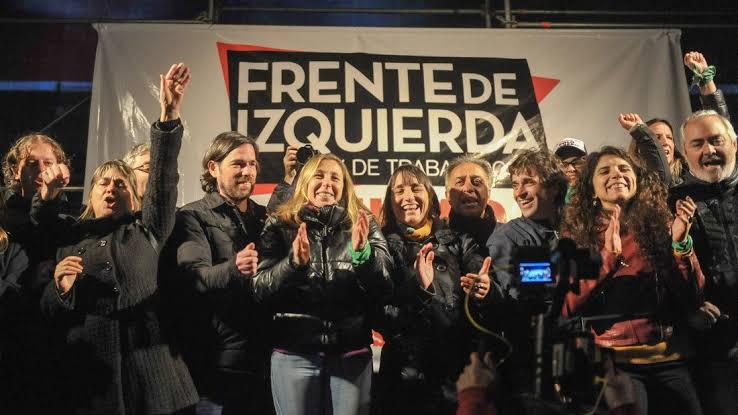
The ongoing crisis within the Left and Workers’ Front–Unity (FIT-U) should not lead to renewed negotiations over candidate nominations among its constituent parties, much less to a split resulting in separate slates. With Peronism in crisis and the Milei administration losing support, the fundamental question is whether the struggles and a new political initiative can push the working class toward its own independent political path.
The government continues its offensive: labor reform, falling wages, and attacks on pensions, public health care, and public education—along with the sellout of natural resources and subordination to imperialism—seek to alter the balance of power built up over decades. Milei has not achieved a historic defeat of the labor movement, but battles have been lost, and the resistance remains fragmented. Resistance emerged at universities and Garrahan Hospital, in mobilizations against labor reform, and in industrial conflicts at Mirgor’s electronics plants in Tierra del Fuego (August–September 2026), the FATE tire factory in San Fernando (February 2026 onward), and Tenaris SIAT’s steel-pipe plant in Valentín Alsina (May 2025 and July 2026). Healthcare workers and Indigenous communities also fought evictions and encroachments on their territories. The March of Anger emerged from this tension: there are forces capable of resisting, but the struggles have not yet found a common direction. The working class is not defeated; it is divided and disorganized.
Peronism had already been losing its ability to politically organize significant sectors of workers and youth and to channel their aspirations and struggles within the bourgeois-democratic regime. Peronist governments, particularly those of Alberto Fernández and Cristina Kirchner (2019–2023), accelerated this process. A portion of Peronism’s traditional electorate voted for Milei in 2023, while another portion subsequently opted for abstention. But the erosion of the libertarian government has not led to an automatic return of these sectors to Kirchnerism, nor has Peronism, so far, regained the hegemonic capacity it held in previous political cycles. This opens up the possibility of a deeper political rupture, although it remains to be seen what form it will take.
Polls should be interpreted with caution—there is still more than a year to go before the 2027 presidential election, and results vary considerably by polling firm—but they indicate an open race. A national survey by Proyección, conducted between September 1 and 10, placed La Libertad Avanza at 35% and Fuerza Patria at 31.9%, while 18.5% opted for a blank or invalid ballot when asked about political parties; when measuring individual candidates, Milei received 36.9%, Kicillof 32%, and Myriam Bregman 8.2%, with 9.3% casting blank or invalid votes and 9.2% remaining undecided. The polling firm’s director summarized the situation, noting a growing anti-Milei sentiment that “has not yet coalesced in terms of representation” and that part of the ruling party’s decline is shifting toward blank ballots and undecided voters.
A second national poll by Trends, conducted between September 8 and 17, found similar results: 35% for La Libertad Avanza, 33% for Peronism, and 8% for the left. When asked about political identification, Peronism garnered 18%, Kirchnerism 15%, and the left 8%. The data does not indicate the disappearance of Peronism nor the automatic shift of its former base toward the left. Rejection of Milei has not yet crystallized into a single alternative: the far right, Peronism, and the left are vying for disillusioned or enraged sectors, some of whom are already in struggle. This contest also extends to precariously employed young people who voted for Milei, disenchanted with the parties that have previously governed. The left needs to step in so that these rifts—which cut across sectors of the working class currently pulling in opposite directions—can move toward an independent political experience.
The FIT-U’s Electoral Victory and Its Organizational Limits
The FIT was founded in 2011, when Kirchnerism still wielded significant influence over the labor movement. Its formation represented a step forward: it made it possible to partially overcome the left’s electoral fragmentation and present a class-independent alternative to the options put forward by the bosses and those advocating class collaboration. Its parliamentary representation gave national visibility to positions that none of its member organizations could have projected on its own. But the scope of that unity was, above all, electoral.
Unity in the struggles was not the FIT’s starting point: it did not emerge from organizations built through struggle nor from a process of self-organization by the working class. It was formed on the defensive, when organizations that had until then resisted any form of unity were forced to form a front to compete in the general elections.
In 2009, during Cristina Fernández de Kirchner’s administration, Law 26,571 was passed, creating the Open, Simultaneous, and Mandatory Primaries (PASO). To participate in the general elections, each political force had to obtain at least 1.5% of the valid votes in each category and district during the primaries. Although the official explanation presented the measure as a way to organize and democratize the electoral field, the requirement could exclude small parties from the general elections even if they had obtained tens of thousands of votes in the primaries. The Trotskyist left denounced this restrictive nature.
That defensive response led to a real victory: it allowed workers and the popular sectors to vote against the bourgeois alternatives through a common, visible, and recognizable reference point on a national scale. It also opened up the possibility that the unity achieved in the electoral arena could serve as the starting point for an even more urgent task: unity in the struggles against successive governments that implemented one austerity measure after another. In practice, however, the FIT remained limited to joint electoral campaigns and inter-party agreements: each organization maintained its own independent role, and competition among the party apparatuses did not translate into a common organization of the struggles or into regular forums where workers and organizations could discuss the program, the political orientation, and the candidates.
Fifteen years later, hundreds of thousands may vote for the FIT-U or support its campaigns, but nonmembers still lack the right to participate in decision-making. Although the PTS, PO, Izquierda Socialista, and MST won important positions in unions, shop steward committees, student councils, and social movements, each faction often prioritized its own group and competed for spheres of influence. This dynamic weakened the solidarity among teachers, food service workers, factory workers, the unemployed, and students, and hindered the consolidation of common leadership emerging from the struggles.
Competing for leadership is part of any political organization’s work; the problem arises when that competition replaces building common organizations. In an assembly, a coordinating committee, or a shop steward committee, different orientations may conflict, and workers can decide between them and change their position based on experience. When every victory becomes the territory of a single faction, the forces of the left did not unite.
Electoral unity was institutionalized through parliamentary seats, position rotation, funding, spots on candidate slates, and mechanisms to measure the balance of power among parties. In the struggles, no equivalent organizations were created to jointly organize intervention; the competition for hegemony—first with the PO carrying greater weight and later with the PTS’s public and electoral advance—displaced their formation.
There is also a disparity between the class the left seeks to represent and those who concentrate its public representation. The Front brought workers and union leaders from major struggles into Parliament, but among its most visible national figures, lawyers, university professors, professionals, and leaders trained in the student movement or within party apparatuses predominate. Precarious and informal workers, migrants, women from the lowest-paid sectors, and Indigenous leaders have a much smaller presence, despite their growing weight within the Argentine working class.
It is not only a matter of social composition, but also of the method used to determine the candidate lists. Candidacies have been decided primarily through agreements and power dynamics among the FIT-U parties, not through independent, class-based organizations that would let those at the forefront of the struggles elect their own representatives. For this reason, worker representatives do not resolve the contradiction: a union delegate facing layoffs, a Garrahan Hospital worker leading her labor dispute, or an indigenous leader defending her territory can translate that authority into political representation only if an organization includes them on its candidate lists.
In 2025, while millions expressed their rejection of Milei and Peronism through abstention—more than two million in the province of Buenos Aires alone—the FIT-U maintained an electoral base close to that of previous elections. Myriam Bregman’s campaign once again raises an unresolved question: how to transform electoral influence and the positions won in the struggles into a broader political organization.
Responses within the FIT-U: Which party and through what process
The PTS’s initiative addresses a specific concern. The growing support for Myriam Bregman should not be limited to an electoral candidacy, and thousands of workers and young people who are drawn to the left do not want to join the PTS, the PO, the IS, or the MST. The PTS has responded by promoting committees in workplaces, on college campuses, and in neighborhoods, with the stated goal of building a “Movement for a New Working-Class Party.” But the FIT-U public debate in June 2026—featuring leaders from the PTS, PO, Izquierda Socialista, and MST—revealed differences over what kind of organization to build, who could be part of it, and how to determine its political orientation.
The MST argues most clearly that the FIT-U should transform into a common organization. Alejandro Bodart maintained that the Front “is not enough for the coming period” and should stop being merely an electoral front and become “a common organization,” “a great workers’ party,” or “a great united party of the left.” He proposed that the current parties could become “internal currents” or tendencies and advocated a structure in which differences are discussed and, when it comes to action, the majority decides. Sergio García took the argument further: if sectors of the working class and youth abandon their “historic Peronist home,” “we cannot offer them four or five different homes.”
The Workers’ Party (PO) does not reject discussing a common party either. Gabriel Solano explicitly stated that, when the PTS raised the issue, the PO responded, “Yes, let’s discuss it,” and argued that a common revolutionary party would have to operate under democratic centralism. Their disagreement lies in what the immediate next step should be. Historically, he argued, the Workers’ Party tactic emerged when a segment of the working class and its organizations leaned toward political independence; but in Argentina, “that doesn’t exist today.” For Solano, the existing tendency toward class independence is expressed today in the FIT-U. Hence his proposal: joint committees, a National Assembly, and joint participation in the struggle that would allow for “verifying in practice” the agreements and differences and, on that basis, moving toward a common party.
Izquierda Socialista maintains that the FIT-U should be the tool for organizing the new wave of support. Mercedes de Mendieta defined it as “a front of four revolutionary parties, under a strategic program” and argued that downplaying its importance would be a mistake in the face of new organizational forms. Nor does the organization rule out, in principle, the discussion of a workers’ party. Juan Carlos Giordano distinguished several scenarios: if it were a broad-based party fueled by workers’ currents breaking with the union bureaucracy and Peronism, IS might be open to discussing it, recalling the Morenoist experience in founding Brazil’s PT; he argues that “those currents do not exist now.” That is why, under current conditions, he proposes FIT-U unity committees open to independents.
The PTS is driving the movement for a party of the new working class, drawing on Bregman’s influence and the committees it created. In the same debate, Christian Castillo proposed regional coordination committees involving militant unions, shop steward committees, students, groups, and activists, conceived as united-front organizations that must go “beyond the FIT-U”: “We don’t ask for a FIT-U membership card from any comrade who is fighting.” This proposal recognizes that the self-organization needed to confront Milei cannot be limited to party membership.
The differences center on who would participate, what rights they would have, and how they would decide the political orientation. The problem with the PTS committees is not that the party wants to lead them. To mobilize workers and activists from other currents, they must allow them to participate, defend alternative positions, and make decisions democratically. The same applies to the united committees proposed by the PO and the IS: they are not enough if they remain subordinate to agreements between parties. Bregman’s authority, the establishment of the FIT-U, and the strength of the struggles could serve an organization where participants have their own political rights.
The Need for the Political Independence of the Working Class
Between March and July 1938, Trotsky repeatedly discussed with leaders of the U.S. Socialist Workers Party the possibility of raising the slogan for a Labor Party, a workers’ party based in the unions. That discussion is not a strict formula for Argentina today, but it demonstrates a useful method for defining slogans and organizational proposals based on the concrete conditions and trends of the working class.
Lenin discussed the problem of an independent workers’ party in the United States as early as 1912. In The Results and Significance of the U.S. Presidential Elections (1912), he argued that “This so-called bipartisan system prevailing in America and Britain has been one of the most powerful means of preventing the rise of an independent working-class, i.e., genuinely socialist, party.” In Four Thousand Rubles a Year and a Six-Hour Day (1914), he again insisted on the need for an independent organization of the working class: “And there is no road to a free future other than by way of an independent working-class organisation, educational, industrial, co-operative and political.”
In April 1938, Trotsky returned to the question of the workers’ party and made a fundamental distinction: “The question of the labor party has never been a question of principle for revolutionary Marxists. We have always taken our point of departure from the concrete political situation and the tendencies of its development.”
While the political independence of the working class and the building of the revolutionary party were strategic imperatives, the need for a Labor Party was merely a tactical issue, dependent on the situation. Trotsky recalled that, before the 1929 crisis, it was still possible to imagine the revolutionary party growing alongside the radicalization of the working class until it took the lead; under those conditions, Trotsky considered abstract propaganda for a Labor Party unjustified. The major strikes in Minneapolis, Toledo, and on the West Coast in 1934—and, above all, the formation in 1935 of the Committee for Industrial Organization (CIO)—radically altered those conditions.
The new industrial unionism organized millions of workers, including unskilled workers, immigrants, and Black workers. Mass strikes and sit-down strikes transformed the American labor movement, and by 1938, the Congress of Industrial Organizations (CIO), as Trotsky noted, brought together “some 3,000,000 or more” in a new and far more militant organization. But that independence, partially won in the factories and unions, had no equivalent in the political sphere: the CIO remained subordinate, in electoral terms, to Roosevelt and the Democratic Party.
Trotsky linked the development of the new unions to the need for their own political organization: “In the United States the situation is that the working class needs a party – its own party. It is the first step in political education.” The unions had reached a point where they needed to intervene politically: “The working class stands before an alternative. Either the trade unions will be dissolved or they will join for political action.” For Trotsky, the agitation for a party of their own responded to a need already present in the labor movement; it was not an abstract slogan invented by revolutionaries.
Trotsky argued that “the only way for workers already organized in trade unions is to join their forces in order to influence legislation, to influence the class struggle.” This required an independent political organization, rather than continued dependence on Roosevelt or figures such as Fiorello La Guardia, the Republican mayor of New York and a New Deal supporter, who enjoyed the backing of union sectors and the American Labor Party. Such a party would be a workers’ party in name only. For Trotsky, it had to be politically independent and oriented toward working-class power: “We are for a party, for an independent party of the toiling masses who will take power in the state.”
The Debate Over the Workers’ Party in Argentina
In Argentina, strong unions coexisted with the working class’s political subordination to Peronism. Moreno took this contradiction as his starting point. For him, forming a workers’ party was “the most important historical task”: the proletariat, which had voted as a class for Peronism, would have to move toward “its own political and union representation, overcoming Peronism as an alien representation.”
In the pamphlet 1954: A Key Year for Peronism, Moreno warned against a mechanical transposition of the American experience: “The Argentine working class does not have a party to organize it,” but the General Confederation of Labor (CGT), integrated into the state and politically subordinate to Peronism, could not simply be transformed into a CIO either. “A mechanical assimilation” of the Labor Party “cannot be carried out in our country.” From this arose a sequence of tasks: “To achieve a Labor Party, we must first secure the independence of the unions from the state. But to achieve this, we first need the independent, union-based, and political organization of union activists.” The immediate tasks were to form union opposition groups and politically organize the workers’ vanguard, while the call for a Labor Party retained a propagandistic character. But Moreno did not conceive of this sequence as rigid stages: a crisis could combine the tasks, and “there need not be enormous time spans between the formulation of the various slogans.” That is why he called on activists to unite “around a program that reflected the interests of their own class” and to combine these tasks concretely.
The Cordobazo radically altered the balance of social forces and the possibilities for revolutionaries. The workers’ and students’ semi-insurrection of May 29–30, 1969 ushered in a cycle in which the Concord Workers’ Union (SITRAC) and Materfer Workers’ Union (SITRAM), the Cordoba class struggle movement, El Chocón, Petroquímica, Banco Nación, the Tucumanazos and Rosariazos, and numerous factory conflicts demonstrated the emergence of a new vanguard capable of challenging the bureaucracy and winning a degree of independence in the factories. When Lanusse prepared the Great National Agreement (GAN), his plan for an electoral exit strategy, he needed to prevent that independence from disappearing again into the bosses’ parties. Moreno warned that the elections sought to shackle the labor movement “within the various bosses’ parties,” causing it to lose “the margin of political independence achieved since the Cordobazo.” In response, he proposed that “just as class-conscious alternatives to the bosses and the bureaucracy were emerging in the factories,” “a workers’ and socialist alternative” should also emerge in the political-electoral arena.
Moreno did not start from the abstract need to invent a broader party, but rather from an already existing vanguard and the need to politically generalize the partial independence won in the factories. In “We Have Legal Status: We Place It at the Service of a Workers’ and Socialist Front” (1972), published in Avanzada Socialista, No. 17, on June 21, 1972, the PSA[1] placed its electoral status—the legal authorization to field candidates—at the service of that proposal. It addressed “the heroic activists of the two Cordobazos, of Chocón, of Petroquímica, of Sitrac-Sitram, of Banco Nación, of the Tucumanazos, and of the Rosariazos” and declared: “Here is our electoral status! We do not want it for ‘exclusive use.’” The proposal was to place it at the service of a “Great Workers’ and Socialist Agreement.” The Workers’ and Socialist Pole sought to turn a victory of the revolutionary party—its legal status—into an instrument through which leaders who had emerged from the rise of the class struggle could intervene directly in the political arena.
The Socialist Workers’ Party (Partido Socialista de los Trabajadores, PST) brought the discussion on the need for an independent workers’ party to the presidential elections of March 11 and September 23, 1973. In March, it presented the Coral–Nora Ciapponi ticket; by September, it placed its legal status at the service of a common workers’ ticket and proposed that Agustín Tosco and Armando Jaime head it. When both declined, it presented Coral and José Francisco Páez. The party’s electoral status could thus serve to drive a campaign that would bring together other left-wing currents and class-conscious sectors.
In Avanzada Socialista No. 75, September 1973, the PST explained the objectives of this openness:
“We are going to do the same now: the legal loophole that has allowed our party to field its ticket does not belong exclusively to us—it is a victory of the mass mobilization—which has been shaking the regime since the Cordobazo—and, as such, must be wisely utilized by the class-conscious movement and the left, of which we are a part. Just as the votes that Coral-Páez obtains do not belong to them personally, nor to our party, the political and technical tools for securing them must be the common heritage of the entire revolutionary left.
We call on all class-conscious, revolutionary, and left-wing organizations, figures, and leaders to form a united committee to plan an electoral campaign that utilizes public forums, radio, and television and, ultimately, a large central rally, with speakers from all tendencies, to unify the left and publicize the class struggle, anti-imperialism, and socialism—which are the banners of Coral-Páez; and which, in any case, our party will carry forward.”
In A Scandalous Document (1974), Moreno described that intervention as “a key in the development and growth of our party; they meant a qualitative leap for us”: it had linked the revolutionary program to the experience of much broader sectors.
Nor did Moreno turn the Cordobazo into a formula. In Argentina: A Triumphant Democratic Revolution (1983), in the section “What Kind of Party Do We Want,” he argued: “We didn’t and don’t see in this election phase the possibility for a labour party to emerge with some mass influence” The vanguard that had emerged from the Cordobazo no longer carried the same weight. The slogan once again took on a propagandistic character: “the working class needs its own party to get to the government,” but “we do not know through what channels the inevitable tendency to class independence and government will be expressed.”
Where is the bridge today?
The case of the Labor Party shows that political tasks depend on how the class is organized and on its tendencies. In Argentina, there has been no organizational leap comparable to that of the CIO, the industrial labor federation that organized millions of workers. The working class appears far more fragmented—between formal and informal workers, unionized and precarious workers, between industry and services, and between platform workers, the unemployed, and migrants. Large concentrations of workers, powerful unions, internal committees, and delegate bodies continue to exist. The problem is how to coordinate these struggles and partial forms of organization into a political agenda of the workers’ own.
Recent mobilizations and conflicts have brought together workers, students, women, retirees, young people, and the working class. The university march on April 23, 2024 drew hundreds of thousands; the University of Buenos Aires (UBA) estimated more than one million nationwide, although other counts were lower. Another mobilization brought together hundreds of thousands of people on October 2, 2024. In 2025, large marches took place on March 24, March 8, 2025, and at the February 1, 2025 Federal March for Anti-Fascist and Anti-Racist Pride. These were joined by retiree demonstrations, conflicts at Garrahan Hospital and in the healthcare sector, protests against layoffs and labor reform, and indigenous and environmental struggles.
This mass participation has not yet translated into stable, independent forms of organization and representation. The FIT-U retains electoral clout, but its ties to militant sectors remain limited. These sectors need to be brought together in shared spaces to discuss and decide on an independent political orientation.
Footnote
[1] Argentine Socialist Party (PSA), led by Juan Carlos Coral, which, together with the Revolutionary Workers’ Party–La Verdad (PRT-La Verdad), gave rise to the PST, formally established in late 1972.


