
Between East and West: Armenia
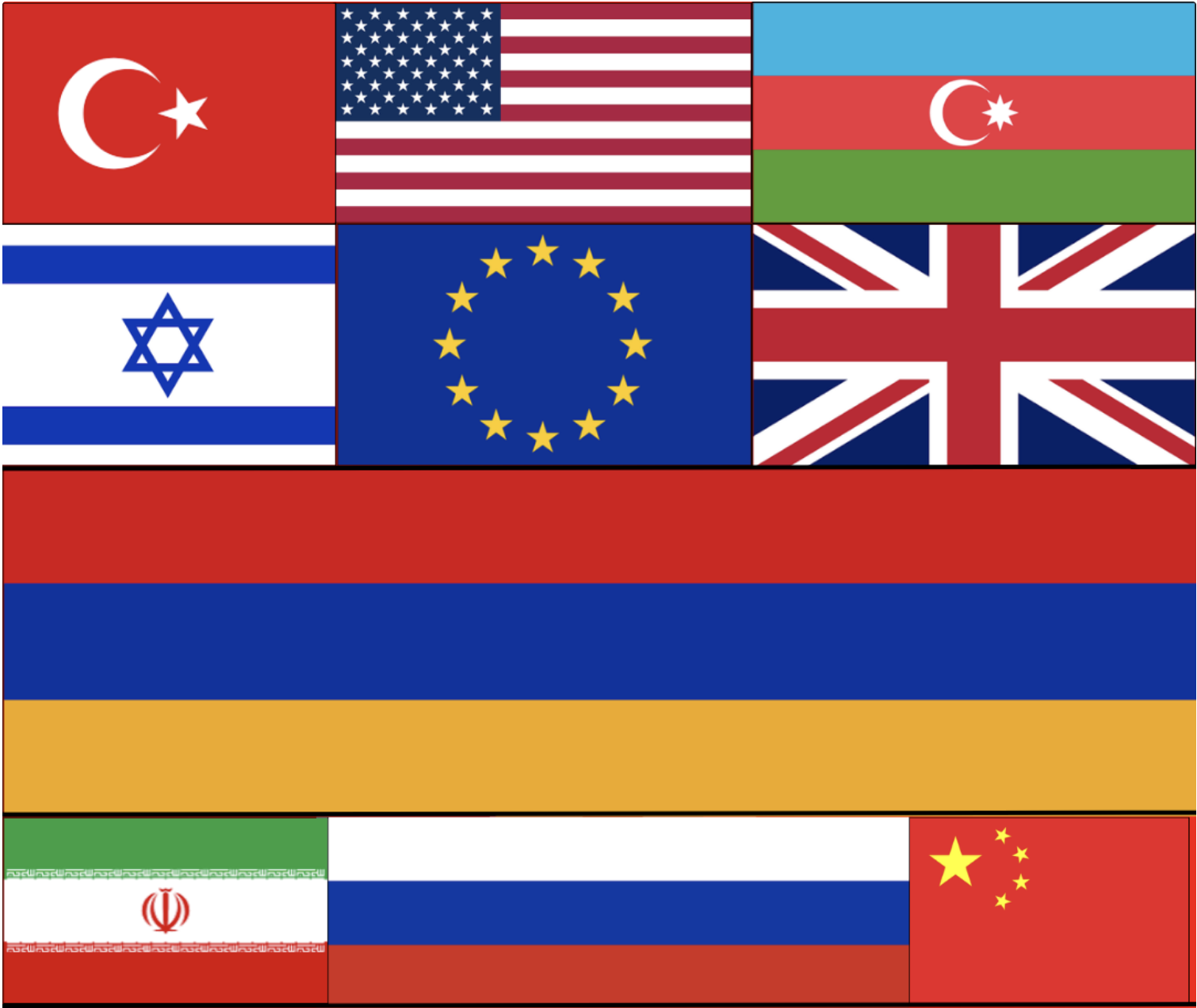
Throughout history, Armenia has been a fault line and a battlefield between East and West. Today, it remains a frontier between Western imperialism, centered on the US and the EU, and the emerging imperialist bloc in the East led by the Russia–China alliance.
The liberation of the working class of Armenia and the Caucasus lies neither in the chauvinism of the old oligarchs who lean on Russia’s military and economic power, nor in Pashinyan’s pro-Western authoritarian liberalism, which presents the transformation of Armenia into a potential battlefield for the EU and NATO against Russia and Iran as a promise.
The June 7, 2026 Armenian Elections and Their Class Implications
Nikol Pashinyan’s Civil Contract Party retained its parliamentary majority by winning approximately 49.89% of the vote. The opposition in parliament consists of Strong Armenia, led by the Armenian-Russian oligarch Samvel Karapetyan, which received 23.34% of the vote, and the Armenia Alliance, led by former Armenian President Robert Kocharyan, which secured 9.95%.
Pashinyan represents the figure of a liberal-bourgeois Bonapartist, deriving his strength from balancing the masses’ hatred of the old status quo and oligarchy with their aspiration for integration into Western imperialism. On the one hand, he has dismantled the old alliance of the Russian oligarchy, bureaucracy, and comprador bourgeoisie in Armenia; on the other, by punishing his political opponents, he is creating the possibility of democratic backsliding in what has been regarded as the only country in the Caucasus that could be described as democratic.
The fact that the two pro-Russian parties contested the elections separately reflects the fragmentation of the comprador bourgeoisie. This faction, which on the one hand sought to mobilize the masses through coup attempts backed by the Armenian Apostolic Church and nationalist chauvinism, while on the other promising Russian protection against the Turkish-Azerbaijani threat, failed to present any alternative for the working class. Instead, it merely helped consolidate Pashinyan as the “lesser evil.”
This profound social polarization, also reflected in the parliamentary seat distribution (64–41) is itself a projection of Armenia’s historical position as a fault line and battlefield between East and West. Throughout its history, Armenia has stood on the front line between great powers: Rome and Persia, Byzantium and the Sassanids, the Ottoman and Safavid Empires, and, in the last century, between the Turks and the Russians. A land that has always been a zone of conflict between East and West, Armenia today continues to serve as a frontier between Western imperialism, centered on the United States and the European Union, and the emerging imperialist center represented by the Russia–China alliance.
The social divisions produced by being trapped between these great powers are therefore unavoidable.
The Defeat of Nagorno-Karabakh / Artsakh and Its Aftermath
For the past forty years, the Nagorno-Karabakh/Artsakh question has been the principal issue shaping Armenian politics. For millennia, whether as an independent entity or under the rule of various states, Nagorno-Karabakh was the homeland of the Armenian people. Following the defeat of the de facto independent Artsakh forces in 2020 and the forced displacement of nearly 150,000 Armenians in 2023, an act of ethnic cleansing that stripped Nagorno-Karabakh of its Armenian population, the loss of Artsakh remains an open wound and a continuing source of danger for Armenia.
The war that erupted in Nagorno-Karabakh during the dissolution of the Soviet Union was the product of the Stalinist bureaucracy’s inability to resolve the national question and its deliberate encouragement of chauvinism. The bourgeoisies of both countries exploited the conflict to poison their respective working classes with nationalism and to conceal the plunder carried out through privatization.

Borders before and after the 2020 Karabakh War. Orange borders in the “Before” image correspond to the total territory controlled by the Artsakh Republic, with the borders of the former Soviet Nagorno-Karabakh Autonomous Region embossed and labeled “Karabakh”. The entirety of this territory was annexed by Azerbaijan as a consequence of the war.
The Second Karabakh War in 2020 ended with Armenia’s defeat as a result of Azerbaijan’s military superiority, equipped with Turkish and Israeli technology, and Russia’s decision to punish Pashinyan. The lightning offensive of September 2023, followed by the forced mass displacement of 150,000 Armenians, stands as proof of how the right of nations to self-determination is trampled underfoot at the negotiating tables of bourgeois diplomacy. The pro-Russian Armenian comprador bourgeoisie first dragged the peoples of Nagorno-Karabakh and Armenia into war, only to abandon them to their fate at the moment of defeat.
Those who abandoned the Armenian people in 2020 were not only Russia and the pro-Russian comprador bourgeoisie. The United States, the European Union, and much of the international community also supported the military operation, some openly, others through their silence.
The US–Russia and Israel–Iran Fault Lines in the South Caucasus
After independence, Armenia sought closer relations with the West, where one-third of the Armenian people had been living since the 1915 Armenian Genocide. Yet because the Nagorno-Karabakh crisis remained unresolved, Armenia stayed within Russia’s orbit: to counter the Turkish military threat and the continued closure of its borders, to preserve the independence of Nagorno-Karabakh, and because of its economic dependence on Russia. Over time, independent Armenia became a country impoverished through the alliance of a corrupt bureaucracy and oligarchy.
The extent of corruption and impoverishment became fully apparent after the defeat in Nagorno-Karabakh in 2020. Although Armenia purchased four Su-30 fighter jets from Russia in 2016, no accompanying weapons or bombs were acquired. At the moment when the country needed them most, it was unable to receive ammunition for which it had already paid years earlier. Military depots were found to be filled with obsolete Russian weapons and unusable Russian ammunition.
Russia’s Weakening Hegemony in the South Caucasus
The alliance of the United States and the European Union and the United Kingdom, seeking to weaken Russia, began directing its strategic offensive toward two regions regarded as Russia’s soft underbelly: the South Caucasus and Central Asia.
Following the dissolution of the Soviet Union, Russia maintained its dominance over Georgia. After the Rose Revolution of 2003, however, Georgia gradually distanced itself from Moscow, pursuing the twin goals of European Union integration and NATO membership. Russia responded by punishing Georgia through the 2008 war. Although Georgia continued to aspire to integration with the West after the conflict, the outbreak of the Ukraine war, the growing possibility of becoming Russia’s next target, and the West’s failure to honor its promises altered the country’s political trajectory. While Russia regained a certain degree of influence following the most recent elections, Georgia nevertheless remains outside the framework of Russian hegemony.
Despite the turbulent events that accompanied Azerbaijan’s independence and its initial attempts to break away from Russian influence, the rise to power in 1993 of former Politburo member and Deputy Chairman of the USSR Council of Ministers, old “apparatchik” Heydar Aliyev, who had effectively ruled Soviet Azerbaijan between 1969 and 1982, transformed the country into a dictatorship centered upon the rule of a single strongman. Azerbaijan thus remained within Russia’s orbit. After Heydar Aliyev’s death, his son Ilham Aliyev inherited both power and wealth as the country’s new autocratic ruler.
Enriched by Azerbaijan’s oil and natural gas resources, Ilham Aliyev established increasingly close ties with the West, particularly with Israel. By cultivating these relations while simultaneously balancing Russia, Azerbaijan gradually acquired greater autonomy from Russian influence. The European Union, desperate to replace Russian natural gas after the Russia–Ukraine war, effectively abandoned Armenia in exchange for Azerbaijani gas supplies. At the same time, Azerbaijani oil transported to Israel through the Baku–Tbilisi–Ceyhan pipeline became one of Israel’s principal sources of energy.
The Israel–Azerbaijan Axis and Iran
Azerbaijan, one of Israel’s principal partners in its strategy against Iran, seeks to lay claim to territories inhabited by the Azerbaijani population that constitutes roughly one-quarter of Iran’s population. In pursuit of this objective, Azerbaijan has repeatedly issued military threats against Iran. It hosts Israeli radar installations and operational centers while simultaneously encouraging nationalist agitation among the Azerbaijani population living inside Iran.
As part of the broader strategy of encircling and containing Iran, Nagorno-Karabakh was handed over to Azerbaijan, while the proposed Zangezur Corridor, to pass through southern Armenia, was designed to sever Iran’s overland connection with Russia entirely.
At the beginning of the US-Israeli war against Iran, Azerbaijan joined the chorus of states threatening Tehran. However, when Iran neither suffered military defeat nor displayed signs of internal collapse, Baku retreated from its earlier position and failed to fulfill what appeared to have been its commitments to Israel.
Israel’s Recognition of the 1915 Armenian Genocide
Since its establishment in 1948, Israel regarded Turkiye as its foremost ally in the Middle East. Over the past two decades, however, the Erdoğan regime’s efforts to counter Israeli aggression and expansionism in the region while pursuing its own regional ambitions gradually strained Turkish-Israeli relations. Consequently, Israel began constructing new alliances in both the Eastern Mediterranean and the broader Middle East.
When Azerbaijan, one of the pillars of this new regional alliance system, failed to deliver the strategic advantages it had promised during the 2026 war against Iran, Israel decided to recognize the 1915 Armenian Genocide. This move served two purposes: to establish a stronger foothold in the Caucasus, from which it had long remained distant, and to punish Azerbaijan.
Historically, Israel had consistently refused to recognize other genocides in order to preserve the uniqueness and singularity of the Holocaust and to prevent comparisons with its own genocidal policies against the Palestinian people. For decades, Israel rejected recognition of the Armenian Genocide. It even actively lobbied, particularly in the United States, to block international recognition of the 1915 genocide. Israel terminated these lobbying efforts in 2019, after which the United States Senate formally recognized the Armenian Genocide later that same year. Although Donald Trump declined to endorse the decision, it was officially embraced by Joe Biden in 2021.
Within the geopolitical landscape that emerged after October 7, 2023, Israel has continued pursuing new strategic initiatives aimed at strengthening its regional position, forging new alliances, and tightening the encirclement of Iran.
Between the Turkiye–Azerbaijan Alliance and the EU–NATO–TRIPP Axis
Turkiye has long sought to assume a leading role in the Western strategy, spearheaded by the United States, the European Union, and the United Kingdom, to expand influence into Central Asia. With this objective in mind, Ankara has spent years strengthening its economic and military relations with the countries of Central Asia.
In this context, Turkiye’s oligarchic-comprador bourgeoisie has insisted upon opening the Zangezur Corridor, which would pass through southern Armenia in order to establish a direct land connection with Azerbaijan and gain access to the markets of Central Asia as part of the broader Pan-Turanist project. Such a corridor would not only establish an overland route to the Central Asian republics, considered Russia’s strategic soft underbelly, but would also sever Iran’s land connection with Russia.
At the same time, Armenia sought to preserve its historically close relations with Iran, a country where more than 100,000 Armenians continue to live. Faced with these growing threats, Yerevan increasingly turned toward closer cooperation with the United States and the European Union. Having initiated a Normalization Process with Turkiye and Azerbaijan, the Pashinyan government, following its electoral victory, began advocating the Crossroads of Peace project, which envisions the reopening of the borders with both countries. Subsequently, Armenia signed onto the TRIPP (Trump International Route for Peace and Prosperity) project with the United States, thereby becoming compelled, under the guise of regional peace and economic development, to open the door to the monopolization of the South Caucasus’ strategic transportation routes and mineral resources by the imperialist powers.
Built upon privatization and the interests of multinational corporations, with 74% of the corporate shares placed directly under US control and a concession period extending for ninety-nine years, this project mortgages the sovereignty of Armenia and the peoples of the region, transforming transportation corridors from a public right into instruments of profit for imperialist capital. TRIPP emerged as a neoliberal imposition designed to satisfy the market hunger of Western finance capital, facilitate the plunder of rare-earth minerals, and prepare the ground for the geopolitical drive of the US and the EU to establish hegemony across Eurasia against the Russia–China–Iran axis.
At the same time, alongside Russian natural gas, which remains Armenia’s principal source of energy, an agreement was signed for the construction of a new American-built nuclear power plant to replace the aging Russian-designed facility that has long operated under Russian supervision.
Seeking to secure this new phase of Western recolonization, the European Union accelerated Armenia’s disengagement from Russia’s orbit by announcing €50 million in assistance packages to help Pashinyan withstand Russia’s pre-election economic pressure while simultaneously expanding its civilian monitoring missions in the country.
Meanwhile, Armenia’s participation in joint military exercises with NATO, including the most recent drills involving Armenia, the United States, France, and Greece, is part of NATO’s broader strategy of expansion and of the wider effort to encircle Russia and Iran in the Caucasus.
Armenia’s Dilemmas and Future
Pashinyan’s victory in 2026 will not bring lasting stability to Armenia. Trapped between competing great powers, the landlocked country remains caught between its military and economic dependence on Russia and the promises extended by Western imperialism. Russia continues to control much of Armenia’s natural gas supply, electricity infrastructure, and even the Turkish border guards stationed along the frontier. Russia also remains Armenia’s largest trading partner in both exports and imports. Meanwhile, Azerbaijan’s demand for constitutional amendments as a precondition for a peace agreement, including the removal of references to the independence of Nagorno-Karabakh, will generate new domestic political crises, since Pashinyan failed to secure the two-thirds parliamentary majority required to implement such constitutional changes.
Having remained within Russia’s orbit for decades primarily because of the Nagorno-Karabakh/Artsakh question, Armenia turned away from Moscow after Russia itself facilitated Artsakh’s transfer to Azerbaijan. Faced with the growing threat of Turkish and Azerbaijani aggression, Armenia has consequently found itself compelled to move closer to the United States, NATO, and the European Union in order to preserve its independence.
The European Union and NATO are not forces that bring democracy, freedom, and prosperity. They are imperialist predators that expand the domination of finance capital while placing the peoples of the region under the yoke of debt.
Despite Armenia’s efforts toward normalization, relations with Turkiye have failed to advance because of Azerbaijan’s overwhelming economic and political influence over Ankara. Turkiye’s policy toward Yerevan remains entirely subordinated to Baku’s interests. At every turning point Armenia is compelled to make further concessions to both Turkiye and Azerbaijan. Regardless of the rhetoric surrounding normalization, this process represents the transformation of Armenia into an economic semi-colony of Turkish-Azerbaijani capital under the auspices of Western finance capital. It is not a genuine brotherhood of peoples but rather another attempt by competing regional imperialist centers to divide and exploit markets.
The liberation of the working class of Armenia and the Caucasus lies neither in the chauvinism of the old oligarchs who rely upon Russia’s military and economic power nor in Pashinyan’s pro-Western authoritarian liberalism, which presents the conversion of Armenia into a potential battlefield for the EU and NATO against Russia and Iran as a political promise.
The future lies in rejecting nationalist wars and in the common revolutionary struggle of Armenian, Azerbaijani, and Georgian workers against imperialism and against their own collaborating bourgeoisies.
First published here by Marksizm Şimdi!


