
Afghanistan, 5 Years After the Occupation
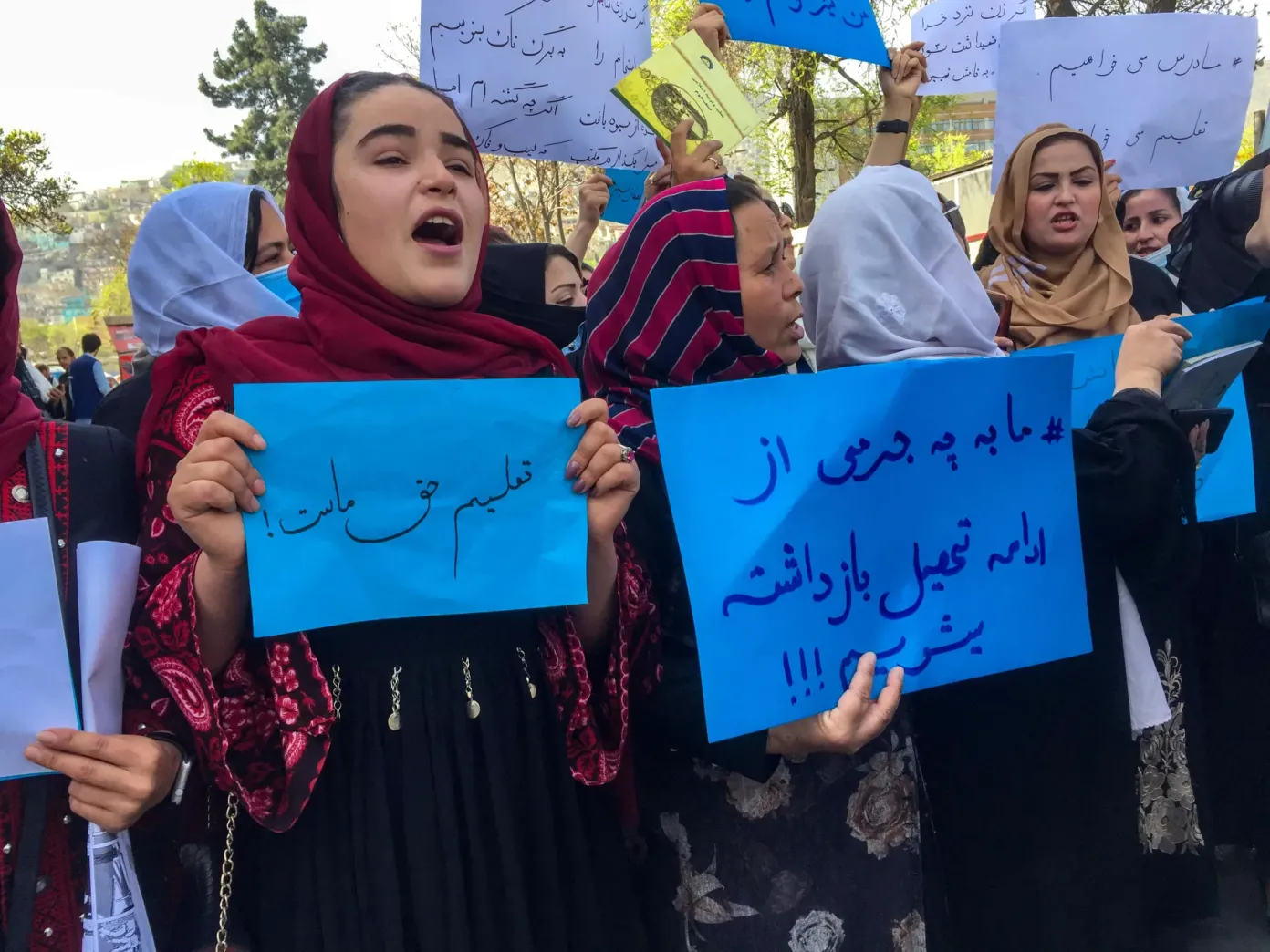
On August 15, 2021, U.S. occupation forces withdrew from Afghanistan, putting an end to a criminal occupation that lasted 20 years — during which U.S. imperialism invested around 300 million dollars per day to sustain a corrupt puppet government, as well as a military force that committed all types of human rights violations against the Afghan population.
“The situation of Afghan women did not undergo a qualitative change during the 20 years of occupation. Only 25% of women are literate. Half of them marry before the age of 18. The payment of a dowry to the bride’s family and the mandatory use of the burqa are widespread, particularly in rural areas where 75% of the Afghan population lives. The occupation regime never bothered to actually enforce the law against domestic violence. Another law, guaranteeing the inclusion of the mother’s name on children’s identity documents, was only voted on at the end of 2020. In reality, imperialism did not occupy Afghanistan to ‘save’ women from oppression. On the contrary, it essentially accommodated itself to existing sexist social practices with a few cosmetic changes (some funding for NGOs, the presence of women in the puppet regime’s parliament, among others).” (1)
This criminal occupation was preceded by a different one: that of the Soviet Union, which began in 1979 and concluded with the expulsion of Soviet troops 10 years later. This occupation put an end to two important achievements of the April 1978 Revolution (known as the Saur Revolution): agrarian reform and the end of the marital dowry in the country (a form of commodification of women), plunging Afghanistan into a war that claimed the lives of one million people.
In the five years since the end of the U.S. occupation, the new regime led by the Taliban has imposed a monopoly on violence in the hands of the State, securing de jure diplomatic recognition from Russia and de facto recognition from all of its neighbors, as well as international powers. This recognition was obtained due to the interest of these countries in accommodating Afghanistan to their own objectives. For instance, the European Union hosted a meeting with representatives of the Afghan state in June aimed at facilitating the deportation of Afghan refugees residing in the EU — a clear violation of these refugees’ human rights.
Neighboring countries have security interests in the region: that is, it is in their interest that the Taliban regime curb the organization of dissident movements within its territory. The best example is China, which violently occupies the region of Xinjiang — where a majority Uighur population lives under a violent state of occupation. China has an interest in the Afghan regime suppressing the activities of groups fighting for Uighur rights, which the Afghan regime readily does. At this moment, the Pakistani regime accuses the Afghan regime of facilitating the actions of the TTP (Tehreek-e-Taliban Pakistan, the Taliban operating in Pakistan, which, despite ideological affinity, is not the same organization as the Taliban in Afghanistan); as a result, it has expelled hundreds of thousands of Afghan refugees, launched sporadic bombings in border regions, and enacted blockades at border checkpoints.
Life Has Not Improved
However, despite the Afghan population’s victory in expelling the invader in 2021, life has not improved, and GDP has shrunk by 20%. First and foremost responsible are the imperialist countries, which keep around 10 billion dollars in Afghan funds frozen (70% of them frozen in the United States) — resources that would be vital for improving the living conditions of the population. The country’s exclusion from the international payments system (SWIFT) has made the import of food, medicines, and fuel, on which the country depends, far more expensive. In addition, imperialist powers have drastically reduced humanitarian aid. Today, two-thirds of the Afghan population lives below the poverty line.
Second responsible is the Taliban regime itself. Its economic and social policies, imposed dictatorially, have brought no improvement to living conditions in the country.
Its policy of attracting transnational mining companies to exploit mineral wealth estimated at 1 trillion dollars (including reserves of lithium and rare earths) has not yet borne fruit. There are also agreements with Central Asian countries, such as Uzbekistan and Kazakhstan, which wish to construct a railway route through Afghanistan to Pakistani ports — negotiations that remain ongoing.
Agriculture continues to be the primary economic activity in the country. The export of fruits, saffron, coal, and hand-woven carpets, along with remittances sent by refugees to their families, serve as the main sources of hard currency. Meanwhile, the taxation of agro-pastoral activities and domestic and international trade provides the resources to maintain the state, which has diverted funds away from public education and healthcare to focus on paying police and military forces, alongside limited investment in highways.
In agriculture, the Taliban regime has cracked down on poppy cultivation, reducing annual opium production from around 6,000 tons to roughly 300 tons. This policy led to peasant protests demanding a policy of crop substitution aimed at sustainable agricultural production. On the other hand, the opium trade has been partially replaced by the trafficking of synthetic drugs. No agrarian reform policy has been implemented; on the contrary, there is an accommodation between the Taliban regime, large landowners, and a shameful, racist policy targeting the Shiite Hazara population, who are periodically expelled from their lands in the central region of the country.
The Afghan regime’s most pernicious policies, however, are directed at women. Afghanistan is the only country in the world that bans access to education for girls and women over 12 years of age, mandates the use of the chador (a garment that fully conceals and dehumanizes women), and prevents them from leaving their homes without a male relative as chaperone (mahram). As a result, roughly half of all women leave their homes only once or twice a month, essentially turning their households into prisons. This misogynist policy carries a massive economic impact, given that women constitute roughly half of the entire workforce and are are excluded from the labor market, schools, universities, and any form of human development directly due to these measures. Beyond being inhumane, these policies will lead to a severe shortage of female teachers, nurses, doctors, and scientists in the near future.
A socialist policy for Afghanistan begins with the demand to unfreeze all Afghan funds held in imperialist countries, expand humanitarian aid, and secure diplomatic recognition for the country by all States, restoring its right to a seat in the United Nations.
Furthermore, it is essential to integrate campaigns defending the rights of Afghan refugees against deportations, whether from the United States, the European Union, or neighboring countries like Pakistan and Iran.
Finally, decisive support must be given to working-class and popular protests, as well as to the self-organization of workers, women, and other oppressed sectors — such as the protest that took place on June 9 in the city of Herat, where around 100 people demonstrated against the morality police’s crackdown on women, chanting “Education, Work, and Freedom,” a demonstration that was violently suppressed by gunfire from security forces, leaving people dead and injured.
As for self-organization, it is necessary to support popular organizations such as RAWA (Revolutionary Association of the Women of Afghanistan), the oldest in the country, which advocates for a secular republic, opposes all foreign intervention, defends the rights of the Hazara minority, and operates clandestinely in girls’ education and solidarity networks. Another organization is the LRA (Left Radical of Afghanistan), which issued a call for international solidarity to defend women’s rights, true national independence for Afghanistan, the use of the country’s natural wealth for socio-economic development and the welfare of the population, and public, free education for all men and women.
Footnotes
(1) Attack at Kabul Airport Underscores the American Defeat in Afghanistan | International Worker’s League


