
Afghan-Pak War Inflames Nationalist Reaction
Security States, Displaced Workers, and the Capitalist Crisis
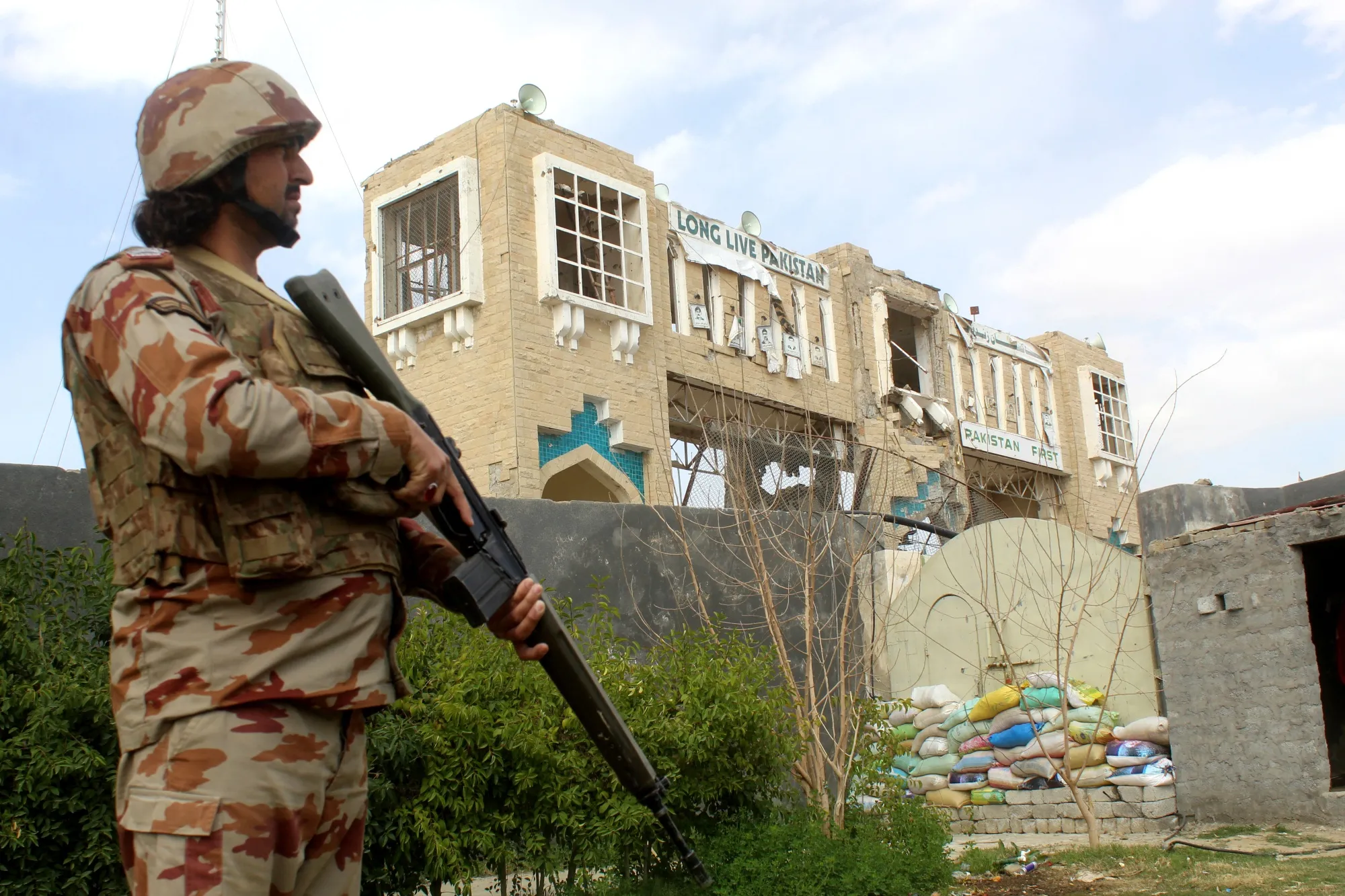
Since the end of the American occupation in 2021, dangerous military tensions have continued, erupting in conflict in recent weeks between Pakistan and Afghanistan. According to Pakistani state media and officials, Pakistani airstrikes targeted multiple locations inside Afghanistan, including a Taliban brigade headquarters and an ammunition depot in Kandahar, as well as several posts in the Wali Khan, Shawal, Bajaur, and Angoor Adda sectors. Reports claim that two brigade bases were “destroyed.” Meanwhile, a surprising statement came from Pakistan’s Ministry of Information claiming that Afghan Taliban forces were targeting Pakistani areas in the districts of Chitral, Khyber, Mohmand, Kurram, and Bajaur.
Reports were also received of firing and shelling near the Torkham border crossing, an important route for Afghan returnees, although the land border has largely remained closed since clashes last year. Contradictory casualty figures have emerged from both sides. Islamabad’s spokesperson claimed that 133 Taliban fighters were killed and more than 200 injured, with tanks and artillery also destroyed. Pakistani media reported the deaths of two Pakistani soldiers. Kabul authorities rejected these numbers, stating that 8 fighters were killed and 11 injured on their side, while claiming that 55 Pakistani soldiers were killed and that certain areas were captured — a claim Islamabad denied. The Afghan Red Crescent reported civilian casualties, including women and children, in earlier attacks.
Former Afghan President Hamid Karzai, who is not part of the current government, supported patriotic resistance and called for unity while emphasizing respect for peaceful relations with neighboring countries. On both sides, nationalist and militaristic voices are overshadowing the real reality of destroyed homes, displaced families, and poor people affected by decades of war.
Recent Tensions: A Symptomatic Expression of Structural Crisis
Since 2021, there have been at least 75 incidents of firing and clashes along the Durand Line. The border itself is disputed; Afghanistan considers it a colonial-era imposed line that divided the Pashtun nation into two states, while Pakistan’s leadership argues that the tension is caused by militant groups operating from Afghan territory, including Tehreek-e-Taliban Pakistan (TTP), which has linguistic, social, and ideological ties with the Afghan Taliban but remains organizationally separate.
According to experts, neither Pakistan nor Afghanistan has seriously attempted to address these groups, due to factional affiliations and strategic calculations. In this environment, each government blames the other, every military operation becomes justification for the next, and the working-class population of the border regions bears the consequences.
Imperialism, Subordinate Capitalism, and the Security State
From a Leninist perspective, this tension should not be viewed merely as a bilateral border dispute, but as an expression of subordinate capitalism and semi-colonial crisis. Pakistan and Afghanistan are not global hegemonic powers but occupy subordinate positions within the global capitalist system.
Pakistan’s establishment has long acted as a frontline ally in U.S. regional strategy, first during the Cold War and later in the “War on Terror.” Millions of Afghans were displaced during this period, and large numbers of refugees were allowed , even encouraged — to reside in Pakistan. Their labor was utilized in construction, trade, and insecure sectors of the informal economy. Yet at the same time, refugees have been treated as a surplus population, declared a security threat amid economic crisis, rising inflation, unemployment, debt, and austerity policies, and forcibly repatriated.
Afghanistan itself is suffering economic devastation, bearing the burden of international isolation, sanctions, and the absence of a strong industrial infrastructure. Its capacity to absorb the sudden influx of returning individuals is limited. Thus, in both countries, the working class becomes a disposable yet sacrificed human reserve.
Nationalism as an Ideological Weapon
Nationalism now dominates political discourse. The Pakistani elite accuses Afghan leadership of harboring terrorism, while Afghan authorities speak of sovereignty. Yet on both sides, structural violence is ignored: unemployment, extremely weak public services (education and health sectors among the lowest state expenditures), and militarized politics that channel vast resources into destruction instead of social investment.
In Pakistan, slogans like “Pakistan First” are used to suppress internal working-class movements. For example, the Pashtun Tahafuz Movement (PTM), which raised legitimate and fundamental demands regarding displaced Pashtun populations and missing persons, was labeled as under the influence of foreign interference and banned. Similarly, discussion of the Baloch national question is often manipulated, particularly by invoking Pashtun-populated areas of Balochistan — to create hostility between oppressed Baloch and Pashtun nationalities, thereby weakening class solidarity.
The Real Front
The real front in this conflict is not merely the Durand Line, but the invisible line drawn by forces intoxicated with capital and geopolitical power, forces that divide working people into borders, identities, and artificial hostilities to consolidate their rule. Divided Pashtun families, market workers in Peshawar and Jalalabad, and refugees living in camps bear the real burden of ruling-class wars, while decisions are made behind closed doors and the price is paid by the people.
Revolutionary politics demands resistance to every tension that pits ordinary people against one another for elite interests. There is a need for movements grounded not in national myths or emotional slogans but in material interests. It must be made clear that justice is structurally limited within capitalism, and without justice, sustainable peace is impossible. Therefore, if peace is desired, social and economic justice is indispensable , and such justice requires challenging exploitative structures.
For the past half-century, Afghanistan has been a laboratory of war, intervention, and destruction. The 1979 Soviet military intervention gave rise to a crisis that soon turned into a proxy war of global powers. The Central Intelligence Agency and regional state policies used religious and militant groups for strategic objectives. Throughout this period, Pakistan’s rulers actively intervened in Afghan politics under the doctrine of “strategic depth,” the consequences of which the region continues to endure.
As a result, Afghanistan faces massive loss of life, a devastated economy, fractured social structures, and global isolation. The current governmental structure, particularly the Taliban administration, faces severe international and domestic criticism regarding women’s freedom, education, and political rights. In such circumstances, further military pressure on an already wounded society cannot strengthen any peace process; it will only expand the crisis.
Pakistan itself has paid a heavy price in terrorism, militancy, and economic decline. Thousands of lives were lost, billions of dollars in damage occurred, and education and health sectors were consistently neglected. In this context, if a renewed war atmosphere is created, it is necessary to ask: who truly benefits? Is this a tactic to divert attention from internal economic crisis, inflation, and political unrest?
Regional politics must also be viewed in a broader context. Rising tensions around Iran in the Middle East, particularly with Israel and the United States, affect South Asia as well. The prospect of direct imperialist aggression against Iran has generated intense debate in Pakistan’s social and political circles. In particular, among Pakistan’s tens of millions of Shia population, there has been visible concern about the state’s position in the event of an attack on Iran.
It is also a bitter reality that when the Israeli state intensified aggression against Palestinians in 2023, initial official rhetoric was supportive of Palestinians, but later practical silence prevailed. Even limited expressions of Palestinian solidarity faced state pressure. In this context, the Zionist-American military action against Iran has generated strong reactions among Shia communities and allied Sunni working-class circles in both Pakistan and Afghanistan. Many voices have argued that an attack on Iran would not merely target one state but the balance of the entire region, and that this time suppressing public reaction would not be easy. If continuous war tension had not been maintained along the Pak-Afghan border, it was highly possible that the peoples of Pakistan and Afghanistan, particularly Pakistan’s approximately forty million Shia population could have formed a broader anti-war movement alongside their Sunni allies and relatives against imperial aggression toward Iran. Such a movement could have combined opposition to war with internal democratic and class demands, compelling rulers either to adopt a clear diplomatic stance or face significant domestic political pressure. In this sense, reducing Pak-Afghan tension to a mere border issue would be simplistic; it may also function to divide internal political balance.
However, to claim that every regional tension is part of a single secret plan would be analytically simplistic. A more cautious position is that
major powers pursue multi-front pressure and balancing strategies to manage potential political consequences. Regional conflicts often connect to broader global interests, even when their immediate causes are local.
A fundamental fact is that alongside external imperialist intervention, Pakistan’s ruling policies have also contributed to Afghanistan’s destruction. Therefore, if those same rulers now impose a war narrative against an already devastated country, opposing that narrative becomes a political and moral responsibility. War means increased defense expenditures, restrictions on civil liberties, and further sacrifice of education and health sectors.
The Afghan people are not our enemies. They suffer from extreme poverty, unemployment, and insecurity — just like the people of Pakistan. On both sides of the border, the working class pays the price of a system whose strategic decisions are made without their participation. Therefore, mere criticism is not enough a clear democratic and popular program is required:
- Opposition to all forms of Pakistani military adventurism and border escalation against Afghanistan.
- Ending military dominance over foreign policy and establishing parliamentary and public oversight.
- Gradual reduction of the defense budget and redirection of resources toward education, health, employment, and social welfare.
- Ending forced deportation of Afghan refugees and guaranteeing legal protection consistent with human dignity.
- Opposition to any imperialist aggression in the region, including attacks against Iran.
- Support for democratic rights, women’s freedom, labor organization, and political autonomy in Afghanistan.
- Establishment of cross-border solidarity committees between workers, students, and progressive forces in Pakistan and Afghanistan.
- Formation of a joint public stance against sectarian and nationalist incitement.
Peace is not merely the absence of war. Peace becomes possible when foreign policy is subordinated to public interests, when state power is brought under accountability, and when the peoples of the region are recognized as autonomous political agents rather than chess pieces.
If this region remains a battlefield, future generations will inherit the same instability. But if people reject war narratives and choose democratic sovereignty, social justice, and regional solidarity, a different future becomes possible. Shared history can be made the foundation not of hatred but of justice and solidarity — provided we prioritize public consciousness and collective harmony over war hysteria.


