The Knesset Elections Expose the Crisis of Israel’s Apartheid Regime
We are publishing this article by Yoav Haifawi, a member of the Palestinian leftist organization Abnaa el-Balad (“Sons of the Land”), which maintains a consistent stance of boycotting the institutions of the Zionist state—such as the Knesset, the Israeli parliament. This article was originally published on the website “Revista En Defensa del Marxismo” in Argentina.
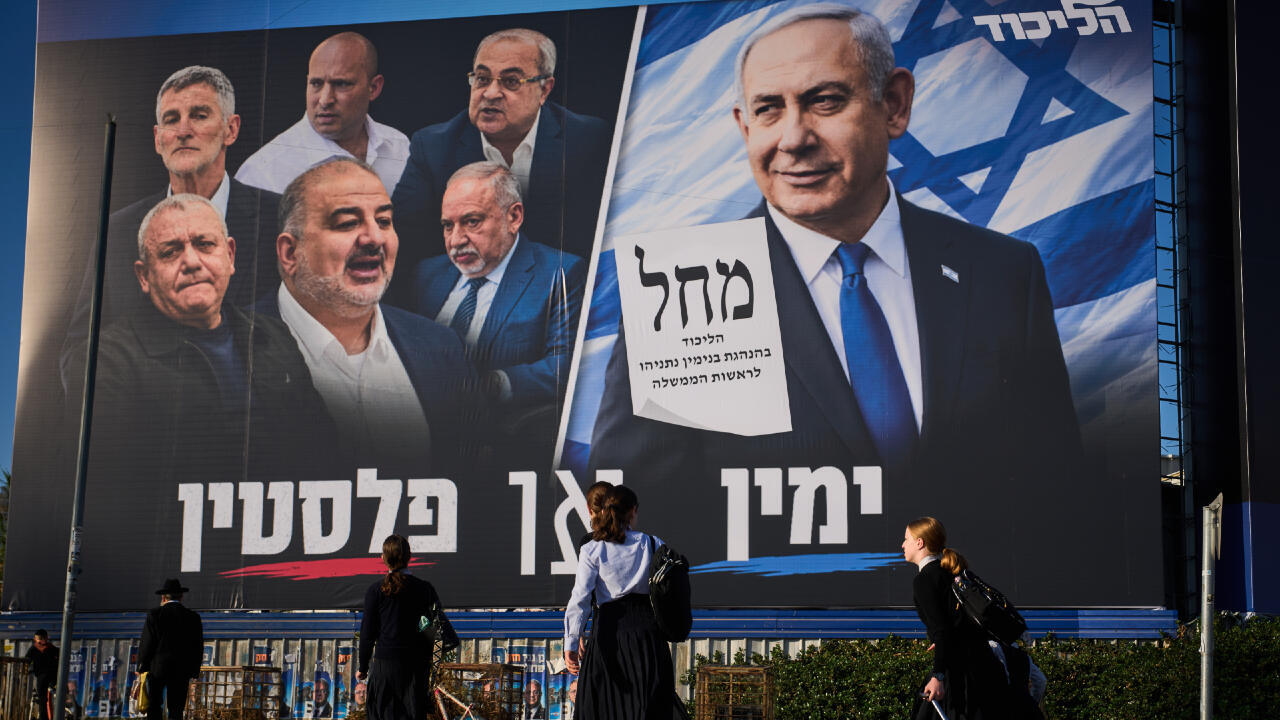
It is regularly said that the coming elections to the Israeli Knesset, which are due on October 27, are “critically important”.
In fact, the result is well known in advance. After these elections, like after every Israeli election since 1948, there will be an overwhelming majority in the Knesset of racist deputies, dedicated to Jewish supremacy and the expansion of the Zionist colonialist project at the expense of the native Palestinian population and neighboring Arab peoples.
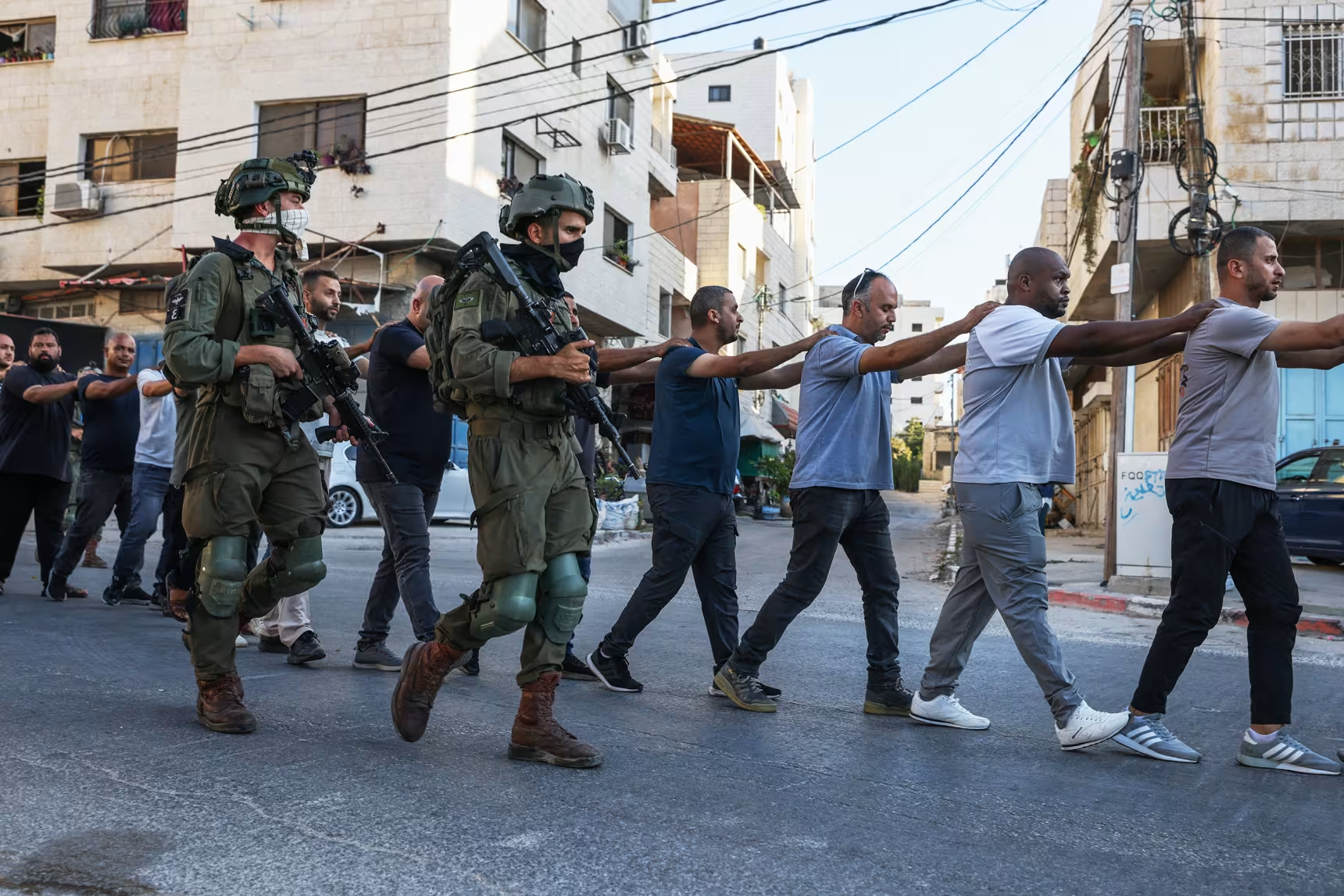
The coming elections are unlikely to change the course of the ongoing genocide in Gaza and “the war on all fronts” that the current Israeli government launched after October 7, with the full support of all the Zionist opposition. The critical crisis of the Zionist project is expressed in these elections not by posing fateful decisions before the voters, but through the complete lack of any discussion of the fundamentals that led to Israel’s longest war over its 78 years and to its failure to reach a stable conclusion on any front.
In this first of two articles, I analyze the current crisis of Zionism and how it is reflected in the elections. In a second article I will discuss the positions of the parties and movements that represent Arab Palestinians in the ‘48 occupied territories, who are allowed to take part, and the issue of participation versus boycott.
The Gaza Genocide – implementation of the Dahiya Doctrine
The first Palestinian Intifada of “stones” (1987 – 1993) brought the Oslo Agreements, which were supposed to lead to the establishment of an independent Palestinian State in the West Bank and Gaza. But this was an illusion: Israel never intended to allow real Palestinian independence. Disillusion with the fake “peace process” led to the armed second intifada (2000 – 2005). It led to the unconditional withdrawal of the Israeli army and settlers from the Gaza Strip, and the imposition of a strict siege of the densely populated area.
The Gaza strip was created as a distinct territory as a result of the Palestinian Nakba, the ethnic cleansing that accompanied the establishment of the state of Israel in 1948. Most of its residents are refugees from southern Palestine, who were never allowed to return to their homes. By 2023 the small strip, about 1.36% of the whole country, held about 15% of the whole population, or almost 30% of the Arab Palestinian population.
Ariel Sharon, Israel’s prime minister at the time of the withdrawal from Gaza, did not hide his intentions: He preferred to deal with Gaza through artillery and bombing from the air, rather than put Israeli soldiers in danger fighting the guerillas on the ground. On the political level, Israel used the division of the Palestinian leadership between the Fatah-led corrupt and powerless “Palestinian Authority”, in the Israeli controlled West Bank, and Hamas-led Gaza, as another excuse to block any path to Palestinian statehood.
The strict siege from land, air and sea prevented any viable development. For 18 years Gaza lived through torturous contradictions: being the only semi-free Palestinian territory, while, at the same time, being a big open-air prison for more than two million people. Israel believed it had found a sustainable paradigm to expand its settlements and ethnic cleansing in the West Bank while bombing Gaza regularly. The normalization of Israel’s relations with several Arab governments encouraged its leaders and its US imperialist masters to believe that they were establishing their stable hegemony over the Middle East.
All this exploded with “Tufan al-Aqsa”, the surprise attack by Hamas and its allies on October 7, 2023. Israel unleashed an unprecedented level of violence against Gaza’s civilian population, devastating all the basic essentials of life. Israel’s excessive violence was not a spontaneous response to the attacks of October 7. It was a systematic implementation of a pre-planned strategy that it adopted long before under the name of “The Dahiya Doctrine”.
“Dahiya” refers to the southern suburbs of Beirut, the capital of Lebanon, where the majority of the population belongs to the Shiite branch of Islam. In its 2006 invasion of Lebanon, while Israeli tank columns were defeated on the ground, Israel destroyed much of the Dahiya from the air, hoping that the suffering of the civilian population would restore its deterrence.
The genocidal Dahiya Doctrine is mostly identified with General Gadi Eizenkot. In 2008, while he was the head of the army’s northern front, he explained it openly in an interview to Yediot Ahronot:
“What happened in the Dahiya quarter of Beirut in 2006 will happen in every village from which shots will be fired in the direction of Israel. We will wield disproportionate power and cause immense damage and destruction. From our perspective, these are military bases. […] This isn’t a suggestion. It’s a plan that has already been authorized.”
Now, after Israel pursued the same doctrine in Gaza to the level of mass genocide, General Eizenkot is regarded as the great hope of the Israeli opposition to replace the failed crook Netanyahu. His main complaint against Netanyahu is that Hamas in Gaza “was not crushed”.
Forever Wars against Everybody
The Israeli election could be significant if the opposition had any intention to end Israel’s unrestrained aggression on all fronts. But this is not the case. In fact, all the Zionist opposition is going out of its way to attack the most extremely rightist government in the state’s history… from the right!
First, General Eizenkot and his allies promise to crush Hamas, as if the problem is that the people of Gaza were not bombed, starved and tortured hard enough. The second favorite issue uniting the Zionist opposition is the drive for wider mobilization to serve the war and occupation machine. They stress that more wars require more soldiers, and want to enforce enlistment of Ultra-Orthodox “Haredi” Jews. They mobilize militaristic public opinion against the conservative-religious parties from the Netanyahu camp which are happy to support all wars as long as they can spare their public from direct danger. There is also a lot of talk in this opposition about enlisting the Arab Palestinians in the ‘48 occupied territories for some kind of “national service”. Unwilling to arm Palestinian youth, this is likely to amount to slave labor in the service of the occupation.
Once again, like the Genocide in Gaza, the endless “war on all fronts” is not a spontaneous result of public hysteria, nor the excess of the extremists in power, but the logical conclusion of long-planned strategy, which is supported by Zionist and imperialist consensus.
While the US adopted Israel as its main tool for forcing its hegemony in the Middle East, after the 1967 war, the basic formula agreed to was to assure Israel’s strategic military superiority over any possible coalition of regional powers. Keeping the region under corrupt self-serving dictatorships and nurturing civil wars and sectarian feuds have advanced the strategy along. But the region’s development cannot be stopped forever, so it required more direct military interventions by the US and Israel.
In most previous wars, the dynamics were simple: Israel would attack some “unobedient” neighbor, and the US would extract political concessions in exchange for halting Israel’s aggression. While starting a war, Israel’s politicians and generals used to ask “how much time we have?” Israel went to war like an attack dog, with no internal “brakes”, but waited for a signal from their masters when to stop.
This mechanism is now broken, as the US fell in love with its servants’ aggression and applies no pressure to stop the war. There is one exception, the war on Iran, where the US itself was tempted into a war and started to pay a price for it. To regain control and limit the damage, it ordered Israel out of this war, at least for now. As Israel is actively pushing its borders on all other fronts, many Zionists are afraid that Netanyahu’s diminished credibility is eroding Israel’s international standing. They now hope that replacing the politicians in charge will halt the collapse in Israel’s international image and will assure imperialist support to even more aggression.
There is no “democracy” in Apartheid
Many reporters falsely describe the political struggle in Israel as a collision between “Right” and “Left”, or “Center Left”. This is a completely misleading terminology in the analysis of the Apartheid regime. Take the case of “The Democrats” – which are supposed to be the most “Left” party in the Zionist opposition. It unites the remnants of the Zionist “Labor Party” which led the 1948 ethnic cleansing and the 1967 occupations, with remnants of the more pseudo-left “Meretz”, which due to the right drift in Israeli public opinion lost any chance for independent representation.
“The Democrats” are now united under the leadership of combative General Yair Golan. In 2007, while he was commander of Israeli occupation forces in the West Bank, he defied an explicit ruling of Israel’s High Court as well as army commands and authorized the usage of Palestinian civilians as human shields in operations against suspected guerrilla fighters.
In an interview with the Guardian in August 2024 he declared that “Hamas must be eliminated from the Strip, and that stronger action should be taken in Israel’s north against the powerful Lebanese militia Hezbollah.” He also stated that “Israel must continue to have freedom of action in Gaza and the West Bank for the near future.”
In another interview, this time in “The Times of Israel”, in February 2025, Golan accused Netanyahu of “allowing Hamas to continue to control the Strip and restore its status”.
In a typical opportunistic and militaristic twist, Golan was an enthusiastic cheerleader for the Zionist-Yankee attack on Iran in February 2026. He declared in his X account: “Eliminating Khamenei is a dramatic and significant step. Israel’s security forces, together with the American forces, have once again demonstrated intelligence superiority and impressive operational capability. I salute you.” Lately, on October 9, when the failure of the aggression has already become clear for all, he stated that killing Khamenei was “a mistake” – because “it doesn’t serve the interests of the State of Israel. Any time there’s an elderly, long-serving leader, there’s a certain advantage.”
The pseudo “Democrats”, along with all the Zionist opposition, joined the initiative of the extreme right to ban Sami Abu-Shehadeh, the leader of the Palestinian “National Democratic Alliance”, from participating in the Knesset elections.\
Internal contradiction of a system in crisis
While there is no significant difference between the Zionist extreme right government camp and extreme right opposition, there is a great amount of sincere hate and distrust between them. Much of it is a local reflection of the cultural wars that divide the populist right everywhere, of which Netanyahu is one of the founding fathers, from the imperialist “liberal” elites. But the global division is multiplied by the sense of failure that is the result of the last three years of endless war.
Netanyahu was deeply in trouble for multiple corruption indictments long before the last war. He succeeded in holding the support of most of the Jewish electorate by channeling frustration with the establishment to support his impunity. Now he is accused by the opposition of responsibility for the total failure of Israel’s intelligence and defenses on October 7, and of his failure to win the war.
On the other side, Netanyahu’s supporters accused the opposition of being “leftist”, “weak” and intending to build a government supported by Arab parties. There are even plenty of conspiracy theories as if the opposition and the deep state (including elements in the army and the security services) were somehow involved in outright treason on October 7, in order to discredit the government.
Now the Jewish electorate is divided into about two equal camps, full of frustration and hate. But they are both united by the Zionist consensus that Palestinians should be denied any rights, most importantly the right to self-determination. This denial is extended to the two million Palestinians who formally have Israeli citizenship and can participate in the Israeli elections. There is almost full consensus by the Zionist parties that a legitimate “Zionist government” should not rely on the votes of Arab parties (including the Arab & Jewish Israeli Communist Party).
This outright racism is likely to punish its supporters, as none of the two Zionist camps is likely to win a majority. The most likely result of the elections, therefore, is a deadlock that may lead to another election. It can also lead to internal crisis in some of the Zionist parties themselves, as mass betrayal of the electorate would be the easiest way to form a government.
As the Israelis are consumed by their internal conflicts, it is only outside pressure that can stop the genocide and end the war on all fronts.