Remembering the Naval Mutiny of 1946
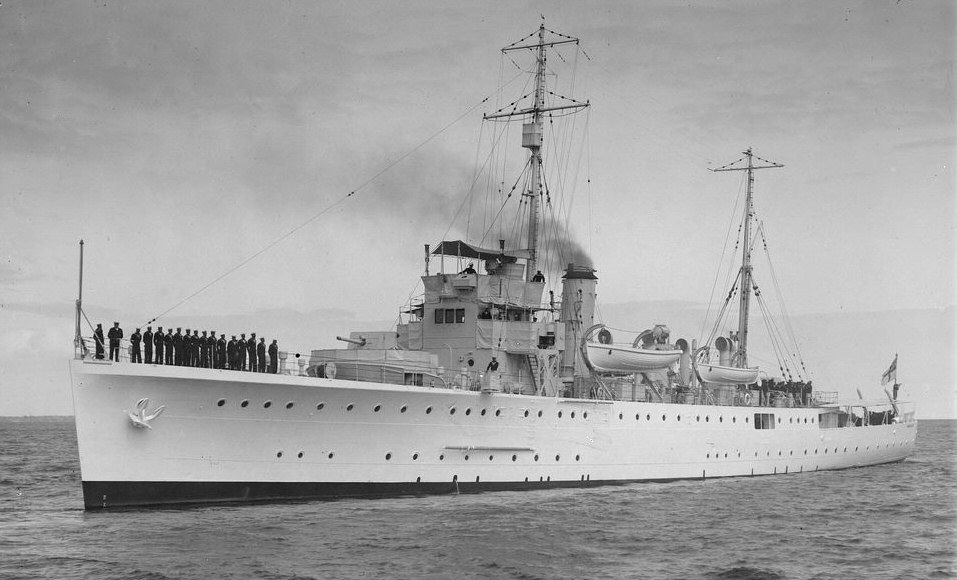
The 19th of February 2026 would mark the 80th anniversary of the naval mutiny, the event which shook the British Raj to its core and made British rule in India impossible. The significance of this event, and the struggles surrounding it have not only been forgotten, there is barely any remembrance of the event, nor the main actors behind it. There is only one monument to the naval mutiny, a life sized statue of an unnamed sailor in a corner in Mumbai, hidden from view. The uprising of the mutinying naval ratings of the British Indian Navy was not one isolated incident, it was the culmination of the rising class consciousness of the people of India, and it was the culmination of the growth of class struggle in British India.
Over the course of the struggle, a Hindu, a Muslim and a Sikh led the mutiny of the naval ratings. It cut through the growing communalization of Indian politics, as the bourgeoisie conspired with the imperialists to split apart the Indian people. The naval ratings began taking over territory and fought the British authorities in pitched battles through Bombay, the fire of the mutiny spread beyond its epicentre in Bombay’s docks to every port city from Karachi to Calcutta. The uprising of the naval ratings was combined with the strike action of textile workers in Bombay. The fire of the youth and students uprising in Calcutta had not died down, when the storm of the naval mutiny came.
In fact, to call it only a ‘naval mutiny’ would be missing the larger picture, the events that unfolded on the 19th of February, was the start of an Indian revolutionary process. The upsurge brought with it the promise of a different India than what eventually came. The communal riots which would break out a few months later, and then the partition of the sub-continent that would follow put an end to this new united India, one where Hindu, Muslim, Sikh, and Christian, could unite under one banner of struggle against imperialism. Instead, the bourgeoisie and imperialists plotted to ensure that India would be divided, they were content with India’s workers, peasants and youth fighting among themselves rather than fighting unitedly against imperialism.
For the victorious bourgeoisie, the mutiny was an embarrassing reminder of their own failures. The mutiny had brought the Congress and Muslim League together, not in support of this revolutionary uprising, but on the side of the imperialists, assisting them in disarming the sailors and breaking the mutiny. The so-called ‘Iron man of India’ Sardar Vallabhbhai Patel, was at the forefront of calling the naval ratings to lay down their arms. The promises of security from prosecution were not kept, every sailor was court martialled.
The mutiny and its aftermath is also a stark reminder of what happens to revolutionary processes in the absence of revolutionary leadership. The leaders of the naval mutiny on HMS Hindustan had called on the Congress Party, the Muslim League and the Communist Party to give them leadership. The Communist Party, guided as it was by Stalinist ideology and taking its orders from the bureaucracy in Moscow, proved its uselessness in the situation. They could not mobilize in support of the sailors, limiting their stance to worthless appeals to the two main Indian bourgeois parties of the Congress and Muslim League to come together. Though it was the only major mainstream party that supported the mutineers, their role amounted to nothing.
The Congress and the League in the meanwhile, had already made their plans for India’s future quite clear. The League wanted a separate homeland for Indian Muslims, the Congress intended to build a capitalist India, in agreement with British imperialism, rather than in struggle with it. The dream of a united socialist India would be shattered in the blood curdling violence which gripped India in 1946 and 1947.
The only revolutionary alternative available at this time, was the Bolshevik Leninist Party of India, which despite its small size, and having suffered severe repression from the British government, succeeded in mobilizing the textile workers of Bombay. For a brief moment, India’s workers, India’s farmers, and India’s youth and students, erupted in protest against the British. The social forces which could bring about a revolutionary change were active, what was needed was a programme and party which could galvanize it all together. Unfortunately, this was not to be India’s historic destiny.
Over the decades the revolutionary legacy of the naval mutiny was buried. The Muslim league which ruled Pakistan, would not entertain any notion of a united India, which could question the very existence of their national project. The Congress party having taken power would never allow the truth behind its counter-revolutionary role during the mutiny; when the truth did finally come out, and people came to see the reality in Utpal Dutt’s play ‘Kallol’ in 1965, there were riots in the streets of Calcutta, and the Congress government lost power in West Bengal in the following election of 1967.
Today, the Indian navy has taken hold of the legacy of the ‘naval uprising’, recasting it in nationalist terms. The defiance of a mutiny has been whitewashed, by calling it an uprising instead. The mutiny stood for defiance against imperial authority, the breaking of an imposed racial hierarchy, something that would be deeply uncomfortable for the navy of a capitalist power with ambitions of global power.
It is the duty of revolutionary-minded individuals to defend the true legacy of the Naval mutiny of 1946, the legacy of revolutionary class struggle. It showed that India’s people were not cowed to passivity, that there was revolutionary potential here, and that there can be another revolution in India. The naval mutiny stirred revolutionary consciousness among the masses and broke the back of the British Empire in India, casting them out for good. The next revolution will do the same for the bourgeoisie of India, Pakistan, and all over South Asia.