
Hidden history of anti-imperialist & anti-fascist organizing in Minneapolis
Introduction
In Minneapolis and St. Paul, Minn., the working class has been mobilizing en masse against the Department of Homeland Security (DHS). DHS sent thousands of Immigration and Customs Enforcement (ICE) agents to the Twin cities in very broad and sweeping anti-immigrant operation that has brutalized both documented and undocumented residents. ICE agents made it clear that the murder of Renee Good and Alex Pretti was meant to teach a lesson that anyone who stands with immigrant workers in opposition to ICE is a “domestic terrorist.”
Under the auspices of Trump’s leaked National Presidential Security Memorandum 7, everyone, including white allies of the immigrant community, will face the same repression that oppressed communities have faced daily for centuries.
The attacks of the Trump regime are international. The regime is proudly upholding the colonial and imperialist legacy of the U.S. with ongoing interventions in Venezuela and threats to Cuba, Greenland, Iran, and many other places around the world. The imperialist drive to obtain access to resources like rare earth minerals, oil, and inexpensive labor has created miserable living conditions in the global South for generations.
Imperialism today is characterized by the weakening of global U.S. hegemony, the rise of new imperialist players such as China and Russia, the rearmament of Europe and Japan, and the shake-up of traditional post-World War II allies, and all of this creates economic instability and uncertainty for both workers and the capitalist class. Trump’s National Security Strategy (NSS) outlines how they plan to bring the U.S. through this period. They seek to push forward with their “America First” agenda by leaning into the Monroe Doctrine, the use of “gunboat diplomacy” in the Western Hemisphere, containing China, and targeting immigrants and anti-capitalist organizations at home.
What started as deadly missile attacks on fishing vessels accused of trafficking drugs turned into Trump’s designation of the regime of Nicolás Maduro as a foreign terrorist organization. This led to the U.S. bombing and invasion of Venezuela to kidnap Maduro and his wife Cilia Flores and send them to New York on a bogus drug and gun indictment.
White House Deputy Chief of Staff Stephen Miller, writing on social media, made the Trump administration’s intentions clear: ”American sweat, ingenuity, and toil created the oil industry in Venezuela. Its tyrannical expropriation was the largest recorded theft of American wealth and property. These pillaged assets were then used to fund terrorism and flood our streets with killers, mercenaries, and drugs.”
The Trump regime is aggressively owning their colonial heritage and wearing their imperialist status with pride. This new reality is creating a serious crisis for Venezuela and many other countries in Latin America and the Caribbean, as well as immigrants living in the U.S. The target of the Trump regime has several aspects. This includes reaffirming U.S. hegemony in the Western Hemisphere by reviving the Monroe Doctrine, slowing or stopping the advance of Chinese and Russian imperialist competition for rare earth minerals and oil, and maintaining tight control and access to those resources and supply chains. All of this is part of a broader inter-imperialist rivalry that could bring China, Russia, and much of Europe into a devastating war that will have as its goal a redivision of the world for the benefit of capitalist super profits.
Millions around the globe, from their daily experiences working in the oil fields of Venezuela to the villages of Nigeria to the coal mines in Alabama, know that the system is rigged against them but see no path forward.
Lenin explains that as wealth is concentrated into fewer and fewer hands, everyone else suffers under their exploitation. He writes in “Imperialism, the Highest Stage of Capitalism,” “Capitalism in its imperialist stage leads directly to the most comprehensive socialization of production; it, so to speak, drags the capitalists, against their will and consciousness, into some sort of a new social order, a transitional one from complete free competition to complete socialization. Production becomes social, but appropriation remains private. The social means of production remain the private property of a few. The general framework of formally recognized free competition remains, and the yoke of a few monopolists on the rest of the population becomes a hundred times heavier, more burdensome, and intolerable.”
Resistance within the U.S. working class
Polls show that the majority of people in the U.S. oppose the Trump regime’s agenda. The regime maintains its legitimacy through a well-funded far-right populist political apparatus propped up by a modest but loud base proclaiming Trump’s “genius.”
In the meantime, on a national level the unions seem to be taking a “wait and see” attitude, potentially pinning their hopes on the Democrats returning to office in 2028. However, the Democratic Party has done nothing to put the brakes on Trump’s actions. In fact, when it comes to Venezuela, most Democrats agree with putting regime change and U.S. domination in the Western Hemisphere on the agenda. The Democratic Party’s silence in the face of the growing authoritarian and colonialist project speaks to the complicity and class nature of the party.
At the start of the genocide in Gaza, class-conscious workers made important efforts to bring resolutions in opposition to the genocide into their unions. Labor for Palestine activists helped pass ceasefire resolutions in the UAW, APWU, UE, and other unions. Although the outcome was limited, the organizing did represent a shift toward exposing the role of U.S. imperialism in the genocide.
While organizing around Palestinian liberation has quieted following the heavy-handed repression from the Biden regime, organizing around Trump’s threats to Venezuela is starting to heat up. UE delegates at their 79th convention passed a resolution that states, “In the resolution ‘For Jobs, Peace, and a Pro-Worker Foreign Policy,’ delegates to our most recent convention declared that ‘Foreign and military policies should defend the interests of working people, not the wealthy. UE has long believed that the labor movement should promote its own foreign policy based on diplomacy and labor solidarity.’ This commitment to diplomatic rather than military solutions led delegates to demand that the U.S. government ‘[c]ease using U.S. military and intelligence agencies in interventions against nations which pose no threat to the American people’ and, specifically, that the U.S. ‘[c]ease all harassment of and economic sanctions on Venezuela.’”
Thousands mobilized around the country following the U.S. intervention in Venezuela. Then on Jan. 23, after the DHS invasion of Minneapolis and murder of Renee Good, there was a “No work, No School, No shopping” mobilization of hundreds of thousands. The action was back by unions like Unite Here Local 17, Teamsters Local 638, SEIU Local 26, CWA Local 7250, the Minneapolis Teachers Union and many more. The Minneapolis Teachers Union released a statement saying, “Today ICE shot and killed another constitutional observer, a Union sibling, an AGFE member, Alex Pretti. On this horrific day, we re-assert our demand for ICE to leave our city and state. Yesterday 100,000 of us marched in the streets. As a Union, the Minneapolis Federation of Educators, continues to call on all our members and neighbors in Minneapolis to stand together to protect our neighbors and each other.”
As the working class in Minneapolis and beyond braces for whatever comes next, it may be helpful to look back at a past attempt by socialist workers to build opposition to war and fascism in the lead-up to World War II. There is an important tradition of anti-imperialist and anti-fascist labor organizing in the U.S. and especially in Minneapolis led by Marxists that has been kept out of the mainstream history books. This tradition has survived through groups like the Remember 1934 committee, Marxist scholars, and modest socialist organizations like Workers Voice that are patiently building a presence in the workers’ movement and educating around our historical perspectives.
In order to build a fighting movement today, working people need to understand some of the most important examples from our history and then bring those lessons into our unions and mass movement organizations. Through the lens of the buildup to World War II, this article will take a look back at the example of the Trotskyist in the Communist League of America (CLA) and their leadership of the trade-union movement in Minneapolis, which pushed an anti-imperialist agenda and defended the labor movement from fascist attacks. Finally, the article will discuss class independence and draw some conclusions about the prospects for the movement today.
Teamsters opposition to WWII
World War II was a long, drawn-out nightmare for the working class across the globe. Roughly 21 years after the imperialists sent workers to kill each other in the First World War, the contradictions of capitalism could not be resolved without the inter-imperialist rivalry again coming to blows. The nightmare saw the rise of fascism in Italy under Mussolini, and far-right authoritarian regimes in Nazi Germany under Hitler, and the Spanish State under Franco. We also saw the Nazi imprisonment and slaughter of Jewish people; the Nanjing massacre executed by the Japanese empire against Chinese civilians; the dropping of atomic bombs by the U.S. at Nagasaki and Hiroshima in Japan; and numerous atrocities that also impacted the semi-colonial and colonial countries.
There’s also another side to the story of World War II from a working-class perspective that would highlight, for example, the resistance of Jewish people to the Nazis in the Warsaw Ghetto and other towns and cities, the underground partisan movement across Europe that played an important role in undermining Nazi occupation, the Chinese fight against imperialist Japan, or the anti-colonial struggles in countries like Ethiopia in their fight against fascist Italy. The buildup to World War II has many examples of working-class resistance to imperialism in all its forms. This includes serious attempts to build an anti-imperialist wing of the labor movement in the U.S.
Perhaps the best expression of building a principled opposition is the socialist leadership of the Minneapolis Teamsters General Drivers Local 574/544 in the lead-up to the War. These socialist workers showed us how an independent class struggle left-wing perspective could transform a union into a vehicle for opposition to U.S. imperialism. They took on the capitalist class, politicians, the police, the National Guard, and even their own top union leadership.
The rise of the Minneapolis Teamsters also coincided with the rising tide of the new Congress of Industrial Organizations (CIO), which was more militant and democratic than the narrow AFL craft unions and organized workers regardless of skill level. The leaders of the Minneapolis Teamsters would eventually pay for their unrelenting class solidarity by being framed on trumped-up charges and sent to prison for more than a year. Their sacrifice, written out of the mainstream history books, should be an important touchstone for all working-class activists today.
The initial leadership of the Minneapolis organizing efforts (V.R. Dunne, Grant Dunne, Miles Dunne, and Carl Skoglund) were militants of the Trotskyist movement and seasoned veterans of the class struggle. The organizing drive relied heavily on a deeply exploited immigrant working class. Economic conditions in Minneapolis were dreadful for the working class, and the bosses dominated daily life. That is until a handful of revolutionaries created a plan to organize the city.
These revolutionaries passed through the ranks of the IWW and the left wing of the Socialist Party and, after the Russian Revolution in 1917, helped found the Communist Party. They were internationalists to the core, and after their expulsion from the Communist Party by the Stalinist leadership, they would join with James P. Cannon and a host of others to found a new organization, the Communist League of America (CLA). The CLA played a leading role in developing the political program of Trotsky’s Left Opposition (the core of the later Fourth International). Between 1934 and 1938, the Trotskyists would fuse with A.J. Muste’s American Workers Party to form the Workers Party, enter into the Socialist Party, get expelled from the Socialist Party, and finally become the Socialist Workers Party (SWP) on Jan. 1, 1938.
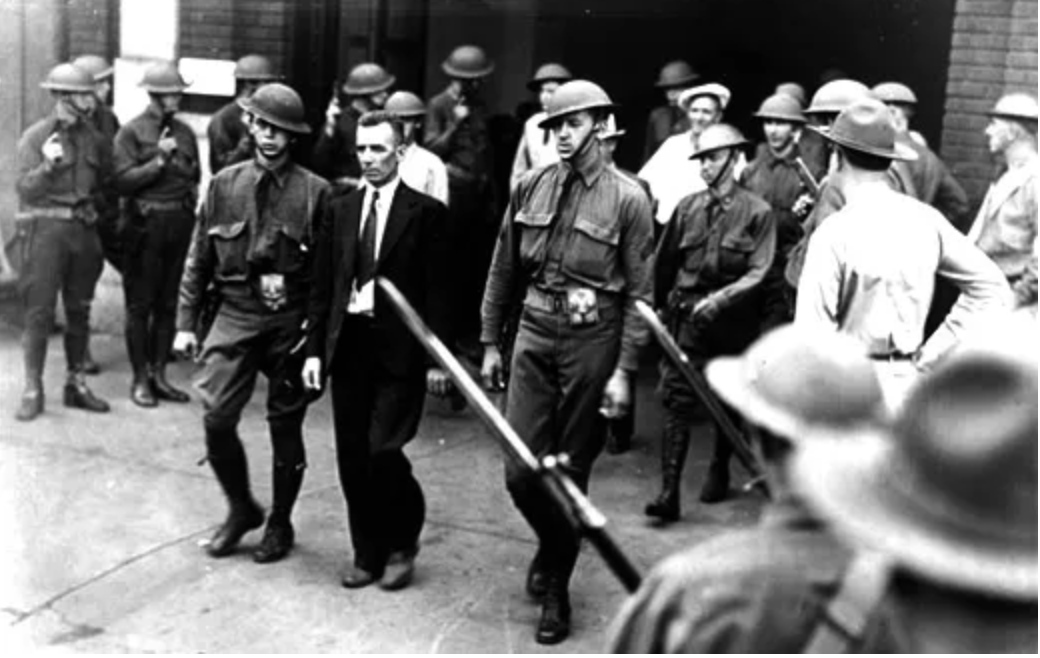
In 1934 these socialists led a dynamic strike movement in Minneapolis that created a massive crisis for the capitalist class and brought the city to a general strike that forced the government to institute martial law via the National Guard. This experience is chronicled in Farrell Dobbs’s book “Teamster Rebellion.” The labor movement and the Teamsters in particular organized thousands of new members, and the Trotskyist movement would also grow as a result. The conclusion of this struggle led to massive gains for the working class of Minneapolis, the spread of industrial militant trade unionism in the Midwest, and an incredible growth of the Teamsters union.
The successes of the organizing efforts in Minneapolis were closely guided by the CLA and in consultation with the founder of the Fourth International and exiled leader of the Russian Revolution, Leon Trotsky. The party made considerable efforts to send writers to help staff the union paper, attorneys to help navigate the treachery of the capitalist courts, women leaders to organize women’s auxiliaries among the workers’ families to build solidarity for the strike, and leading members like James P. Cannon to strategize against the bosses. This gave the union organizing and strike the best chance at success in a very difficult situation and also ensured that the party would learn through the experiences of Minneapolis.
Bryan Palmer writes in his book “Revolutionary Teamsters,” “The mass strike, and its highest expression, the general strike, thus revealed the capacity of American labor in this period to mobilize in combative ways but also reflected the importance of Left leadership embedded in the unions but quite different from the ensconced bureaucracies that so often directed rank-and-file actions within mainstream organizations.”
Building a mass movement against imperialism
The class-struggle left-wing leadership of the Teamsters, combined with the understanding of how to build mass movements and the united front, were critical in the years leading up to World War II. In 1934, at the height of the strike, the Teamsters led the labor movement in a general strike of Minneapolis. An Aug.1, 1934 issue of Teamster Local 574’s (544) newspaper, The Organizer, reports, “Military tyranny has reached its peak in Minneapolis. For the first time in decades, a trade union headquarters has been occupied by military forces and trade union leaders have been arrested and imprisoned in a military stockade. Picket cars are ordered off the street while every scab truck gets a free permit.
“Never before in our time has such a direct and outright act of strike-breaking by military force been witnessed. A dastardly blow has been struck at the very heart of the labor movement by military forces under the command of Floyd B. Olson, Governor of the State of Minnesota.”
The Teamsters called on the entire labor movement to enter the struggle. There they got an initial feel for what it would mean if the working class took power. The Teamsters and the labor movement practically ran the city, issuing permits for trucks to drive through the city, establishing food markets so farmers could sell their produce, and establishing a massive strike fund so workers could pay their bills while on strike. It would take the combined forces of the governor, national guard, the bosses, and the police to prevent a revolutionary situation from developing.
Although they didn’t make a revolution, the Teamsters would establish Minneapolis as a union town and live to fight another day. They soon turned their attention to confronting the coming war and military preparations by the Roosevelt government. Farrell Dobbs, a leader of Local 544, was recruited to the Trotskyist movement through the organizing efforts in the Minneapolis coal yards. He writes in his book “Teamster Bureaucracy,” “It was in this rivalry between imperialist cutthroats that Roosevelt was dedicating himself to the protection of ‘American interests.’ But that wasn’t what he talked about during the 1936 elections. Instead, he campaigned on the basis of his phony image, built up during his first term, as a champion of the exploited masses.”
Dobbs continues, “At that point General Drivers Local 544, in Minneapolis, Minnesota, set out to organize trade union opposition to Roosevelt’s preparations for use of the workers as imperialist cannon fodder. … Thus it was apparent to them that the first task was to alert the union ranks to the dangers arising from the new course taken by the White House and to explain why the workers’ vital interests were threatened. Only in that way could the necessary forces be drawn together to launch a broad protest movement.”
As FDR ramped up rearmament and war efforts, Dobbs and his comrades began to fill their union newspaper, the Northwest Organizer, with anti-imperialist articles. They found numerous ways to then bring those articles into the broader labor movement. They also passed resolutions and ran independent working-class labor candidates with an antiwar platform. The paperwould serve as a vehicle for helping workers understand how the fights for their immediate demands could lead to a deeper social change. In a way, this served as a laboratory to experiment with class-struggle demands. In the process, the mass movement helped develop some of the ideas that would become the Fourth International’s Transitional Program.
The Northwest Organizer and the drive toward war
The union newspaper was essential for educating the rank-and-file members about the coming war.The Northwest Organizer, which started out as the newspaper of Local 544, eventually became the paper for the larger Teamsters Joint Council, which had representatives from every Teamster local in the city. By 1937, the Northwest Organizer was featuring regular articles about the imperialist war drive. The Teamsters explained the warmongering of President Franklin D. Roosevelt as an agent of the capitalist class. This included the strikes due to FDR’s cuts to the Works Progress Administration and the reallocation of funds for rearmament. They explained how the ruling class uses the army to both protect capitalist investments in foreign countries and protect corporate interests in the U.S. by sending troops out against striking workers.
Incorporating the antiwar history of the Minnesota labor movement during World War I, the Northwest Organizer warned workers about the dangers of relying on the Democratic Party to stop war. The newspaper explained that during World War I the Minnesota peace movement grew to 70,000 supporters but was quickly stewarded into the Democratic Party by false promises of Democratic President Woodrow Wilson.
Articles in the Northwest Organizer also explained that in 1915 the Minnesota American Federation of Labor took an antiwar stance, and by 1917 the labor movement had mobilized thousands in the streets against President Wilson’s move to sever diplomatic ties with Germany and then mobilized again a few weeks later when Wilson brought the U.S. into the war. The U.S. declaration of war against Germany brought down heavy repression on the antiwar labor movement. The Northwest Organizer proved to be a crucial tool in educating rank-and-file trade unionists across Minneapolis.
Roosevelt’s war drive and the Ludlow Amendment
Roosevelt and the U.S. government used a combination of false promises and heavy repression during WWII to undo growing antiwar sentiment. The Trotskyist Teamsters in Minnesota were specifically targeted for their opposition to FDR’s war drive. The rebel Teamsters carried on a vigorous campaign of anti-imperialist agitation among the Minnesota labor movement and made some very concrete steps. One step included critical support of an amendment proposed by Congressional Representative Louis Ludlow that called for a national referendum if the U.S. Congress wanted to declare war. Despite the limitations of the Ludlow Amendment, the Trotskyists took a flexible approach, and through their leadership of the Teamsters and the broader left wing of the labor movement, they took up support for the Ludlow Amendment. This effort led to passing an antiwar resolution in the much larger Minnesota Central Labor Union (MCLU). The resolution stated, “That … fifty thousand trade unionists, declares its unalterable opposition to all war preparations and … its firm opposition to any war launched by the government; that we shall join with all other forces in the labor movement who share our views for the purpose of consolidating the strongest possible movement of resistance to war and to warmongers.”
The MCLU resolution also called on war funds to be diverted to the unemployed, the removal of U.S. armed forces from the “Far East,” and solidarity with China’s fight for independence. In other words, the labor movement was taking up a sharp program not only against Roosevelt’s war drive but also in relation to anti-colonial struggles in China. This resolution was an outgrowth of years of principled trade union activity by Teamsters General Drivers Local 544, and it led to a broader possibility of influencing the Farmer-Labor Party (FLP) in Minnesota, which was led by the Communist Party (CP) and a right-wing quasi-pacifist faction. The CP opposed the Ludlow Amendment and instead was in full support of FDR’s war drive in what they thought was a maneuver to defend the Soviet Union (Stalin would eventually sign a pact with Hitler, and the CP would change course only to flip-flop yet again after Germany invaded the Soviet Union).
The mood among the masses, alongside the confidence gained through the rising CIO militant trade-union movement, was beginning to shift in opposition to Roosevelt. One of the driving factors in the growing opposition to FDR was the contradiction over government spending and rearmament. A Feb. 23, 1939, article in the Northwest Organizer pointed out the contradiction: “When Roosevelt cut the relief appropriation to the tune of a billion dollars, he told us—NO funds. When Congress cut the relief appropriation by another $150,000,000, they told us—NO FUNDS. But when the bill to increase the Army Air Corps to 5,500 warplanes came up a few days ago in the House of Representatives, a bill involving the expenditure of about $376,000,000, there seemed to be plenty of FUNDS. The House voted almost unanimously for the bill. NO FUNDS for the hungry and homeless unemployed. PLENTY OF FUNDS to finance the coming imperialist war.”
The leadership of Teamsters Local 544 was able to advance an anti-imperialist position despite the efforts of IBT General President Daniel Tobin to stop them. Tobin was a friend of FDR and a fervent anti-communist who in 1940 was making calls for the AFL and CIO to move toward unity. The Trotskyists were suspicious of his aims. A Jan. 13, 1940 issue of Socialist Appeal states, “Tobin has been an ardent New Dealer and a close political friend of the White House. It is entirely possible that this unity campaign was worked out in cooperation with President Roosevelt. Roosevelt is interested in seeing a united labor movement, not because it will help the workers fight more effectively for their rights, but because it will aid him in integrating the labor movement movement behind the war machine.”
Taking on the fascists; union defense guards
Alongside inter-imperialist conflict, we find the rise of far-right and authoritarian movements. This is certainly true of the period leading up to World War II. In his book “Teamster Politics,” Farrell Dobbs writes, “Clashes between capital and labor in times of social crisis tend to stimulate activity among political demagogues with a fascist mentality. They anticipate that intensification of the class struggle will cause sections of the ruling class to turn away from parliamentary democracy and its methods of rule and resort to fascism as the way to hold on to state power and protect special privilege.”
The 1920s and ’30s saw the rise of far-right and fascist movements around the world as a response to revolutionary upsurges that threatened the power of capital. By 1940 a number of far-right and totalitarian governments had taken power in various countries.
In the United States, fascist groups tried to gain a foothold, but the capitalists did not need them at that time to crush the left and organized labor. Broadly, the union bureaucracies in the build-up to World War II caved into pressure to sign no-strike pledges and accommodate the capitalist war drive. The Minneapolis Teamsters in Local 544 were a rare exception. The Trotskyist leadership adeptly navigated the construction of a class-struggle anti-imperialist left wing in the labor movement at a time of extreme social crisis that would have them fending off the attacks from fascist organizations.
Fascists in the U.S. became a useful tool for the bosses to attack union workers. A Socialist Appeal article from April 28, 1939 states, “These fascist groups are nothing less than permanent organizations of scabs in the service of the most reactionary bosses. The workers ought to be ready to repulse them wherever they raise their heads.”
One of the largest chapters of fascists, the Silver Shirts, developed in Minneapolis in late 1938. Also known as the Silver Legion of America, the Silver Shirts was founded in 1933. In “Hitler’s American Friends: The Third Reich’s Supporters in the United States,” Bradley Hart writes, “The Silver Legion of America, commonly referred to as the Silver Shirts, was a pro-fascist, antisemitic, and avowedly Christian and Aryan organization. It gained influence in Minnesota in the 1930s, and one of Pelley’s key organizers spent time in the Twin Cities organizing chapters and advocating against the Farmer-Labor party in the 1938 election for governor … William Dudley Pelley … created strong alliances with the Ku Klux Klan and the German American Bund. Tapping into pre-existing antisemitic sentiments in the Twin Cities as well as heightened economic anxiety, the Silver Shirts found a receptive audience in the 1930s, claiming a membership of almost six thousand members.”
The bosses in Minneapolis, organized as the “Citizen’s Alliance,” had no qualms about using fascists to undermine the Teamsters’ efforts. It was the employers who contacted William Dudley Pelley and asked him to send people to Minneapolis and to start a recruitment drive. Local 544 had already shown no fear in the face of police and National Guard attacks. How would they handle a fascist threat?
Local 544 immediately went to work organizing union defense guards. These defense guards were conceived of as broad, inclusive, and for the defense of the entire labor movement. Dobbs writes, “Conceptually, the guard was not envisaged as the narrow formation of a single union. It was viewed rather as the nucleus around which to build the broadest possible united defense movement. From the outset, efforts were made to involve other unions in the project. It was expected that time and events could also make it possible to extend the united front to include the unemployed, minority peoples, and youth—all potential victims of the fascists, vigilantes, or other reactionaries.”
Under the leadership of Ray Rainbolt, a Dakota member of Local 544, the defense guard swelled to 600 members. Military-style training, education about past defensive tactics, and an intelligence-gathering team were established to prepare workers. The working class became the eyes and ears, always vigilant and on the lookout for fascist leaflets or meetings. The workers, from their experience on the picket line, knew that they could not trust the police and would have to provide their own defense. Mobilizations and drills helped establish a public presence of the defense guard and warded off any serious attempts to attack the Teamsters and let the fascists know that they were more than capable of defending themselves.
The development of the Workers’ Defense Guard was developed through the collective discussions and democratic decision making at the Socialist Workers Party (SWP) convention. In 1939 the SWP passed a resolution at their national convention outlining the necessity of forming worker defense guards: “The struggle against fascism makes possible, and demands, the broadest possible united front. The essential requirements for membership in the defense Guard must be formulated simply as a willingness to fight the fascists, to defend labor and other organizations and groups from the fascist and vigilante attacks, and to accept the democratic discipline of the Guard. While taking every precaution to make sure of the integrity of every applicant and to preserve the Guard from provocateurs, stoolpigeons, and irresponsible or light-minded elements, the effort must be made to enlist membership and support as broadly and widely as possible on this basis.”
The SWP and their trade union cadre were able to galvanize anti-fascist forces in places like Los Angeles, Minneapolis, and New York City. On Feb. 20, 1939, the SWP mobilized a mass response in opposition to a meeting of the Nazi-supporting German American Bund. In article for Red Flag, Nathaniel Flakin writes, “On Feb. 20, 1939, the stars and stripes waved next to the swastika. … An enormous crowd sang the Star-Spangled Banner while giving the Hitler salute. Guards in grey uniforms inspired by those of the Nazis’ paramilitary wing stood at attention in front of a 30-foot portrait of George Washington. The German American Bund had filled the Garden with 20,000 supporters. Attempting to shake their image as a sauerkraut-munching Hitler fan club, the Bund draped itself in the banner of Americanism and celebrated Washington’s birthday. Banners proclaimed “Wake up America!” (copied from Hitler’s “Deutschland Erwache!”). The rally was protected by 450 uniformed stormtroopers from the Bund’s Order Division, their version of the Nazis Sturmabteilung or “Storm Division.”
Outside the Socialist Workers Party had amassed some 50,000 anti-fascists. All other left organizations, and the Zionist organizations too, had failed to mobilize people against the Nazis. As a result, a couple hundred SWP members had gained the ears of masses.
A Feb. 22, 1939, article in Socialist Appeal described the scene as follows, “An imposing, fighting demonstration of fifty thousand workers assembled near Madison Square Garden on Monday evening to protest the first big fascist mobilization in New York City. In addition to the fifty thousand demonstrators who responded to the call of the Socialist Workers Party for a labor rally against the fascist concentration, official police estimates given to the press counted another fifty thousand among the spectators. With few exceptions, the latter made clear their sympathy with the aims and slogans of the demonstrating thousands. … 1,780 of Mayor La Guardia’s police, the largest number of cops ever collected in the city against a single demonstration, slugged and trampled under horses’ hooves scores of workers in an unsuccessful attempt to break up the demonstration. From 6 p.m. until 11, the workers engaged in a series of bitter clashes with police. The size of the workers’ counterdemonstration far exceeded the expectations of even the most optimistic.”
Working people learned a valuable lesson that day about whose side the police are on. It was evident from the rise of a fascist movement in the U.S. and the spread of fascism across Europe, that a Workers Defense Guard could play an indispensable role in stopping the attacks on the working class by both the police and fascists. The construction of the defense guards was halted at the start of World War II as the SWP faced legal battles and trumped-up charges of sedition that would have leading members of the SWP and the Teamsters spend more than a year in jail. The defensive formulations used by the SWP and their work in the Minneapolis Teamsters was indispensable for limiting the capitalists courts ability to pass longer sentences.
Working class independence; labor party
Between the 1934 strike and the start of World War II, the Trotskyist leadership deftly navigated the electoral arena in Minneapolis. At times they would run independent labor candidates. At other times they ran as socialists—as in 1936, when they ran V.R. Dunne on the Socialist Party line for the position of Minnesota Secretary of State and received 4000 votes—three-fifths of them from Minneapolis. Sometimes, when the Teamsters weren’t supporting a labor or socialist candidate, the union would vote to support the Farmer-Labor Party (FLP) candidate. The reformist FLP was by far the dominate electoral party in Minneapolis and had a deep connection to the labor movement, but by the end of the 1930s, it linked itself more and more to the policies of Roosevelt and the Democratic Party.
The internal conflicts in the FLP over the direction of the party and the failure of the FLP to make a strong opposition to Roosevelt brought electoral defeats, and several unions dropped out of the party. At the same time, the failure of the Roosevelt administration to address the dire needs of the working class helped draw the conclusion that workers needed their own party, and the notion of building a labor party was starting to take hold in an organic form.
In Minneapolis in 1939, the Central Labor Union, supported by Teamsters Local 544 and the Socialist Workers Party as well as sections of the FLP, decided to run an independent candidate, T.A. Eide, for mayor, under the banner of the labor movement. Farrell Dobbs writes in “Teamster Bureaucracy,” “Control of the campaign in support of his [T.A. Eide’s] candidacy was taken over by volunteer trade-union committees that sprang up in the wards. This meant that the AFL central body was acting in effect as a labor party on an improvised basis. Thus a promising, if amorphous, political movement had arisen out of the struggle within the FLP. The new formation was solidly rooted in the working class, and it was acting under trade-union control.”
Dobbs continues, “The Trotskyist leaders of Local 544 backed the Eide campaign. … While doing so, they urged the Central Labor Union to move toward the creation of a permanent labor party and to link up with progressive forces elsewhere in striving to build a national formation. … In the last analysis, the Teamster militants stressed, effective measures to prevent war and defend labor’s interests generally could be taken only through a working-class struggle for direct control of the government.”
Eide’s pro-labor, antiwar campaign lost narrowly to the Republican candidate and faced attacks not only from the capitalists but also heavy criticism from the Stalinist Communist Party. Still, the campaign was a success in putting opposition to Roosevelt’s military drive on the agenda. It also brought the labor party question to the fore at a time when revolutionary socialists were trying to break out of isolation and find their way to the masses. What would have been possible had the demand for a labor party taken hold not just in Minneapolis but in the course of every major labor struggle in the country? How would the development of the AFL and CIO have been different if, instead of relying on capitalist politicians, they could have had as their political voice the organized working masses in their millions?
Between 1932 and 1938 there were deep debates in the Trotskyist movement about the demand for a labor party. The rise of a militant industrial labor movement in the form of the CIO gave hope that there would be major advances in political consciousness and workers would flock to the banner of revolutionary socialism. Looking back at the year 1936, Farrell Dobbs writes in “Teamster Politics,” “… revolutionists did not call for the building of a labor party during that period. As matters then stood it was not at all certain that the workers would have to go through a reformist stage in the course of a breakaway from capitalist politics. The social crisis was impelling them in one swift leap from a generally atomized state toward union organization in a advanced industrial form. And that dynamic was still operative. It was thus possible that in the struggles to come the workers could make another big jump, this time to revolutionary politics.”
By 1938 it was clear that the jump to a mass revolutionary socialist party would not happen and that the labor movement was moving in advance of the growth of the Socialist Workers Party. After discussions between Leon Trotsky, James P. Cannon, V.R. Dunne, and Max Shachtman in Mexico City between April and July 1938, the conclusion was drawn that the correct position would be to use the labor party demand in an agitational and propagandistic way.
Trotsky pointed out, “In Minneapolis we cannot say to the trade unions you should adhere to the Socialist Workers Party. It would be a joke even in Minneapolis. Why? Because the decline of capitalism develops ten-a hundred times faster than the speed of our party. It is a new discrepancy. The necessity of a political party for the workers is given by the objective conditions, but our party is too small, with too little authority in order to organize the workers into its own ranks. That is why we must say to the workers, the masses, you must have a party. But we cannot say immediately to these masses, you must join our party.”
He continued, “In a mass meeting 500 would agree on the need for a labor party, only five agree to join our party, which shows that the slogan of a labor party is an agitational slogan. The second slogan is for the more advanced. Should we use both slogans or one? I say both. The first, independent labor party, prepares the arena for our party. The first slogan prepares and helps the workers to advance and prepares the path for our party. That is the sense of our slogan. We say that we will not be satisfied with this abstract slogan which even today is not so abstract as ten years ago because the objective situation is different. It is not concrete enough. We must show to the workers what this party should be: an independent party, not for Roosevelt or [former “Progressive” presidential candidate Robert] LaFollette, a machine for the workers themselves. That is why on the field of election it must have its own candidates. Then we must introduce our transitional slogans, not all at once, but as occasion arises, first one and then the other. That is why I see absolutely no justification for not accepting this slogan.”
Resolving these debates was necessary to build a pole of working-class independence that could drive a wedge between the working class and FDR’s demand that labor support his war aims. The Trotskyists in this period used the question of class independence to win rank-and-file members of Local 544 to an anti-imperialist perspective.
Fighting repression in Minneapolis
The Minneapolis experience has a significant number of lessons for the working class beyond the awe-inspiring strike in 1934. In order to halt the efforts of Minneapolis Teamsters, it took the combined forces of the bosses, the politicians, the cops, and even their own international leadership. By 1941, 18 leaders of the Minneapolis Teamsters and Socialist Workers Party were sent to prison for a year or more under the prosecution’s use of the Smith Act. The Smith Act accusations helped frame up these socialist leaders on charges of sedition.
In an introduction to Cannon’s book “Socialism on Trial,” SWP leader Joseph Hansen writes, “They were incarcerated because they opposed imperialist war and because they advocated building a socialist society as the only means of ending such wars and all the other evils of capitalism in its death agony. The views for which they now sit behind bars. …
“Although the Minneapolis case was the first peacetime federal prosecution for sedition in the history of the United States, it was clearly engineered by the Roosevelt administration as part of its war program. The facts prove this beyond honest dispute. In addition to granting [Teamsters President Daniel] Tobin a personal favor, Roosevelt had a much weightier political reason for initiating prosecution. The administration, expecting momentarily to plunge the United States into the catastrophe of World War II, wished to isolate and silence the advocates of socialism so that their ideas might be prevented from gaining a hearing among the masses driven into the slaughter.”
In Minneapolis, the Trotskyist leadership of the Teamsters General Drivers Local 544 faced many crises and dealt with each challenge by organizing the masses of workers in a democratic and independent manner. This article has tried to highlight the importance of their struggle to advance anti-imperialist and anti-fascist positions inside the labor movement. Although it didn’t create a national general strike that helped avert World War II, a review of these experiences today does point the working class in the right direction for building a principled opposition to U.S. imperialism, Trump’s authoritarianism, and the far right. Sometimes we can learn just as much from our movements’ defeats as we can learn from the victories.
Today we find a labor movement largely unwilling to break with the Democratic Party in favor of class independence. In the Teamsters union, today we see Sean O’Brien and the majority of the IBT leadership playing a dangerous game by leaning into their alliance with Trump and the MAGA crowd. This includes supporting anti-worker Trump administration appointees like Secretary of Labor Laura Chavez-DeRemer. The Department of Labor is blasting out social media posts that propagandize around the nationalist “America First” slogan and calls to “Build the Homeland.”
Sean O’Brien today, like Daniel Tobin in the 1930s and ’40s, is standing on the wrong side of history. O’Brien has also touted far-right politicians like Josh Hawley and Vivek Ramaswamy. Both O’Brien and Shawn Fain, president of the United Auto Workers, have unfortunately praised Trump’s tariffs as a solution to neoliberal policies. As a recent Truthout article by Noah Dobin-Bernstein and Sahiba Gill concludes, “Working-class anger about a deeply unfair global economy is real and justified. This issue defines both the lives of U.S. workers who have seen their jobs outsourced and those overseas who work grueling factory jobs for $1 per hour and deserve more. But there are no solutions in the politics of division and blaming ‘other’ workers. These tired old anti-labor politics, the ones behind Trump’s version of tariffs, only distract our collective anger away from the billionaire corporations who profit at the expense of workers everywhere.”
As the Trump regime leaks draconian memos that threaten immigrants, Muslims, and socialists, he is also creating secret “terrorist” lists, both domestic and foreign. He is bombing boats off the coast of Venezuela and villages in Nigeria for the political and economic benefit of the capitalist class. The most advanced workers are going to have to find a way to build a united front in opposition to war and repression. A labor movement that rejects imperialist aims and unites all elements of the working class on an international basis to fight for their own interests is urgently needed. Accomplishing this will take unlocking the lessons of the hidden history of anti-imperialist struggles in the labor movement and popularizing the examples put forward by Farrell Dobbs in his Teamster series.
The need for a revolutionary party and program
As this article points out, the labor movement alone is not sufficient to sustain and build a successful movement against the capitalist class. Of course, workers at the point of production can at any time shutdown the entire war industry or stop ICE agents tomorrow by putting their hands in their pockets and walking off the job.
The Jan. 23 action in Minneapolis had in it this idea in an embryonic form. But it’s bad form for working people to go around calling everything a general strike. We need to be honest about where our movement is at politically and what risks unions and the working class are willing to take and what risks they are not. We also can’t run into battle without coherent strategy and tactics. An honest assessment can help us find the way forward to defeat the forces of tyranny.
The present circumstances open up the potential for great danger for the working class—but also opportunities. Repression, actions from the far right, and threats of war all present serious obstacles confronting working people, but it is possible to seize the moment and become a powerful anti-imperialist, anti-fascist, and anti-authoritarian force. This force can expose the agenda of the capitalist class, organize against war, and defend civil liberties from Trump’s attacks.
We need a broader transformation of society, and for that labor needs to link with other working-class and community organizations that are fighting Trump’s attacks. Immigrant rights, Palestine solidarity, women’s rights, Black liberation, Indigenous liberation, LGBTQ rights, civil liberties, and all the other movements have a role to play in building the fightback. But a fightback by itself is also not enough.
The unions and our movements need to be politicized toward working-class independence. For the vast majority of unions, the current bureaucracies are still tied to the capitalist parties. What will it take for the unions to break with the Democrats and Republicans and forge an independent path? It will take the type of strategy and tactics used by the Minneapolis Teamsters to politicize the labor movement, fight for bread-and-butter issues in the streets, and work toward building a party that truly represents working people.
We need thousands of socialists to enter the unions and win the rank-and-file to class independence through patient discussions, new organizing, struggles on the shop floor, and the broader mass movement in the streets.
Ultimately, workers need to take political power in their own name or we’ll be trapped in an endless cycle of struggles to overcome exploitation and oppression. Building an independent working-class political organization or party is essential to organizing against the capitalist class. But that is just a first step. History shows us that the unions or reformist parties alone are unlikely to drive forward the type of movement needed to take power.
We need to build a party that can advance a revolutionary program to organize and self-empower the working class to move forward decisively. Such a party will have learned to utilize the lessons of struggles in the past in order to develop its strategy and tactics for this task.
The capitalist class understands the profound impact past struggles have had on the working class, and the last thing they want is a new generation of young workers to internalize those lessons. In order to understand how to fight back, workers have to understand why they’re fighting back. This means having an understanding of how imperialism works, how the capitalist class uses fascist movements, and why the working class is routinely dragged through the hell of capitalist exploitation and war.
A working class that develops a broader understanding of imperialism as a social and global phenomenon inherent in the capitalist system and its connections to the rise of far-right and fascist movements is dangerous for the capitalist class. What would happen if trade unionists started drawing the conclusion that mass actions, work stoppages, general strikes, and joining the fight for socialism are necessary to thwart and ultimately end imperialist, fascist, and government authoritarian aggression?
Changing the system is necessary to ending the brutality of the capitalist system. CLA and later Socialist Workers Party leader James P. Cannon reaffirmed this in “Socialism on Trial.” He wrote, “Our party has always stated that it is impossible to prevent wars without abolishing the capitalist system, which breeds war. It may be possible to delay a war for a while, but eventually it is impossible to prevent wars while this system, and its conflicts of imperialist nations, remains.”
(Photo) V.I. Dunne, a leader of the 1934 Minneapolis Teamsters strike and a member of the Communist League of America, is arrested by National Guard troops.


