
Balochistan: Pakistan’s Colonial Mode of Governance
The recent major attacks by the Balochistan Liberation Army represent a crisis that cannot be explained away
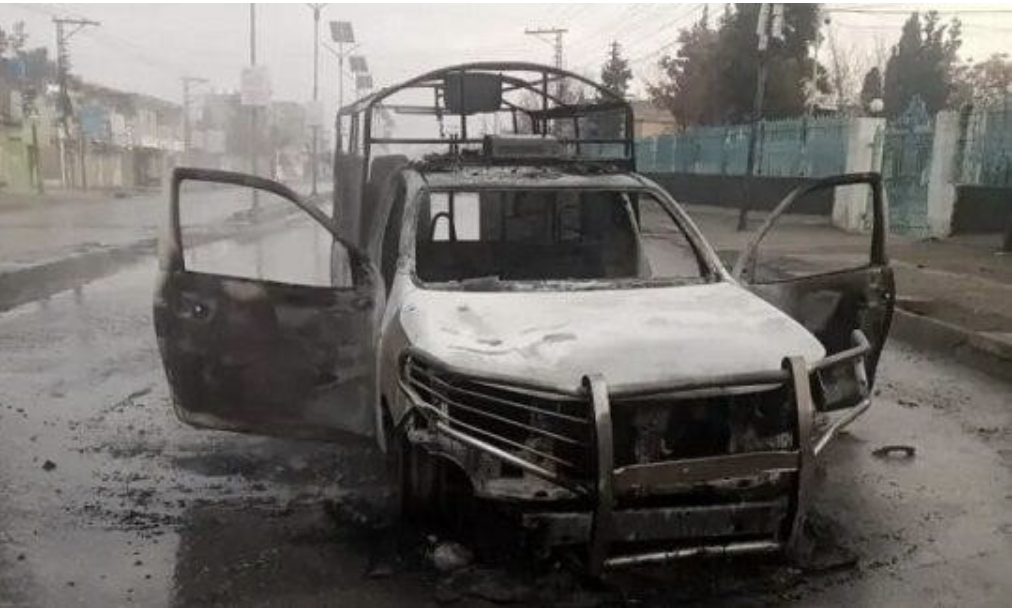
The coordinated attacks carried out by the Baloch Liberation Army (BLA) across nearly a dozen cities in Balochistan mark a deeply alarming escalation in the province’s security situation. The loss of innocent lives is tragic and deserving of criticism. We extend our heartfelt condolences to the families affected by this violence—people who already endure state repression, poverty, unemployment, and chronic political marginalization.
However, reducing these events to mere “security failures” or blaming them solely on “foreign conspiracies” is not only superficial but deliberately misleading. Violence in Balochistan did not emerge in a vacuum. It is the direct outcome of a colonial, class-based, and authoritarian state structure imposed on the region for decades.
Not Just a Security Failure—A Failure of the State
While militant violence in Balochistan is not new, recent attacks reveal developments that demand serious, sober analysis. For the first time, multiple targets were hit within Quetta itself, including areas traditionally considered high-security zones, home to state institutions and senior officials. This is not simply a lapse in intelligence or policing. It is a systemic failure of governance—of a political order built on coercion, repression, and artificial stability.
The geographic spread of these attacks—simultaneous operations in over a dozen cities and towns—points to a shift in the organizational capacity of militant groups. Despite repeated state claims, violence has not diminished; it has merely changed form. The emergence of suicide attacks within the Baloch movement is a reflection of how far state repression has pushed society into a dead end. This phenomenon is far less the result of external manipulation than of internal contradictions produced by the state itself.
The Myth of a Neutral State
The state and its spokespersons consistently explain Balochistan through the narrative of “foreign interference.” This explanation collapses under serious scrutiny. Marxist theory makes clear that the state is not a neutral arbiter but an instrument of coercion designed to protect ruling-class interests. In Balochistan, this reality stands fully exposed.
The core problem is this: there is no governance in Balochistan—only repression. The province is governed under an authoritarian, semi-colonial system where elected representatives are largely symbolic. The current provincial government is an artificial construct, born not of popular mandate but of political engineering. Its leadership does not represent the people; it benefits from the ongoing conflict.
As history shows, the deeper the crisis in a Bonapartist system, the more power is transferred to unelected, symbolic figures while real authority remains elsewhere.
Military Dominance and Institutional Collapse
In practice, administrative control over the province lies with military institutions. Elected representatives hold no real authority, nor does the provincial bureaucracy. Accountability has vanished. Corruption has become systemic. Public resources are diverted away from social welfare into the hands of the ruling elite and local collaborators.
Economic opportunities continue to shrink, unemployment rises, and public alienation deepens— fueling further instability.
Repression of Peaceful Politics: The Case of the Baloch Yakjehti Committee
One of the most critical—and deliberately ignored—aspects of this crisis is the state’s repression of peaceful political struggle. The arrests, detentions, and harassment of the leadership and activists of the Baloch Yakjehti Committee (BYC), along with accusations of links to militant groups, follow the same colonial logic that treats every independent popular voice as an enemy.
The BYC’s politics are fundamentally civic, peaceful, and non-violent. Its demands center on enforced disappearances, extrajudicial killings, resource exploitation, and political disempowerment. Yet for the state, the real threat is not the gun—it is political consciousness. That is why peaceful movements are rebranded as “security risks” and crushed.
As Lenin argued in State and Revolution, when a state responds to peaceful political demands with repression, it exposes its true class character. By making peaceful politics impossible, the state itself lays the groundwork for the violence it later uses to justify even greater repression.
The Baloch Question: A Historical Continuity
Baloch resistance is not accidental or episodic. Since 1948, the Pakistani state has attempted to resolve the Baloch political question through force—whether via the authoritarian experiment of One Unit, the military operations of the 1970s, or the post-2000 militarization under the banner of the “war on terror.”
The outcome has been consistent:
- Political processes are weakened
- Military logic is entrenched
- The people are driven further away from the state
The theory of permanent revolution explains this dynamic clearly: when national, democratic, and social questions are forcibly frozen, they erupt in new and often more intense forms.
The coexistence of armed resistance on one hand and mass civilian mobilization—capable of bringing millions to the streets on short notice—on the other proves that the state has already lost the political battlefield. Military force is now being used to compensate for that political defeat.
Media Control and the Crisis of Truth
This failure of governance is compounded by a tightly controlled political and media environment. Genuine opposition is absent. Peaceful political voices are imprisoned. Independent reporting on Balochistan has been all but extinguished.
National media has narrowed itself to state-approved narratives, delivered by analysts far removed from ground realities—while the people of Balochistan have largely disengaged from these platforms altogether. Artificial social media pages and controlled narratives no longer resonate. On the ground, despair, fear, and anger prevail—yet these realities remain invisible in mainstream discourse.
What Is the Way Forward?
This crisis will not be resolved through further security operations, controlled narratives, or the crushing of peaceful political leadership. The problem lies in the foundations of the state itself.
Balochistan is not an isolated case. It represents the most extreme expression of the same class state that exploits workers, peasants, and oppressed groups across Punjab, Sindh, and Khyber Pakhtunkhwa. The difference is one of intensity, not of nature.
The Only Viable Path: A Revolutionary Constituent Assembly
The way forward requires a decisive break from the existing order. Workers and oppressed people across Pakistan—particularly in Punjab and Sindh—must stand in solidarity with the people of Balochistan and demand the formation of a revolutionary constituent assembly that:
- Is based on genuine popular representation
- Ends military domination of politics
- Guarantees the right of self-determination for all nationalities on an equal basis
- Establishes public ownership over natural resources
- Reconstructs the state in the interests of the working class
As long as this colonial, class-based, and repressive state remains intact, Balochistan will continue to burn—and that fire will ultimately engulf all of Pakistan.
This is not just Balochistan’s struggle. It is the struggle of Pakistan’s working people as a whole. And its only answer lies in a revolutionary, democratic, and socialist transformation of the state.


