Trump, the United States, and Latin America
Trump picks up imperialist policy towards Latin America where his predecessors left it off
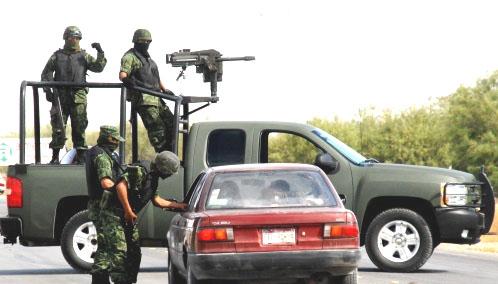
“The growing military naval presence in the Caribbean Sea represents the largest US mobilization in the region since at least 1989. This new imperialist incursion into Latin America has left dozens dead in attacks on crews of small boats off the coast of Venezuela, extending also to the Pacific, in Colombian waters. Trump’s “slogan” is that these are drug traffickers linked to “international terrorist groups,” such as the Tren de Aragua and others.”
Introduction
This scene indicates a violent and continuous attack on the sovereignty and self-determination of the Venezuelan and Colombian peoples. It is clear that such attacks will not be occasional, but rather continuous, and that they tend to spread beyond these two countries. The situation rekindles and intensifies anti-imperialist sentiment, associating Trumpism with the region’s ultra-right wing and with the history of US imperialist aggression.
The threats since mid-October of military attacks on Venezuelan territory, repeatedly announced by Trump and his advisers, would be explained as destroying drug trafficking bases and overthrowing their supposed leader, Nicolás Maduro. Although such direct action seems unlikely, given the unpredictable risks for imperialism itself and for the pro-Trump Venezuelan opposition, Maduro’s political fate remains uncertain. His regime, supported by the military command, is widely unpopular, corrupt, and repressive, even among trade unions and left-wing sectors. This combination of factors weakens him and makes his future uncertain, leading him to further intensify repression against critical opinions and mobilizations for economic and political demands.
The central strategy of Trumpism, so far, is the removal of the Venezuelan president, led by US Secretary of State Marco Rubio and Secretary of Defense Pete Hegseth. For these sectors, it would not be enough to hand over the country’s energy and natural resources to US companies—as Maduro’s advisers have already offered in negotiations—but it would be necessary to overthrow him and restructure the country’s political regime.
In 2024, still under the Biden administration, the United States did not recognize Maduro’s victory in the Venezuelan presidential elections, rejecting the elections as not free. On that occasion, not only did the right-wing opposition denounce electoral restrictions, but so did the left-wing opposition, which was prevented from registering its candidates. In 2019, during Trump’s first presidency, the US embassy in Caracas was closed following accusations of espionage.
This new Latin American scenario requires a strong and united stance on the part of the region’s leaders. However, what prevails is silence—cowardly and convenient—or, at best, empty rhetoric opposing the militarization of the Caribbean. The submission of the local bourgeoisie, bowing to pressure and tariffs from the United States, explains the hesitations and vacillations of regional governments, as well as the far-right stance in favor of the policy of fighting drug trafficking, under US coordination.
Several governments in the region are aligned with current US geopolitics: Mexico, Guatemala, Honduras, El Salvador, Guyana, Trinidad and Tobago, Panama, Costa Rica, the Dominican Republic, Argentina, and Paraguay.
Contrary statements, when they exist, only reveal tactical opportunism for negotiations with the US. This is the case with the empty rhetoric of the Brazilian government, which demonstrates a hesitant stance. Its responses are formal and specific, limiting itself to proposing to mediate in the conflict between “the two sides”: the US and Venezuela! This is an opportunistic attitude, aimed at gaining (electoral) popularity for the upcoming presidential elections in Brazil. Furthermore, it conceals the tariff negotiations currently underway with the US, which are being conducted without any regard for the interests of the working class and the Brazilian people. The Lula government’s position is limited to raising formal objections, without addressing the seriousness of US interventions in Latin America.
In this article, I examine some aspects of this situation: the military scenario in the region; the issue of drug trafficking and Trump’s excuses; the conflicting positions within Trump’s inner circle on Venezuela; the Venezuelan political regime; the alignment of Latin American governments with Trumpism; and US strategic interests in the region.
The growing military buildup in the Caribbean Sea
The growing military presence in the Caribbean Sea, with lethal actions off the coast of Venezuela and in Colombian waters, leaves no doubt about the Trump administration’s objectives: to continuously carry out naval actions in the Latin American region and expand its own economic and geopolitical interests.
Since August, some 10,000 U.S. troops have been deployed in the region, distributed between naval operations and land bases. Half are on eight Navy warships, equipped with F-35 fighter jets, and including more than 2,000 Marines. The other half are stationed at bases such as Puerto Rico, where they operate fighter jets, Air Force MQ-9 Reaper drones, surveillance aircraft, and support equipment[ 2 ]. This includes dozens of military aircraft and ships, as well as a nuclear-powered submarine.
This military fleet will be joined by the world’s largest warship, the aircraft carrier USS Gerald R. Ford, accompanied by more than 5,000 military personnel and 75 attack, surveillance, and support ships, as well as fighter jets such as the F/A-18. This vessel is heading for the region’s waters from the Mediterranean, off the coast of Croatia[3 ], with arrival scheduled for November. The orders were issued on October 24 by Secretary of Defense Pete Hegseth[4 ][5 ].
- 2 Riley Mellen, Eric Schmitt, Christoph Koetti, Samuel Granados, and Junho Lee, “Where the U.S. Is Increasing Its Military Presence in the Caribbean,” NYT, 10/17/2025. https://www.nytimes.com/2025/10/17/us/politics/trump-caribbean-venezuela-us-military-maps.html
- 3 Helene Cooper and Eric Schmitt, “U.S. military kills 14 more people accused of drug smuggling on boats,” The New York Times, October 28, 2025. https://www.nytimes.com/2025/10/28/us/politics/us-military-boat-strikes.html
- 4 Kayla Esptein and Josh Cheetham, What the world’s largest warship that the US is sending to the Caribbean is like, BBC News Brazil, October 25, 2025. Trump and Venezuela: What is the world’s largest warship that the United States is sending to the Caribbean like? – BBC News Brazil
- 5 The world’s largest aircraft carrier, fighter jets, and the CIA: What is Trump’s ultimate goal in Venezuela?, BBC News Brazil, October 24, 2025. What is Donald Trump’s ultimate goal in Venezuela? – BBC News Brazil
Satellite images and public flight tracking records confirm the increase in operations in the region. It is also possible to see, on websites open to the public, military flights that confirm the US presence in the vicinity of Venezuela and Colombia.
For its part, a US newspaper revealed that Trump authorized secret CIA actions against the Venezuelan government[ 6 ];that is, ground operations on Venezuelan soil.
Threats considered “shows of force” have been frequent since mid-October: prolonged flights over the Venezuelan coast by B-1 bombers, operations with helicopters at sea between Venezuela and Trinidad and Tobago, and surveillance missions by the U.S. Navy about 20 km off the coast. On September 2, lethal attacks (assassinations) began in Caribbean waters and, starting in October, in the Pacific, off the coast of Colombia, against small boats accused, without evidence, of drug trafficking and of having links to the Tren de Arágua and other criminal organizations.
Between September and the end of October of that year, US special operations units killed 57 crew members of small boats[8 ]. On social media, Trump and his advisers[9 ] claimed that they were drug traffickers, presenting as “evidence” aerial videos showing boats on fire after the attacks. No evidence confirmed the accusations that they were drug traffickers. These episodes constitute summary executions, which are in direct violation of international law.
What were once law enforcement operations carried out by the US Coast Guard became acts of war against “enemy forces.” The Secretary of Security, renamed by Trump as the “Department of War,” stated after one of the attacks in Colombian waters that “the four vessels were known to our intelligence services, were traveling on known drug trafficking routes, and were transporting narcotics.” He added: “These narco-terrorists have killed more Americans than Al Qaeda and will be treated in the same way.”[10 ]. Fourteen people, possibly fishermen, were killed without any investigation or evidence of involvement in drug trafficking.
- 6 Julian E. Barnese and Tyler Pager, “Trump Administration Authorizes Secret CIA Operation in Venezuela,” The New York Times, May 15, 2025. https://www.nytimes.com/2025/10/15/us/politics/trump-covert-cia-action-venezuela.html7 These B-1 bombers can carry up to 34 tons of guided and unguided munitions (bombs).
- 8 Eric Schmitt, Charlie Savage, and Chris Cameron, “U.S. Strikes Second Ship in Pacific as Anti-Drug Operation Expands,” The New York Times, October 22, 2025.
- 9 Former Fox News anchor Pete Hegseth, now Secretary of Defense (War, as Trump christened it), states: “Yesterday, under the direction of President Trump, the Department of War carried out a lethal kinetic strike against a vessel operated by a designated terrorist organization engaged in drug trafficking in the Eastern Pacific.” He draws the following comparison: “Just as Al Qaeda waged war against our homeland, these cartels are waging war against our border and our people. There will be no refuge and no mercy, only justice.“ https://x.com/SecWar/status/1981049943306752361
- 10 Helene Cooper and Eric Schmitt, ”U.S. Military Kills 14 More People Accused of Drug Smuggling on Boats,” The New York Times, October 28, 2025. https://www.nytimes.com/2025/10/28/us/politics/us-military-boat-strikes.html
These are only assumptions, without the boats being detained or inspected. Even if their involvement had been proven, which it was not, it is unacceptable to carry out executions that are completely outside the bounds of international law.
In October, government advisers stated that the United States was now in a “non-international armed conflict” against drug cartels. Trump characterized his military buildup in the region as targeting Venezuela and its leader, whom the United States accuses of leading a “non-state terrorist organization” (Tren de Arágua) that is flooding the United States with drugs and murders.
The regional climate is one of open militarization, justified by the fight against “international terrorist groups.” Trump went so far as to suggest ground attacks on Venezuelan soil, claiming that drug smuggling had shifted to land routes. He added that his government would “probably go back to Congress and explain exactly what we are doing” before launching such attacks, but stressed the need to obtain parliamentary authorization. “We will attack them very hard when they come by land,” he said, referring to the groups he accuses of drug trafficking. “They haven’t gone through that yet, but now we are fully prepared for it”[ 12 ]. In public statements, he mentioned the inclusion of lethal CIA operations with the aim of overthrowing the Venezuelan president[13 ].
- 11 Trump’s offensive in the Caribbean Sea against Venezuela and, subsequently, against Colombia seems to have created some specific divisions within the military hierarchy itself. The head of the U.S. Southern Command, Admiral Alvin Holsey, resigned from his post. He oversaw naval operations in Central and South America.
- 12 Eric Schitt, Charlie Savagee, and Chris Cameron, “U.S. strikes second ship in Pacific as anti-drug operation expands,” The New York Times, 10/23/2025. https://www.nytimes.com/2025/10/22/us/politics/trump-drug-boat-strike-colombia.html
- 13 Julian E. Barnes and Tyler Pager, “Trump Administration Authorizes Secret CIA Operation in Venezuela,” The New York Times, 15/10/2025. https://www.nytimes.com/2025/10/15/us/politics/trump-covert-cia-action-venezuela.html
Trump’s rhetoric on drug trafficking and its relationship to terrorism
In January, shortly after taking office, Trump signed an Executive Order[ 14 ] that classified drug cartels as foreign terrorist organizations, equating drug trafficking with terrorism. This redefinition expanded the state’s prerogatives to take military action, in addition to the economic sanctions already in place. The “threat to national security” would go beyond “traditional organized crime,” according to the text, as it would involve “extra-hemispheric actors” ranging from “designated foreign terrorist organizations to antagonistic foreign governments” involved in “insurgency and asymmetric warfare.” It cites the Venezuelan criminal group Tren de Arágua (TdA) and the Salvadoran Mara Salvatrucha (MS-13). It designated the attorney general and the secretary of internal security to “begin operational preparations” in accordance with the old Alien Enemies Act of 1798, rarely used in the history of the United States.
14 White House. Executive Order. Designation of Cartels and Other Organizations as Foreign Terrorist Organizations and Specially Designated Global Terrorists, January 20, 2025. https://www.whitehouse.gov/presidential-actions/2025/01/designating-cartels-and-other-organizations-as-foreign-terrorist-organizations-and-specially-designated-global-terrorists
This marked a “qualitative leap” in the legal characterization of drug cartels by the United States. Until last year, these groups were treated as transnational criminal organizations, but now they are defined as “extra-hemispheric actors,” meaning that they are not only located in Latin America, but are part of a network involving international terrorist groups and “antagonistic governments” that threaten U.S. security.
Trump claimed in March that the Tren de Aragua (TdA) was committing crimes in the US under the direction of the Venezuelan president, who had released its members from prison and sent them to the US. With such “evidence,” Trump invoked the Foreign Enemies Act[ 15 ] to deport more than 200 Venezuelans detained in the US to the prisons of Nayib Bukele in El Salvador, one of his most loyal allies.
In the official March statement, the TdA was described as a “foreign terrorist organization with thousands of members” that allegedly operates with another narco-terrorist organization, supposedly sponsored by the Maduro regime. According to Trump, “these transnational criminal organizations” increasingly control the Venezuelan government and territory, turning Venezuela into “a hybrid criminal state” that is “perpetrating an invasion and a predatory incursion into the United States.” This is the ideological framework, which justifies it to his domestic audience, for carrying out the growing militarization of the Caribbean Sea and the ongoing deadly aggressions.
In July, the Treasury Department’s Office of Foreign Assets Control (OFAC) classified the Cartel de los Soles as a “specially designated global terrorist organization” based in Venezuela. OFAC alleged that “Nicolás Maduro Moros and other senior Venezuelan officials” in the political regime “corrupted government institutions,” including “sectors of the armed forces, intelligence services, the legislative branch, and the judiciary,” for the trafficking of narcotics to the United States. It further added that the Venezuelan government “would provide material support to foreign terrorist organizations that threaten the peace and security of the United States,”[16 ], specifically the Tren de Aragua and the Mexican cartel de Sinaloa.
In early August, the US Attorney General announced a new (doubled) reward of $50 million for information leading to the capture of Maduro, classified as “one of the world’s largest drug traffickers.”[17 ].
- 15 WHITE HOUSE. Presidential actions, invocation of the Foreign Enemies Act on the invasion of the United States by the Tren de Aragua, March 15, 2025. https://www.whitehouse.gov/presidential-actions/2025/03/invocation-of-the-alien-enemies-act-regarding-the-invasion-of-the-united-states-by-tren-de-aragua/
- 16 U.S. Department of the Treasury, press release, “Treasury Department Sanctions Venezuelan Cartel Led by Maduro,” July 25, 2025. https://home.treasury.gov/news/press-releases/sb0207
- 17 International Crisis Group, U.S. Drug War Offensive Raises Fears of Intervention in Venezuela, September 3, 2025. https://www.crisisgroup.org/latin-america-caribbean/andes/venezuela-united-states/us-anti-drugs-strike-stirs-fears-venezuela-intervention
The State Department poster read: “for conspiracy to commit narco-terrorism, conspiracy to import cocaine, and conspiracy to use and carry machine guns and destructive devices in furtherance of a drug offense”[18 ]. According to the government, the United States seized 30 tons of cocaine from the Cartel de los Soles, of which seven tons belonged to Maduro. This would pose a “threat to our [U.S.] national security”: he [Maduro] would not escape, the attorney general said. She also stated that the Venezuelan had been associated with the Tren de Aragua and the Sinaloa Cartel, considered “foreign terrorist organizations,” since January of this year. The U.S. Treasury Department had already included the Cartel de los Soles on the list of “specially designated global terrorists”[19 ].
The United States is the world’s largest market for cocaine, followed by Europe. It is the main destination for global trafficking. However, this drug, proportionally represents a minor part of the explosion in the consumption of synthetic drugs, such as amphetamines and opioids. Fentanyl, produced mainly in Mexico with chemical inputs from Asian countries, including China, is responsible for most overdose deaths in the United States. According to the U.S. Drug Enforcement Administration (DEA), the Department of Justice, and the Congressional Research Service[20 ], Venezuela plays virtually no significant role in the production or smuggling of fentanyl or cocaine.
The Caribbean basin accounts for a small percentage of the trafficking route to the United States. The scale of the naval military offensive is disproportionate to the volume of drugs transiting the region. In this sense, the attacks on boats show that the real objective is not to combat drug cartels and drugs entering the United States, but to justify militarization. In fact, the government’s story does not match reality.
Trump, in his delusions, emphasized that every boat destroyed in the region would save 25,000 lives. In the United States, it is estimated that around 100,000 people die each year from drug overdoses, but most of these deaths are due to fentanyl. The increase in overdoses has been driven by fentanyl. According to U.S. Customs and Border Protection, 94% of the drugs seized in the United States are intercepted at the southern border. According to the Drug Enforcement Administration (DEA), the Department of Justice, and the Congressional Research Service (CRS), the main route, by far, is the Caribbean basin. The largest global production of cocaine—whose consumption is lower in the US compared to fentanyl – leaves Colombia, Peru, and Bolivia and heads to North America and Europe. It passes through Peruvian, Ecuadorian, and Colombian ports and, more recently, is passing through Ecuador and Costa Rica.
- 18 U.S. Department of State. Reward increased to $50 million, August 7, 2025.
- 19 U.S. Department of the Treasury, Treasury Sanctions Maduro-Led Venezuelan Cartel, July 25, 2025.https://home.treasury.gov/news/press-releases/sb0207
- 20 Samuel Granados, Genevieve Glatsky, and Annie Correal, “Why Flying Venezuelan Boats Won’t Stop the Flow of Drugs,” The New York Times, 10/9/2025. https://www.nytimes.com/interactive/2025/10/09/world/americas/drug-trafficking-venezuela.html
According to a 2024 report, Colombia is the main point of origin for cocaine reaching the United States, accounting for around 64% of drugs seized. It is not only transported by sea, nor mainly through the Caribbean. There are also land and air routes to the United States and Canada. The main maritime route is via the Pacific Ocean, accounting for around 74% of total traffic, as the Pacific is a vast expanse that makes surveillance difficult, unlike the Caribbean Sea, where there is greater US surveillance.
In addition to the Pacific route, cocaine also follows two routes that cross the Caribbean. The most commonly used is the western Caribbean route (Colombia, Ecuador, Peru, and through Panama and Jamaica). The other route follows the Caribbean corridor, which runs from Colombia to the Dominican Republic and Haiti and, from there, to Florida or Canada.
Trafficking from Venezuela is much lower than in Central America and the Pacific. While exports from Colombia accounted for some 279.7 tons and those from Ecuador for some 252 tons, those from Bolivia were around 45 tons and those from Venezuela reached some 35.1 tons. According to UNODOC (2025)[21 ], the Soles Cartel, whose leader, according to Trump, is Nicolás Maduro, is not a drug cartel but a network of corruption entrenched in the Venezuelan Armed Forces that, among other things, facilitates drug trafficking.
(21) UNODC World Drug Report 2025: Global instability compounds the social, economic, and security costs of the world drug problem. June 26, 2025. https://www.unodc.org/unodc/fr/press/releases/2025/June/unodc-world-drug-report -2025_-global-instability-compounding-social–economic-and-security-costs-of-the-world-drug-problem.html
The association between drug trafficking and terrorism dates back to the Ronald Reagan era.
The association between drug trafficking and terrorism is not a recent development. It dates back to the 1980s, when the United States, under President Ronald Reagan, instituted the so-called “war on drugs” as one of the pillars of its foreign policy in Latin America. Since then, this strategy has functioned as a doctrine and geopolitical instrument of control and intervention, disguised as anti-drug moralism and the fight against transnational crime.
Throughout the 1980s and 2000s, the United States declared war on drugs, but domestic consumption never really declined; on the contrary, it grew. This reveals not only an increasingly mentally ill capitalist society—a clear public health problem—but also the links between drug trafficking networks and federal agents and the CIA itself. The flow of arms trafficking feeds the various criminal organizations that continue to operate proceeds along a North-South axis, i.e., from the United States to Latin America. In previous decades, the so-called “war on drugs” essentially served the policy of regional militarization.
Since the 1980s, a legal superstructure has been consolidated that has launched and legitimized countless actions to combat drugs in Latin America, defining the region as the source of the “flood” of drugs into the United States. This superstructure largely shaped US geopolitics, linking drug trafficking, organized crime, terrorism, and revolutionary insurgency.
The report A New Inter-American Policy for the 1980s, known as the Santa Fe Document, presents the drug issue as a strategic security problem for the United States that would legitimize hemispheric military cooperation. The Drug Abuse Control Act (1988) institutionalized anti-drug coordination and budgeting not only at the US national level, but also in Latin America. In the late 1980s and throughout the 1990s, the National Defense Authorization Act (1989) emerged, which designated the Department of Defense (DoD) as the agency responsible for overseeing drug trafficking into the country. This led to the creation of the Joint Interagency Task Force and the Joint Interagency Task Force South, which is coordinated by the United States Southern Command (SOUTHCOM).
Based on this ideological and operational framework, large regional “packages” were developed (2000-2016). Plan Colombia is directly associated with the counterrevolutionary process against the FARC and the ELN, linked to the fight against drugs, with billions of dollars in aid from the United States to the Colombian government at the time. Something similar was developed with the Merida Initiative in Mexico, which focused on the military and equipment, and added aspects of intelligence, legislation, and Mexican institutional reform.
Neither Barack Obama (2007-2016) nor Joe Biden (2020-2024) substantially modified this ideological-legal and operational architecture. Biden, for example, replaced the Merida Initiative with the United States-Mexico Bicentennial Framework for Security, Public Health, and Safe Communities, which formalized Mexican co-responsibility in demand reduction.
The first Trump administration (2017-2021) radicalized this tradition. It intensified political pressure on Mexico and China, which had become the producers of fentanyl. Trump threatened to make extensive use of the OFAC/Kingpin Act and to classify the cartels as Foreign Terrorist Organizations (FTOs), which materialized at the beginning of his second term. This radicalization coincided with the structural change in the drug market and the consolidation of synthetic drugs (fentanyl/methamphetamine), which shifted production chains previously linked to coca cultivation toward greater interconnection between chemical production chains, ports, and finance. The timescales for the production and circulation of drugs as commodities intensified.
With Trump 2.0 (2025) and his Executive Order No. 1415, he finally succeeded in designating cartels and similar groups as Foreign Terrorist Organizations (FTOs) and Specially Designated Global Terrorists (SDGs). FTO means the criminalization of material support for trafficking and tightens migration and asylum. In this way, he is combining international economic power legislation with sanctions from the Office of Foreign Assets Control (OFAC) and anti-terrorism law.
This combination of anti-terrorism legislation and financial sanctions has created a more powerful instrument: a legal-financial weapon with extraterritorial reach.
The FTO is a legal-financial weapon of enormous and dangerous scope, since, in addition to affecting drug cartels and organized crime, it extends over national sovereignties, projecting US power through criminal and financial means and pressuring countries to align themselves financially and cooperatively. It is, in essence, an imperialist war with the appearance of international legality, in which the fight against drug trafficking becomes a mechanism for financial and political discipline of Latin American states.
The alignment of Latin American governments with the Trump administration
Trump’s tariff pressures and security rhetoric operate in sync, combining economic sanctions, coercive diplomacy, and moralizing rhetoric that resonates with Latin American governments and comprador bourgeoisies. The Trump administration coordinates assistance, joint police and military operations, and financial security (monitoring), while preserving the flow of arms from north to south. From the old “war on drugs” (eradication), it has moved on to adopting regional pressure that combines police-military action, judicial cooperation, financial sanctions, and data diplomacy.
In practice, programs such as Plan Colombia (2000s), the Merida Initiative (2008), and their recent developments (Bicentennial Framework, 2021) have institutionalized security as a pillar of the relationship between the United States and Mexico/Central America and South America.
Colombia remains tied to anti-drug policy and US tutelage. Congress and the State Department prioritize resources and legitimize US interference under the pretext of fighting crime.
The United States also relies on pro-US opposition in several countries in the region and, in particular, takes advantage of the low popularity, corruption, and weaknesses of several of these governments, as is the case in Venezuela and Colombia. At the same time, through pressure, tariff threats, and political-ideological affinities, they are creating an environment of pro-Trump governments, or at least governments that are submissive to him. Let’s look at some cases.
The United States continues to support President Nayib Bukele of El Salvador, whose massive (and indiscriminate) repression of gangs is presented as a model. At the end of July, the United States rejected comparisons between its legislative processes and those of other countries in the region. In August, Secretary of State Marco Rubio defended the end of presidential term limits in El Salvador, as approved in July by the National Assembly. Also in August, he supported the annual human rights assessment, asserting that there was no evidence of violations in the country. Meanwhile, Bukele continues his harsh crackdown on gang members and human rights groups that oppose draconian anti-gang laws.
In early September, Marco Rubio traveled to Mexico to meet with President Sheinbaum, and the two announced the creation of a group to advance joint actions against criminal groups. In his statements, the Secretary of State praised the president for her fight against criminal organizations, but they said nothing about the United States’ intention to carry out a unilateral military intervention on Mexican territory. In early August, Trump authorized preparations for the use of military force against cartels on Mexican soil and instructed the Pentagon to “begin using military force against certain drug cartels in Latin America”[22].
Sheinbaum formally opposed the plan, although she had already shown herself willing to “cooperate” with the US. At the same time, Trump praised the military deployment concentrated on the US-Mexico border, drug seizures, and the transfer of “high-value individuals” to the US. He called on Mexico to continue its “additional and aggressive efforts.”
In September, the US and Mexico launched joint actions against cross-border arms trafficking. During the same period, the Mexican president signaled her alignment with US trade priorities by imposing a 50% tariff on Chinese products, including vehicles. On the other hand, Mexico has not yet suffered any high tariffs, as initially promised.
The most recent version of alignment with the US came from Guatemalan President Bernardo Arévalo, who is planning a reform of the country’s prison system after 20 members of the Barrio 18 gang escaped from a maximum-security prison, Fraijanes II. The gang is characterized as a “foreign terrorist organization” by the US. He said: “We will have the support of the FBI and other US security agencies, whose experience and technical capacity will strengthen our security systems and make our fight against organized crime more effective,” “we will not be alone in this fight”[23 ].
Arévalo’s alignment with Trump dates back to February, when Marco Rubio visited the country. Rubio reiterated the US priority for the region in terms of security, the fight against organized crime, and drug trafficking[24 ]. The Guatemalan president supported the deportation of immigrants from the US to the country, both Guatemalans and other nationalities, replicating what he was already doing in the Biden administration. On that occasion, Arévalo announced the formation of a “border security force” that would patrol the borders of Guatemala, Honduras, and El Salvador against transnational crimes. So far, the country has not suffered any increase in tariffs, only maintaining the basic 10% on its exports to the United States.
In general terms, military interventions in the Caribbean Sea, which extend to the Pacific, have been met with shameful silence or near-silence from Latin American governments. Guyana and Trinidad and Tobago have shown their support for the United States, to which Venezuelan Defense Minister Vladimir Padrino responded that there will be retaliation against such countries if they are attacked by the United States. Lula, for his part, formally criticized the US military actions at the end of September. He described the attacks on the ships as “extrajudicial executions” and immediately offered himself as a political mediator in the situation, since, for him, “dialogue with Venezuela must remain open.”
- 22 The New York Times, August 8, 2025.
- 23 Annie Correal, “Guatemala Receives U.S. Help in Crackdown on Gangs After Prison Break,” The New York Times, October 15, 2025. https://www.nytimes.com/2025/10/15/world/americas/guatemala-prison-break-penal-reforms.html
- 24 Matthew Lee, Guatemala offers Rubio a second deportation agreement for migrants sent home by the US, Associated Press, February 6, 2025.
Brazil joins the discussion on drug trafficking and terrorism
The Brazilian far right follows in Trump’s footsteps. The initial proposal is to expand the Anti-Terrorism Law (Law No. 13,260/2016) to include the activities of criminal organizations. The anti-terrorism law was drafted and expedited during Dilma’s administration by former Justice Minister José Eduardo Cardozo and supported by many Workers’ Party deputies in the context of the June 2013 protests during the international sporting events.
The current bill No. 1,283/2025 proposes to broaden the concept of terrorism to include activities of criminal organizations such as cartels, militias, and drug traffickers. Its summary is very clear: “Amends Law No. 13,260, of March 16, 2016 (Anti-Terrorism Law), to broaden the motivations for the crime of terrorism, specify critical infrastructure and public utility services, extend the application of the law to criminal organizations and private militias that commit acts of terrorism, and establish an aggravating factor for acts of terrorism committed using cyber resources.” (Danilo Fortes – União/CE)[25 ]. Article 2 of the Law would be amended to include as terrorism practices that impose “dominion or control over a territorial area, when committed with the aim of causing social or widespread terror, endangering persons, property, public peace, or public safety.”
The bill, presented in March in Congress, was given urgent status in May in the Federal Chamber Plenary, which allowed the process to be shortened, without going through committees. Coincidentally or not, in the midst of this legislative process, a series of bilateral meetings were held between a delegation from the United States and the Brazilian government on the issue of transnational criminal organizations, in which programs to jointly combat terrorism and drug trafficking were discussed[ 26 ].
The bill’s sponsor is the far-right Guilherme Derrite, currently São Paulo’s Secretary of Public Security, who stepped down from the Secretariat and resumed his position in the National Congress, becoming the bill’s sponsor.
The far-right commitment gained strength following the military operation in Rio de Janeiro against the Comando Vermelho (CV), defined by Governor Cláudio de Castro and the security forces. The operation left 121 dead in the favelas (slums) of Penha and Alemão on October 28, in what appears to have been a summary execution. It was the largest massacre in the history of Rio de Janeiro. Reports and videos show mutilations and decapitations. The mega-operation failed to achieve its objectives: to arrest 100 members, including leaders of the Comando Vermelho (Red Command). However, it had a significant positive reception from the population of Rio de Janeiro, at least momentarily, in the city and in the favelas, and throughout the country, according to an Atlas survey. In the days that followed, right-wing governors—Goiás (Caiado), Minas Gerais (Zema), Paraná (Ratinho), and São Paulo (Tarcisio)—met via videoconference to support Cláudio Castro and the policy of militarizing the fight against organized crime.
- 25 Chamber of Deputies. PL 1283/2025 – Bill, 03/27/2025. https://www.camara.leg.br/proposicoesWeb/fichadetramitacao?idProposicao=2490514
- 26 Geovana Melo, Questioned by the US, the Brazilian government affirms that it does not classify the country’s criminal factions as terrorists, G1, 07/05/2025. https://g1.globo.com/politica/noticia/2025/05/07/questionado-pelos-eua-governo-brasileiro-diz-nao-classifica-faccoes-criminosas-como-terroristas.ghtml
A letter from the US government sent to Rio de Janeiro’s Secretary of Public Security, Victor César dos Santos, on November 4, “lamented” the loss of the four police officers who died in the operation: “We have respect and admiration for the tireless work of the state security forces and are at your disposal for any support that may be needed.” This was stated by James Sparks, head of the Drug Enforcement Division of the US Department of Justice. Not a word about the brutal deaths of so many people. The letter is, in my opinion, yet another sign of how the Trump administration is trying to include in the agenda on tariffs with the Brazilian government the discussion of characterizing criminal groups as terrorists. Obviously, this has given more hope to the far right.
Positions on Venezuela at the Trumpist summit
At this point, it is difficult to assess what the repercussions will be on the situation in Venezuela in particular. But there is evidence of an openly hostile logic in US geopolitics towards Latin American countries. What is on the table is US pressure in bilateral negotiations around business interests, coupled with political pressure, whether military or through economic sanctions (or both).
At the Trumpist summit, two strategic currents coexist in relation to Venezuela. The clearly interventionist one, led by Marco Rubio and Pete Hegseth, openly advocates the removal of Maduro through direct military action or a total blockade. The second, “negotiating” current, mediated by Richard Grenell and business leaders from the energy sector, proposes a mediated transition, maximizing exploitation contracts and preventing the strengthening of Chinese and Russian interests.
Trump oscillates between the two positions, depending on pressure from the oil lobby, the Cuban-Venezuelan-US bourgeoisie, and military sectors. This ambiguity reproduces the historical pattern of US policy toward the region: military aggression and economic pragmatism.
In the last two months, there has been a militarization of Caribbean waters and attacks on small Venezuelan boats, based on repeated “allegations” about the association between Maduro and drug cartels. But during that period, secret negotiations were also held between Maduro’s advisers and the designated US official, Richard Grenell. In those negotiations, the Venezuelan president reportedly proposed agreements related to existing (and future) oil and gold projects, preferential contracts for US companies, as well as reversing the flow of oil exports from China to the United States and terminating his country’s energy and mining contracts with Chinese, Iranian, and Russian companies [27]. This information was revealed by a US newspaper and was not denied by either the Trump administration or Nicolás Maduro. In other words, according to the leaked information, the objective was to obtain maximum concessions on Venezuelan natural resources, while maintaining the political regime with Maduro at the helm, ruling out Chinese and other interests.
Even so, Trump broke off negotiations in early October, as Maduro would not have accepted one of his demands: to relinquish power. This suggests a possible scenario of escalation against his government.
The strategy led by Richard Grenell considered the possibility of deepening concessions on strategic wealth, while maintaining the Venezuelan political regime and its leader, in a slower and agreed political transition process. However, the Trumpist sector represented by Marco Rubio overrode the secret negotiations and convinced Trump to harden his stance. Thus, what has prevailed, at least for now, was the strategy led by Rubio and security adviser Stephen Miller: to overthrow Maduro and his allies and end the current political regime. In support of the secretary, the director of the Office of Strategic Services (CIA), John Ratcliffe, took office on January 15, promising a more aggressive institution. By way of illustration, it is worth recalling that, at the US Senate hearing, he stated that he would make the CIA more willing to carry out covert actions when Trump ordered it. Note the “watchdog” statement: “go places no one else can go and do things no one else can do.”[28 ]. For Ratcliffe, the ideal CIA recruit is a “doctor/professional capable of winning a bar fight.” Another gem: “This sentiment is the essence of what today’s CIA must regain.” In other words, a return to what the institution ostensibly once was and did, under the slogan Make America Great Again.
In mid-October, Trump reportedly authorized the CIA to intensify ground operations in Venezuelan territory: “We are definitely looking at ‘the land’ now, because we have the sea very well under control,” he said. This would be a license to carry out lethal operations in the country and a series of operations in the Caribbean[ 29 ]. In addition to this threat, on October 21, Trump said he would notify Congress of his intentions to bomb Venezuelan targets. Such actions could include attacks on ground targets allegedly linked to drug trafficking, but also on facilities linked to the Cartel de los Soles.
- 27 Anatoly Kurmanaev, Julian E. Barnese, Julie Turkewitz, “Maduro, of Venezuela, offered the U.S. the riches of his nation to avoid conflict,” The New York Times, October 10, 2025. https://www.nytimes.com/2025/10/10/world/americas/maduro-venezuela-us-oil.html#:~:text=Leer%20en%20espa%C3%B1ol,Maduro%20of%20Venezuela%20in%20Carac as.
- 28 Julian E. Barnes, John Ratcliffe presents a vision for a more aggressive CIA, January 15, 2025.
- 29 Julian E. Barnese and Tyler Pager, Trump administration authorizes covert CIA action in Venezuela, The New York Times, October 16, 2025. https://www.nytimes.com/2025/10/15/us/politics/trump-covert-cia-action-venezuela.html
Are these simply rhetorical threats or narratives that are linked to military practices? In any case, what we are witnessing is an increase in attacks and assassinations, as well as flybys in Caribbean and Pacific waters, including Venezuelan and Colombian territory. Trump suggests that he will attack land targets. He claims that attacks on small boats have diverted drug smuggling to land routes. He added that his administration would “probably go back to Congress and explain exactly what we’re doing” before launching such attacks, stressing that he needs Congress’s permission to act. “We will hit them very hard when they come overland,” Trump said of those his administration accuses of drug trafficking. “They haven’t gone through that yet, but now we are totally prepared for it.”[30 ].
The strategy to overthrow Maduro and end the Venezuelan political regime is clearly linked to full access to the country’s natural resources. This is the main strategy currently being pursued. It is not simply a matter of pressing for more concessions from the Venezuelan regime. A pro-Trump Venezuelan government would be the condition for political stability, with US military guarantees in the region.
Another existing position seems less realistic, although it is taking shape. Negotiations with the Venezuelan government could involve maintaining the current political regime, but without Maduro and part of the military leadership (Diosdado and others), incorporating pro-Trump opposition sectors, such as Marina Corina Machado, and moving towards new presidential elections. In other words, it would be a provisional transitional government. This is a proposal that neither Maduro nor part of the Venezuelan leadership would accept, as it would completely remove any guarantees about their immediate political future.
30 Eric Schitt, Charlie Savagee and Chris Cameron, “US strikes second ship in Pacific as anti-drug operation expands,” The New York Times, 10/23/2025. https://www.nytimes.com/2025/10/22/us/politics/trump-drug-boat-strike-colombia.html
The Venezuelan political regime is mobilizing… and negotiating…
Much analysis at the moment questions any possibility of Venezuelan resistance in the event of a US military intervention. Basically, this position is based on Venezuela’s clear military inferiority. In part, this is true as far as the military apparatus is concerned. However, it underestimates the power of mobilization that Maduro still has in Venezuela today.
Maduro and his political regime are completely Bonapartist, a trend that consolidated during Hugo Chávez’s government and continued to deepen with Maduro and his military leadership[31 ].
They are rejected by the majority of the Venezuelan people, even electorally, as was the case in the 2024 presidential results. The “resounding” victory in the municipal elections last July only mask the loss of social support and exacerbate allegations of electoral fraud. Currently, the Venezuelan regime remains entrenched in a strong and cohesive military base in the Bolivarian Forces, made up of generals and senior military commanders, and still involving around 30% of the population, which, through various state mechanisms, remains co-opted by the political regime.
31 On Bonapartist consolidation in the country, see: Venezuela después de Chávez. Un balance necesario (Venezuela after Chávez: A Necessary Assessment), edited by Alejandro Iturbe, with articles by various authors. Although the title suggests otherwise, the book focuses particularly on the period between 2004 and 2007. São Paulo: Ed. Lorca, 2013.
The majority of the Venezuelan people perceive and feel in their daily lives not only social misery, but also the degree of corruption that permeates the countless pores of the state. The government persecutes the various trade union and left-wing sectors that oppose the country’s economic and political disasters. It restricts political freedoms and basic forms of political and trade union organization.
However, it is difficult to predict what US military attacks on the ground would mean. Anti-imperialist sentiment could emerge or revive as an ideology of national resistance, especially against an imperialist power that has historically always oppressed and exploited the Latin American peoples. Meanwhile, the Venezuelan regime still has the power to mobilize, whether through the civilian apparatus co-opted by the regime, or even through coercive mobilization, not to mention the military apparatus, which is not insignificant.
Certainly, a US ground intervention, especially in Caracas, in the central areas of the city and, above all, in the countless slums and their narrow streets in the hills surrounding the city, would not be “a walk in the park.”
This would initially give rise to two more plausible logistical possibilities for the initial attacks: a) continuous attacks with missiles and drones, with pre-established targets: Maduro and sectors of the military and civilian leadership; b) division within the military leadership and assassination/kidnapping of Maduro, with the support of US counterintelligence. These possibilities are not mutually exclusive.
In any case, in order to stabilize a new pro-Trump government, such as that of María Corina Machado, if it does not have the support of significant sectors of the armed forces, a US military presence on the ground would be required. And that is where “things can get complicated.” It is very difficult to predict how popular resistance will develop in such a scenario, with anti-imperialist and anti-Bonapartist currents colliding with pro-imperialist revolutionary currents, culminating in processes may point to radical solutions.
In any case, in August and September, images were shown of “special offensive” operations throughout the country involving police, military, and civilian units to reinforce internal security.
Maduro stated in August that he would mobilize more than four million militiamen throughout the country, which is unlikely in terms of infrastructure (material, logistics, equipment, operability). He also intensified border controls and sent drones and ships to patrol his coast. In September, he presented images of military exercises on the island of Orchilla.
Petro and the situation in Colombia
The aggression against Venezuela and Colombia and the political pressure on Latin American governments indicate how Trump-era imperialism will treat its “partners” and enemies, according to its business and geopolitical interests. What began with violent and murderous military action in Venezuelan waters spread to Colombian waters, which are a much more important area for drug trafficking to the United States.
On October 8, Colombian President Gustavo Petro denounced that Colombian citizens had also been killed in U.S. maritime attacks. Petro was blunt: “The U.S. government authorities committed murder and violated the sovereignty of Colombia.”
On October 8, Colombian President Gustavo Petro denounced that Colombian citizens had also been killed in U.S. maritime attacks. Petro was emphatic: “The U.S. government authorities committed murder and violated our sovereignty in territorial waters.” He added: “A new war zone has opened up: the Caribbean.” “Evidence indicates that the last ship bombed was Colombian and was carrying Colombian citizens.” The United States immediately demanded that Petro retract his statement, as it could damage bilateral relations between the two countries[32 ].
Trump then accused Petro of failing to curb illegal drug production and called him an “illegal trafficker,” saying he would suspend aid payments to the country and increase trade tariffs. In September, the United States revoked the Colombian’s entry visa to the United Nations General Assembly.
Since January, Petro had been in diplomatic conflict with Trump by refusing to allow US military aircraft to deport Colombians to the country. The Colombian president gave in to threats of higher tariffs and sanctions against the country.
The diplomatic conflict continues to escalate following the torpedoing of two boats, possibly in Colombian waters. Petro continued to denounce the murderous nature of the attacks, such as those that occurred on September 3 and 15[33 ]. In a message critical of Trump, he denounced another attack on October 22 as “a murderous act.”
Petro believes that the Colombian police have achieved relative success in the fight against drug trafficking, which has led the groups to move their routes to Ecuador, expanding violence in its territory and using its ports.
The Pacific Ocean, from southern Colombia to Panama, Mexico, and the United States, is not accessible to speedboats, but to large vessels, in which drugs are transported in commercial containers or in the submerged hulls of ships. The central strategy, for Petro, is to control ports and inlets with national forces, since the cocaine that crosses the Pacific “leaves on merchant ships.” “With intelligence agencies embedded within the trafficking groups” and “coordination with police forces in other countries,” it has been possible to seize increasing amounts of cocaine. According to the Colombian president, with this strategy, his government has managed to seize 2,800 tons of cocaine in three years: it would have been the largest seizure in the country’s history.
- 32 Julie Turkewitz and Robert Jimison, “Colombian President Says U.S.-Bombed Ship Carried Colombians,” New York Times, 10/08/2025. https://www.nytimes.com/2025/10/08/world/americas/colombia-citizens-boat-us-bombed.html
- 33 Simon Romero, Geneviève Glatskye, and Zolan Kanno-Youngs, “Colombian Leader Accuses U.S. of Murder, Prompting Trump to Suspend Aid,” 10/19/2025. https://www.nytimes.com/2025/10/19/world/americas/trump-colombia-petro-aid.html
Now they would have new problems, as the groups are increasingly engaged in illegal gold mining in the Amazon and coordinating mafias in multinational networks in large financial circuits. He states: “The current US administration seems to be rejecting its own experience with Colombia and changing its strategy to another misguided one that violates the sovereignty of Latin American and Caribbean countries.”
Trump continues to attack the Colombian president at a time when the presidential elections are approaching and he has failed to reach peace agreements with the guerrillas. Petro is completely weakened in terms of popular support, as his government has not made progress in improving the living conditions of the population. Therefore, Trump’s attacks do not lead one to believe that he is in fact seeking to achieve an effective anti-drug strategy, but rather to influence next year’s Colombian elections by promoting the victory of the extreme right. He says: “Now they think that by weakening the democratic movement in Colombia, they will have easier access to Venezuela’s oil”[34 ].
34 Mellen R, Schmitt E, Koetti C, Granados S, Lee J. Where the U.S. Is Building Up Military Forces in the Caribbean. The New York Times. October 17,
Available at: https://www.nytimes.com/2025/10/17/us/politics/trump-caribbean-venezuela-us-military-maps.html.Accessed: Nov. 10, 2025.
Final considerations: what are the real interests behind the military resurgence in the region?
In this article, I started from the observation of the militarization of the Caribbean and the US military attacks on the crews of small Venezuelan and Colombian boats, accompanied by threats of invasion of Venezuela and verbal attacks and sanctions against the Colombian president. These events express, in my opinion, a new US geopolitical configuration in the region.
I analyzed the ideological and discursive aspects (justifications) that support such actions, which have so far been responsible for more than 60 summary executions of boat crews. The “ideological thread” lies in the association that Trump has established, since the beginning of his second term, between drug trafficking, organized crime, and terrorism, in what he has called “foreign terrorist organizations.” This narrative also serves to link the Venezuelan Bonapartist president, Nicolás Maduro, as a “drug trafficking leader,” “allowing” the political and legal justification for military escalation.
I have shown that the central route for drug trafficking to the United States is not the Caribbean Sea or Venezuela, but the Pacific Ocean, used by larger vessels and complex commercial routes for such trafficking. I also identified that the association between drug trafficking and international terrorism operates as a political instrument of intervention in the internal affairs of Latin American countries, combined with tariff and financial sanctions to expand US control over national governments. In this context, like the pro-Trump far-right governments and political forces in the region, the Brazilian far right associates itself with the proposals of the US president, defending the militarization of the fight against organized crime and its legal equivalence with terrorism.
That said, I will make some observations about what, in my opinion, lies behind these actions.
The recent US military and naval offensive reflects a structural repositioning of imperialism in Latin America, amid the geo-economic and technological dispute with China. This is not a specific reaction to combat drug trafficking, but rather a non-linear and complex movement to rebuild US hegemony, aimed at controlling critical infrastructure, logistics chains, and financial, energy, and digital flows, which are the pillars of the contemporary capitalist economy.
US imperialism seeks to articulate military power, technological and mineral dominance, and legal-regulatory influence as complementary dimensions of the same strategy. At the geoeconomic level, it combines sanctions, licenses, and coercive trade agreements to bring local governments—aligned with Trumpism—to the strategic guidelines of the United States. Notable examples are Mexico, El Salvador, and Honduras. Technologically, it attempts to monopolize digital and communication networks—5G, data clouds, and data centers—under the pretext of guaranteeing standards of “security” and “freedom” of use, but ensuring the digital supremacy of the US. In legal and institutional terms, the establishment of regulatory dependencies—security treaties, judicial cooperation, and standardization of controls over cyberspace—reinforces the subordination of Latin American countries to imperialist logic. The current negotiations between Brazil and the United States over the tariffs are an illustration of this asymmetrical integration.
This US strategy has led to a growing alignment of Latin American governments with US strategic guidelines. Cases such as Argentina, Paraguay, Ecuador, Honduras, El Salvador, and Mexico confirm this movement. On the other hand, in countries where this comprehensive alignment does not exist and their governments are unpopular, as in the case of Venezuela and Colombia, Trump is further forcing their political decline and “paving the way” for the arrival of ultra-right-wing pro-Trump governments.
Some strategic centers are priorities for the US. The Panama Canal once again plays a central role, not only in commercial transit but also in global digital communications. The Canal and its digital infrastructure have become the subject of dispute between the US and China. The US threat at the beginning of the year of a possible invasion if the contract with the Chinese company that manages part of the Canal was not broken reveals the coercive and extraterritorial nature of current US policy. The Lithium Triangle (Argentina, Bolivia, and Chile), considered the mineral heart of the energy transition, is another nerve center. These countries have become the target of intense diplomatic and economic pressure, with the aim of directly or indirectly controlling lithium and its refining chain, which is essential for the US battery, semiconductor, and “smart” weapons industries.
The Brazilian case is more complex. Ongoing negotiations with the US cover issues of digital sovereignty, mining and technology regulation, and possibly cooperation in the fight against drug trafficking under the label of “international terrorism.” The debate is shifting from the strictly energy sphere to the technological and mineral sphere, covering strategic resources such as niobium, nickel, copper, manganese, and rare earths.
Lula’s government is fully linked to internal and international bourgeois factions. Although it enjoys recovering popular support and has partially isolated the far-right Bolsonaro supporters, the government is conducting negotiations with the US completely “behind the scenes,” away from public debate. Trumpist pressure has been exerted differently, through trade and technology, but it converges towards the same result: the surrender of national wealth and the complete erosion of the country’s scientific and digital sovereignty. Lula, as he has said, is open to negotiation, that is, prone to surrender. Meanwhile, workers and the Brazilian people are unaware of the real content of these negotiations.
Finally, the current US military, economic, and technological offensive in Latin America expresses the historical continuity of imperialism in the region, now reformulated in the face of the hegemonic dispute with China. The militarization of the Caribbean, control over mineral and energy resources, and the imposition of digital and legal standards all form part of the same project to reconfigure US dominance over the continent.
In short, what we are seeing is a new stage of Latin American dependence—marked by technological and digital submission—and an attempt to rebuild US hegemony over a subcontinent historically considered its “strategic backyard.” The defense of the sovereignty and self-determination of the Latin American peoples therefore requires a political and intellectual response commensurate with this imperialist offensive.
Further Bibliography
Cooper H, Schmitt E. U.S. military kills 14 more people accused of smuggling drugs on boats. The New York Times. October 28, 2025. Available at: https://www.nytimes.com/2025/10/28/us/politics/us-military-boat-strikes.html. Accessed: November 10, 2025.
Epstein K, Cheetham J. What is the world’s largest warship that the United States is sending to the Caribbean like? [Trump and Venezuela: How the world’s largest warship is being sent to the Caribbean]. BBC News Brazil. October 25, 2025. Available at: https://www.bbc.com/portuguese/articles/. Accessed November 10, 2025.
BBC News Brazil. The world’s largest aircraft carrier, fighter jets, and the CIA: what is Trump’s ultimate goal in Venezuela?. October 24, 2025. Available at: https://www.bbc.com/portuguese/articles/. Accessed October 24, 2025.
Barnes JE, Pager T. Trump Administration Authorizes Secret CIA Action in Venezuela. The New York Times. October 15, 2025. Available at: https://www.nytimes.com/2025/10/15/us/politics/trump-covert-cia-action-venezuela.html.
Accessed October 10, 2025.
Barnes JE, Ratcliffe J. Presents a vision for a more aggressive CIA. The New York Times. January 15, 2025. Available at: https://www.nytimes.com/. Accessed August 10, 2025.
Barnes JE, Turkewitz J, Kurmanaev A. Maduro of Venezuela offered the U.S. his nation’s riches to avoid conflict. The New York Times. October 10, 2025. Available at: https://www.nytimes.com/2025/10/10/world/americas/maduro-venezuela-us-oil.html.
Accessed October 10, 2025.
Chamber of Deputies. Bill No. 1283/2025. Brasilia. March 27, 2025. Available at:
https://www.camara.leg.br/proposicoesWeb/fichadetramitacao?idProposicao=2490514. Accessed on: November 1, 2025.
White House. Presidential Actions: Invocation of the Alien Enemies Act regarding the invasion of the United States by Tren de Aragua.
Washington. March 15, 2025. Available at: https://www.whitehouse.gov/presidential-actions/2025/03/invocation-of-the-alien-enemies-act-regarding-the-invasion-of-the-united-states-by-tren-de-aragua/. Accessed: October 10, 2025.
White House. Executive Order: Designating cartels and other organizations as foreign terrorist organizations and specially designated global terrorists. Washington. January 20, 2025. Available at:https://www.whitehouse.gov/presidential-actions/2025/01/designating-cartels-and-other-organizations-as-foreign-terrorist-organizations-and-specially-designated-global-terrorists/. Accessed: November 1, 2025.
U.S. Department of State. Reward increase up to US$50 million. Washington. August 7, 2025. Available at:https://www.state.gov/. Accessed: November 10, 2025.
U.S. Department of the Treasury. Treasury sanctions Venezuelan cartel led by Maduro. Washington. July 25, 2025. Available at: https://home.treasury.gov/news/press-releases/sb0207. Accessed on: July 30, 2025.
International Crisis Group. U.S. anti-drug strike stirs fears of intervention in Venezuela. Crisis Group Report
Report. September 3, Available at: https://www.crisisgroup.org/latinamerica-caribbean/andes/venezuela-united-
states/us-anti-drugs-strike-stirs-fears-venezuela-intervention. Accessed: Nov. 10, 2025. Iturbe A, org. Venezuela después de Chávez: un balance necesario. São Paulo: Lorca; 2013.
Melo G. Questioned by the U.S., Brazilian government says it does not classify criminal factions as terrorists. G1. May 7, 2025. Available at: https://g1.globo.com/politica/noticia/2025/05/07/questionado-pelos-eua-governo-brasileiro-diz-nao-classifica-faccoes-criminosas-como-terroristas.ghtml.
Accessed October 20, 2025.
Petro G. Post on X about October 22, 2025 attack. October 22, 2025. Available at: https://x.com/. Accessed
October 22, 2025.
Romero S, Glatsky G, Kanno-Youngs Z. Colombian leader accuses U.S. of murder, prompting Trump to suspend aid. The New York Times. October 19, 2025.
Available at: https://www.nytimes.com/2025/10/19/world/americas/trump-colombia-petro-aid.html. Accessed October 19, 2025.
Schmitt E, Savage C, Cameron C. U.S. attacks second boat in the Pacific as anti-drug operation expands. The New York Times. October 23, 2025. Available at: https://www.nytimes.com/2025/10/22/us/politics/trump-drug-boat-strike-colombia.html.
Accessed October 23, 2025.
Turkewitz J, Correal A. Colombian president says U.S.-bombed boat carried Colombians
carried Colombians [Colombian president says U.S.-bombed boat carried Colombians]. The New York Times. Oct. 8, 2025. Available at: https://www.nytimes.com/2025/10/08/world/americas/colombia-citizens-boat-us-bombed.html.Accessed: Oct. 8, 2025.
Turkewitz J, Granados S, Glatsky G, Correal A. Why blowing up Venezuelan boats won’t stop the drug flow.
The New York Times. Oct. 9, 2025. Available at: https://www.nytimes.com/interactive/2025/10/09/world/americas/drug-trafficking-venezuela.html. Accessed: Oct. 9, 2025.
UNODC – United Nations Office on Drugs and Crime. World Drug Report 2025: Global instability compounding social, economic and security costs of the world drug problem. Vienna: UN; June 26, 2025. Available at: https://www.unodc.org/unodc/fr/press/releases/2025/June/unodc-world-drug. Accessed: June 26, 2025.
June 26, 2025. Available at: https://www.unodc.org/unodc/fr/press/releases/2025/June/unodc-world-drug-report-2025_.html. Accessed: October 10, 2025.