Einstein: materialism, relativity and his radical criticism of capitalism
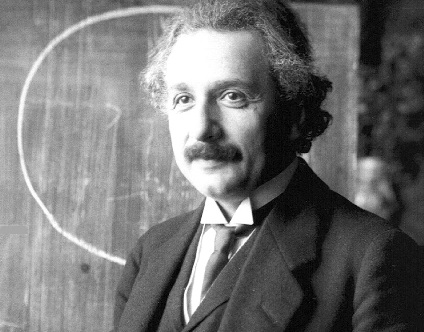
Sixty years have passed since one of the most famous personalities of the twentieth century, the German physicist Albert Einstein died on April 18, at age 76 in the U.S.
By: Glailson Augusto Rocha dos Santos
A scientist who had the great, yet sadly uncommon, distinction of understanding the vital need for coherence between the scientific method and a consistent philosophical approach for advancing human knowledge on solid foundations, an unsuspected advocate of socialism and the need for overcoming the capitalist anarchy which insists on dominating contemporary society.
The materialistic and revolutionary content of the Theory of Relativity
A materialist (something clearly visible whether in his article titled “Physics and Reality”, 1936, as in his telling letter to Jewish philosopher Eric B. Gutkind from 1954), Einstein certainly would be amazed with all the mangling carried out by postmodern mysticism in his name.
His theory of relativity, for example, so used by the distorters of his ideas in order to justify all sorts of idealistic madness and relativism, is based on two surprisingly simple postulates. They are blatantly materialistic and easily proved in practice:
1. All the laws of physics take the same form in all inertial frames of reference.
2. The speed of light in free space (vacuum) has the same valuec in all inertial frames of reference.
From these two uncomplicated assertions emerges the whole amazing elegance of Einstein’s theories which enabled us, for the first time, to unravel the mysteries of mass-energy equivalence. It corrected the inaccuracies of the centuries old theory of gravitation by Newton and, at last, ruled out once and for all the annoying and persistent science fiction of the “luminiferous ether”, among many other achievements.
In the words of Carl Sagan in his book Broca’s Brain:
“Before Einstein it was widely held by physicists that there were privileged frames of reference, such things as absolute space and absolute time. Einstein’s starting point was that all frames of reference—all observers, no matter what their locale, velocity or acceleration—would see the fundamental laws of nature in the same way.” [1]
Einstein’s indisputable merit was to realize how our anthropocentric biases, reflected in our craving for giving human beings a privileged point of view to perceive the universe, had made us until then blind to the fact that a materialistic coherent approach demanded us to consider that, from any point of view, the laws of physics must remain the same, even if this contradicted our most deeply rooted concepts about time and space.
In other words, we should not attempt to impose our ideas upon reality, on the contrary: we must be willing to revise them whenever the concrete reality is demonstrated as more complex and striking than we were able to imagine.
In this sense, the revolution brought on by Einstein and his colleagues can be understood as part of the broader context of previous scientific revolutions which led us to progressively break with the primitive mystical visions that seek to conceal our own minuteness and frailty by assigning us privileges that we do not have.
It was so with the Copernican revolution that brought us out of the center of the universe; it was so with the revolution promoted in Geology by Hutton and Lyell, which showed us how short is our history in view of the astonishing time scale on our planet; it was so with the Darwinian revolution that unveiled our humble background as a mere splinter branch of primates on the unbelievably vast tree of life; it was so with the revolution promoted by Marx and Engels clarifying the occult material foundations lying behind our social relations, institutions and ideologies throughout the entire history; and it is so with Einstein and his theory of relativity by showing that we are not a privileged frame of references to perceive the universe.
Only by freeing ourselves from the self-imposed yokes, which hinder our understanding of nature as well as of ourselves, will we be able to grasp our actual limitations and potentials to intervene and transform ourselves and the world around us. That is the lesson reaffirmed by each of the revolutions that have advanced our understanding.
After all, as the Russian revolutionary Leon Trotsky realized:
“The historic ascent of humanity, taken as a whole, may be summarized as a succession of victories of consciousness over blind forces – in nature, in society, in man himself.”
The Einstein-Bohr Controversy
Although there are no doubts regarding the relevance of Einstein’s contributions to the advancement of our knowledge of reality by means of his Theory of Relativity, his role in connection to the development of Quantum Mechanics is still the target of much dispute, at least among the lay public.

Niels Bohr and Albert Einstein in 1925
Still in the 20s, as Einstein reaped the results of his revolutionary theory, the field of physics was rocked by a new revolution, which had among its protagonists the Danish physicist Niels Bohr. Bohr proposed a new probability-based physics for the investigation of nature on an atomic scale, revealing the need for two different approaches to comprehend reality on different scales and setting restricted areas for each of them: Einstein’s relativity to describe the phenomena on a larger scale than the atomic and quantum mechanics to describe the phenomena on a subatomic scale.
Even though Einstein’s position in relation to quantum mechanics has been significantly subtler and less intransigent than we are led to believe by most popular historians of science (which tend to reduce one the most important public debates in science in the twentieth century to a petty ego dispute), the truth is that Einstein himself is regarded as one of the founders of quantum mechanics, and his reluctance to acknowledge some of the implications of quantum physics seems just to reflect his commitment to an approach to physics committed to materialism.
The constant criticism by Einstein of certain aspects of quantum mechanics ended up encouraging its advocates to refine their understanding of the philosophical and scientific implications of their own theories. It got to the point that Bohr himself published, in 1949, an article entitled “Debate with Einstein over epistemological problems in atomic physics”, dedicating it to the German physicist.
If for Bohr, at least initially, it was enough that quantum physics was capable of describing and predicting phenomena on an atomic scale, for Einstein that was not enough. A philosophical approach of undoubtedly materialistic character that allowed us to understand in depth not only the quantum phenomena, but their implications was needed.
After all, much of Einstein’s merit lies in the fact he haven’t complied with the mere description of gravity carried out centuries earlier by Newton. Einstein wanted more than any description, as rigorous and capable of precise predictions as it was – he wanted to understand the mechanism of gravity, and that is what he did when he unveiled the curvature of space-time caused by the mass of any given object (one of the consequences of his theory of relativity). Similarly, a mere empirically adequate description would seem to him insufficient for a genuine understanding of quantum phenomena.
In a melancholic private letter to his old friend Michele Agelo Besso, dating from December 12, 1951, near the end of his life Albert Einstein wrote:
“All the fifty years of conscious brooding have brought me no closer to the answer to the question: What are light quanta? Of course today every rascal thinks he knows the answer, but he is deluding himself.”
Einstein’s concerns about the ongoing need for epistemological rigor and his conscious defense of the materialistic nature of the scientific approach have shown themselves to be extremely relevant, especially when we look at the penetration of idealistic, mystical and obscurantist pressures in the contemporary scenario of Natural Sciences, resulting in absurdities like “quantum mysticism”, touted by ideologues with scientific credentials like Frijof Capra and Amit Goswami.
Einstein and socialism
Yet Einstein has been far more than a brilliant scientist bent on overcoming the prejudices and capitulations to idealism which restricted the scientific advances of his time. He also was a man concerned about the political and social issues of his day, quite unlike the cartoonish image of a crazy scientist alienated from reality that is spread by the propaganda of those interested in dissociating his political critical view from his undoubted scientific brilliance.
His acute critical spirit led him so far as to openly advocate socialism in a bold article called “Why Socialism?”, from 1949, just six years prior to his death and after having watched the tragic application of his theory by the US government in building a nuclear bomb to cowardly attack the then already battered Japanese foes hitting the cities of Hiroshima and Nagasaki. An episode which claimed the lives of over 240,000 people, almost all of them civilians, three months after the defeat and surrender of Italy and Germany in World War II.
Einstein wrote:
“The economic anarchy of the capitalist society as it exists today is, in my opinion, the real source of the evil (…).
“I am convinced there is only one way to eliminate these grave evils, namely through the establishment of a socialist economy, accompanied by an educational system which would be oriented toward social goals. In such an economy, the means of production are owned by society itself and are utilized in a planned fashion. A planned economy, which adjusts production to the needs of the community, would distribute the work to be done among all those able to work and would guarantee a livelihood to every man, woman, and child.The education of the individual, in addition to promoting his own innate abilities, would attempt to develop in him a sense of responsibility for his fellow men in place of the glorification of power and success in our present society.” [2]
He was also able to recognize the false equivalence between the socialist appeal and the regime sponsored by the Soviet bureaucracy when he criticized Stalinism, saying:
“Nevertheless, it is necessary to remember that a planned economy is not yet socialism. A planned economy as such may be accompanied by the complete enslavement of the individual. The achievement of socialism requires the solution of some extremely difficult socio-political problems: how is it possible, in view of the far-reaching centralization of political and economic power, to prevent bureaucracy from becoming all-powerful and overweening? How can the rights of the individual be protected and therewith a democratic counterweight to the power of bureaucracy be assured?” [2]
While his biography, like that of any other human being at any given time, is not without its own share of mistakes, blunders and contradictions, Einstein deserves to be remembered as a brilliant scientist who, committed to a materialist approach to reality, was an outspoken opponent of all forms of idealism, mysticism and obscurantism. A human being conscious of our need to get rid of our own prejudices, idealism and self-deceptions to build a promising future for the whole of humanity.
After all, only aware of the lack of any divine or natural imperative which dooms to go along with capitalism in its decadent funeral march, shall we be able to glimpse alternatives that will allow us to overcome the limitations of the present historical moment to advance into a deeper, more thorough understanding of the reality around us and of ourselves. There is no doubt that he was a brilliant man.
Notes:
[1] – http://www.newrepublic.com/article/117028/carl-sagan-albert-einstein
[2] – http://monthlyreview.org/2009/05/01/why-socialism/