2026 World Cup: Not even FIFA can cover for Trump
While for most people, soccer means passion, emotion, or a sense of belonging, to the people who manage and own soccer, it represents huge profits, political support, and enormous benefits for a select few.
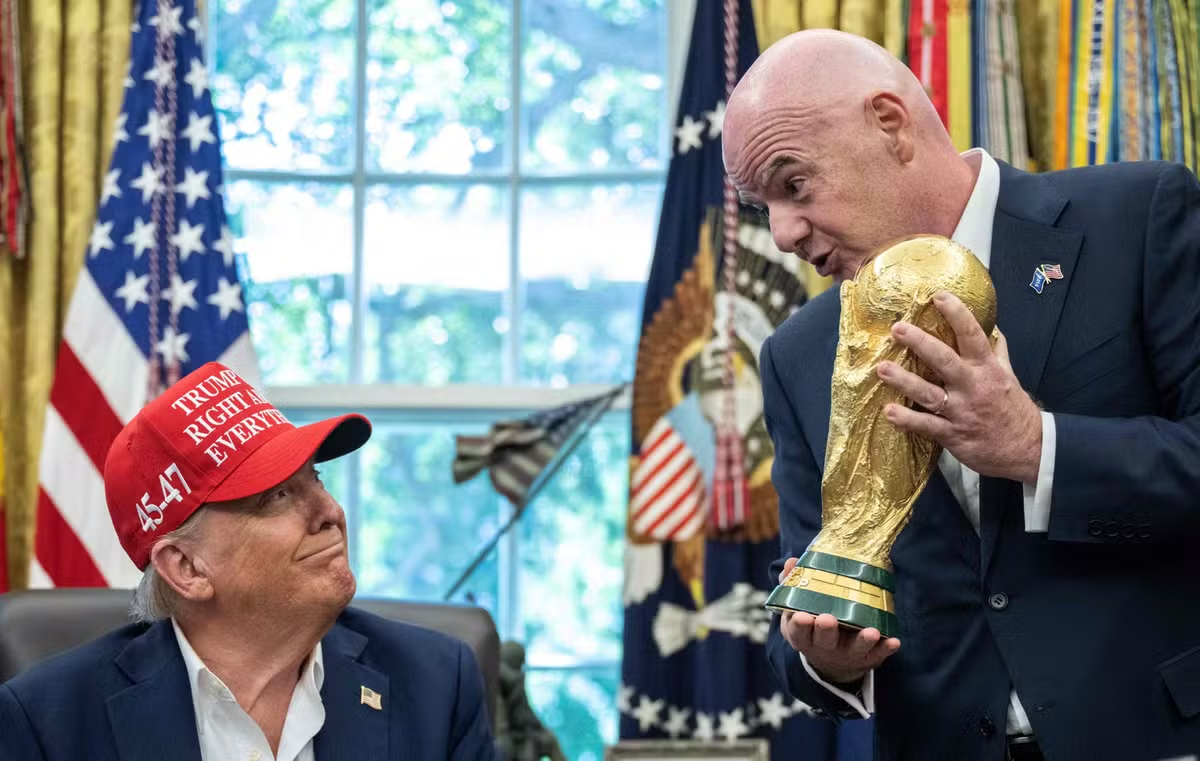
FIFA, the body that governs soccer worldwide, is about to kick off its latest event, one which, without a doubt, is a cause for great excitement among large segments of the working class and the masses—particularly in the Americas and Europe.
While for most people, soccer means passion, emotion, or a sense of belonging, to the people who manage and own soccer, it represents huge profits, political support, and enormous benefits for a select few.
The Trumpist, Xenophobic FIFA
Trump’s goal of hosting the World Cup in the United States dates back to his first term in 2017, when he secured the country’s selection as a host alongside Mexico and Canada. This was not without controversy, as, just as with Qatar’s selection, there were allegations of bribery linked to FIFA.
From then until now, FIFA, led by Gianni Infantino, has functioned practically as a committee devoted to the Trump administration: it awards him prizes for his supposed struggle for world peace and organizes meetings for him with global soccer figures such as Cristiano Ronaldo and Lionel Messi.
Furthermore, FIFA does nothing but endorse the bans Trump imposes on various countries regarding entry into the United States, as has been happening in recent days, just hours before the World Cup begins.
More than 50 countries in Asia and Africa are subject to a visa bond. This means their citizens must pay between $5,000 and $13,000 to enter the United States, in addition to undergoing a pre-screening of their social media accounts.
The “party” being prepared by ICE
A few weeks ago, the government announced that security during the World Cup in the stadiums will include, among other agencies, the prominent participation of ICE (Immigration and Customs Enforcement). While it was reported that ICE’s role will be to assist in detecting counterfeit tickets and resale, it would not be surprising if mass deportations for irregular entry end up dominating the World Cup. (Editor’s note: workers at SoFi stadium in Los Angeles threatened to strike in the event of an ICE presence at the stadium, in addition to making other demands concerning pay and working conditions, and as of June 9 came to a tentative agreement that they have the right to walk off the job if there is ICE presence during the eight scheduled World Cup matches at the stadium.)
However, not even this attempt to downplay ICE’s role manages to improve its image. According to a poll by The Washington Post and the University of Maryland, 65% of respondents oppose ICE’s presence in stadiums during the World Cup. Nearly eight out of ten African Americans and Hispanics reject the presence of agents from that agency.
Revenue, below expectations
Trump had announced with great fanfare that hosting the World Cup would contribute $17.2 billion to the country’s GDP. However, that projection has been falling, and the figures are well below expectations for several reasons.
First, the cost of tickets: they hover around $600 for the group stage and reach up to $13,000 for the final. All signs point to few matches being played in front of a full stadium. Compared to the 2022 Qatar World Cup alone, tickets are seven times more expensive. Additionally, the train ride to MetLife Stadium—where the final will be played—will cost $150, well above the current fare of $12.90.
Second, there is the concern that visiting the United States poses for foreigners. This is not only reflected in the data from this World Cup but also appears to be becoming a trend: in 2025, the United States was the only “major” country to record a sharp drop in tourist arrivals. Furthermore, more than 120 human rights organizations issued a travel advisory for attendees, warning that they could face serious violations of their rights. (Editor’s note: since initial publication of this story in Spanish, U.S. border control denied entry to award-winning Somali referee Omar Artan, who had been scheduled by FIFA to help run the games)
Finally, the data is not encouraging for Trump and FIFA. According to Tourism Economics, “80% of hotels in host cities report that demand for accommodations is below expectations.”
The same consulting firm predicts that more than 1.2 million people will arrive in the country for the event, although the latest updates show figures lower than that projection.
Social unrest and the political climate
The World Cup data, the growing rejection of law enforcement, and current protests—such as “No Kings” in the United States and the teachers’ protests in Mexico—indicate that this World Cup is unlikely to curb the discontent with the Trump administration, much less contain social mobilization in the region.
This includes, centrally, the Americas, where growing struggles are unfolding in countries such as Mexico, Bolivia, Colombia, Chile, and Argentina.